Author: Claire Wanja

  • Kenya Re opens offices in Uganda

    Kenya Re opens offices in Uganda

    The Kenya Reinsurance Corporation (Kenya Re) has launched its offices in Uganda in a bid to reinforce its presence in the local market.

    Speaking at the opening event, Kenya Re’s Group Managing Director Dr Hillary M. Wachinga termed the opening a strategic move that not only strengthens their Uganda footprint butalso reinforces their commitment to providing unparalleled services in the East, West, Southern and Central African regions.

    “Our presence in Uganda serves a vital purpose of bridging the gap of missing reinsurance services domestically. We want to partner with local insurance companies to reduce the reliance on international reinsurance which often comes at a higher cost. By reinforcing our local presence, our goal is to foster self-sufficiency in the reinsurance sector and contribute to Uganda’s economic growth by retaining value within the country,” said Dr. Wachinga.

    He added that Uganda’s vibrant economy and dynamic insurance sector was an attractive suitor for Kenya Re’s business to flourish as the market has experienced significant growth in recent years, fuelled by a rising middle class, increased infrastructure development, and a growing awareness of the importance of risk management.

    According to the Insurance Regulatory Authority in Uganda, the sector recorded a 19.23%growth in 2022 compared to 10.6% in 2021. The gross written premiums grew fromUSH1.11 trillion in 2021 to USH1.32 trillion in 2022.

    Kenya Re launched the subsidiary in 2019 but started transacting officially in January 2020. The office is responsible for managing and growing the Corporation’s General  &Life reinsurance business in line with its strategic objectives within Uganda, where General Insurance accounts for over 60% of the market with Life Insurance accounting for close to 34% of the market.

    Speaking at the event, Kenya Re Uganda’s Board chairman Mr. George Steven Okotha welcomed the development saying that the business had realised growth in gross reinsurance premiums fromUSH6 billion in 2020 compared to USH13.9 billion reported in 2021 and USH 16.3billion in 2022. Profit after tax stood at USH2.33 billion in 2022 while total assets increased from USH17 billion in 2020 to Ush36 billion in 2022.

    “Before we set up an office here, we analysed the market to determine what clients want. We noted that they consider price, ability and willingness to pay claims, underwriting expertise, speed of service delivery, flexibility, innovation and credit quality/rating. These factors guide how Kenya Re Uganda Limited runs business and they form part of our unique selling points,” he said.

  • Kisumu set to host Kenya’s first Business Ecosystem Summit

    Kisumu set to host Kenya’s first Business Ecosystem Summit

    Kenya is set to host the first-ever Business Ecosystems Summit (BES) in Kisumu this Friday, September 1st, 2023.

    This is in line with ongoing key government reforms aimed at stimulating business growth across the country, bolstering economic independence and prosperity.

    Organized by the IMC People Ltd in partnership with the Lake Region Economic Bloc (LREB), the summit is aimed at unlocking the potential of collaborative networks and effectively navigating the dynamic shifts within various business landscapes.

    Speaking about the upcoming summit, LREB Chairperson Governor Professor Anyang’ Nyong’o said Kisumu is ready and honored to host the summit.

    “We are more than happy to host this dynamic gathering of visionary minds at the upcoming Inaugural Business Ecosystems summit. This summit is like no other, it serves as a catalyst for fostering innovation, driving economic growth, and creating harmonious collaborations. Together, we will explore groundbreaking strategies, embrace emerging technologies, and forge strategic partnerships to unlock the full potential of our business ecosystems. I invite all participants to join hands and embark on this transformative journey towards a prosperous future.” Said Governor Nyong’o.

    The summit aims to provide mechanisms for organizations to leverage technology, excel in research and business competence, and compete effectively in the marketplace. This is in addition to driving new collaborations that press social and environmental challenges and foster sustainable practices and responsible business models.

    In his address, LREB CEO Victor Nyagaya emphasized the paramount importance of the summit in propelling innovation and fostering substantial growth.

    “Acting as a key partner, LREB are thrilled to actively participate in this transformative expedition and aid in the establishment of collaborative ecosystems.

    LREB seeks within its mandate to enhance socio economic transformation of the bloc through leveraging on the economies of scale in its ecosystem and implement through collaboration with state and non-state actors the empowerment and participation of its over 15 million population. As a bloc we firmly believe that by embracing disruptive trends and nurturing strategic partnerships, we have the power to unlock a multitude of novel opportunities, resulting in enhanced prosperity and an increase in revenue. We are therefore calling upon all investors and businesses (those who can come in as sponsors and exhibitors) to register because we know the people of LREB will show up in huge numbers,” stated Nyagaya.

    A public-private collaborative approach will take center stage at the summit with LREB chairperson Prof. Anyang’ Nyong’o and the governors of the 13 other member counties of LREB, including deputy chairperson H.E Ken Lusaka, who is also Bungoma County Governor gracing the high-level summit.

    Representatives from the Ministry of Trade and Investment and other ministries, Senators, Members of Parliament, and Governors are expected to appear at the summit, signifying governments’ recognition of the critical role business ecosystems play in achieving economic growth.

    Giving her remarks ahead of the summit, The IMC People CEO Jeanette Oromo said the summit’s key focus is accelerating business transformation and fostering innovation among diverse stakeholders including government officials, policymakers, industry leaders, and entrepreneurs.

    “In light of the transformative and disruptive trends and the remarkable resilience exhibited during the pandemic, it is becoming increasingly evident that traditional paradigms need re-evaluation. Our intention, therefore, is to conduct this evaluation through the summit, utilizing modern technology, fostering collaborations, and addressing social and environmental challenges. Our goal is to shape the future of Kenya’s business ecosystems while working hand in hand with all players – Government, Investors and Business Communities to forge a way forward that makes it easier for accessibility to businesses in our regions by investors and vice – versa, customer acquisition and retention and transparency in regard to funding and investment.” said Oromo.

    During the summit, a special focus will be made on fostering business ecosystems that center around shared sectors, missions, goals, and products. The primary goal is to maximize interactions and leverage each participant’s unique strengths. This approach aims to optimize collaboration and unlock the collective potential of all stakeholders by empowering them to engage with a comprehensive ecosystem, rather than dealing with individual entities separately.

    Businesses who will be present are expected to find ways to harness creativity, collaboration and innovation to lower costs of production and find new customer acquisition strategies while attracting investment.

  • Standards Reset: Rebooting trade and sustainability in Kenya

    Standards Reset: Rebooting trade and sustainability in Kenya

    By Peter Munyiri

    In the heart of Kenya’s industrial sphere, we stand perched on the edge of a seismic shift, peering into the intricate maze of standards and sustainable development. Fueled by a collective aspiration, we envision crafting our narrative as a global trailblazer, rebooting our systems with standards-based solutions. This is more than just a journey – it’s a transformative revolution, designed to reshape our trade landscape and breathe new life into our sustainable development sectors. This is our ‘Standards Reset’, and it begins now.

    Guided by our mission to deliver top-notch Standardization, Metrology, and Conformity Assessment Services, our vision is rooted in the conviction that superior standards across the spectrum will catalyze a transformation in operational efficacy, customer service, and innovation. Our ambition? To steer Kenya’s evolution into a global benchmark for excellence in standards implementation, perpetually dedicated to protecting customers, facilitating trade, and building a sustainable future, all while adding remarkable value to its stakeholders and the nation.

    Indeed, the power of superior standards is threefold: They protect consumers, drive economic growth, and foster environmental sustainability. Each of these elements plays an integral role in facilitating a sustainable future, and it’s our aim to ensure that this trinity of benefits remains at the heart of Kenya’s transformation journey.

    Firstly, robust standards ensure that consumers are safeguarded from substandard products and services.

    They act as a shield, protecting the public from potential harm and instilling a sense of confidence in the products and services they consume. This not only nurtures a culture of trust within the market but also enhances the reputation of businesses that adhere to and exceed these standards.

    Secondly, standards are the lifeblood of economic growth and competitiveness. They facilitate trade by breaking down barriers, thereby opening up new markets for businesses. This dynamism allows for the exchange of goods and services on a level playing field, driving economic prosperity and establishing Kenya as a competitive player on the international stage.

    Finally, standards are crucial to promoting environmental sustainability. By dictating environmentally conscious practices, they ensure that economic growth does not come at the expense of our planet. This promotes a balance between economic development and environmental preservation, enabling us to pass on a healthier and more prosperous planet to future generations.

    Therefore, as we advance on this path, our resolve remains unwavering: To implement superior standards that protect consumers, stimulate economic growth, and champion environmental sustainability, as we shape a brighter and more sustainable future for Kenya.

    The journey we undertake goes beyond mere compliance to standards. We aspire to be more than participants – we envision Kenya as a trailblazer, consistently surpassing standards to stand head and shoulders above the global competition. “Exceed, don’t just meet” is the mantra echoing in our steps towards contributing to Kenya’s evolution.

    In this modern era of constant transformation, technology intertwines seamlessly with standards, creating a symbiotic relationship. The advent of digital management systems, artificial intelligence, and cybersecurity has expanded the horizons of standards. Consider the Industrial Revolution 4.0, where cybersecurity standards have become indispensable to safeguard digital platforms, reinforcing smooth operations and strengthening our stance in international trade.

    The voyage to widespread standards adoption is not devoid of obstacles. We anticipate challenges, such as limited technological infrastructure, resistance to change, and policy gaps. Yet, we remain undeterred. Our resolve is to navigate these hurdles through comprehensive capacity-building initiatives, digital literacy programs, and the establishment of clear, actionable policies.

    The backbone of this transformative journey is robust stakeholder engagement. The harmonious collaboration of government entities formulating conducive policies, private sector innovators driving competition, and an informed public endorsing the importance of standards can turbocharge our progress.

    Collaboration and partnerships are the keystones of our approach, for we acknowledge that the full power of standards can only be harnessed through collective action. Our objective is to build bridges with industry leaders, policymakers, and other stakeholders to create a conducive environment for the successful rollout of our transformative agenda.

    As we gaze into the future, optimism abounds for Kenya. We believe in our collective ability to mould a future where Kenya shines as a beacon of standards-based solutions, facilitating trade, and championing sustainable development.

    Echoing the words of Peter Drucker, “The best way to predict the future is to create it.” This ethos is the heartbeat of our vision, predicting a promising future for Kenya and beyond. Today, we lay the cornerstone of this transformative journey. As we set forth, we anticipate the support and cooperation of all stakeholders in bringing this vision to fruition.

    Let’s unite on this transformative journey, carving a future where Kenya is recognized for its resilient industries, sustainable practices, and global competitiveness. In harmony, we will etch a pathway illuminated by standards, propelling our nation’s evolution, and pioneering sustainable trade and development.

    In this bold pursuit, our collective efforts foster resilience, champion sustainability, and fuel competitiveness.

    The outcome? A testament to Kenya’s indomitable spirit, an enduring legacy echoing progress, and an inspiration reverberating across the globe. Every stride we make today carves the roadmap towards our shared sustainable future. So, let’s reset, redefine, and revolutionize our standards, for Kenya’s tomorrow is sculpted by the bold steps we take today.

    Peter Munyiri is the Chairman of the National Standards Council (NSC) at the Kenya Bureau of Standards (KEBS)

    DISCLAIMER: Opinions expressed in this article do not necessarily represent those of the Corporation.

  • Safaricom, TerraPay sign Bangladesh, Pakistan money transfer deal

    Safaricom, TerraPay sign Bangladesh, Pakistan money transfer deal

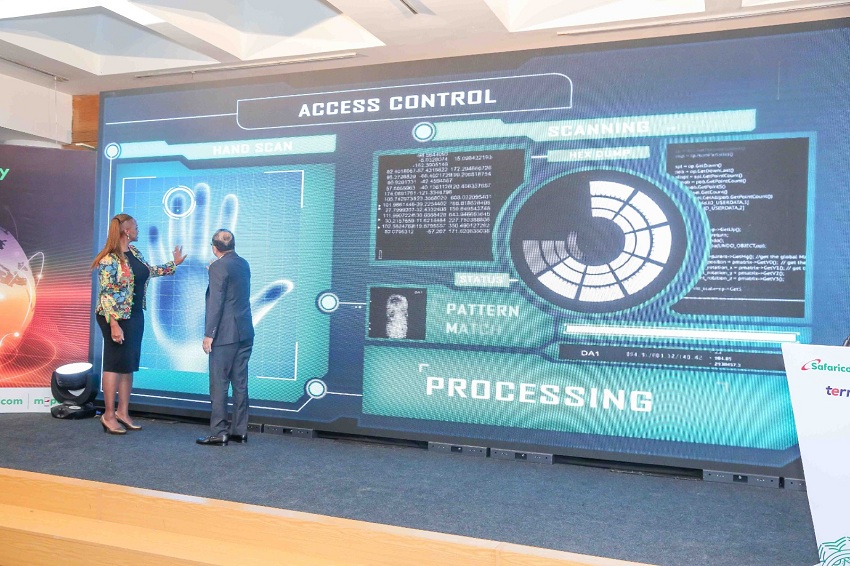
    Safaricom has on Wednesday announced a partnership with TerraPay, empowering more than 32 million M-PESA customers to send and receive money to more than 200 million people across Bangladesh and Pakistan with plans to roll out India and Nepal in a few months.

    Ambar Sur, Founder & CEO – TerraPay says he believes the collaboration will spur the development of mobile financial service operators enabling them to directly scale globally and provide customers with the choice to send payments in a secure, transparent, and swift manner.

    “Our partnership with Safaricom will further boost our capabilities in providing an inclusive global financial ecosystem with superlative technical solutions- cultivate an affinity by empowering Safaricom customers with fast & affordable borderless payment options and access to TerraPay’s widespread partner network of 4.5 billion bank accounts and 1.5 billion mobile wallets,” he said.

    “Remittances have become an economic lifeline for thousands of households and businesses in the country, connecting them to opportunities and empowering our customers to transact conveniently and affordably around the world. We are therefore delighted to partner with TerraPay to enable anyone in the country to send and receive money to and from more than 200 million people across Bangladesh and Pakistan with M-PESA. This partnership opens up one of the world’s largest remittance markets making Kenyans more globally connected,” said Peter Ndegwa -CEO, Safaricom.

    TerraPay joins a roster of more than 35 partners under the M-PESA Global service which enables customers in Kenya to send and receive money and make and receive payments across more than 170 countries.

    M-PESA customers can send and receive money to Bangladesh and Pakistan through the M-PESA Global service under the M-PESA Super App or by dialling *334# and selecting M-PESA Global under the “Send Money” option

    In Safaricom’s last financial year to March 2023, more than 917,000 customers used the M-PESA Global service, transacting more than Kshs.418 billion in over 31.8million transactions.

    Accordingly, M-PESA processed more than 90% of all remittances into the country.

  • AI develops and tastes new energy drink

    AI develops and tastes new energy drink

    Picture this: an Artificial Intelligence (AI) that not only designs a drink but also carefully selects its ingredients, formulates the complete recipe, and even tastes it for perfection.

    Sounds like something out of a sci-fi movie, right? Well, prepare to be amazed as we dive into the extraordinary story.

    Let’s take a moment to remember some of the significant milestones and inventions in the history of food and drink: the world’s first food delivery (1768), the refrigerator (early 1800s), pasteurization (19th century), the microwave oven (1945), induction cooking (1973), online food ordering (1994), and food delivery robots (2018).

    And now, we just witness the latest milestone—the world’s first energy drink entirely developed by Artificial Intelligence, based on a Hungarian producer’s instructions (July 2023).

    While the original secret was unveiled two weeks ago, the moment of truth has finally arrived as the drink is now being produced today in one of Europe’s most cutting-edge energy drink factories.

    Machines do what a more conscious machine has instructed them to do.

    Leveraging its unparalleled ability to process vast amounts of information at lightning speed, the A.I. scoured the depths of the internet, analyzing data on energy drink ingredients, sales figures, consumer feedback, health research, and industry trends. Armed with this comprehensive knowledge, the A.I. set out to create an energy drink that would surpass all expectations.

    Employing its cognitive prowess, the A.I. enhanced the energy drink with a meticulously curated blend of vitamins, and amino acids, ensuring compliance with industry regulations and optimizing nutritional standards.

    To fine-tune the flavor, the A.I. created even three variations and digitized them using the technology of a New York-based company. After tasting (yes, tasting, not testing) all three drinks and analysing extensive data and statistics, the A.I. utilized its Predictive Intelligence to select the winning flavour.

    The result? Tutti-frutti & Berry-blast, a fresh flavor unlike any other by HELL, born from the digital realm of A.I.

    To safeguard the recipe’s secrecy, the A.I. provided stringent recommendations. It resides on a highly secure computer within HELL ENERGY’s Hungarian factory, fortified by advanced security measures. Recognizing the need for backup measures, a copy of the recipe is safely stored in a Swiss vault.

    But the A.I.’s involvement didn’t end there. It also took charge of the packaging design, infusing the can with a youthful and trendy aesthetic, harmonizing the brand’s identity with the A.I.’s own digital flair.

    HELL A.I.’s new creation underwent rigorous quality control and blind tastings, passing with flying colors and further validating the A.I.’s extraordinary capabilities.

    This groundbreaking development signifies a new era for the food industry, where A.I. systems analyze vast amounts of data in minutes, accelerating product development cycles from years to a matter of weeks. Collaborative efforts among numerous A.I. systems drive innovation, pushing boundaries previously thought impossible.

    Produced in one of Europe’s most advanced beverage facilities, HELL A.I. energy drink is poised to make its debut in over 60 countries worldwide come summer/autumn 2023. Prepare to embark on a taste experience like no other, courtesy of the remarkable fusion of artificial intelligence and innovative beverage creation.

    SOURCE HELL ENERGY

  • Singapore passport replaces Japan’s as world’s most powerful

    Singapore passport replaces Japan’s as world’s most powerful

    Singapore has replaced Japan for having the world’s most powerful passport, allowing visa-free entry to 192 global destinations out of 227 around the world according to the latest Henley Passport Index.

    For the first time in five years Japan dropped to 3rd place, according to the latest ranking, which is based on exclusive data from the International Air Transport Association (IATA).

    Germany, Italy, and Spain all move up into 2nd place with visa-free access to 190 destinations, and Japanese passport holders join six other nations – Austria, Finland, France, Luxembourg, South Korea, and Sweden – in 3rd place with access to189 destinations without a prior visa.

    The UK appears to have finally turned the corner after a six-year decline, jumping up two places on the latest ranking to 4th place – a position it last held in 2017.

    The US, on the other hand, continues its now decade-long slide down the index, plummeting a further two places to 8th spot with access to just 184 destinations visa-free. Both the UK and the US jointly held 1st place on the index nearly 10 years ago in 2014 but have been on a downward trajectory ever since. Afghanistan remains entrenched at the bottom of the index, with a visa-free score of just 27.

    Dr. Christian H. Kaelin, Chairman of Henley & Partners, says the general trend over the history of the 18-year-old ranking has been towards greater travel freedom, with the average number of destinations travelers are able to access visa-free nearly doubling from 58 in 2006 to 109 in 2023.

    “However, the global mobility gap between those at the top and bottom of the index is now wider than it has ever been, with top-ranked Singapore able to access 165 more destinations visa-free than Afghanistan.”

    Henley & Partners has conducted exclusive new research into the relationship between a country’s openness to foreigners – how many nations it allows to cross its borders visa-free – and its own citizens’ travel freedom. The new Henley Openness Index ranks all 199 countries worldwide according to the number of nationalities they permit entry to without a prior visa.

    The Top 20 ‘most open’ countries are all small island nations or African states, except for Cambodia. There are 12 countries that are completely open to all passports and four that don’t allow anyone in visa-free.

    While the correlation between a high openness score and a high visa-free access score is not linear or straightforward, it is notable that Singapore and South Korea – highest climbers in the Top 10 over the past decade – boast relatively high degrees of openness compared to the 5 countries with the biggest disparity between the travel freedom they enjoy versus the visa-free access they provide to other nationalities. US, Canada, Australia, New Zealand and Japan have all either slid down the ranking or remained in the same place as their openness stagnates.

    SOURCE Henley & Partners


  • New indices reveal globally women achieve only 60pc of their full potential

    New indices reveal globally women achieve only 60pc of their full potential

    No country has achieved full gender parity and fewer than 1 per cent of women and girls live in a country with high women’s empowerment and a small gender gap, according to a new global report launched by UN Women and UNDP at the Women Deliver Conference in Kigali, Rwanda.

    The report launched on Tuesday provides-for the first time-a more comprehensive picture of progress in women and girl’s human development.

    Read the full report here-> The paths to equal: Twin indices on women’s empowerment and gender equality

    The report sees UN Women and UNDP join forces to propose the Women’s Empowerment Index (WEI) and the Global Gender Parity Index (GGPI) as the twin indices for measuring gender parity and women’s empowerment.

    The twin indices offer different but complementary lenses for assessing progress in advancing women’s human development, power, and freedoms. Together, they shed light on the complex challenges faced by women worldwide and pave the way for targeted interventions and policy reforms.

    Analysis of 114 countries has found that women’s power and freedom to make choices and seize opportunities remain largely restricted. Low women’s empowerment and large gender gaps are commonplace.

    The WEI measures women’s power and freedoms to make choices and seize life opportunities across five dimensions: health, education, inclusion, decision-making, and violence against women. Similarly, the GGPI evaluates the status of women relative to men in core dimensions of human development, including health, education, inclusion, and decision-making.

    Globally, women are empowered to achieve on average only 60 percent of their full potential, as measured by the WEI. They achieve, on average, 72 percent of what men achieve across key human development dimensions, as measured by the GPPI, reflecting a 28 percent of gender gap. These empowerment deficits and disparities are harmful not just to women’s well-being and advancement but also to human progress.

    Commenting on the report’s findings, UN Women Executive Director Sima Bahous stated, “With the Sustainable Development Goals, the global community has made a strong commitment to gender equality and women’s empowerment. However, we can see clearly with these new indices that across countries, women’s full potential remains unrealized, and large gender gaps continue to be commonplace, thereby obstructing and slowing progress in the realization of all the Goals”.

    “Sustained efforts are therefore needed to deliver on the promise of gender equality, secure the human rights of women and girls and ensure that their fundamental freedoms are fully realized”, she concluded.

    The report also highlights that less than 1 percent of women and girls live in countries with both high levels of women’s empowerment and high gender parity, while more than 90 percent of the world’s female population —3.1 billion women and girls — live in countries characterized by a large women’s empowerment deficit and a large gender gap.

    “This eye-opening analysis shows that higher human development is not by itself a sufficient condition, as more than half the countries with low and middle performance in the women’s empowerment index and global parity index fall in the very high and high human development groups,” said UNDP Administrator, Achim Steiner. “Too many women and girls are living in countries that only allow them to reach a fraction of their potential and these fresh new insights are ultimately designed to help to effect real change – for real people”.

    The WEI and the GGPI are useful tools for policymakers, providing vital evidence on progress and the urgent policy actions needed to achieve women’s empowerment and gender equality. The indices reveal the need for comprehensive policy action in the following areas:

    Health policies: Support and promote long and healthy lives for all, with a focus on universal access to sexual and reproductive health.

    Equality in education: Address gaps in skills and quality of education, especially in fields such as STEM, to empower women and girls in the digital age.

    Work-life balance and support for families: Invest in policies and services that address work-life balance, including affordable quality childcare services, parental leave schemes, and flexible working arrangements.

    Women’s equal participation: Set targets and action plans for achieving gender parity in all spheres of public life and eliminate discriminatory laws and regulations that hold women back.

    Violence against women: Implement comprehensive measures focused on prevention, changing social norms, and eliminating discriminatory laws and policies.

    The indices serve as a catalyst for change, enabling comprehensive tracking and assessment of progress and gaps across countries. They come at a critical juncture, where global challenges threaten to undermine human development and exacerbate existing gender disparities. By harnessing these indices, policymakers, stakeholders, and communities can take informed action and accelerate the journey towards a more equitable and inclusive world.

    The world is at a critical crossroads and this report is a key contribution to the Sustainable Development Goals stock-taking moment and a means of furthering the efforts each of the 17 goals, in the lead up to the SDG Summit in September.


  • Sama welcomes govt’s commitment to addressing BPO operating barriers

    Sama welcomes govt’s commitment to addressing BPO operating barriers

    The Government will work tirelessly to maintain Kenya’s competitiveness as an ideal destination for ICT-based export-led labour services; the State Department for Information Communications Technology (ICT) and Digital Economy PS Eng John Tanui has assured investors in the sector.

    Speaking when he toured the Nairobi operating hub for Sama, the leader in providing data annotation solutions that power the AI models of the future, PS Tanui assured that the Government has embarked on strategic processes to clear operating barriers facing players in the Business Process Outsourcing sector.

    As part of a strategy to facilitate technology firms’ investments in Kenya, the Government, he said, is working to establish more than 1450 digital hubs in every ward countrywide linked by a robust fibre optic backbone infrastructure. Such connectivity, he said, will help boost ongoing capacity-building efforts to facilitate more than 1 million jobs in the ICT sector.

    Recent legal events have created a chilling effect on the growth of the BPO sector.  Sama Global CEO Wendy Gonzalez indicated that Kenya could stand to lose more than 2,500 jobs earmarked for Kenyan youth as part of the firm’s growth plans this year, but more importantly, growth of the BPO sector as a whole.  Eng Tanui said it is in the Government’s interest to secure such employment by addressing legal and related barriers.

    “Sama is a global organization that currently employs more than 3,500 Kenyans and projects to increase this number by 2,500 by next year. I have heard their concerns, and I can confirm that the Government will relentlessly work to address operating challenges affecting Kenya’s competitiveness in the global market,” Eng Tanui said.

    He added, “The Government is committed to securing these 2,500 jobs by Sama as we race to formulate the necessary policies and regulations to accelerate the growth of players in the BPO sector.”

    During the tour, Sama CEO Ms Gonzalez and Sama Vice President of Global Delivery, Annepeace Alwala, welcomed the Government’s assurance to address operating challenges as it seeks to grow and continue its long track record of growth in Kenya.

    The global BPO market, Ms Gonzalez said, is estimated to be valued at more than US$ 262 Billion, with African countries continuing to emerge as the next BPO growth frontiers. She shared that The BPO sector is crucial in developing Artificial Intelligence (AI) systems that power the Automotive, Retail, Agricultural and Food technology sectors.

    “Economic players are investing heavily in AI, with such investments now estimated to top US$ 2 trillion by 2030. Notably, the AI sector is a growth line for players in the BPO sector as it requires substantial human support to build and validate input data,” Ms Gonzalez said. She added, “Sama has been in Kenya for the last 15 years and continues to provide quality formal jobs for Kenyans, providing value chain AI solutions for self-driving cars, virtual reality gaming consoles, fashion segmentation and Agricultural solutions for crop disease protection.”

    Recently, Sama announced the unveiling of Platform 2.0, a re-engineered computer vision platform to reduce the risk of machine learning (ML) algorithm failures.

    The completely redesigned, scalable platform, consisting of SamaIQ™, SamaAssure™ and SamaHub™, offers greater transparency for clients to minimize rework and allows Sama to deliver annotated data and insights three times faster.

    Platform 2.0 has achieved a 99% client acceptance rate for AI training data through SamaAssure, the industry’s highest quality guarantee.


  • UNDP unveils Digital Public Infrastructure portfolio in Kenya

    UNDP unveils Digital Public Infrastructure portfolio in Kenya

    The United Nations Development Programme (UNDP) has unveiled the Digital Public Infrastructure (DPI) portfolio and the signed a Memorandum of Understanding (MoU), on partnership with the Ministry of Information, Communications, and the Digital Economy to drive inclusive digital transformation.

    The partnership marks a pivotal moment in Kenya’s digital revolution and sets the stage for bridging the digital divide across Africa.

    The partnership focuses on key areas, essential for driving an inclusive digital transformation. They include digital skilling and upskilling, data governance, e-government delivery, and promotion of digital jobs and businesses. By equipping workers with the necessary digital skills, breaking down data silos, automating government services, and fostering the growth of digital jobs and businesses, both parties aim to ensure sustainable and inclusive digital transformation in Kenya.

    Anthony Ngororano, the Resident Representative of UNDP Kenya, expressed his excitement about the partnership, stating, “This unveiling and partnership demonstrates our commitment to accelerating inclusive digital transformation in Kenya. By addressing the challenges related to digital skills, data management, and access to digital jobs, we can unlock the full potential of Kenya’s digital economy and bridge the existing digital divide.”

    Kenya has emerged as a leader in digital transformation on the African continent, with its digital economy contributing an impressive 7.7% to the country’s Gross Domestic Product (GDP), surpassing other nations such as Morocco and South Africa. Accenture’s Africa iGDP Forecast predicts that by 2025, the digital sector in Kenya will add KES 1.4 trillion or 9.24% to the country’s GDP. However, despite these achievements, Kenya, like many African nations, still faces the challenge of a widening digital divide.

    CS Ministry of Information, Communications, and the Digital Economy, Eliud Owalo, highlighted the importance of collaboration and partnership in achieving digital transformation goals.

    “Kenya has emerged as a frontrunner in digital transformation in Africa, but we recognize the need for inclusive development. Through collaboration with UNDP and other stakeholders, we can address the challenges of digital skills, data governance, e-governance, and digital job creation. This partnership will enable us to build an ecosystem that effectively supports our National Digital Master Plan (2022-2032) and accelerates Kenya’s inclusive digital transformation,” said Owalo.

    By equipping workers with digital skills, breaking down data silos, automating government services, and fostering the growth of digital jobs and businesses, UNDP aims to ensure sustainable and inclusive digital transformation in Kenya.

    Ahunna Eziakonwa, UNDP’s Assistant Administrator and Regional Director for Africa, stressed the transformative potential of Africa’s digital public infrastructure, stating, “Africa stands at the cusp of a digital revolution that has the potential to transform economies, empower communities, and bridge the digital divide. With Africa’s digital economy projected to reach $712 billion by 2050, investments in digital public infrastructure are crucial for catalyzing economic growth, diversifying economies, and fostering sustainable development across the continent.”

    Collaboration among various stakeholders is paramount to fully unlock the potential of Africa’s digital public infrastructure.

    Governments, private sector entities, and civil society organizations must work together to create an enabling environment that promotes investment, supports research and development, and nurtures local talent. Collaboration at regional and continental levels can further enhance knowledge sharing, resource pooling, and the development of scalable solutions to address common challenges, ultimately paving the way for a prosperous and inclusive future.


  • The power of information: embrace science for a healthier future

    The power of information: embrace science for a healthier future

    In today’s digital age, we find ourselves immersed in a sea of information, constantly pounded by news, opinions and myriad claims from various sources. While this access to information can be empowering, it also poses a significant challenge: distinguishing between fact and fiction.

    Nowhere is this more critical than in the realm of medical knowledge, as the recent COVID-19 pandemic demonstrated. As the virus spread around the world, a contagion of conspiracy theories, cod science and fake news bombarded the public, hindering the drive to save lives.

    Now misinformation about alternative nicotine products, such as vapes and nicotine pouches, also threatens to result in unnecessary premature deaths. Fortunately, by acknowledging the overwhelming scientific evidence that shows the lifesaving potential of these products, we can make informed decisions to shape a healthier future for those adults who wish to quit smoking.

    Much of the misperception problem in Kenya lies in conflating tobacco and nicotine. Far too many people regard them as one and the same. Yet reputable scientists widely acknowledge that most of the harm associated with conventional cigarettes is caused by the toxicants in the smoke produced by the burning of tobacco.[1][2]

    As South African harm reduction pioneer Michael Russell memorably put it: “People smoke for nicotine, but they die from the tar.”

    The World Health Organization (WHO) states that nicotine does not cause cancer[3].

    Nicotine itself is not totally risk-free, but neither does it cause cardiovascular disease or the respiratory conditions that many smokers suffer from[4]. It has been widely sold in medicinal form called Nicotine Replacement Therapy (NRT) for many years.

    Public Health England says that vaping is 95% less harmful than smoking. Meanwhile, smokers who vape are almost twice as likely to quit as smokers who use NRT, according toa study by Queen Mary University of London[5].  These results are supported by the leading Cochrane evidence review of vaping, which concluded that vaping is 70% more effective than NRT[6].

    This huge weight of evidence would seem to have one sensible conclusion: as smokers find it so difficult to kick their nicotine habit, we should get them to switch to less harmful alternatives like vapes and pouches.

    Health authorities in England are doing just that and are giving away millions of vapes to smokers in an effort to make the country smoke-free by 2030. UK prime minister Rishi Sunak said of the ‘swap to stop’ scheme: “If you can help existing adult smokers to switch away from smoking to using vapes, there are clearly public health benefits of acting before the bigger problems come down the line.”[1]

    But nowhere provides a better illustration of the lifesaving potential of alternative nicotine products than Sweden, which is set to become the first developed country to achieve smoke-free status later this year.

    Through its policy of making these products accessible, acceptable, and affordable, Sweden has become a global leader in reducing smoking rates and promoting public health. Ithas slashed its smoking rate from 15% to 5.6% in just 15 years[2]. In coming months, that is set to fall below 5%, the level officially classified by WHO as smoke-free[3].

    As a result, Sweden now boasts the lowest incidence of smoking-related diseases and the fewest premature deaths due to tobacco-related causes in Europe[4].

    Sweden is evidently a public health success story and WHO should be holding it up as a template for African nations to reduce the terrible toll of cigarettes, which currently kill 8,000 Kenyans every year.

    But still anti-tobacco activists – often driven by funds from ideological foreign entities – lobby our Parliament to treat tobacco and nicotine as one and the same, and continue to call for a total ban on less risky products such as vapes and nicotine pouches.

    False claims and misleading information are sowing confusion and jeopardizing public health efforts. Instead, let us champion the power of science and pave the way for evidence-based decision-making in pursuit of better health outcomes for all.

    [1]https://www.bundestag.de/resource/blob/711050/40b859307b0d526dbefa1b562b944f13/05-Storck-data.pdf

    [2]https://athra.org.au/wp-content/uploads/2020/03/Letter-to-LFA-Board-from-ATHRA-4March2020.pdf

    [3] https://cancer-code-europe.iarc.fr/index.php/en/ecac-12-ways/tobacco/199-nicotine-cause-cancer

    [4]https://www.fda.gov/media/83300/download

    [5]https://www.qmul.ac.uk/media/news/2019/smd/e-cigarettes-more-effective-than-nicotine-replacement-therapies-finds-major-uk-clinical-trial.html

    [6]https://www.cochranelibrary.com/cdsr/doi/10.1002/14651858.CD010216.pub4/epdf/abstract

    Joseph Magero is chairman the Campaign for Safer Alternatives (CASA)

    DISCLAIMER: Opinions expressed in this article do not necessarily represent those of the Corporation.