Author: Christine Muchira

  • Statistics Bill 2026 to repeal 2006 Act that established KNBS

    Statistics Bill 2026 to repeal 2006 Act that established KNBS

    The Kenya National Bureau of Statistics, KNBS, has intensified public participation forums across the country as part of efforts to collect views and recommendations on the proposed Statistics Bill 2026.

    The proposed bill seeks to repeal the Statistics Act of 2006, which established the Kenya National Bureau of Statistics, and replace it with a new legal framework aimed at strengthening the country’s statistical system.

    Speaking during a stakeholders’ sensitization forum in Isiolo, Acting Head of Legal Affairs at KNBS, Linda Olwenyi, said the public participation exercise has already been conducted in all regions of the country, including the Eastern Cluster which was the last one after holding such forums across the country.

    Olwenyi noted that the forums are bringing together opinion leaders, government officials, and other stakeholders within the Kenya Statistical System to give comments, views, and written memorandums on the draft bill.

    She explained that the proposed law seeks to establish the Kenya Statistics Authority, a new body that will have a broader mandate and enhanced funding to support statistical activities in the country.

    According to Olwenyi, many statistical operations remain underfunded, affecting the collection and management of important national data. She added that the new authority will strengthen planning and coordination of statistics across government institutions.

    At the same time, she assured Kenyans that all personal information collected during government statistical exercises remains safe and confidential.

    Olwenyi emphasized that KNBS follows strict data protection measures and urged members of the public to continue cooperating whenever information is required for official statistical purposes.

    Isiolo Central Division Assistant County Commissioner James Macharia said local administrators, including assistant chiefs, area managers, community leaders, and opinion leaders, participated in the sensitization forum.

    Macharia expressed confidence that the awareness campaign will help reach more members of the public and improve understanding of the importance of national statistics.

    He urged citizens to provide accurate information during government data collection exercises, noting that reliable statistics play a key role in national planning and budgeting.

    Macharia said accurate data helps the government make informed decisions on resource allocation and development priorities in different sectors of the economy. He added that if the government of kenya has accurate statistics it can for example build a school or hospital at the place where the statistics shows there is population and need.

    One of the participants at the forum, Lydia Nyawira, described the engagement as informative and beneficial.

    Nyawira said the forum helped her better understand how KNBS operates and how data collected from Kenyans is managed and protected.

    The public participation exercise on the Statistics Bill 2026 is expected to continue in different parts of the country before the final draft is submitted for consideration.


  • Kenya heightens Ebola preparedness amid regional outbreak concerns

    Kenya heightens Ebola preparedness amid regional outbreak concerns

    Kenya has heightened national preparedness and emergency response measures following the regional outbreak of the Bundibugyo strain of Ebola Virus Disease (EVD).

    This even as the Ministry of Health intensifies coordination with health and development partners to strengthen the country’s readiness against potential cross-border transmission.

    Speaking during a high-level preparedness meeting chaired by Health Cabinet Secretary Aden Duale, the Government outlined ongoing interventions aimed at reinforcing surveillance, laboratory testing, border health services, case management, logistics, and public awareness systems.

    The renewed preparedness efforts come after the World Health Organization (WHO) declared the Ebola outbreak in Uganda and the Democratic Republic of Congo a Public Health Emergency of International Concern, while Africa CDC classified it as a Public Health Event of Continental Security.

    Coordinated through the Kenya National Public Health Institute (KNPHI) under the fully activated National Incident Management System, the Ministry has enhanced screening of travelers at high-risk points of entry and activated emergency response structures across the country.

    A large-scale cross-border simulation exercise is also scheduled to take place in Busia next week to assess operational readiness and strengthen coordination systems for rapid response.

    Kenya’s four national reference laboratories are operating around the clock to support Ebola testing capacity, while isolation and holding facilities have been activated in designated referral hospitals and border locations to support rapid containment efforts if required.

    Public sensitization campaigns are equally underway among healthcare workers, border communities, transport operators, and other high-risk groups to strengthen awareness on prevention, detection, and response measures.

    CS Duale called for enhanced collaboration and support towards emergency financing for personal protective equipment, diagnostics, and border screening infrastructure, alongside technical assistance for surveillance, laboratory systems, infection prevention and control, and emergency operations.

    He further emphasized the need to strengthen county preparedness mechanisms, cross-border coordination with Uganda and the DRC, specimen transportation systems, risk communication efforts, and continuous capacity building for frontline health workers and border personnel.

    The Cabinet Secretary commended WHO, Africa CDC, US CDC, IOM, Kenya Red Cross, AMREF, UNICEF, and other partners for their continued support in strengthening Kenya’s preparedness architecture.

    He reaffirmed Kenya’s commitment to regional collaboration, transparency, and adherence to the International Health Regulations as the country continues working with regional and global partners to strengthen collective preparedness and prevent the spread of the disease.

    The meeting brought together senior Ministry officials, development partners, county representatives, emergency response stakeholders, and members of the CECs Caucus.

  • IGAD appoints Rania Mustafa as acting Head of Mission to Sudan

    IGAD appoints Rania Mustafa as acting Head of Mission to Sudan

    The Intergovernmental Authority on Development (IGAD) has appointed Rania Mustafa Hassan as Acting Head of Mission to Sudan, marking a key step in the regional bloc’s renewed engagement with the country and the planned reopening of its office in Khartoum.

    In a statement, IGAD says the move is part of its continued re-engagement with Sudan and the reopening of its office in Khartoum.

    The appointment underscores IGAD’s continued solidarity with the people of Sudan and its commitment to sustained diplomatic engagement in support of peace, recovery, and stability.

  • Muli to Kalonzo: Ukambani must unite before 2027

    Muli to Kalonzo: Ukambani must unite before 2027

    National Liberal Party (NLP) leader Dr. Augustus Kyalo Muli has issued a fiery open letter to Wiper Party leader Stephen Kalonzo Musyoka, calling for an unprecedented unity pact among Ukambani leaders ahead of the 2027 elections.

    In the letter, Muli dismissed accusations that he is a “traitor” insisting that his only loyalty is to the Kamba community. “I am not anyone’s proxy. I am not a messenger. I am Ukambani’s insurance policy,” he declared.

    Muli warned that former Deputy President Rigathi Gachagua’s oft-repeated phrase “5 million can’t support 3 million” is not just rhetoric but a calculated political firewall. “It is not an insult. It is a strategy. And it has worked against us for 60 years because we walk to the negotiation table divided and weak,” he wrote, urging Kalonzo to lead a united front that could transform Ukambani’s political fortunes.

    The NLP leader argued that Ukambani’s current two million votes are consistently leased out every five years to larger coalitions, leaving the region marginalized.

    He outlined a vision where Ukambani consolidates its votes with diaspora communities, Lower Eastern allies, and other marginalized groups to form a five-million-vote bloc. “A divided Ukambani is two million votes that others lease every five years. A united Ukambani is the seed of a five million vote bloc that can finally deliver a Kamba to State House,” Muli said.

    He reminded Kalonzo of past disappointments, citing elections where Ukambani delivered votes but received little in return. “1997: We gave votes. We got dust. 2013: We gave votes. Our dams stalled. 2017: We gave votes. We got hunger. 2022: We gave votes. We got promises. And unless we unite this time, 2027 will not be any different, no matter who the candidate is,” he warned.

    Muli’s proposal, dubbed the Ukambani Unity Pact 2027, calls for a single development agenda focused on water, roads, jobs, irrigation, and markets, with costed and time-bound projects.

    He also proposed a nine-member negotiating council representing political parties, elders, youth, mothers, clergy, professionals, and diaspora communities.

    According to Muli, this council would ensure transparency and end the era of midnight deals. “Any leader who cuts a side deal is answerable to the community. The era of ‘I was called to State House’ ends. We were all called to poverty. That is the only call we answer now,” he wrote.

    The NLP leader acknowledged Kalonzo’s decades of leadership but challenged him to take on a new assignment. “You have carried Ukambani for over three decades. We honor you for that. But carrying Ukambani and uniting Ukambani are two different assignments. The first made you our elder. The second can give us the presidency,” Muli stated.

    The letter, copied to the Kamba Council of Elders, Kamba Professionals Forum, diaspora groups, and media houses, signals Muli’s intent to reposition Ukambani politics from fragmented bargaining to bloc negotiation. His closing words were both a challenge and an invitation: “My hand is not extended to beg. It is extended to build. The agenda is clear. The numbers are possible. If we unite, we win with you. If we don’t, we all lose, including you.”

  • East Africa bets on digital customs systems to boost regional trade

    East Africa bets on digital customs systems to boost regional trade

    Investment in technology and stronger regional collaboration are emerging as key drivers of efforts to deepen regional trade relations and boost commerce across East Africa.

    Revenue authorities from across the region are increasingly investing in digitisation to replace paper-based processes with digital solutions improved data accuracy, reduced fraud, and created a foundation for integrated government services.

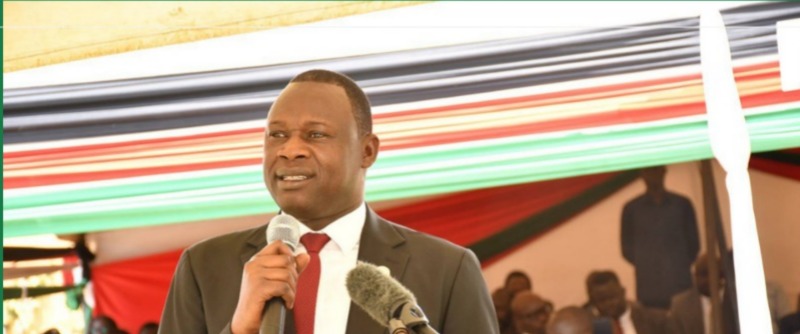
    Speaking in an interview, immediate former Commissioner General for the South Sudan Revenue Authority William Anyuon Kuol noted that investing in an electronic cargo tracking system will help modernise border monitoring, address customs challenges, and ensure legal import compliance across all entry points.

    William Anyuon Kuol

    So far, Kenya, Rwanda, Tanzania and Uganda are in the process of rolling out an integrated customs management system to provide an end-to-end digital cargo clearance process across the East African region.

    “Automated systems have dramatically reduced processing times, eliminated manual bottlenecks, and increased accountability in document issuance across all service centres,” said Kuol.

    The South Sudan revenue authority is also investing in a state-of-the-art automated system to enlist more taxpayers and allow traders and clearing agents to make declarations, query entry statuses, and pay duties online in a seamless manner.

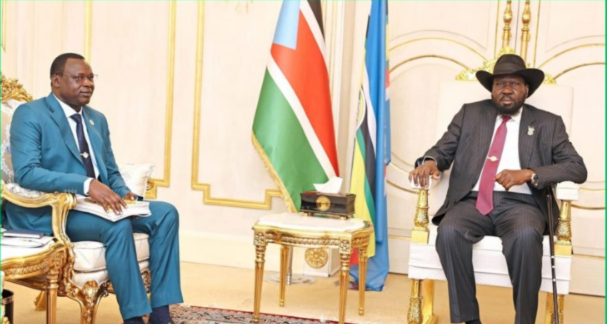
    South Sudan President Salva Kiir (R) with former Commissioner General for the South Sudan Revenue Authority William Anyuon Kuol (L)

    Kuol, who is a former minister for trade in South Sudan, said the establishment of a dedicated SSRA station at the Malaba border crossing, enhancing oversight of goods entering and exiting the country, has boosted cargo monitoring systems and manifest controls.

    Further he highlighted these reforms have resulted in increased customs revenue collection and more secure trade routes, protecting both national interests and legitimate traders.

    The East African Community and other development partners are working with the Ministry of Finance in South Sudan to construct a modern inland customs clearance stop area through a public-private partnership.

    The 10 million Euros facility at the Nimule border town will help create dedicated zones for efficient cargo processing and inspection.

    The one-stop border post is expected to break ground in July this year, improving trade ties between Uganda and South Sudan.

    “Infrastructure modernisation supports South Sudan’s integration into regional trade networks, reducing congestion and enhancing cross-border commerce efficiency” he noted.


  • Waiguru begins investor onboarding for Sagana Industrial Park ahead of commissioning

    Waiguru begins investor onboarding for Sagana Industrial Park ahead of commissioning

    Kirinyaga County Government has started process of onboarding investors who have expressed interest in setting up industries at the Sagana Industrial Park. 

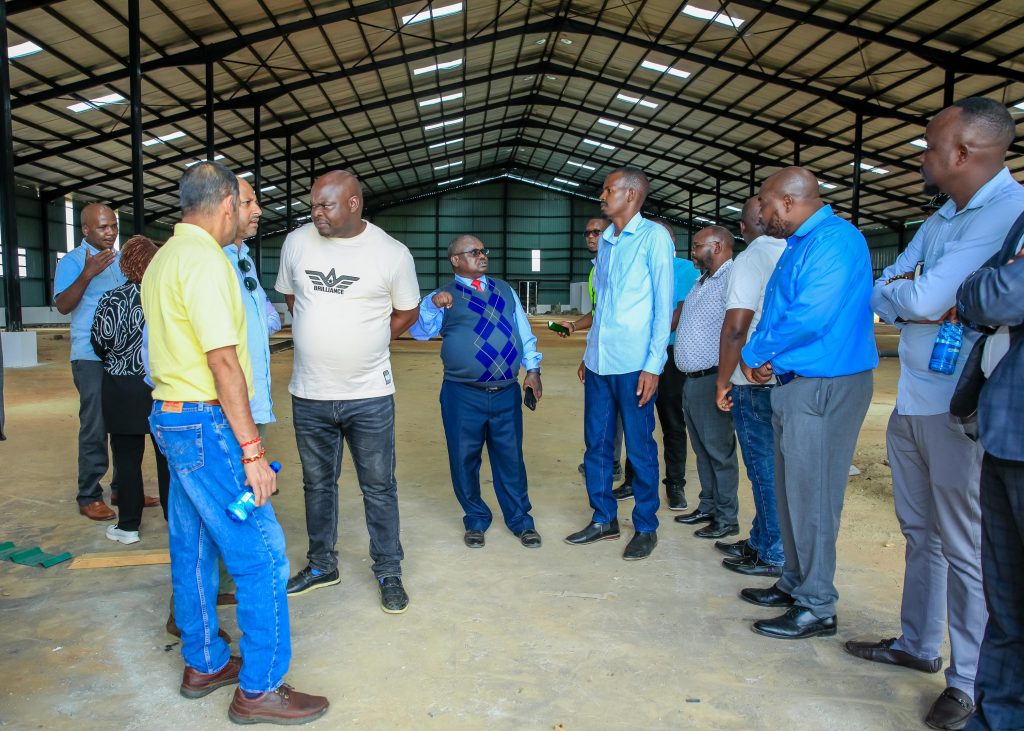
    On Thursday, representatives from 13 companies that have committed to set up factories together with officials from Export Processing Zones Authority (EPZA) toured the facility.

    County Executive Committee Member for Cooperatives, Trade, Tourism, Marketing, Industrialization and Enterprise Development, Calbert Njeru who received the officials at the facility, expressed optimism that the onboarding process would be completed by the end of June.

    “The investor onboarding process is fast approaching and today we hosted another team from EPZA to take our investors through the process after they showed interest in investing in Sagana,” he said.

    Njeru noted that the county had made significant progress in putting in place infrastructure required to support industries at the facility.

    “In terms of infrastructural development we are at 90 percent. The road tarmacking will be done and a contractor has already been awarded the tender. For water, the Governor has already committed resources to ensure there is enough supply while electric power is already on site,” he added.

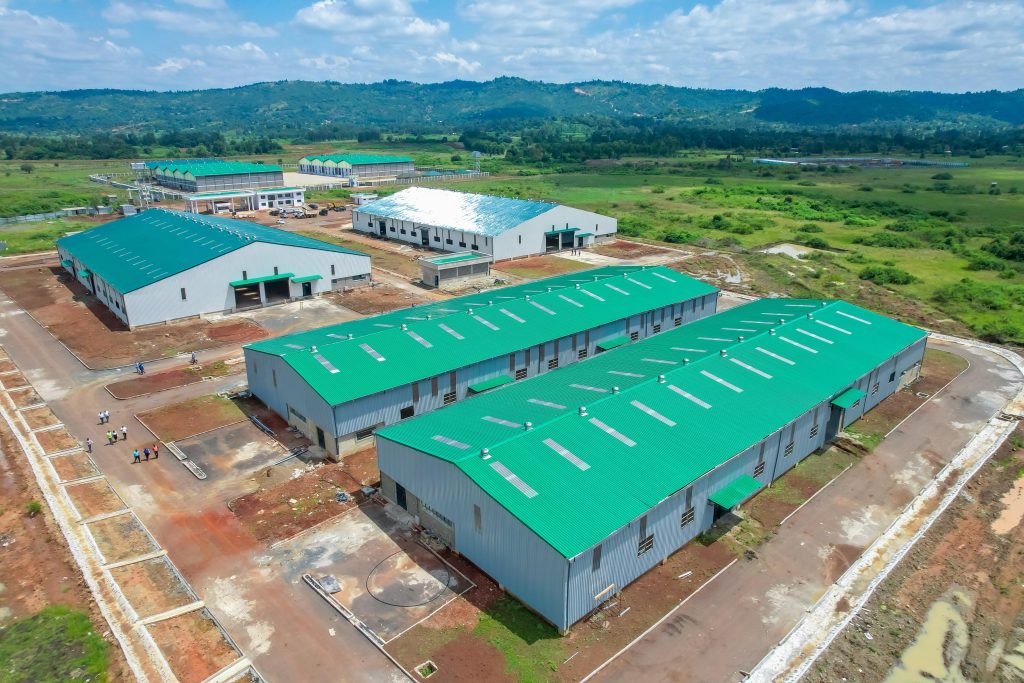
    Governor Anne Waiguru said the County Aggregation and Industrial Park (CAIP) and Export Processing Zone (EPZ) facilities at the park are now at 90 percent completion as investor onboarding officially begins.

    Construction of eight warehouses; two for cold rooms, two for aggregation and four for value addition is already complete.

    “Everyone is excited and we can all see that the Industrial Park is developing at a very fast rate. This is what we call tangible development,” she said.

    The Governor said the facility, located within the Sagana Agro-Industrial City, which is a designated Special Economic Zone (SEZ) will create jobs and open new markets for farmers by linking agricultural production to processing and manufacturing.

    “Once complete, this industrial park will directly employ over 10,000 youth while an additional 100,000 others will benefit indirectly from selling their produce here and offering associated services,” she added.

    Waiguru said the project is one of the county’s flagship economic transformation initiatives and will play a central role in strengthening Kirinyaga’s agricultural economy and positioning Kirinyaga as an emerging manufacturing and agro-processing hub in the region.

    “The industrial park will attract investors who will establish agro-processing factories at the facility, creating a reliable market for local farm produce and boosting incomes for farmers across the county. Other investment opportunities include logistics, packaging, warehousing and other industrial activities linked to the facility,” she said.

    EPZA Acting General Manager for Investment and Corporate Communication, Moses Kipkebut, said 13 investors from different sectors had already shown interest in setting up operations at the Sagana EPZ.

    “Today we have come here to meet our investors who have shown interest in the Sagana EPZ and onboard them as quickly as possible in anticipation of its commissioning by President Ruto soon,” said Kipkebut.

    Kipkebut said Sagana had a competitive advantage over many EPZs in the country due to its strategic location and strong agricultural base.

    “Sagana EPZ has several advantages as compared to other EPZs including proximity to Nairobi and the airport especially for fresh agro-processing. It is also located in one of the leading horticultural regions in Kenya while availability of water and improved infrastructure gives it an added advantage,” he added.

    He further noted that investors setting up at the facility would benefit from attractive tax incentives under the EPZ programme.

  • Ruto launches Coast tour with issuance of 33,000 title deeds

    Ruto launches Coast tour with issuance of 33,000 title deeds

    President William Ruto began a five-day extensive development tour of the Coast region on Thursday morning by issuing more than 33,000 title deeds.

    The land documents were given to Coast residents from Lamu, Tana River, Kilifi, Mombasa, Kwale and Taita-Taveta counties at Mama Ngina Drive, Mombasa County.

    The titles are for pieces of land in Kilifi/Weru Ranch, Mwele Simakeni, Msabaha, Ka Dzandani, Wachu Kordentu and the Ronge Juu Registration Unit.

    “Today, we are here to address the challenge of squatters, citizens who live in fear of being evicted. It is a commitment I made and it is a commitment I intend to keep,” the President said.

    Present at the function were Deputy President Kithure Kindiki, Senate Speaker Amason Kingi, Cabinet Secretaries Ali Hassan Joho (Mining) and Salim Mvurya (Sports), Governors Abdulswamad Sheriff Nassir (Mombasa), Gideon Mung’aro (Kilifi), Fatuma Achani (Kwale), Andrew Mwadime (Taita-Taveta), and Dhadho Gaddae Godhana (Tana River), MPs and MCAs were present.

    In the past three years, President Ruto announced 1.5 million title deeds have been issued across the country, with 381,000 deeds to residents at the Coast to address historical land ownership challenges.

    Additionally, he said the government is processing an additional 200,000 title deeds in different parts of the Coast region, which will be ready in the next 90 days, benefiting more than one million residents.

    “One million residents will be issued with title deeds. They will stop being squatters and become landowners,” he said.

    To achieve this, President Ruto directed the Ministry of Lands to speed up the sub-division and adjudication processes so that every deserving beneficiary can receive their rightful piece of land.

    He explained that the Government has successfully negotiated with absentee landlords and acquired several parcels of land across the Coast region that will help in resolving long-standing disputes and settling affected families.

    He cited the case of Ronge Juu in Taita Taveta, which was established in 1969, saying families there have waited for nearly 60 years for formal recognition and ownership documentation.

    As part of the Government’s efforts to promote orderly land ownership, President Ruto explained, ongoing land adjudication processes are underway in various parts of Coast region, including Vigurungani, Mtaa, Mazola, Chengoni, Bofu, Gandini, and Kitengwani.

    He also announced that adjudication of land is also going on in Mihirini, Mwembe Kati, Tsangalaweni, Kalia Ngombe, Viragoni, Godoma, Ngoroki, Chawia, and Mu Mari, among others.

    “This exercise is aimed at identifying, demarcating and documenting land rights and is expected to result in the issuance of more than 55,000 title deeds,” he said.

    At the same time, he said the Government is strengthening the registration of community land to protect communal heritage and secure the rights of local communities, with six units already formalised in Taita-Taveta and Tana River counties, and a further nine are being processed acros the region.

    Through deliberate interventions, he said the Government has negotiated and acquired strategic parcels of land in Kwa Punda in Changamwe (Mombasa) benefiting 8,500 people; Junda in Kisauni (Mombasa) benefiting 12,000 people; Gazi in Msambweni (Kwale) benefiting 3,000 people; Gombato in Kwale County, benefiting 7,000 people; Shambani in Msabaha (Kilifi) benefiting 11,000 families; Ganda in Malindi benefiting 9,000 families; and Takaungu in Kilifi benefiting 2,000 families.

    “We have also finalised negotiations to acquire additional land in Mashamasha (Lamu), benefiting 2,000 families; Migingo in Malindi, benefiting 4,000 families; and three separate locations in Likoni (Mombasa) benefiting 356 families.

    “Additional land has also been secured in Junda, Utange, and Bombo in Kisauni and will benefit 2,100 families,” he said.

    The President said the Government is engaging landowners in Kagaa and Kiwandani (Kilifi); Machungwani (Taita-Taveta); Parbat and Waa (Kwale); Kitangale and Kibusu (Tana River); and Zumzum, Thathini, Ali Dina, and Kwa Bulo (Mombasa), among others, to facilitate the settlement of squatters.

    The President commended absentee landlords for agreeing to resolve the land issue through dialogue.

    “We all agreed the solution will not be achieved through court battles but through dialogue,” he said.

    The President explained that land should never be a source of perpetual conflict, but a source of prosperity.

    “It should create jobs, attract investment, strengthen communities and expand opportunity,” he said.

    Prof Kindiki noted that the land ownership challenge was among the promises President Ruto had made to the people of the Coast.

    “Today, we are here not to ask the land question but to provide the land answer and the land solution,” he said.

    Joho said lack of title deeds has been a challenge for a long time, leaving residents in constant fear of eviction.

    Mvurya recalled that addressing the land ownership challenge was among the top priorities of the Kenya Kwanza administration, a commitment the government has delivered on.

    Kingi said President Ruto has demonstrated commitment to addressing the various challenges facing the people of the Coast.

    He said the region has many challenges but the land ownership tops the list.

    Mr Mung’aro said land ownership issues had remained unresolved for decades despite repeated campaign promises over the years.

    He said the Government was now implementing concrete measures to address the historical injustices that have been ignored for far too long.

    Governor Achani thanked the President for addressing the land challenges, noting that it was regrettable residents of the Coast have been living as squatters.

    Governor Nassir said no other administration has made deliberate efforts to address the land question at the Coast as President Ruto’s is doing.

    He noted that 30 per cent of the title deeds issued in the past three years of the Kenya Kwanza administration have been given to the people at the Coast.

    “This is not a normal political meeting. This is a meeting in which we are delivering on the promises that had been made,” he said.

    He went on: “Today, the President is not here to make promises. He has come to inform you that he has delivered on the promise he made to you.”

    Governor Nassir said the partnership between the Orange Democratic Movement and United Democratic Alliance and Kenya Kwanza would continue delivering title deeds, universal healthcare and water projects for the benefit of wananchi.

    “We are united for a cause,” he said.

    Governor Godhana urged President Ruto to continue resolving land ownership challenges, saying the initiative has the support of leaders in the region.

    On his part, Governor Mwadime said: “We have not witnessed a meeting of such magnitude convened to address the long-standing land challenge.”

    Kilifi North MP Owen Baya said the people of the Coast will support President Ruto’s re-election bid because of his development track record, citing the issuance of title deeds.

    Tana River Women Representative Amina Dika said issuance of title deeds is not the only promise the President has kept, saying he has also fulfilled pledges on non-discriminatory provision of national identification cards, which has been a challenge in the region.


  • AU calls for renewed global solidarity on Africa’s peace, security challenges

    AU calls for renewed global solidarity on Africa’s peace, security challenges

    The African Union (AU) has called for renewed multilateral solidarity in responding to Africa’s evolving peace and security challenges, in line with the principles enshrined in the recently signed Joint Cooperation Framework between the AU and the UN in Addis Ababa.

    Speaking at the 4th AU–UN High-Level Retreat in Libreville, the Chairperson of the African Union Commission Mohamoud Youssouf observed that the effectiveness of preventive diplomacy, mediation, and conflict resolution mechanisms is increasingly being tested amid growing strains on the multilateral system.

    The Chairperson further highlighted developments in the Strait of Hormuz, noting their potential implications for African economies with broader economic stability.

    He reiterated the importance of advancing reforms of the international financial architecture to better respond to Africa’s development priorities and aspirations.

    The Chairperson expressed concern over the constraints posed by limited resources on the effectiveness of multilateral institutions, underscoring the need for strengthened cooperation and enhanced coordination between the AU and the UN in addressing shared continental and global challenges.


  • Rachel Ruto highlights need for greater Autism support in Kenya

    Rachel Ruto highlights need for greater Autism support in Kenya

    First Lady, Rachel Ruto has commended efforts by the Asyl Miras Center for children living with autism in promoting inclusion, raising awareness about autism, reducing stigma and equipping professionals with specialised skills to support children with Autism Spectrum Disorder (ASD).

    Speaking when she visited the center in in Astana, Kazakhstan, Mama Rachel acknowledged the institution’s comprehensive approach to supporting children with Autism Spectrum Disorder and their families noting that Kenya has a lot to learn from this model.

    “The work being done here is inspiring. Kenya has a lot to learn from this model, particularly in ensuring that children living with autism and their families receive accessible, dignified and professional support,” said Rachel Ruto.

    The First Lady, who champions children’s welfare initiatives in health and education, toured the centre during the State Visit to Kazakhstan alongside President William Ruto. Earlier, she had joined the President at a State Ceremony held at the Independence Palace in Astana.

    The Asyl Miras Center provides equal access to intervention services for families regardless of their region or income level. More than 300 educators and specialists at the facility work to improve the quality of life of children with autism and their families through tailored rehabilitation and developmental programmes.

    She noted that children participating in the intervention programmes had demonstrated significant progress, with many recording an average two-fold improvement in skills development.

    The Asyl Miras centres are designed as multifunctional institutions where children and their parents receive holistic care from trained professionals. Each rehabilitation programme runs for five and a half months, with every centre capable of supporting up to 180 children at a time free of charge.

    Speaking during the visit, Asyl Miras Center Chief Executive Officer Ainur Karbozova said the institution’s goal is to ensure children with autism can fully participate in society.

    “We want to help children with autism spectrum disorders to socialise and live fully. Our foundation aims to provide world-class rehabilitation programmes for them in Kazakhstan. Therefore, we work with the world’s leading specialists in rehabilitation,” she said.

    The centre was established in 2014 by Kazakhstani entrepreneur and philanthropist Bulat Utemuratov under the Bulat Utemuratov Foundation, now regarded as one of Kazakhstan’s largest private charitable foundations.

    With a strategic focus on healthcare, education, culture, environmental protection and social infrastructure, the Foundation has invested more than USD 240 million in charitable initiatives benefiting hundreds of thousands of people across Kazakhstan.

    Its flagship programme, Autism: “One World for All”, has expanded to 13 Asyl Miras autism centres across 12 cities in Kazakhstan, supporting more than 17,000 children and their families since its launch.

    In 2025, the European Business Association in Kazakhstan (EUROBAK) recognised the Foundation for its large-scale autism awareness campaign conducted as part of the United Nations-designated Autism Awareness initiatives.

    She also toured the Alem.AI Centre in Astana to appreciate the remarkable work being undertaken for protection of children on artificial intelligence and digital threats.

    Kenya has taken deliberate steps to strengthen national AI capacity, foster innovation, and learn from global leaders in the field.

    The visit comes just a week after the Africa Forward Summit in Nairobi, where African First Ladies led by the Mama Rachel called for a collective societal approach to safeguarding children in digital spaces and in an increasingly AI-driven world.

    “Digital safety for the African child must be prioritised. As digital transformation continues spreading across Africa, the safety of the continent’s children remains under threat,” Mama Rachel said during the summit.

    Autism, or Autism Spectrum Disorder

    Autism, also known as autism spectrum disorder (ASD), is a condition characterized by differences or difficulties in social communication and interaction, as well as a need or strong preference for predictability and routine, sensory processing differences, focused interests, or repetitive behaviors.


  • Kenya, Kazakhstan forge new trade, investment partnership during Ruto state visit

    Kenya, Kazakhstan forge new trade, investment partnership during Ruto state visit

    Kenya and Kazakhstan have pledged to turn trade and investment ties into concrete commercial partnerships that help in driving prosperity of the two nations.

    Presidents William Ruto and Kassym-Jomart Tokayev on Wednesday laid out a roadmap for trade, energy, logistics and technology cooperation during a business forum at the Astana International Financial Centre.

    Government and business leaders of both countries agreed that boardroom talks should now translate into tangible outcomes that benefit the people.

    President Ruto told the forum that the world is being reshaped by shifting trade corridors, supply chain diversification, energy transition and rapid technological change.

    Due to this shift, he said, countries offering market access, policy stability and strategic connectivity would become preferred destinations for capital.

    “Kazakhstan stands today as the largest economy in Central Asia and an increasingly important bridge into Eurasia,” he said.

    He went on: “Kenya, on its part, has established itself as East Africa’s leading commercial, logistics, financial, and innovation hub.”

    President Ruto, who is on a two-day State Visit to Kazakhstan, is accompanied by First Lady Rachel Ruto, Prime Cabinet Secretary and Foreign Affairs Cabinet Secretary Musalia Mudavadi, Cabinet secretaries William Kabogo (ICT and Digital Economy) and Lee Kinyanjui (Investment, Trade and Industry), among other top government officials.

    Pitching Kenya as a premier investment destination, President Ruto noted that the country provides access to a market of more than 300 million people iin the East African Community and over 1.4 billion consumers under the African Continental Free Trade Area.

    “Kenya and Africa were once spoken of as markets of future promise. Today, we are the growth frontier of our time,” he said, stating that the two nations can build a new economic bridge between Africa and Central Asia, powered by trade, industrialisation, innovation, and shared prosperity.

    To anchor the relationship with Kazakhstan, he announced that Kenya would open a consular-general office in Astana, and progress it to a full-fledged embassy next year to anchor the growing ties between the two nations.

    President Ruto described Kenya’s energy and digital sectors as huge opportunities for Kazakh investors, pointing out that 93% of the country’s electricity grid comprises renewable energy.

    He explained that Kenya aims to expand generation capacity to 10,000MW by 2030.

    “This is opening major opportunities across geothermal development, transmission infrastructure, battery storage systems, smart grids, industrial power solutions, green hydrogen, electric mobility, and climate-smart manufacturing,” he noted.

    President Ruto said Kenya could learn from Kazakhstan’s expertise in uranium processing and peaceful nuclear energy use as it advances its long-term energy security and industrialisation agenda.

    On agriculture, President Ruto said the two countries have complementary strengths, pointing out that Kazakhstan brings advantages in grain production, dependable fertiliser value chains and large-scale farming, while Kenya offers globally renowned tea, coffee, horticulture and fresh produce.

    “We can build resilient food systems through irrigation cooperation, fertiliser production, agro-processing, commodity logistics, and export-oriented value chains serving African and Eurasian markets,” he explained.

    He also highlighted Kenya’s competitive edge in fintech and digital innovation, stating that Nairobi has emerged as Africa’s Silicon Savannah, with M-Pesa and the wider fintech ecosystem transforming financial inclusion.

    Further, he said, Kenya is rolling out “one of Africa’s most ambitious digital superhighway programmes”, including nationwide fibre optic expansion and digitisation of government services through the e-Citizen platform.

    Additionally, the President pointed to potential cooperation between the Astana International Financial Centre and the Nairobi International Financial Centre to facilitate cross-border investment and infrastructure financing.

    On his part, President Tokayev welcomed the push for deeper ties and proposed the establishment of a bilateral business council focused on trade and investment.

    He also announced plans to dispatch trade missions to scout for new opportunities.

    “To streamline engagement, Kazakhstan will create a dedicated business unit to serve as the focal point for handling trade and investment matters between the two countries,” President Tokayev said.

    Technical experts, he pointed out, would be deployed to support upgrades in logistics and transport systems, and an intergovernmental council would be formed to address outstanding issues.

    To boost Kenyan exports, Kazakhstan plans to set up a centre to promote tea, coffee, flowers and other goods.

    He said Kazakhstan offers a direct gateway to Eurasia and is keen to leverage the ports of Mombasa and Lamu to optimise exports into Africa.

    Aviation, Presidents Ruto and Tokayev said, is a key priority, and both leaders called for direct air cargo and passenger routes between Nairobi and Astana under Kazakhstan’s open skies policy.

    President Ruto urged business leaders to move “beyond dialogue to deal-making; beyond networking to investment; and beyond ambition to transformative partnerships that create jobs, expand industries, and unlock long-term growth”.

    He said Kenya’s modernisation programme is expanding energy, roads, railways, ports, airports and digital connectivity, while repositioning infrastructure as an “investable asset” through public-private partnerships and the National Infrastructure Fund.

    “Kenya is not simply inviting trade. Kenya is inviting a long-term strategic partnership,” President Ruto said.

    President Tokayev said Kenya can take advantage of Kazakhstan’s open air policy to establish air connectivity between the two countries.

    The forum brought together senior officials, investors and business executives from both countries that are keen on building on the agreements signed during President Ruto’s visit and eventually link Africa’s fastest-growing markets with Central Asia’s industrial base.

    Meanwhile, President Ruto visited Alem.AI Centre in Astana, an international centre dedicated to artificial intelligence research, education, start-ups and government applications.

    He also toured the Kazakhstan National Space Centre, which will forge links with Kenya’s Space Centre in Malindi.