Author: Beth Nyaga

  • CS Bore urges youth to embrace online development programs

    CS Bore urges youth to embrace online development programs

    Young people have been urged to take advantage of the opportunities presented by the National Online Employment Skills Development Programme, an initiative that bridges the gap between employment and education.

    Ministry of Labour and Social Protection Cabinet Secretary Florence Bore said the program demonstrates the government’s commitment to empowering the youth with skills aimed at enhancing their economic participation in the country’s economy.

    She said there is a need for young people to join the program as it will enable them to exploit information technology to pursue economic opportunities.

    “I hope this program will inspire many to join the online gig economy as gig workers or freelancers,” said Bore.

    The CS said the program which is an innovative initiative of the Ministry of Labour and Social Protection, State Department for Labour and Skills Development, in collaboration with the Ajira Digital program driven by the Ministry of Information, Communications and The Digital Economy is designed to bridge the gap between education and employment.

    It is also aimed at equipping young people, especially persons with a disability with the requisite skills and competencies which is the backbone of today’s evolving job market.

    The CS who was speaking virtually during the virtual launch of the National Online Employment Skills Development Programme at the NSSF building said the government is providing individuals with the tools, training, and opportunities they need to succeed.

    She added that the program is a significant milestone in the government’s effort to build a highly skilled and future-ready workforce.

    “We are empowering them to shape their own futures and contribute meaningfully to the economic growth of our nation,” said Bore while affirming that the program has attracted over 2000 young people across the country. 

    She further added that the gig economy has grown, transforming the labour market towards more accessible, competitive, and consistent job opportunities over the last decade, which she noted has the potential to reduce the unemployment that has affected the youth.

    According to the Kenya National Bureau of Statistics 2021, the unemployment rate is 6.6 percent indicating that age groups of 20–24 and 25–29 continued to record the highest proportion of unemployment, while in the long-term unemployment rate, which was 3.9 percent, youth aged 20–24 still have the highest rate of long-term unemployment at 13.5 percent.

    The survey also lauds the Judiciary for offering opportunities to over 110,476 young people who have been linked to work in the private sector thereby addressing the challenges faced by both job seekers and employers thereby creating a win-win scenario that fosters sustainable growth and prosperity for all.

    Ajira program also focuses on empowering the youth with Skills Assessment and Gap Analysis, Apprenticeship and internship opportunities, and Job Placement and Career Services through their career development journey.

    In his remarks, the Principal Secretary State Department for ICT and the Digital Economy, Eng. John Tanui, in a virtual presentation by Ms. Priscilla Maina, Assistant Director State Department of Digital Economy, said the Ajira Digital Program was instituted in 2016 with the aim of ensuring one million young people, 70 percent of whom are young women, access digital and digitally-enabled jobs annually.

    “Today there are over 400 Ajira youth empowerment centers across the country where young people can access free computers, internet, and working space to work and earn online,” said the PS.

    He added that the government has also established over 114 Ajira clubs institutionalized in universities and Technical and Vocational Education and Training institutions, to equip young people in higher learning institutions with digital skills.

    “We have trained and mentored over 321,000 young people on the Ajira Digital Curriculum, 33 percent of who are already working online,” said Eng. Tanui.

    In his remarks, Geoffrey Kaituko, Principal Secretary State Department for Labour and Skills Development, said the program targets youth, among them people with disabilities, especially youth with hearing and visual impairments.

    “This program will be delivered through e-learning. However, youth with disabilities shall be trained through face-to-face methodology,” said Kaituko,

    He added that beneficiaries of the program will also be trained in data management, transcription and content writing owing to the high demand for data management in the online gig economy.

    The Ministry of Labour and Social Protection, in close collaboration with the Ajira Digital Program under the Ministry of Information, Communications and The Digital Economy, Kenya Private Sector Alliance, the eMobilis Technological Training Institute, the Mastercard Foundation, and Konza Technopolis, will collaborate to ensure the success and widespread reach of the Program across the country.

  • Mutindwa Market razed down in dawn inferno

    Mutindwa Market razed down in dawn inferno

    Property of unknown value has gone up in flames at Makadara’s Mutindwa Market.

    Traders say the inferno which sparked off at 2 am at a stall spread fast to adjacent structures and soon engulfed the entire market.

    The fire brigade from Nairobi County arrived at the scene but nothing could be salvaged.

    Traders say the fire could have been contained had more effort been put into the response.

    Embakasi West Member of Parliament Mark Mwenje who visited the market called for a speedy probe into the inferno and challenged the Nairobi County Assembly to debate the recent fire incidents that have been occurring in various markets within the county.

    Mwenje said traders must be assisted to rebuild, even as he appealed for calm as police investigate the cause of the Wednesday dawn inferno.

  • Ruto: Connectivity vital for creative economy

    Ruto: Connectivity vital for creative economy

    President William Ruto has said the Government is committed to enhancing the digital superhighway to create opportunities for content creators to make a living.

    The President said the government is looking to set up 25,000 free WiFi hotspots around the country to improve Internet access and give young people access to the digital superhighway.

    The President revealed Google is supporting the setup of the hotspots.

    “I appreciate Google’s support in enhancing the digital superhighway and creative economy pillar of our transformational agenda. In particular, for your support for our plan to provide free Wi-Fi hotspots across the country.”

    The President was speaking during the closing ceremony of YoutubeBlackVoices, a fund designed to grow the presence and talents of black content creators across the world, including Kenya.

    The Head of State also noted that the number of YouTube channels had grown exponentially.

    “The number of YouTube channels in Kenya with over 1 million views has grown by 110 per cent in the last year proving our capacity for creative content generation is enough to generate livelihoods and become an economic sector.”

    Over 90 government institutions including TVETs, hospitals, and law courts will also be connected to the Internet imminently, he added.


  • ODPP: 65 persons rescued from Shakahola should be forced to eat

    ODPP: 65 persons rescued from Shakahola should be forced to eat

    The Prosecution is seeking a court order for 65 persons rescued from Shakahola forest to be detained at the Shimo la Tewa Prison and forced to eat after they staged a hunger strike.

    The men and women, who were rescued while in poor health condition, have been undergoing counseling at a rescue center in Mtwapa.

    Senior Principal Magistrate Joe Omido heard that they staged a hunger strike last week hence threatening to starve themselves to death.

    The state also produced a charge sheet in court, where 38 women and 27 men were accused of attempted suicide. However, they were not required to take a plea with the state asking the court to make further direction later.

    Senior Principal Prosecution Counsel SPPC Jami Yamani and Principal Prosecution Counsel (PPC) Juma Victor Owiti asked Omido to issue an order directing the medical officer in charge of Shimo la Tewa prison to forcefully feed the victims.

    Jami submitted that the victims were taken to hospitals after they were rescued emaciated with some almost dying and have undergone counseling by trained DCI officers.

    The two senior prosecutors said the rescue centers, where they have been held have no capacity to hold them anymore due to the hunger strike.

    The prosecution further submitted that detaining the Shakahola survivors inside the highly guarded prison would enable the investigators to treat them as both victims and suspects.

    The court was also asked to order that each of the 65 suspects be subjected to a mental health assessment by a qualified psychiatrist and that the report be filed in court.

    Jami and Owiti further told the court that at the prison facility, the group will be forcefully fed without being tortured or their rights breached adding they need to be in an environment where they can be examined medically and report filed in court and shared with the investigators

    The court will rule Thursday whether it will grant the state application to have the suspects held at the Shimo la Tewa prison or not. 


  • Kajiado County bans livestock ferrying to curb theft

    Kajiado County bans livestock ferrying to curb theft

    Kajiado County Commissioner Felix Watakila has banned the transportation of livestock without a movement permit to curb cases of livestock theft that have been rampant in the county.

    Speaking during a security meeting with the chiefs and security officers in Kajiado, Watikila noted that the government is keen to ensure that the residents and all their property are secure.

    “No one will be allowed to ferry livestock without a movement permit as we have ascertained that the livestock thieves ferry the stolen livestock using trucks to different destinations,” he said.

    The county commissioner revealed that so far, 12 cases of cow theft have been reported in Mashuuru, whereby 10 of the suspects have been apprehended and their cases prosecuted in court.

    In Isinya sub-county, 13 cases were reported, while 10 suspects have been arrested and their cases are in court.

    “Some livestock owners take much time to report livestock theft cases, which in turn becomes difficult for the police and security officers to trace and arrest the suspects and I call upon Kajiado residents to report such cases as soon as they happen for immediate action,” he said.

    Watakila added that they noted that most livestock theft cases are between the residents, either by immediate family members, relatives, or employees.

    The county commissioner also cautioned area chiefs and individuals who negotiate with the court to drop charges of certain suspects saying it was against the law.

    “We are not working with issues to do with clans and tribalism, when a livestock suspect is related to the chief in any way, the chief issues orders to the Officer Commanding Station to release them.     Any chief who will be involved in such a situation will be terminated from the office with immediate effect”, warned Watakila.

    He added, “It is also unfortunate that individuals are turning this into a business venture, whereby the suspect is forced to pay five cows for each cow that he had stolen in an out-of-court settlement. This practice is sabotaging our efforts in the fight against livestock theft as the suspect will be released immediately and he will continue stealing from others,”.

    Livestock theft cases have been rampant in Kajiado County for the past three years, where residents decry that livestock thieves are rendering them poor by stealing all the sheep or cows they find in a homestead at night.

  • Shakahola Cult: 19 more bodies exhumed as death toll hits 303

    Shakahola Cult: 19 more bodies exhumed as death toll hits 303

    19 more bodies have been exhumed from Shakahola forest in Kilifi County bringing the death toll to 303.

    Coast Regional Commissioner Rhoda Onyancha said the 93 DNA samples had been taken from relatives of victims looking for their missing persons.

    Onyancha said the number of those rescued stands at 95 while those who have been reunited with their families are 19.

    A total of 613 people have been reported missing while the number of those identified by families stands at 19.

    The exhumation process continues tomorrow.

  • Organizations breaching the Data Protection Act to be fined Ksh 5M

    Organizations breaching the Data Protection Act to be fined Ksh 5M

    Organizations using individuals’ personal data for their benefit risk arrest and prosecution for breaching the Data Protection Act of 2019.

    The Office of Data Protection Commission (ODPC), Commissioner Immaculate Kassait, warned those breaching the Act by using individuals’ data without their consent risked Ksh 5 million fine or six months imprisonment, or both.

    Kassait made the remarks in a speech read on her behalf by Rose Mosero, Deputy Data Commissioner-In-Charge of Enforcement and Compliance, during a sensitization forum on Data Privacy and Protection Act 2019 in Kirinyaga County.

    Kassait said people should give consent before their personal data is used by organizations, individuals, or any group in Kenya and outside the country, adding those handling personal data must be registered with the Commission.

    She appealed to County Commissioners and other law enforcement officers, to assist her office in identifying individuals or organizations breaching the Act for the office to take action.

    “The categories allowed to manage personal information should be registered with (ODPC), they are data controllers and data processors,” she said.

    She said that since the Commission was established in November 2020, they have received more than 2, 800 claims from people who feel their data was wrongfully handled.

    Kirinyaga County Commissioner, Tobiko Nayioma, further warned the public to be aware of what they post on social media platforms because, in social media, information is treated as if subjects have consented.

    He said some social media information was sensitive but the public was not taking it seriously since even international organizations may use it for bad intentions.

    Members of the public lamented that Betting companies and Financial Apps were abusing their Data Protection Act rights since they received messages from these organizations even when they did not sign any documents with them.

    The Public was at the same time advised to report any organization misusing their information, even religious ones since the government will not act where there was no complainant.

    Religious leaders said that they should be given an exemption on registration fees since some of their groups were too small to raise Ksh 4,000 annual fee.

    Currently, the officers from the Data Commission are conducting sensitization forums in different parts of the country.

  • Community conflict on the rise due to drying Ewaso Nyiro River tributaries

    Community conflict on the rise due to drying Ewaso Nyiro River tributaries

    Illegal water abstraction, pollution, and unsustainable farming practices are some of the issues attributed to community conflicts arising from the drying of tributaries that feed the 700km Ewaso Nyiro River which feeds drains into the Lorian Swamp.

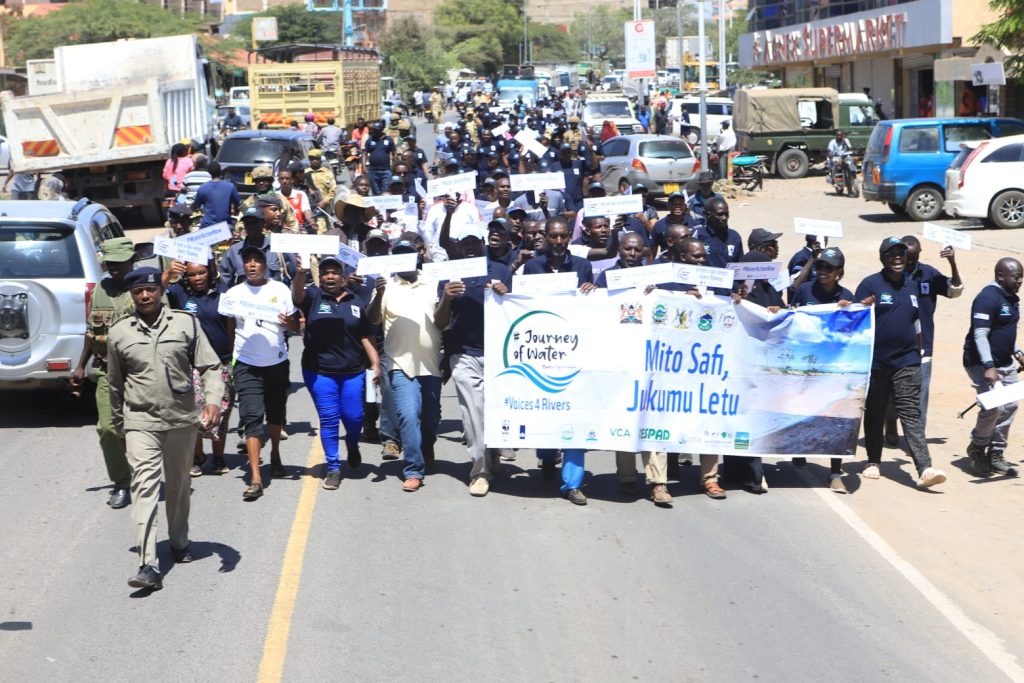
    This was my discovery when I joined a group of over 500 men and women on a grueling three-day walk aimed at sensitizing communities on the conservation of the water catchment.

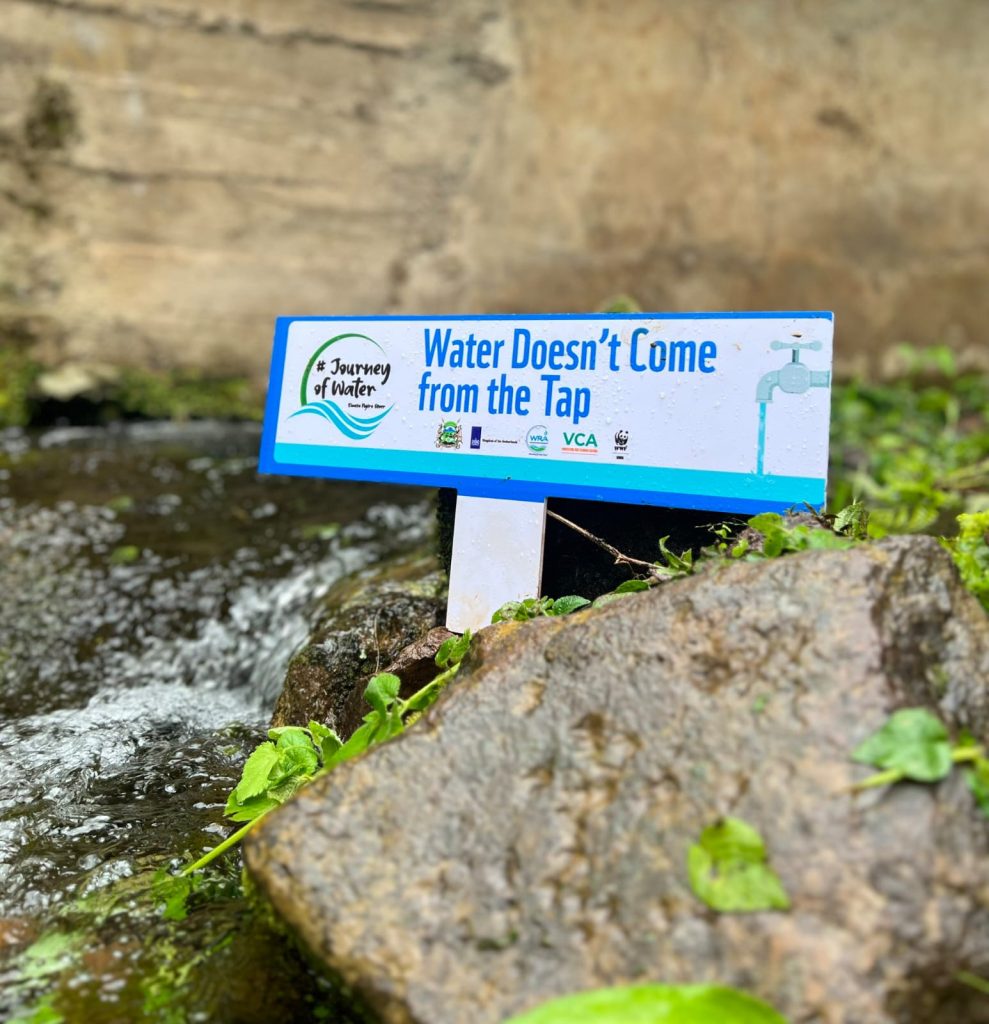
    Many of the community members participated in the walk that was organized by WWF-Kenya with support from the Netherlands Embassy in Kenya through a project dubbed ‘Catchment to Tap’.

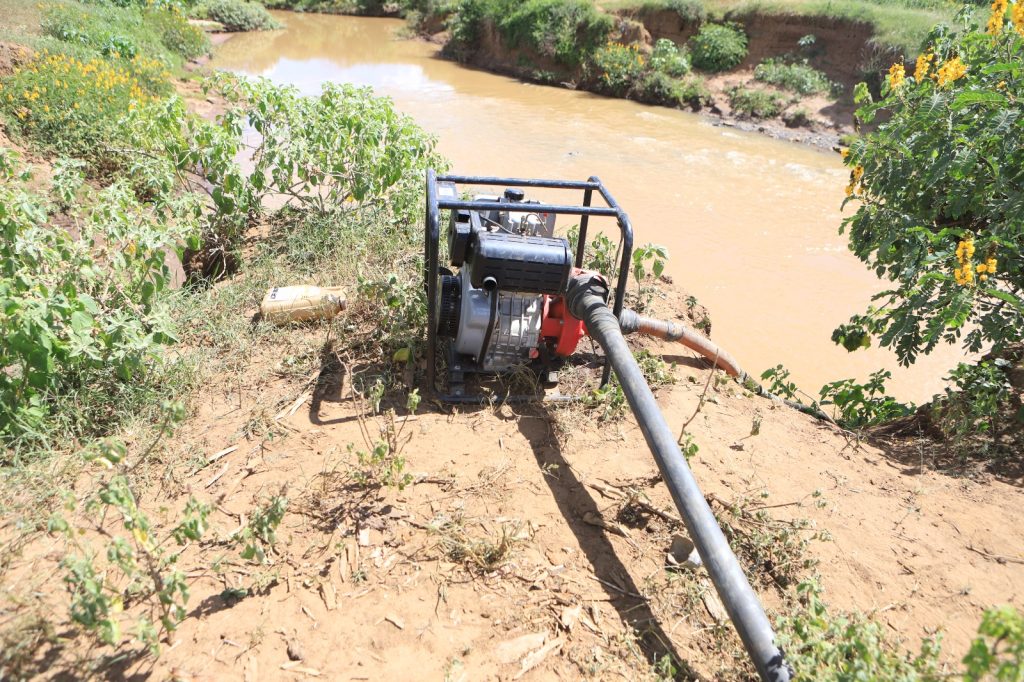
    A water pump used in abstraction. PHOTO | WWF-KENYA | IMAGE: HANDOUT

    Along the tributaries which include Timau, Nanyuki, and Isiolo rivers, I noted that there were uninhibited human activities posing the greatest danger to the ecosystem.

    In some instances, some of the farmers we met during the over 20 Km walk along the different tributaries ducked into the thickets while others hurriedly disconnected their illegal water connections, perhaps to hide their unscrupulous ways.

    Alarmed by the number of illegal pumps, I spoke to an official of the Water Resource Authority who requested anonymity due to the sensitivity of the matter, to gain more understanding of the obtaining situation.

    The source confirmed that WRA is fully aware of the illegal abstractions but quickly pointed out that the land owners who are the culprits, are “well-connected.”

    “If you try and enforce the law on this class of people, they ask you if you know who they are. It gets extremely difficult to control them. We are now asking for a collective approach where we have civil societies, River User Associations (RUAs), County Government, and the National Government coming together to enforce the regulations,” the source told me

    According to the WRA official, if all stakeholders are involved, implementation of the rationing programs will be addressed with the seriousness it deserves.

    A participant, Margaret Kuchal, confirmed what the source was saying as true adding that a number of prominent political players downstream have made the conflict a never-ending story, perhaps for their own interests, as they allegedly incite communities to fight over the scarce resource.

    “People living downstream blame those upstream for taking water from the source to their pipes without any consideration. Instead of using only what they need, they flood their farms with water. What’s more, this water washes away their fertilizer which pollutes the rivers,” she said.

    PHOTO | WWF-KENYA | IMAGE: HANDOUT

    On the other hand, Kuchal says politicians upstream exploit the water in total disregard of the law and the people living downstream which only serves to aggravate an already worse situation.

    As a solution, Kuchal reiterates rationing of the scarce resource ought to be done without fear or favour as well as make sure all those benefiting from the resource conserve it by using best practices like not farming on riparian land, using drip irrigation, only pumping what is needed subject to certification as well as the building of terraces to control soil erosion.

    Experts in the group averred that if water upstream is not managed, those downstream will lack the crucial commodity, deteriorating the ensuing conflict.

    The three-day walk culminated in a meeting between county government officials from Laikipia, Isiolo, and Nyeri who thereafter made commitments aimed at reversing the challenges they witnessed.

    Speaking to KBC Digital, Leah Njeri, the Laikipia Executive Committee Member for Water, Environment, Natural Resources and Climate Change said the County Government will focus its energies on saving the Nanyuki River over the next year.

    “We are going to pick a river, most likely Nanyuki River, and focus our resources and conserve our water sources. All counties in the Ewaso Nyiro basin need to come together and ensure there is a flow of enough clean water to those downstream by conserving catchment areas,” said Njeri.

    Njeri further indicated that her county will prioritize training and sensitizing women on how to sustainably use water because they are the primary users of this resource.

    On climate change, Njeri noted that the counties should also consider planting bamboo trees which are very good in helping to conserve and purity the rivers, carbon sequestration, providing food (their shoots are edible), and also creating employment since they have to be harvested after maturity and new seedlings planted again.

    Participants walking through Isiolo Town. PHOTO | WWF-KENYA | IMAGE: HANDOUT

    Godana Dida, Chief Officer, of Water and Sanitation, Isiolo County, on his part, said his county would drill boreholes to tap groundwater and sink 10 boreholes every financial year starting 2024.

    “Water is life and demand is increasing day by day. We need to put ourselves in the shoes of those who are not receiving water downstream. Let us collectively and sustainably use this resource so that all of us can benefit,” he said.

    On his part, WWF-Kenya’s Kenya Rift Lakes Programme Manager, Dr William Ojwang’, challenged civil society organizations to amplify their voices given that there are a number of areas certain things agencies such as the Water Resource Authority may not delve into so openly.

    “There has to be political goodwill. If the agencies are doing their work and somebody calls in the middle of the night so they can take back pumps that you confiscated, would you even go back there? You feel frustrated. I mean why are you working?” Ojwang asked.

    Ojwang said there is a lot of impunity that needs to be addressed and that all stakeholders have to take responsibility for the matter.

    “Water is everything! If voices on the need to secure water resources and protect catchments are not amplified, the country will lose this precious resource,” he averred.

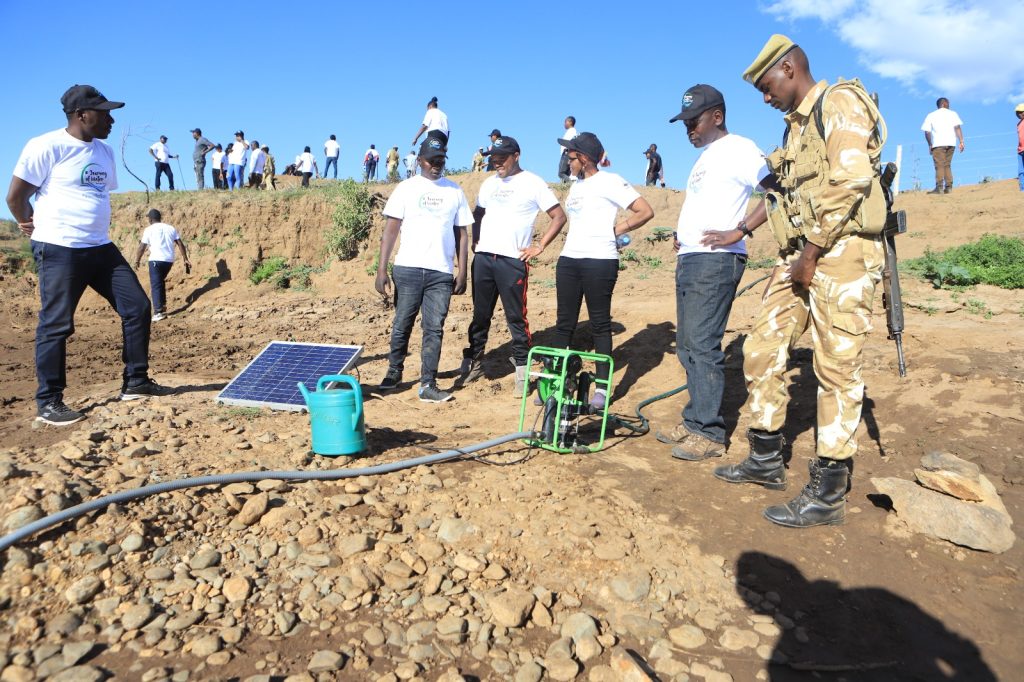
    A solar water pump. PHOTO | WWF-KENYA | IMAGE: HANDOUT

    The Kenya National Association of Water Resources Users Association expressed a willingness to collaborate with the Kenya Forest Service and other stakeholders to push for the zoning of forest reserves to allow for forest regeneration.

    The Mount Kenya Ewaso Water Partnership, a forum that brings together water actors in the basin, also a key player, called on the National and County Governments as well as other stakeholders to provide financial, technical, and capacity-building support to Water Resources Users Associations.

    The ‘Journey of Water’ walk began on Tuesday at the foot of Mount Kenya in Ewaso Nyiro North.

    During the first day of the walk, participants covered eight kilometers along River Timau, which is a tributary of Ewaso Nyiro Basin.

    During the second day, participants trekked more than 10 kilometers mid-upstream before proceeding to Isiolo, then climaxing at Archer’s post on Thursday.

  • Police in Busia impound G4S vehicle transporting bhang worth Ksh1M

    Police in Busia impound G4S vehicle transporting bhang worth Ksh1M

    Police in Busia are holding two G4S employees who were arrested while transporting bhang valued at Ksh 1 million.

    The two were nabbed  along the Busia-Nambale road while on their way to Nairobi.

    Nambale Sub County Police Commander George Ongosi says their vehicle was flagged down by police officers from Nambale Police Station following intelligence information that the G4S vehicle was transporting the illegal cargo.

    According to Ongosi, the bhang had been rolled and sealed in two cartons. The manner in which the bhang had been packaged made it hard for an ordinary person to suspect the boxes contained the drug.

    “We received a tip-off at around 11:30 pm on Friday night that there was a motor vehicle registration number KCX 060Y that was en route to Nairobi,” the Sub County police boss said.

    “Police officers stopped the vehicle and after conducting a quick search, they found two boxes that the driver and his colleague were using for transporting bhang,” he added.

    “The officers arrested the two who were booked and will be arraigned in court on Monday,” he revealed.

    He said the police anti-narcotics team visited Nambale police station on Saturday and positively identified the drug.

    Ongosi warned members of the public to avoid illegal business saying police were on high alert as they seek to stop the trade in illicit products.

    “I want to warn transporters of these drugs that this war will continue and we as police are vigilant,” he said.

    “This, to us, looks like a collaboration between members of the public and the G4S personnel and I want to caution that the long arm of the law will catch up with anyone who will engage in this kind of activity,” he said.

    Incidents of smuggling have been on the rise Busia in recent days due to its proximity to the border and the porosity of the border paving way for such illegal businesses.

    A similar arrest happened nine years ago when police arrested a middle-aged man at Muluanda in the present-day Samia Sub County after being found transporting bhang worth 1.2 million shillings.

  • Non Communicable Diseases (NCD) causing more deaths in Kenya

    Non Communicable Diseases (NCD) causing more deaths in Kenya

    Health experts are warning that non-Communicable diseases (NCD) are increasingly becoming a threat ranking second as the leading cause of death in the country.

    A meeting that brought together health specialists from Siaya County to discuss the effects of non-communicable diseases in the county, was informed  that 50 percent of patients in public health facilities in the county were suffering from NCDs.

    According to the coordinator of the NCDs in Siaya, Peter Omoth, the diseases cumulatively account for 39 percent of deaths in Siaya, a figure that is expected to rise to 47 percent should quick interventions not be put in place.

    “We want to do a lot of advocacy and create awareness that our people should do a lot of exercises to reduce lifestyle diseases,” said Omoth.

    He said that the county government of Siaya has partnered with the Non-Communicable Diseases Alliance of Kenya through the Moyo Afya project to establish early detection of NCDs in five health facilities within the region.

    He said that through the project, Sifuyo, Simenya, Malanga, Ong’ielo and Gobei health centers have been equipped with Electrocardiogram machines to enable them detect cardiovascular diseases early and refer patients for further management.

    A consultant physician at the Siaya County Referral Hospital, Dr. James Wagude called for a review of the drug supply policy that restricts supply of drugs for the management of hypertension, diabetes, and cholesterol only to county and sub-county referral hospitals.

    Dr. Wagude says with statistics showing that NCDs were the second leading cause of death in the country and the burden being so high in the community, the drugs must be taken to the smaller health facilities to enable those diagnosed at the centers start treatment in good time.

    “When we talk about essential drugs list, hypertension, diabetes, and cholesterol drugs are essential nowadays. We have to give these drugs to the smaller facilities” said the medic.

    He lamented that those diagnosed with the diseases were currently forced to spend more money traveling to the sub-county and county referral hospitals, with many opting not to due to the costs involved.

    Siaya County executive committee member for health, Dr. Martin K’onyango challenged medical personnel to engage  community members on the best ways to tackle the increased rate of non-communicable diseases.

    Dr. Konyango further called on Kenyans to enroll with the National Health Insurance Fund (NHIF) to cushion themselves against the high cost of bills should sickness knock on their doors.

    “Cases, where people are seeking for a waiver because of inability to clear hospital bills, are very high,” said the county minister for health.

    NCDs include diseases such as hypertension, diabetes, cancer, sickle cell disease, mental health, asthma, among others.