Author: Beth Nyaga

  • Maasai morans trade their spears for sports

    Maasai morans trade their spears for sports

    The Maasai morans from the Maasai Mara’s Siana Conservancy have recently dominated world headlines for choosing to turn their spears away from killing animals, leaving the same instruments just for sporting purposes.

    The young men have elected to surrender the dreaded spears, instead directing their energies toward a competition aimed at celebrating Earth Hour in solidarity with more than 185 countries and territories, inspiring individuals and organizations worldwide to take action for the environment.

    Earth Hour, organized by World Wide Fund for Nature (WWF), is a global grassroots movement uniting people to take action on environmental issues and protect the planet. Engaging a massive mainstream community, Earth Hour was famously started as a lights-out event in Sydney, Australia in 2007.

    This year, the conservation agency, organized the celebrations to mark this day deep in the Mara’s Siana Conservancy where, among other things, Maasai morans engaged in a Javelin Throwing competition.

    Chants rent the air as morans to turned up and jumped high as if trying to reach to the sky. I quickly got captivated by one of them and I seek to engage him about the whole spectacle. Anthony Njapit was holding a javelin at the time. I later learn he is also a landowner within the conservancy.

    As we chat about this year’s extravaganza, he narrates to me how in the past, the Maasai community thought of animals as the enemy. Things however took a different turn when the community started getting sensitization and being educated on conservation. He tells me that is how they all appreciated they ought to co-exist with wildlife.

    Japit like many other morans used his spear as a weapon against the lions and elephants especially after they invaded his farms killing livestock and destroying crops.
    “We no longer use a spear to wage war on wildlife, we have now turned to sustainable ways of protecting our homes from predators. Some of these interventions include the use of lion lights, and having predator-proof bomas to deter them from attacking especially at night,” he says.

    The 34-year-old says he practiced javelin throw since his heydays in high school. The sport has seen him win accolades at the national level.

    Speaking to KBC Digital, Japit says he hopes one day he will turn out just like Kenya’s hero in the sport, World javelin medalist Julius Yego, who has excelled in the sport.
    Peter Sena, Mara Conservancy Liason Officer, agreeing with Japit says that the sport is a big win for the morans and the community at large.

    “Initially, the Maasai community and wildlife were grave enemies, morans used to compete on the number of wildlife they had killed in measure of strength. The same morans have now realized that they can live with the animals and even generate revenue from them through tourism,” he says.

    Giving a brief history of the conservancy that started in 2016, Sena says there are 3,500 landowners in the community-donated 6.5 acres of land out of their individual 42-acre parcels.

    “They gave the land purposefully towards conservation and also to serve as grass banks for their livestock. 99 percent of the staff in the conservancy is also locals who are benefitting directly from the conservancy,” he says.

    Julius Yego, who joined the celebration albeit virtually due to his rigorous training schedule, said that through the Talanta Hela project, a flagship plan to monetize talents in sports and the creative industry, he will front the idea of the Maasai morans who are engaging in Javelin Throwing and how the program would be supported long term.

    “For me, my talent was discovered in school but not everyone has that chance to enroll, so chances of being noticed are very slim. Through Talanta Hela, we can come up with ideas whereby we can hold competitions from different regions and pick the crème de la crème of the competitors and enroll them into the Sports Academy,” he said.

    Yego who was recently appointed as one of the Talanta Hela Council and Sports Technical Committee members expressed satisfaction for the reason that morans had chosen a more progressive path away from their past ways.

    “Human-wildlife conflict is an existing challenge in the Maasai community, but we have to shun regressive and extreme ways of dealing with it and instead come up with more ways of living in harmony with wildlife. Killing lions and elephants has a negative effect on tourism which generates revenue for the communities. In addition, the Mara is well known for its wildlife hence the need to protect and preserve it even for our future generations,” he said.

    He urged the morans to identify an area where they would practice and hone their skills.

    “I would be elated if Narok County had a stadium for the people to practice in well-established grounds. The County Governments can also manage the stadiums to standards where constituents can nature their talents.”

    The Talanta Hela project is in line with the government’s bottom-up economic transformation agenda and aims to identify, recruit, nurture, market, and monetize talent.

    Kevin Gichangi, WWF-Kenya Project Coordinator Mara Sub-Land Scape, said the main idea behind the event was to introduce a sport to support conservancy by encouraging the morans to participate in conservation.

    “This is a strategy that can pick up over time. Today, we have seen a lot of local talent here. I feel there is a lot of hidden talent in this area when it comes to Javelin as a sport.”

    Regarding human-wildlife conflict, the project coordinator acknowledged that due to the high number of wildlife in the ecosystem, the chances of conflict remain high.

    “Over the years we have been working with the Mara Siana Conservancy supporting the land owners to pool their land together and manage it sustainably for wildlife to ensure their ecosystem thrives as well as benefit from income that will improve their livelihoods,” he said.

    In addition, Gichangi said the organization has provided lion lights and predator-proof bomas to mitigate some of the conflict encountered within the landscape by deterring the predators from attacking their livestock.

     

  • Pastoralists in Garissa embrace farming amid biting drought

    Pastoralists in Garissa embrace farming amid biting drought

    An unprecedented multi-season drought has brought threats of starvation in many parts of Kenya. The situation is even worse in Northern parts of the country that have been hit hard leaving the locals helpless as thousands of their livestock die as a result.

    Families in this part of the world have been deprived of livelihood even as the majority await aid from the government and non-state actors. The four-year drought punctuated by exceptionally warm air temperatures and increased dryness, has been devastating to the source of income and has produced repetitive and debilitating shocks, particularly to animals and crops as well as water availability.

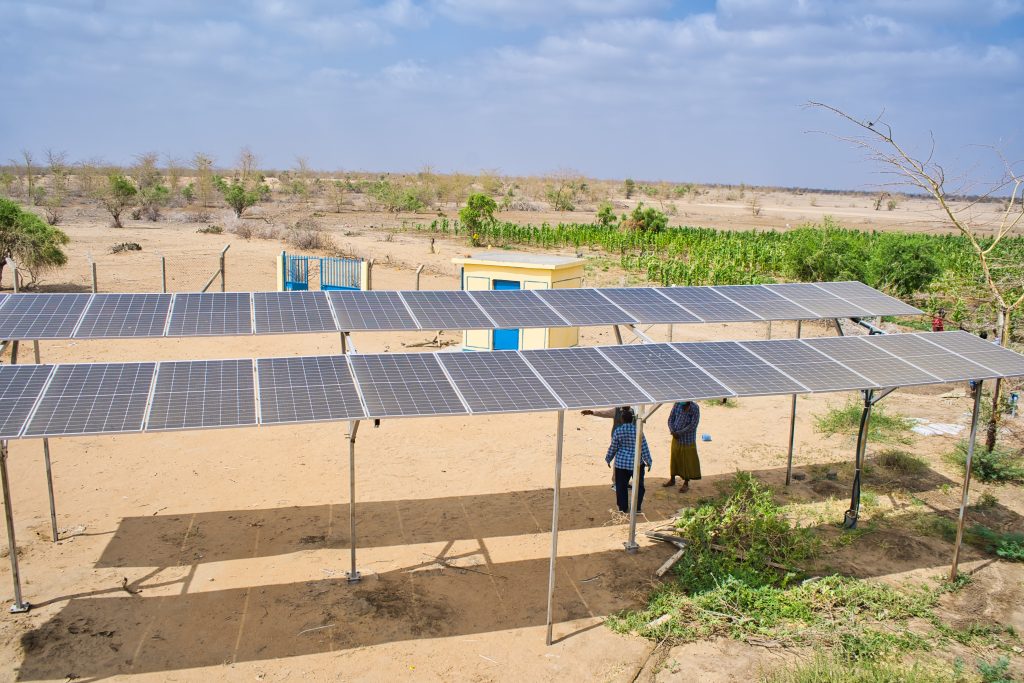
    But not all residents have surrendered their lives to fate. A small community in the Goreale area of Garissa County is trying its hands in farming as a way out of current tribulations. This shift was to a large extent prompted by a borehole project initiated by the World Wide Fund in the area by Nature Kenya (WWF-Kenya) at a cost of about Ksh 10 million.

    And indeed, the project funded jointly by WWF-Sweden, WWF-Germany, WWF-UK, WWF Norway, and WWF Denmark is slowly changing the fortunes of the community that now benefits from the water resource.

    Solar-powered borehole in Goreale, Garissa County

    The locals only have good words for the initiators of the project. Community chairperson Abdulahi Mohamed says prior to the project that was completed in July 2022, residents never imagined a day will come when water will be easily available for their use, at least, in their lifetimes and in an arid area.

    “The population in the Boreale area is about 300 people but at this point, more than 10,000 community members are benefiting from this borehole to date,” he said.

    According to the Chairman, community members used to trek more than 17 kilometers to the nearby Mbaraki borehole to access water. He cites this as one of the major reasons behind the untold suffering faced by young girls and women in the area.

    “The girls and women bore the brunt of the lack of water in the community, the girls especially skipped school because the distances were grueling, and even after fetching the water, they would only fetch for domestic use which means that during their periods, they also had to sit out from school,” says Mohamed

    “Women in turn were left to fetch and take care of homesteads as the men took out the animals to graze in far-flung areas as they searched for watering pans and water holes,” he avers

    And ever since the project was completed, a cheerful Mohamed says even cases of human–wildlife conflicts have tremendously reduced owing to increased volumes of water in circulation both for domestic and wild animals.

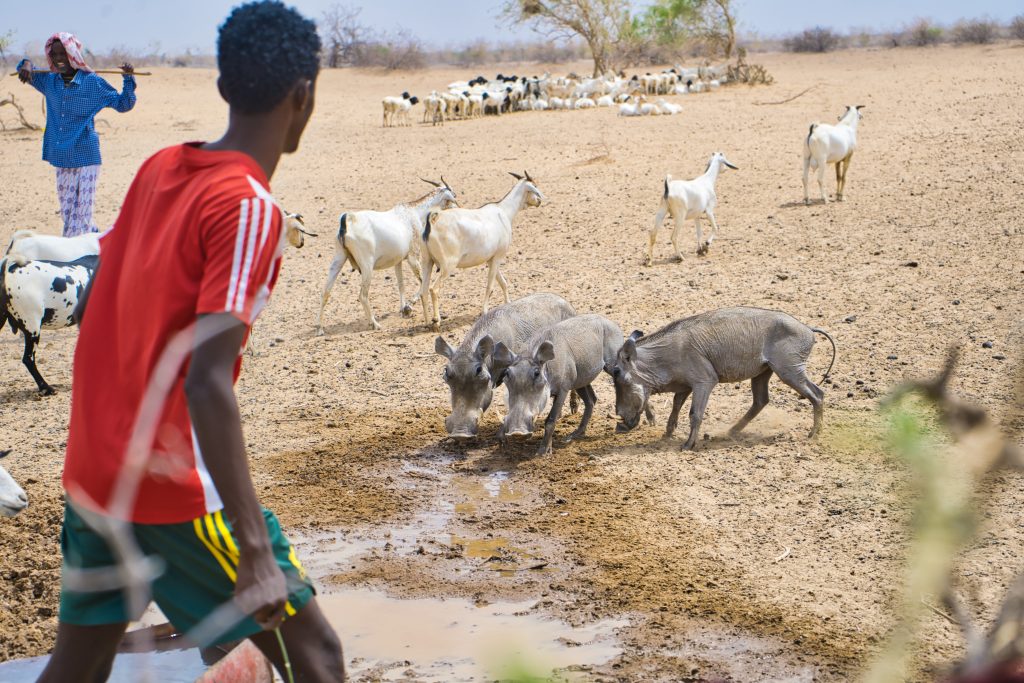
    Wildlife and domestic animals sharing a water source in Goreale

    “We now have a new lease of life as the community is now engaging in farming, cases of human-wildlife conflict have reduced and we no longer waste time and resources looking for this crucial resource. The animals’ water at designated times, domestic animals drink during the day while wild animals take free reign at night,” he said.

    The chairman acknowledges that the decision by community members to embrace farming will draw good fortune to their livelihoods.

    “The people here are now engaging in farming and with this; they have also decided to engage in zero grazing as they seek to improve on their breeds of livestock.” he narrates

    Abdi Fatar Ali, an agriculturalist, says all his life he has known Goreale as an arid, dry area. He lauded the move to sink the borehole and expressed confidence that it will positively transform the region for generations to come.

    As soon as he saw the project started to take shape, Ali states that he volunteered to teach community members the best farming methods suited to the local conditions.

    For instance, he explains that due to the dry soils, he dug up gabions that lead up to different sections of the subdivided land.

    “This makes watering the crops easier, we turn on the water at the borehole source and it freely flows into all the sections of the farm,” he said

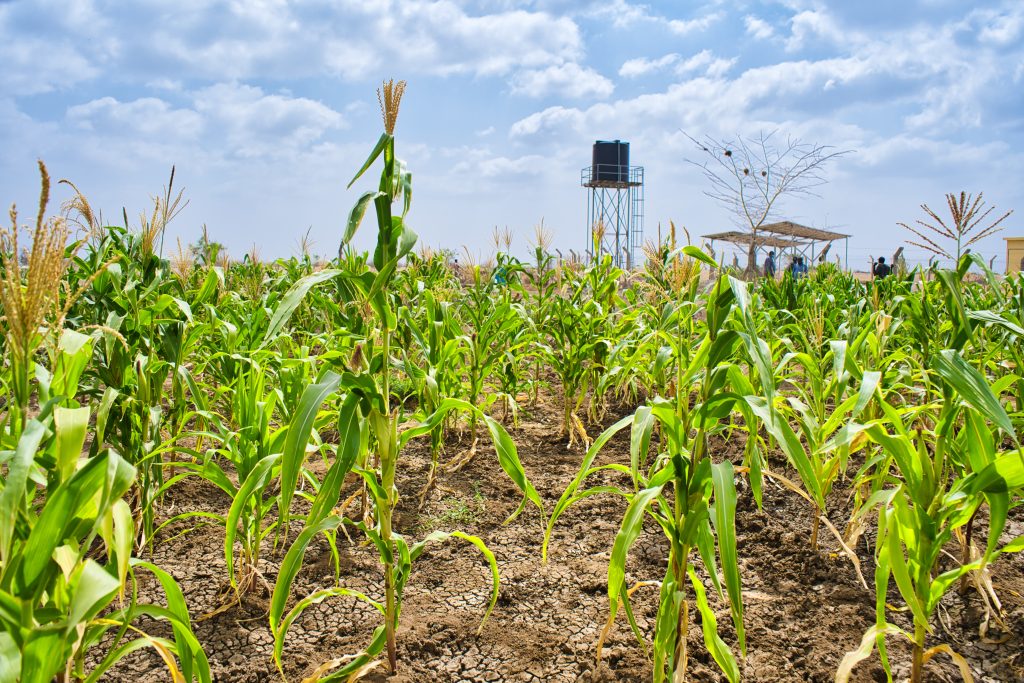
    Taking us on a tour of his farm, Ali observes that so far the community has engaged in watermelon, beans, and maize farming and that crops such as onions and tomatoes will soon be available in their farms.

    Maize plantation in Goreale in Garissa County

    “I take the most pride in knowing that children in the community can see the changes that are happening; they will grow up knowing how to maintain, preserve and utilize the borehole. Farming is also a way of life and is also economically viable,” says the 52-year-old farmer.

    On the same farm is Dr. Yusuf Wato, the WWF-Kenya Wildlife Program Manager. He too expressed satisfaction seeing the progress the community members are making.

    “A year ago, this land was bare, the community members have now tapped into this resource and even piped water to the neighbouring communities, the land is now lush and productive and will see them gain benefits for years to come,” he said.

    And this is not the only project. Dr. Wato says WWF- Kenya provided a water pan at the Bora’ana Conservancy worth Ksh 6 million. The project which is currently 95 percent complete will see more than 5,000 community members benefit from an expected 6 million liters of rainwater to be collected.

  • Maasai Olympics: Community’s firm undertaking to end lion-killing

    Maasai Olympics: Community’s firm undertaking to end lion-killing

    In the Maasai culture, there is a time-honored tradition where males kill lions to prove their rite of passage into manhood.

    Amid a decreasing number of lions, the community is steadily moving away from this culture of hunting down predators and choosing to protect them instead. Numerous programs have been initiated in this regard, including the biennial Maasai Olympics.

    Held for the fifth time, thousands of spectators dressed in traditional red cloaks and beaded jewelry gathered to watch at least 160 young Maasai men and women compete in a series of sporting activities recently.

    Some of the events staged during the competition include spear and rungu (club) throwing, sprints as well as the famous Maasai high jump.

    Beginning August 2022, the four competing warrior villages of Eselengei, Kuku, Mbirikani, and Rombo have taken part both in the local and regional competitions.

    Ming’ati Ole Samanya, a 59-year-old elder from the community, spoke to KBC Digital. He narrates with pride how he has been part of the trainers of some of the competing warrior villages since the event began back in 2009.

    He has seen it all and Semanya speaks of how he has observed firsthand the damage the community caused as its sons pursued the lions dwindling their numbers at an unprecedented scale. He says if the rate at which the predators were being taken down continued, it would have ultimately led to their extinction.

    A Maasai moran throws a traditional club, known as rungu, during the Maasai Olympics REUTERS/Thomas Mukoya

    “In my hey days, I killed two lions, at that point, I received my “lion name” Mingati in the Maa language. I was one of the toughest young morans during my youth. During hunting, crowds thronged behind me as they watched me go in for the kill. For the first lion, I had my spear run through the head while the second one hit the neck rendering them dead. We would then skin the lions and parade through the community donning their skins to show that we had conquered, this was a moment of pride for us,” he said.

    Semanya, however, acknowledges that things have since changed for the better ever since the community made a commitment to protect the lions in their ecosystem.

    He is among a group of community members who now work closely in partnership with organizations such as the Kenya Wildlife Service (KWS), Big Life Foundation, and the county government to carry out awareness, especially about the dangers of killing lions during initiation.

    He is now a champion for the Olympics as it benefits the community financially while also acting as an avenue to preserve the ecosystem.

    “As a community, we benefit from tourism, athletes get small tokens for participation, and business for most women who run local kiosks get a boom in business during the Olympics.” He said

    The research found that 87% of warriors aware of the Maasai Olympics reported the event made them less interested in killing a lion and 91% said it made them more interested in lion conservation.

    The initiative is now in its 10th year and is organized by Big Life Foundation, a community conservation Non-Governmental Organization operating in Amboseli, in the Southern parts of Kenya.

    Craig Miller, Chief Operating Officer of Big Life Foundation says Maasai elders and officers from Big Life came up with the idea as a way to discourage the culture of lion killing from the community, historically one of the key threats to lions in Amboseli.

    “Back in 2003, there were only 20 lions in the entire Amboseli ecosystem, and at that point, we approached the community and they said they would afford to keep living with wildlife because of the constant human-wildlife conflict they experienced,” he said.

    Maasai warrior participates in the javelin throw / PHOTO COURTESY

    In addition, the community members resolved to seek compensation for any loss occasion by the animals as a way of living in harmony with the wildlife.

    These talks were the culmination of the Predator Compensation program in 2003 which saw the mitigation of economic loss of livestock.

    “The Minialayok, Fathers of the boys, approached Big Life and said that compensation was working but morans are still competing to kill lions. They then suggested that they had looked around other countries and realized that the youth were engaged in sports. This is how the Maasai Olympics was birthed. Warriors were pulled into the competitions and the killings declined,” said Miller.

    This year’s event, according to the COO, was more gender-inclusive as it incorporated more competitions in which women would take part.

    Lion Guardians, an NGO, has monitored a six-fold increase in the Amboseli lion population between 2004 and 2020, making it the fastest-growing lion population on community-owned land in Africa, an astonishing turnaround following near extinction at the turn of the century.

    Globally, lions have lost 94% of their range since the start of the 20th century. Today there are estimated to be 23,000 lions left: fewer than elephants, rhinos, or gorillas.