Author: Prudence Wanza

  • Ruto: Sovereign Wealth Fund will transform resource revenues into generational wealth

    Ruto: Sovereign Wealth Fund will transform resource revenues into generational wealth

    President William Ruto has signed into law the Sovereign Wealth Fund Bill, 2026, establishing a vital investment vehicle that will preserve wealth generated from national resources for future generations.

    The President said the new law is a historic milestone that will ensure Kenya’s prosperity endures beyond today.

    “Today, Kenya changes how it will preserve its wealth. Today, we enshrine in law the institution that will ensure that the prosperity those assets create endures for generations,” the President said during the assent ceremony at State House Nairobi on Wednesday.

    The Sovereign Wealth Fund, he noted, will ensure that revenues from petroleum and mineral resources are not entirely consumed at present, but are invested to benefit future generations.

    The new law establishes three key windows under the Sovereign Wealth Fund: The Stabilisation Fund will cushion the economy against external shocks, the Strategic Investment Window will finance national development projects and create jobs, while the Future Generations arm, to be known as Urithi Fund, will invest a portion of petroleum and mineral revenues for future citizens.

    Under the law, 30 per cent of revenues from petroleum and mineral resources will be channeled into the Urithi Fund, with the remainder supporting economic stability and strategic investments.

    Present were Deputy President Kithure Kindiki, National Treasury Cabinet Secretary John Mbadi, National Assembly Speaker Moses Wetang’ula, Orange Democratic Movement Party Leader Oburu Oginga, Head of Public Service Felix Koskei, and National Assembly Majority Leader Kimani Ichung’wa.

    Others were Equity Group Chief Executive James Mwangi, Kenya Commercial Bank Group Chief Executive Paul Russo, Britam Chief Executive Tom Gitogo, and CPF Financial Services Group Managing Director Hosea Kili, among other key dignitaries.

    The Sovereign Wealth Fund becomes the second major financial institution created under the government’s economic transformation agenda after the establishment of the National Infrastructure Fund in March 2026.

    President Ruto said the new law was inspired by successful sovereign wealth funds around the world, including Norway’s Government Pension Fund now valued at about $2.2 trillion (KSh280 trillion) and Botswana’s Pula Fund.

    “The lesson from each of these nations is unmistakable. Natural resources create opportunity. Institutions determine destiny,” he said.

    The President noted that Kenya has learned important lessons from past exploitation of natural resources, citing the extraction of titanium in Kwale where mineral deposits were exhausted without creating long-term national wealth.

    He said the establishment of the fund comes at a crucial time as Kenya prepares to commence commercial oil production in the Lokichar Basin in Turkana and seeks to harness newly confirmed deposits for strategic and industrial minerals across the country.

    “Every barrel extracted should become an asset that never runs dry,” President Ruto said.

    A nationwide mineral survey, he disclosed, has confirmed Kenya’s vast mineral potential, which could accelerate industrialisation, create jobs and boost exports if managed prudently.

    To ensure accountability, the new Act provides for independent professional management of the fund, parliamentary oversight, transparent public reporting and robust auditing mechanisms.

    “The Sovereign Wealth Fund will not belong to any Government but to the Republic of Kenya. Every shilling must be accounted for, every decision guided by prudence and every investment measured by the legacy it leaves for future generations,” President Ruto said.

    The new law, the President stated, demonstrates Kenya’s commitment to saving, investment and preserving national wealth, ensuring that future generations inherit “not depleted resources but lasting prosperity”.

    President Ruto commended the partnership between the Government and the private sector, capital markets, and pension funds in backing mega infrastructure projects such as the Talanta Sport City Stadium, the Bomas International Convention Complex, and the expansion of the Rironi-Mau Summit road.

    “I don’t take this partnership for granted,” he said.

    The President also highlighted the political stability brought by the Broad-Based Government and the collaboration between Kenya Kwanza and the Orange Democratic Movement (ODM), noting that the partnership is delivering immense benefits to Kenyans.

    He commended National Treasury Mbadi for providing the requisite leadership in managing the country’s finances and steering the economy.

    The President also commended Parliament for passing the legislation, saying lawmakers have laid the foundation that will outlive the current generation.

    Noting the bipartisan approach among MPs, the President pointed out that parliamentary sessions have sometimes extended up to midnight to process critical Bills.

    “History will remember you not as the Parliament that debated Kenya’s future, but as the Parliament that legislated it into being,” he said.

    President Ruto noted that Parliament has enacted several transformative laws in the past three years, including the Affordable Housing Levy Fund, three Social Health Authority (SHA) funds, the National Infrastructure Fund, and now the Sovereign Wealth Fund.

    On public-private partnerships, President Ruto said the Government is actively collaborating with private entities. This model is illustrated in the KSh150 billion upgrade of Jomo Kenyatta International Airport, where the Government will deploy KSh20 billion from the National Infrastructure Fund to crowd in the balance from private investors.

    “That is how transformation works, with investors, pension funds, and fund managers come together to implement major infrastructure projects,” he explained.

    The President also pointed to the country’s economic turnaround over the past three years, recalling that Kenya was staring at a sovereign debt default in 2023.

    He asserted that decisive fiscal actions, driven by robust economic adjustments, successfully averted the financial crisis.

    Kenya’s macroeconomic indicators, President Ruto explained, have also recorded significant improvements. National foreign exchange reserves have surged from $5.7 billion in 2022 – the equivalent of two and a half months of imports – to about $17 billion currently, providing, equivalent to seven months of import cover.

    “We are almost tripling our reserves and that is extraordinary,” the President noted.

    He added that data from the United Nations Conference on Trade and Development’s (UNCTAD) “World Investment Report 2026” shows Kenya’s Foreign Direct Investment (FDI) net inflows jumped from $1.5 billion in 2022 to $3.2 billion last year.

    Deputy President Kithure Kindiki pledged to work closely with the President to ensure the private sector plays an expanded role in national development.

    “I have taken notes on today’s discussions and I will support you to transform the country. You are doing the heavy lifting to ensure that Kenyans tomorrow will be better off than today,” Prof Kindiki said.

    Dr Oginga commended the establishment of the Sovereign Wealth Fund, calling it a highly progressive idea. Citing Botswana as a successful African precedent, he noted that such funds preserve finite resources for future generations.

    “With such funds, you go to the capitals of the world to discuss trade and mutually beneficial relations instead of begging. Other people are not obliged to develop your country; we must do it ourselves with our own resources,” he said.

    National Assembly Speaker Moses Wetang’ula termed the enactment of the Sovereign Wealth Fund law a major milestone for the 13th Parliament, noting that previous attempts over the years to establish the fund had failed.

    Mr Kiili  described the new fund as a game-changer but recommended a further amendment to the law to allow private citizens and institutions outside of Government to directly contribute to the fund.

    “We should go beyond natural resources and allow Kenyans of goodwill to contribute,” he said.

    Mr Mbadi said the fund marks a major milestone in Kenya’s efforts to promote inter-generational equity and place Kenya alongside other nations that have leveraged natural resources revenues to build long-term national wealth.

    The Treasury CS said President Ruto will go down in history as Kenya’s foremost reformist leader, pointing to the number of transformative laws and massive infrastructure projects delivered in a short span.

    “Initially, we thought the road to Singapore would pass through Canaan only. But now it seems we will also go through Norway as well,” Mr Mbadi said noting that Norway’s world-class sovereign wealth management offers valuable lessons for Kenya.

    Equity Group’s Mwangi explained that the fund will be instrumental in crowding in commercial capital by effectively de-risking large-scale public investments.

    “In countries such as Singapore, the level of national investment stands at 25 percent of GDP. In Kenya, we are at 18 per cent,” he pointed out, adding that strategic funds will anchor a highly predictable economic growth path.

    “We are maturing when we start thinking beyond ourselves,” he added.

    Mr Russo of KCB said the fund would spark a powerful multiplier effect across the financial ecosystem due to its strict governance structures and transparency.

    “Kenya will therefore be well-positioned to attract significant global investment for various development projects,” Mr Russo stated.

  • LSK calls for nationwide advocates’ march over death of two lawyers

    LSK calls for nationwide advocates’ march over death of two lawyers

    The Law Society of Kenya (LSK) has announced a nationwide Advocates’ March for Justice following the mysterious deaths of two lawyers.

    Addressing the press on Wednesday, LSK President Charles Kanjama condemned the killings, describing them as an attack on the legal profession and the rule of law.

    The body of Kenya Forest Service (KFS) legal officer Esther Wairimu Keige was discovered in a coffee plantation in Juja, Kiambu County, on Tuesday, July 8, barely 48 hours after Advocate Edward Muthee Kariuki was found murdered outside his residence in Athi River on Sunday, July 5.

    “The death of two advocates within the span of a single week is not an isolated coincidence. These deaths amount to an attack on the legal profession, the administration of justice and the rule of law,” Kanjama said.

    LSK called on the government to immediately establish a high-level multi-agency team led by the Directorate of Criminal Investigations (DCI) to investigate the two deaths and bring those responsible to justice.

    The Society also demanded a comprehensive forensic audit of all contested land acquisition, leasing and alienation matters handled by the Kenya Forest Service Legal Department over the past 12 months to determine whether Keige’s death was linked to the discharge of her official duties.

    Kanjama further called for enhanced security measures for advocates serving in public institutions and regulatory bodies, as well as a transparent mechanism through which investigators would provide regular updates on the progress of the investigations.

    On Friday, advocates will assemble at the Milimani Law Courts parking grounds at 9 a.m. before marching to the National Police Service headquarters to present a petition to the Inspector-General of Police demanding a swift investigation into the two killings.

    “All participants are directed to maintain the highest standards of professionalism and dignity throughout the procession. The march shall remain peaceful, orderly and firmly anchored on the Constitution and the rule of law,” Kanjama said.

  • KNLS hands over renovated Mandera Community Library to county government

    KNLS hands over renovated Mandera Community Library to county government

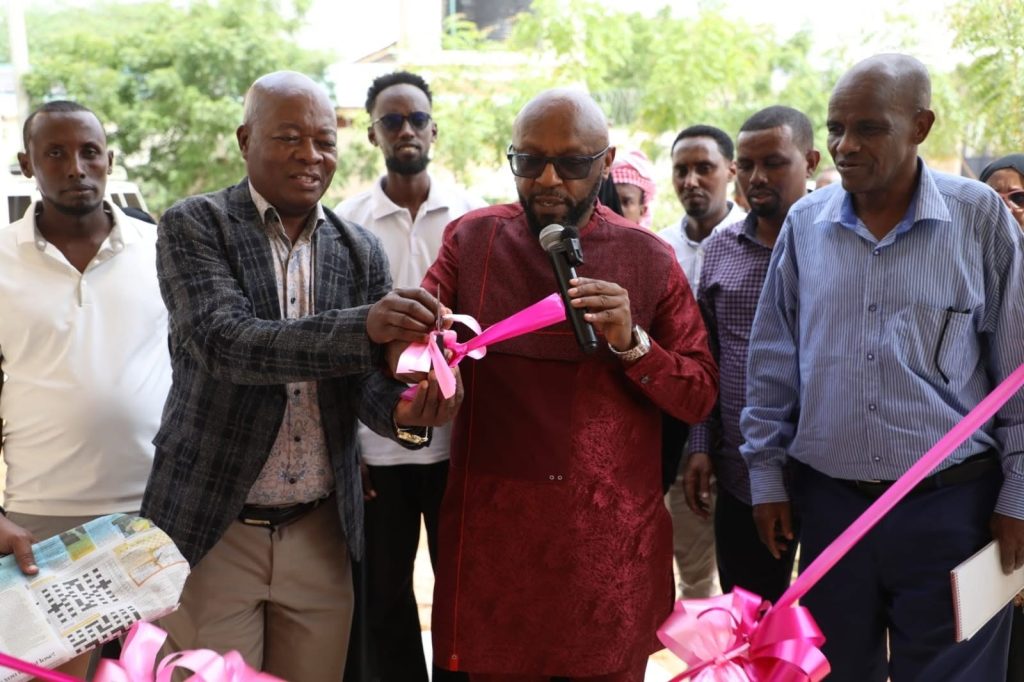
    The Kenya National Library Service (KNLS) has officially handed over the newly Mandera Community Library to the County Government of Mandera in an effort to expand access to modern learning resources for students and residents across the county.

    The modern library will serve as a gateway to knowledge that will support education, research, and digital learning for generations to come.

    The event also marked the completion of two additional community libraries in Lafey and Elwak, which are now ready for commissioning.

    Speaking during the event, Dr. Charles Nzivo CEO of KNLS thanked all partners who contributed to the successful completion of the project, including the National Government, the County Government of Mandera, the Sports, Arts and Social Development Fund, consultants, contractors, and KNLS management.

    The Mandera Community Library has been transformed into a modern digital learning hub equipped with high-speed Wi-Fi, advanced ICT infrastructure, assistive technologies for persons with disabilities, and access to both the KNLS Virtual Library and the Koha Library Management System.

    With the Mandera Community Library now officially handed over and the Lafey and Elwak libraries awaiting launch, KNLS says the facilities will play a key role in improving literacy, supporting education, and creating opportunities for thousands of learners across Mandera County.

  • IEBC begins public participation on campaign financing regulations

    IEBC begins public participation on campaign financing regulations

    The Independent Electoral and Boundaries Commission (IEBC) has invited the public to submit views on the Draft Election Campaign Financing Regulations, authorised expenditures and spending limits.

    In a notice, the electoral body said members of the public, political parties and other stakeholders have until July 15, 2026, to submit memoranda on the proposed regulations.

    The regulations are part of IEBC’s preparations for the 2027 polls and will establish a framework for regulating the amount of money that candidates and political parties can spend during election campaigns.

    Article 88(4)(i) of the Constitution mandates IEBC to regulate election campaign spending, while the Election Campaign Financing Act empowers the Commission to set rules on campaign contributions, expenditure, disclosures, monitoring and accountability.

    “Section 29 of the Act empowers the Commission to issue Regulations on expenditure rules, contributions, disclosures, monitoring, record-keeping, and related matters. In addition, Sections 12, 18 and 19 require the Commission to prescribe contributions, spending limits and authorised expenditures by Gazette notice at least twelve months (12) before a General Election,” IEBC said.

    The Commission said the draft regulations will guide candidates and political parties in managing campaign funds under its oversight.

    Memoranda can be submitted through email at lpa@iebc.or.ke or delivered physically at IEBC offices countrywide.

  • Ruto assents to Sovereign Wealth Fund Bill

    Ruto assents to Sovereign Wealth Fund Bill

    President William Ruto has signed the Sovereign Wealth Fund Bill, 2026, into law, paving the way for the creation of Kenya’s first fund dedicated to investing public wealth for future generations and enhancing economic stability.

    The President assented to the Bill on Wednesday at State House, Nairobi, establishing a legal framework for the management and investment of revenues from the country’s natural resources.

    President Ruto hailed the new law, saying it will help preserve Kenya’s wealth and ensure that proceeds from the country’s resources benefit future generations.

    “If one generation consumes all the proceeds from exhaustible resources, it leaves nothing but empty mines and depleted oil fields for those who come after it. That is neither prudent economics nor responsible stewardship,” he stated

    Understanding the Sovereign Wealth Fund Bill

    The new law seeks to protect the economy from major shocks, finance strategic infrastructure projects and create a savings base for future generations once mineral and petroleum resources are depleted.

    Under the legislation, the Sovereign Wealth Fund will comprise three components focused on stabilisation, strategic infrastructure investment and savings for future generations.

    The Stabilisation Component will serve as a financial buffer by providing resources to help the country respond to extraordinary economic disruptions that could affect macroeconomic stability, including global crises and volatility in international markets.

    Meanwhile, the Strategic Infrastructure Investment will channel funds into priority projects aligned with national development plans while helping attract private sector financing for key investments.

    The Future Generations Component will preserve part of Kenya’s resource wealth to benefit future citizens, with 30 percent of total mineral and petroleum revenues allocated to the fund.

    The law also requires oversight by the Controller of Budget, compliance with the Public Finance Management Act, and regular financial reporting and audits by the Auditor-General to ensure prudent management and accountability of the resources.

    In addition, the Sovereign Wealth Fund Board will be required to prepare annual reports on the performance of each component, which will be published and submitted to the National Assembly as part of accountability measures.

    To protect the Fund from misuse, the law imposes penalties for the misappropriation of funds and sets investment guidelines restricting risky investments, including speculative derivatives, unlisted real estate in Kenya, private equity, art, commodities and securities issued by Kenyan entities.

    The National Assembly will also play an oversight role through the approval of investment policies developed by the Fund’s Board to ensure that investments align with national development priorities.

  • Marine Le Pen found guilty, but court clears way for presidential run if she wears tag

    Marine Le Pen found guilty, but court clears way for presidential run if she wears tag

    The Paris appeal court has upheld Marine Le Pen’s conviction for misusing EU funds but shortened her sentence, clearing the path for her to run in the April 2027 French presidential election.

    A five-year ban on holding public office has been reduced and backdated to March 2025, and the court said it now considered the penalty had already been served.

    However, the leader of the hard-right National Rally (RN) has been given a one-year term wearing an electronic ankle tag under house arrest, although that would not necessarily stop her running either.

    Le Pen has said repeatedly she would not run for president if she had to wear an electronic tag as she would not feel “totally free” to campaign.

    She is expected to announce whether she will stick with that decision in a national TV appearance tonight at 20:00 (19:00 BST) – and hand her candidacy to her protege, 30-year-old Jordan Bardella.

    Marine Le Pen leads the opinion polls with under 10 months to go. She has run for the presidency three times already, and has lost twice in a row to Emmanuel Macron, who cannot run again. Macron has declined to comment on the verdict.

    In her last TV interview a week ago the National Rally leader signalled her conditions for running for president to the judges as well as the broader public.

    She would not campaign for the presidency while wearing a tag, she told news channel LCI, because “when you’re a presidential candidate you need to have total freedom of movement… I can’t rely on a judge to allow me to hold a campaign rally or go to a market”.

    The court’s response, delivered months after her appeal was heard in January and February, made clear the judges were not standing in her way.

    They had weighed up the sentences of ineligibility for public office against the “freedom of candidacy” and the “free choice of electors”, they explained.

    In a later communique, they added it was for the court to assess whether the punishment was proportionate. Running as a candidate and the right to vote was part of the democratic process, they said.

    However, they found Marine Le Pen guilty of embezzling funds meant for members of the European Parliament from 2004-16 and using the money to pay for party staff.

    The three-year prison sentence involves two years suspended and one year wearing an electronic tag. Le Pen’s original sentence required two years with an ankle bracelet.

    Earlier on Tuesday, the head of the conservative Republicans party Bruno Retailleau told French TV that politicians were neither above or below the law but hoped that the verdict would not be “political”. This verdict fulfils both those points.

    In theory, Marine Le Pen could ask for the one-year term for wearing the electronic tag to be reduced for good behaviour. If the courts agreed to that, she could not only run for the presidency, but avoid entering the Élysée Palace wearing one if she won the two-round race on 18 April 2027 and 2 May.

    And although the sentence does include a bar from holding public office, it will not affect her now. Most of the 45-month-term is suspended and she has already served the 15 months that is not suspended since her original conviction on 31 March 2025.

    Dozens of journalists and members of the public queued outside the Paris court of appeals from the early hours of Tuesday morning to hear the much-awaited verdict.

    All eyes now turn to the coming hours and specifically to Le Pen’s live TV interview on the main evening news programme on TF1.

    After the verdict was read out, Le Pen travelled to National Rally headquarters in the 16th district on the west side of Paris, where party president Jordan Bardella was waiting.

    He was not in court this morning and has not made any statements in the aftermath of Le Pen’s verdict.

    The two are thought to be holding talks alongside the rest of the party’s leadership ahead of Le Pen’s TV appearance.

    If she decides not to run, it is expected that Bardella, aged 30, will be the RN’s presidential candidate instead.

    All but one of the 12 defendants attended Tuesday’s court hearing. Former Marine Le Pen ally Bruno Gollnisch was the only one who did not.

    All of them were found guilty of diverting European Parliament money, which judge Michèle Agi said should be considered as public funds.

  • Saba Saba Day: IG Kanja conducts security assessment in Nairobi, Kiambu

    Saba Saba Day: IG Kanja conducts security assessment in Nairobi, Kiambu

    Inspector-General of Police Douglas Kanja on Tuesday conducted a security assessment in parts of Nairobi and Kiambu counties following the commemoration of Saba Saba Day, which was marked by heightened security measures as police prepared for possible protests.

    Kanja who inspected Muthurwa in Nairobi County and Githurai 45 in Kiambu County, was accompanied by Deputy Inspector-General of the Administration Police Service Gilbert Masengeli and other senior police officers.

    During the assessment, the IG addressed officers deployed in the areas and commended them for their commitment and professionalism in maintaining law and order.

    He also engaged traders and residents at the busy Muthurwa Market and Githurai 45, assuring them that the country remained safe and secure,

    The police boss affirmed that the National Police Service (NPS) remains committed to protecting the safety of Kenyans, residents and visitors.

    The assessment comes after the deployment of officers and mounting of roadblocks on key roads to monitor movement and maintain public order.

    On Tuesday morning, police mounted a roadblock at the 87 Junction along Waiyaki Way, while commuters using Jogoo Road were forced to alight at City Stadium Roundabout and walk towards the Central Business District.

    There was also minimal movement of Public Service Vehicles (PSVs) along Thika Road as police maintained a visible presence in several parts of the city.

    However, Nairobi Regional Police Commander Issa Mohamud said the restricted access to the CBD was a security measure to control entry into the area.

    “We decided to do that so we can control access. Our intention is not to harm or block people from coming into the CBD. It is a safety win for the business community,” he said.

  • Macron safe after explosions in Syrian capital during French president’s visit

    Macron safe after explosions in Syrian capital during French president’s visit

    France says President Emmanuel Macron is safe after a number of people were injured in explosions reportedly near the hotel he was staying at in central Damascus.

    A security source told the BBC the blasts were caused by two explosive devices and that several people have been wounded. Syrian media said 18 people, including four police officers, were injured.

    Macron is in the capital for talks with his Syrian counterpart Ahmed al-Sharaa at the presidential palace.

    After travelling to Syria, Macron is set to head to Turkey for the Nato summit. The visit “continues as planned”, according to the Elysee Palace.

    After reports of the explosion in the city, videos and images on social media showed plumes of smoke and flames rising from a vehicle near a hotel in the Syrian capital.

    As those reports came in, Syrian state television said that al-Sharaa had welcomed Macron to the presidential palace.

    BBC Verify has been analysing video footage of the blasts, which shows the explosions happened approximately 125m from the Four Seasons hotel, on the pavement of Shoukry al-Quowatly, a major thoroughfare running through the capital.

    The French president did not hear any explosions while on his way to the meeting, his officials said.

    Upon arriving in Syria on Monday evening, Macron became the first EU leader to visit the country since the fall of Bashar al-Assad’s 24-year rule.

    At the start of July, a bomb blast at a crowded cafe in central Damascus killed at least nine people and injured 22 others, according to Syrian state media.

  • Zelensky to press Nato for air defence systems after intense Russian strikes

    Zelensky to press Nato for air defence systems after intense Russian strikes

    Ukraine’s president plans to use the Nato meeting in Turkey to urge Kyiv’s allies to deliver the air defence systems it urgently needs to protect it from escalating Russian attacks.

    Volodymyr Zelensky’s call for help rings with extra intensity after Russian missiles rained down on the Ukrainian capital twice in less than a week, crashing into blocks of flats and killing more than 50 civilians.

    The summit in Ankara will also be a chance for Zelensky to hold a crucial meeting with Donald Trump and press home his case that Russia’s “brutal” attacks are a show of weakness, not strength, and that Vladimir Putin should be pressured into talks towards a “dignified” peace.

    The latest strikes on Ukraine come as it has been stepping up its own long-range drone attacks against Russia, hitting oil refineries and military targets there and causing significant fuel shortages and power cuts.

    Underscoring that threat, Moscow’s mayor Sergei Sobyanin said anti-air defences intercepted “most” of the 430 unmanned aerial drones fired by Ukraine towards the capital overnight. The severity of the damage was not immediately clear.

    Russian social media accounts are full of videos of people queuing for hours to buy petrol and fighting over what little they’re allowed.

    On the eve of the Nato gathering, which will be held on Tuesday and Wednesday, Zelensky voiced hope that the meeting in Turkey would not be “empty”.

    Nato Secretary General Mark Rutte has urged member states to “pull their weight” and ensure Ukraine gets what it needs “to defend its sovereignty”.

    He underlined that Kyiv was “changing the dynamic on the battlefield”, referring to efforts to stall Russian ground troops in the east.

    That’s also about the recent drone strikes, apparently giving Ukraine an edge. ​

    The phrase of the month here is “window of opportunity”.

    But as the war in the skies has intensified, Russia’s ballistic missiles are causing Kyiv real problems.

    Ukraine’s air force issues a daily tally of the weapons Moscow launches alongside the number intercepted.

    On Monday, almost all drones were blocked successfully but the failure rate for missiles was glaringly obvious.

    Ukraine did not stop a single ballistic missile in that attack.

    It isn’t easy: they fly at several thousand kilometres an hour and there just aren’t enough US-made Patriot air defence missiles in Ukraine to counter them.

    “It is simply absurd that, in today’s world, production has still not been scaled up to the level actually required to protect people from ballistic terror,” Zelensky said, venting his frustration in a video address on Monday.

    He has been calling on European allies to hand over their own stockpiles of Patriot missiles, arguing that they’re no good to anyone in storage when civilians are being killed now in Ukraine.

    “Russia is placing its bets on ballistic weapons, and those who want peace must place their bets on protection against ballistic attacks,” Zelensky argues, setting out his case for meetings in Ankara.

    But Patriot systems are in short supply worldwide and it’s not clear how many would ever be enough if Russia were to escalate its ballistic attacks further.

    That’s why Zelensky also talks about Ukraine producing its own equivalent, with Nato help.

    The Russian attacks, though, do suggest that Ukraine’s deep strikes are getting under the Kremlin’s skin.

    After years of Russia targeting civilian infrastructure in Ukraine, including power stations in mid-winter, Moscow now accuses Kyiv of “terrorism” for hitting its oil refineries with drones.

    Zelensky calls it an “influence campaign” and he will be keen to share details with Nato allies.

    The aim is to pressure Putin into peace talks on terms that Kyiv could stomach – that doesn’t include surrendering the entire eastern Donbas region, as Moscow still demands.

    The campaign targets have been high profile.

    An oil terminal in St Petersburg was hit with drones ahead of Putin’s showpiece economic forum in the city in June. Then there were strikes on a refinery in Moscow itself, creating explosion videos that went viral.

    Now there’s a confirmed hit on an oil refinery in Omsk, Siberia, 2,500 km from Ukraine’s border. The drone must have flown undetected for many hours, which shows how stretched Russia’s own air defences actually are.

    Ukraine’s “influence” efforts also include Crimea, the peninsula which Putin seized in 2014 and which is deeply important to him personally.

    Ukrainian drones are now hitting military logistics, oil refineries and power plants there almost every day, causing power cuts, fuel and food shortages and an official state of emergency.

    A local resident told the BBC the situation was “catastrophic”, reminiscent of the turbulent 1990s after the USSR collapsed.

    One of Putin’s great claims is that he “saved” the country from that chaos, raising Russia “from its knees”.

    Now his all-out war is bringing danger even to Moscow in the form of drone strikes, and widespread fuel rationing.

    So Zelensky will tell Nato, and try to persuade Trump, that Ukraine has turned the tide in this war, and that its campaign of pressure can, with help, compel Russia to engage in proper negotiations for peace.

    Trump has seemed impressed by Ukraine lately, although he spoke to Putin for 90 minutes by phone this week, giving the Russian leader a chance to get his war story in first.

    Above all, Kyiv wants to end this war fast, through “strength or diplomacy”, before another gruelling winter kicks in.

    But to have any chance of that, Zelensky will argue, Ukraine needs more interceptor missiles to protect its cities and civilians.

  • From struggle to strength: How Lorenzo, a Gen Z overcame mental health challenges

    From struggle to strength: How Lorenzo, a Gen Z overcame mental health challenges

    When Lorenzo Ambiyo, a campus student back in 2019, started hearing imaginary voices from unknown sources pushing him to carry out harmful activities, it was unknown to him that it was the beginning of his mental health struggle. Seven years later, he remains committed to his recovery, inspiring others through his journey with mental health.

     Men’s mental health is an important topic, yet often overlooked by society. The reason being, many men are expected by society to be strong, independent, and avoid showing emotions. Many men experience stress, depression, loneliness, and emotional struggles, yet they are less likely to seek help as compared to women. Lorenzo, a campus student then, started experiencing mental health challenges after finding himself unable to provide the basic needs for his newborn child that he had sired with a fellow campus student.

    “My mental health story started in 2019, I was in my third year at the University, the second semester in Narok. I started receiving visions from unknown sources inside my brain. I could hear voices but I could not explain where they were coming from so that I could respond to them. So, I was in distress.”

    Lorenzo, who was pursuing a degree in Mass Communication before mental health took a toll on him, admits that the imaginary voices were pushing him to harm the new baby since he could not provide for his basic needs. He later left university in Narok to join the mother who was in Nairobi to seek help. He says that at first, the mother thought it was something demonic because she did not understand what was happening to him.

    “I started sleeping too much, not eating and within two months, I started going to the streets, roaming aimlessly, and shouting at unknown people”, he recounts.

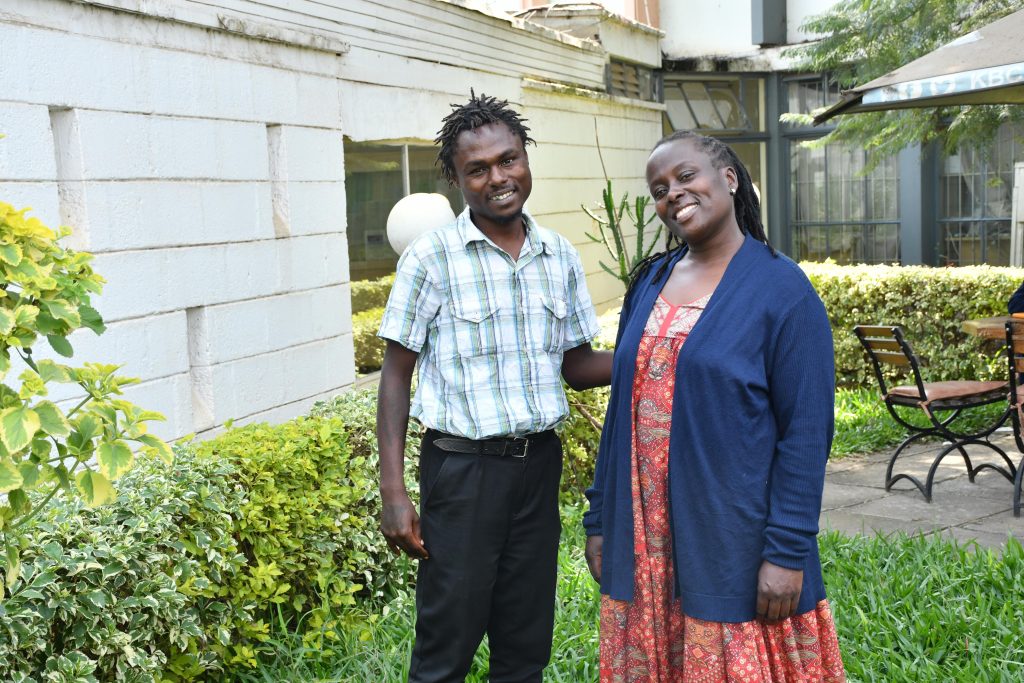
    Lorenzo with his mother

    Lorenzo contends that he nearly joined the street family before the mother sought intervention through a friend who recommended a youth centre at Kenyatta National Hospital which provides specialized outpatient care for adolescents and young adults.

    “I did not join the street family, but it was very close. I could leave the house at 5.30am in the morning and come back very late at night. My mother was not sure where I was and whether I will come back home or not”, he says.

    Lorenzo states that it was at the centre that he was diagnosed with Schizophrenia, a severe chronic brain disorder characterized by psychosis, including hallucinations, delusions, and disorganized thinking or behavior. The condition impacts how a person perceives reality, manages emotions, and relates to others.


    The 29-year-old mental health warrior says he started treatment at the youth centre and, takes his medication daily and attends his monthly clinics religiously to date. He is grateful to non-governmental organizations like Health Rights Advocacy Forum (HERAF) Kenya which has played a key role in his healing journey.

     One of the biggest barriers to improving men’s mental health is stigma. The fear of being seen as weak or being judged can hinder men from speaking openly about their mental health or seeking treatment. Health advocates encourage open conversations on mental health at home, in schools, and workplaces, to break some of the stereotypes associated with men seeking health interventions.

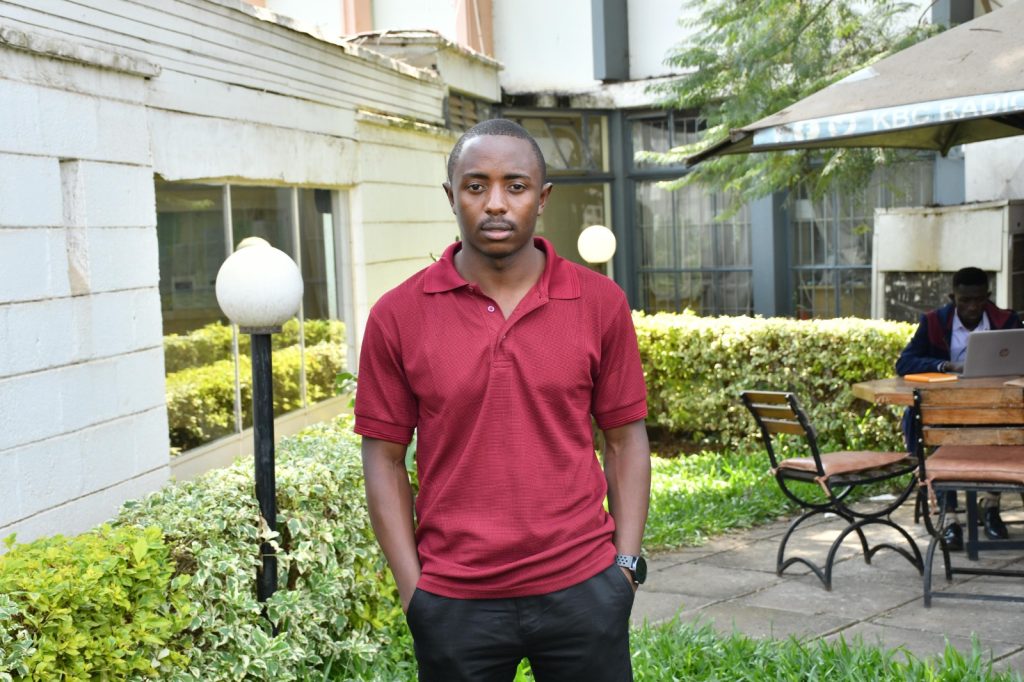
    Lordlaro Lidoros, Programs Assistant at HERAF Kenya and a mental health advocate, encourages employers and family members to look out for inconsistencies or irregular behavior that may raise a red flag that someone is going through mental illness.

    “If you see someone who was coming to work every day early, smartly dressed but starts coming late and untidy, withdraw from the social circles, tend to stick indoors and stay in the hiding, starts drinking too much or smoking, it is very important that you reach out to them, listen to them and encourage them to also speak up,” he recommends.

    Lordlaro Lidoros, Programs Assistant at HERAF Kenya and a mental health advocate

    Lordlaro adds that they have discovered from the work HERAF Kenya has been implementing that most men don’t access care. They don’t even take their drugs when given in hospitals. He says it is important for everyone in society to reach out to every man wherever they are, to encourage them to speak up so that they don’t suffer in silence.

    June is dedicated as Men’s Mental Health Awareness Month, a time set aside to breaking the stigma that discourages men and boys from expressing emotions, discussing their struggles, and seeking professional help.

    “June being a men’s mental health awareness month, we have had webinars to create awareness, X-spaces, community mental health outreaches targeting men and young boys. We are taking this conversation to workplaces, schools everywhere,” he highlights.

    Lordlaro says that his organization is supporting the integration of mental health into primary Health Care Systems, and working with the national government to support policy work related to all other aspects of mental health.

    Mental health affects every aspect of life, including work, relationships, physical health, and overall well-being. Some men may become withdrawn, angry, or engage in risky behaviours like alcoholism. Health experts advocates for turning awareness into action which underscores the urgent need to move beyond conversations and implement practical measures to mental health.

     Although Lorenzo is convinced that using drugs like marijuana, khat, and bhang may have triggered his mental health condition, he encourages other young people to avoid substance abuse and choose friends wisely.

     “To someone who is going through what I went through, especially the Gen Z, there is always hope. Seek help and if you are abusing any substance, stop it. Friends are there to help you but can also destroy you. So, choose your friends wisely,” he advises.

    Lorenzo, now a mental health advocate, says the daughter is now seven years old and is grateful that he was able to enrol into a government TVET institution and continue with his education where he studied electrical engineering.

    He encourages fellow men to speak up, seek health interventions and not to die in silence.

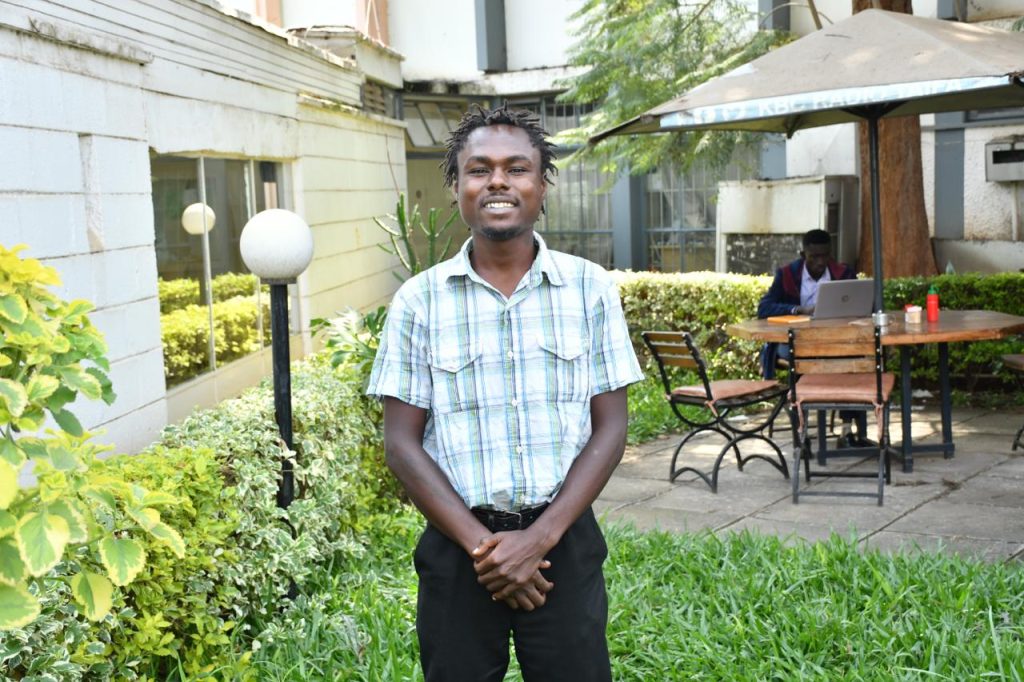
    “You can reach me through my Facebook Page, Lorenzo Ambiyo, we help each other through this journey of mental illness,” he concludes.

    Lorenzo Ambiyo, a Mental Health Warrior

    On his part, Lordlaro too encourages families and employers to create a conducive environment where people are free to speak about issues of mental health so that the society does not continue losing young men and boys to suicide, mental health conditions or drugs.