Author: Prudence Wanza

  • Siaya: Protests over gold mining firm leave two dead

    Siaya: Protests over gold mining firm leave two dead

    At least two people were killed on Monday in Gem–Ramula, Siaya County, following a mid-morning protest over alleged evictions linked to Shanta Gold Kenya Limited.

    Residents staged the demonstration demanding action on the evictions, but tensions escalated, leading to the fatalities.

    Local authorities have not yet released details on the circumstances of the deaths. The incident raises fresh concerns over community tensions and corporate land disputes in the region.

    However, authorities claim the protesters were stopped from attacking a local police station in Ramula Market.

    The 1154 acre project cut along the border of Siaya and Vihiga counties at Ramula Market.

  • Australia’s most-decorated living soldier arrested over alleged war crimes

    Australia’s most-decorated living soldier arrested over alleged war crimes

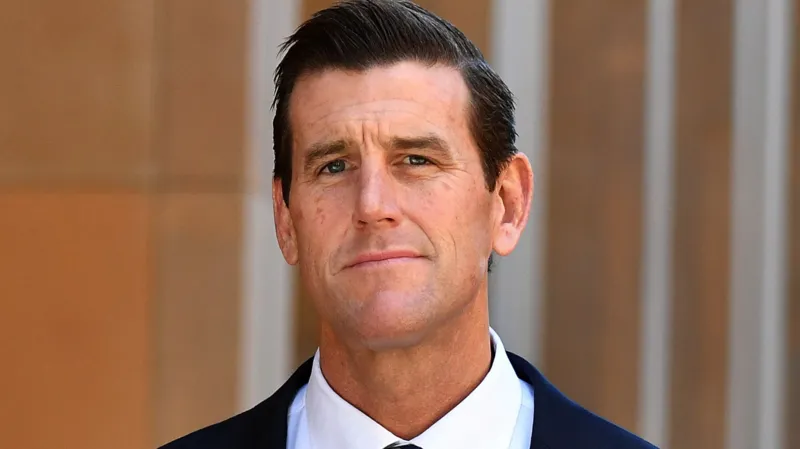
    Australia’s most-decorated living soldier has been arrested and will be charged over allegations he committed war crimes in Afghanistan.

    Ben Roberts-Smith – who left the defence force in 2013 – was detained at Sydney airport and is due to face court on Tuesday over five counts of the war crime of murder.

    A defamation judgement in 2023 found the former Special Air Service corporal and Victoria Cross recipient had killed several unarmed Afghans.

    The 47-year-old denies all wrongdoing, and has previously said the allegations against him – which have not yet been assessed at a criminal standard – are “egregious” and “spiteful”.

    The civil trial was the first time in history any court has examined claims of war crimes by Australian forces.

    Roberts-Smith argued the alleged killings occurred legally during combat or did not happen at all, and last year lost an appeal against the Federal Court finding.

    At a press conference in Sydney on Tuesday, the Australian Federal Police (AFP) confirmed a 47-year-old former soldier had been arrested and said he would be charged with killing unarmed detainees while serving in Afghanistan between 2009 and 2012.

    “It will be alleged the victims were shot by the accused or shot by subordinate members of the ADF (Australian Defence Force) in the presence of, and acting on the orders of the accused,” Commissioner Krissy Barrett said.

    In 2020, a landmark investigation known as the Brereton Report found “credible evidence” that elite Australian soldiers unlawfully killed 39 people in Afghanistan, recommending 19 current or former soldiers be investigated.

    A specialist team – called the Office of the Special Investigator (OSI) – was set up to do so. It has charged only one other person so far.

    Ross Barnett, director of investigations at OSI, said Mr Roberts-Smith’s arrest was a “significant step” under “challenging circumstances”.

    “The OSI has been tasked with investigating literally dozens of murders alleged to have been committed in the middle of a war zone in a country 9,000 kilometers from Australia,” he said.

    “We can’t go to that country, we don’t have access to the crime scenes… We don’t have photographs, site plans, measurements, the recovery of projectiles, blood spatter analysis… We don’t have access to the deceased.”

    Barrett added that allegations of misconduct were confined to “a very small section of our trusted and respected ADF”.

    “The majority of the ADF do our country proud,” she said.

    At the time Nine newspapers first published reports of the allegations in 2018, Roberts-Smith was considered a national hero, having been awarded Australia’s highest military honour for single-handedly overpowering Taliban fighters attacking his Special Air Service (SAS) platoon.

    In a bid to clear his name, he launched a high-profile legal battle – which spanned seven years, cost millions of dollars and was dubbed by some as Australia’s “trial of the century”.

    However a Federal Court judge found – on the balance of probabilities – that Roberts-Smith had taken part in at least four murders, a judgement upheld at appeal.

    Anthony Besanko found that Roberts-Smith had twice ordered unarmed men be shot dead to “blood” rookie soldiers, and was involved in the deaths of a handcuffed farmer he kicked off a cliff and a captured Taliban fighter whose prosthetic leg was taken as a trophy and later used by troops as a drinking vessel.

  • Seven Eritrean players fail to return home after international match

    Seven Eritrean players fail to return home after international match

    Seven players from the Eritrean football squad that scored a historic victory in Eswatini last week have failed to return home, a source close to the team has told the BBC.

    While some of their teammates flew back from Eswatini’s neighbour, South Africa, the seven are said to have absconded.

    There have been several cases when Eritreans competing in various sports have not gone home after international fixtures in recent years.

    Rights groups have described the government in Asmara as highly repressive – a charge which the authorities reject. Despite its small population, hundreds of thousands of Eritreans have sought asylum abroad.

    The news of the players absconding will come as a blow to the team, which, following its 2-1 win in Eswatini and 4-1 victory on aggregate, was celebrating a return to the qualifying group stages for the Africa Cup of Nations for the first time in 19 years.

    Only 10 of the 24-man squad were based in Eritrea and just three of those players, including team captain Ablelom Teklezghi, have now returned, sources in Asmara told BBC Tigrinya

    While it is unclear where the missing players have gone, reports say some of them have been seen in South Africa.

    Those who have absconded include goalkeeper Kubrom Solomon and veteran winger Medhanie Redie.

    Eritrea’s state-owned media outlets have been unusually quiet on the victorious team’s return, which would normally be accompanied by a big fanfare.

    Sources say preparations were made for a similar reception but was cancelled following news of the disappearance of the players.

    The spokesperson of Eritrea’s Sport and Culture Commission, who has been providing updates on social media about the recent success of the team, posted pictures of some of the returning players and staff in Egypt, where the Eritrean embassy and community members organised a reception for them.

    They stopped in Cairo on the way back to Eritrea.

    But the only players seen in those pictures were the ones who then went on to fly to Asmara.

    Many Eritrean fans had been hoping that the victory over Eswatini would lead to a renaissance of Eritrean football, but for many Eritreans the latest news has a familiar ring.

    Over the last two decades, the national team at different levels has been scarred by a series of events in which players, and even almost entire squads, have disappeared either before or after games abroad.

    In 2019, seven players from the Eritrean under-20 side went missing after playing in the East African regional championship in Uganda.

    In 2015, 10 senior squad players refused to return home after playing a World Cup qualifying match in Botswana.

    Two years earlier, 15 players and the team doctor were granted asylum in Uganda after they absconded.

    And in 2009 the entire senior team, apart from the coach and an official, failed to return home from Kenya.

  • Pressure mounts on IEBC to clarify on voter register changes 

    Pressure mounts on IEBC to clarify on voter register changes 

    Pressure is mounting for the Independent Electoral and Boundaries Commission (IEBC) to clarify a directive requiring Kenyans who registered before 2012 to register afresh.

    The directive has sparked criticism across the board amid queries on the integrity of the voter register.

    This comes as the commission’s 30-day Enhanced Continuous Voter Registration exercise enters week two which runs until April 28th with calls for civic education to safeguard public confidence in the process and increase the number of new registered voters.

    Registration centres have been set up across the country, including at constituency offices, Huduma Centres, universities and colleges, as well as the IEBC Customer Experience Centre at Anniversary Towers in Nairobi. But even as the commission moves to clean up its voter register, a directive for voters who registered 2012 to register afresh has sparked controversy.

    The commission in its defense say prior to 2012 the system was manual and did not capture biometrics such as fingerprints and photographs, which are critical in maintaining an accurate and credible voter register.

    The commission also says voter registration has been halted in electoral areas where by-elections and election petitions are ongoing including; Porro Ward, Endo Ward, Emurua Dikirr Constituency, Ol Kalou Constituency, Malava and Mbeere North.

    With only weeks remaining before the close of the enhanced voter registration exercise, attention is shifting to how the electoral body will address emerging concerns to ensure a credible, transparent and inclusive voter register ahead of the 2027 General Election.

  • Kindiki tells Mt. Kenya to back Ruto’s 2027 re-election bid

    Kindiki tells Mt. Kenya to back Ruto’s 2027 re-election bid

    Deputy President Professor Kithure Kindiki has vowed to thwart political inroads by his predecessor Rigathi Gachagua in the populous Mount Kenya region.

    Kindiki says the region should back President William Ruto’s re-election to guarantee their return to the top seat.

    During a consultative meeting with residents of Maara, Tharaka Nithi County, the Deputy President said he remains unbothered by Gachagua’s presence in the region.

    He maintains that he is solely focused on delivery of services but vowed to teach the former Deputy President a political lesson.

    Underscoring the importance of unity in the region, Kindiki rallied the residents to back President Ruto’s re-election bid saying he is a heartbeat away from succeeding the President in 2032.

    He announced plans to resume the construction of the Nithi Bridge blaming funding shortages and logistics for the delays.

  • Archbishop prays for Middle East peace in first Easter sermon

    Archbishop prays for Middle East peace in first Easter sermon

    The Archbishop of Canterbury called for an end to “violence and destruction” in the Middle East during her first Easter sermon as leader of the Church of England.

    Dame Sarah Mullally prayed “with renewed urgency” for peace before a congregation at Canterbury Cathedral, as the US-Israel war against Iran enters its sixth week.

    She called for all people of the Middle East and the Gulf to “receive the peace, justice and freedom they long for”.

    Her Easter sermon comes just shy of a fortnight after her installation as the first female Archbishop of Canterbury, during which she said her teenage self could “never have imagined the future that lay ahead”.

    She told the congregation on Sunday: “This week our gaze and our prayers have been turned towards the land where Jesus was crucified and raised from the dead.

    “Today, as we shout with joy that Christ is risen, let us pray and call with renewed urgency for an end to the violence and destruction in the Middle East and the Gulf.

    “May our Christian sisters and brothers know and celebrate the hope of the empty tomb – and may all people of the region receive the peace, justice and freedom they long for.”

    Thousands of people are reported to have been killed in the ongoing conflict that began on 28 February with widespread US and Israeli strikes on Iran, to which Iran responded by launching attacks on Israel and US-allied states in the Gulf.

    Israel has also since launched broad strikes across Lebanon after the Iranian-backed group Hezbollah fired rockets into northern Israel in retaliation for the killing of Iran’s supreme leader at the start of the war.

    Preaching on St John’s Gospel, the archbishop told the congregation that Jesus Christ’s resurrection began while Mary waited at his tomb in grief.

    She also prayed for people dealing with personal struggles and their “own version of the dark”, such as illness or bereavement.

    “I pray you know that God walks with you through that darkness,” she said.

    Previously the chief nursing officer for England, Dame Sarah paid tribute to those caring for others – such as loved ones and carers in hospitals or hospices.

    “This vigil of care is the work of remaining – of staying present in the quiet and the dark.”

    During her installation as archbishop in late March, Dame Sarah similarly prayed for peace and justice to prevail in “all war-torn areas of the world”.

  • Senegal bans ministers from foreign travel as oil price rise bites

    Senegal bans ministers from foreign travel as oil price rise bites

    Government ministers in Senegal have been banned from all non-essential foreign travel following the rise in the price of oil resulting from the conflict in Iran, the prime minister has announced.

    Speaking at a youth rally on Friday, Ousmane Sonko said that the current cost of a barrel of oil was approaching double what had been budgeted for.

    Sonko has postponed his own trips to Niger, Spain and France as part of the restrictions. He said that the mines minister would announce further measures to curb government spending in the coming week.

    Senegal’s move is the latest response from the continent to the oil price rise, which has seen countries reducing fuel levies and rationing electricity.

    In his speech to young people, the prime minister said he did not want to “frighten” his audience or put pressure on them. Instead, he wanted to give them a “sense of this world, which is a difficult world”, but added that though things were hard the Senegalese were resilient.

    Despite a fledgling oil and gas industry, Senegal relies heavily on importing fuel.

    Last year, the International Monetary Fund described the economy as “robust” with a growth rate of almost 8% and low inflation.

    But its public debt – standing at more than 130% of the total annual size of the economy – is high. Sonko, installed as prime minister two years ago, blamed the previous government for saddling his administration with the debt, which he said had made the current situation of dealing with the price of oil even more difficult.

    Elsewhere on the continent, this week South Africa’s government responded to the rising oil price by reducing the tax it charges on petrol in an effort to limit the increase of the cost of fuel at the pumps.

    Fuel shortages in Ethiopia have forced some government institutions to send employees on annual leave. South Sudan has started to ration electricity in its capital, Juba, while Zimbabwe is increasing the ethanol content in its petrol.

    The effective closure of the Strait of Hormuz in the Persian Gulf as a result of the US-Israeli war on Iran has also led to a restriction of the supply of fertiliser to the rest of the world. An estimated 30% of this essential farming input goes through the Gulf.

    Humanitarian organisation the International Rescue Committee warned on Wednesday that this was a “food security timebomb”, particularly for East Africa which relies on fertiliser imports from the Middle East.

  • Pope Leo calls for global leaders to choose peace in his first Easter Mass

    Pope Leo calls for global leaders to choose peace in his first Easter Mass

    Thousands of worshippers flocked to St Peter’s Square on Sunday to hear Pope Leo XIV deliver his first Easter Mass address as pontiff.

    Framed by white roses on the central balcony of the Vatican’s basilica, the pope called on “those who have the power to unleash wars” to choose peace.

    “On this day of celebration, let us abandon every desire for conflict, domination and power, and implore the Lord to grant his peace to a world ravaged by wars,” he said.

    The first US-born pope has become a vocal critic of the Iran war, and has used recent public addresses to denounce global conflicts and urge de-escalation.

    Pope Leo waved to the crowd gathered in the square below before delivering his “Urbi et Orbi” blessing – Latin for “to the city and the world”.

    St Peter’s Square was decorated with bright spring blooms, with rows of daffodils and thousands of purple, red and white flowers arranged for the Easter Mass.

    “We are growing accustomed to violence, resigning ourselves to it, and becoming indifferent, indifferent to the deaths of thousands of people,” the pope said in his address.

    “Let those who have weapons lay them down. Let those who have the power to unleash wars choose peace.”

    In a break with recent tradition, Leo did not explicitly name any country or conflict in his message.

    He paid tribute to his predecessor, Pope Francis, who gave his final address on Easter Sunday last year hours before his death.

    Referring to the Easter story of Christ’s resurrection, three days after he was nailed to the cross, he said Jesus had been “entirely nonviolent” in the face of suffering.

    For Christians, Easter is the most important date in the liturgical calendar, marking the resurrection of Christ – a central tenet of the faith.

    As bells rang out across the Vatican and the crowd applauded, Leo concluded his blessing by offering Easter greetings in several languages, including Latin, Arabic and Chinese.

    The pope also announced that he would return to the basilica on 11 April to lead a prayer vigil for peace.

    Leo has repeatedly denounced ongoing global conflicts in recent weeks, using a series of Holy Week addresses to warn against what he has described as a growing indifference to war and suffering.

    In his sermon during Saturday night’s Easter vigil, the pontiff urged believers not to feel numbed by the scale of global conflicts but to work actively for reconciliation.

    He made a rare direct appeal to Donald Trump on Tuesday, urging the US President to find an “off-ramp” to end the conflict with Iran.

  • Murang’a expands newborn unit at Level 5 Hospital to boost infant care

    Murang’a expands newborn unit at Level 5 Hospital to boost infant care

    The county government of Murang’a has taken a major step in improving maternal and child healthcare with the official launch of an expanded newborn unit at Murang’a Level 5 Hospital.

    The upgraded unit, which has increased its capacity by more than double, expanding from about 25 to over 60 newborns, is expected to significantly boost care for vulnerable infants

    The launch ceremony on Thursday was presided over by Governor Irungu Kang’ata, who was joined by Prof. William Macharia and Ms. Caroline Cheruiyot, representing key partners behind the project.

    The unit is expected to ease congestion that has long strained the facility, while also ensuring that more babies receive timely and specialized medical attention.

    Implemented through a partnership between the Murang’a County Government, NEST360 and the Clinton Health Access Initiative, the expansion is part of broader efforts to strengthen healthcare systems and improve neonatal outcomes not only in Murang’a but neighbouring counties.

    Speaking during the launch, Governor Kang’ata described the project as a critical investment in the future of the county, emphasizing its role in saving lives and improving health standards.

    “This expanded newborn unit is a major step forward in our mission to safeguard the lives of mothers and infants in Murang’a,” he said.

    “By increasing capacity and enhancing the quality of care, we are ensuring that every newborn has a fighting chance at life,” Kang’ata added.

    Healthcare workers at the facility welcomed the development, noting that the previous capacity often forced difficult decisions due to limited space and resources.

    With the expansion, the health workers will now be better equipped to handle more cases particularly those requiring intensive care.

    The involvement of partners such as NEST360 and the Clinton Health Access Initiative has also brought in improved equipment, training, and technical support, further strengthening the hospital’s ability to deliver quality neonatal care.

    Representatives from the partner organizations observed that such investments are crucial in reducing neonatal mortality, which remains a challenge in many parts of the country.

    “By improving infrastructure and expanding access to specialized care, counties like Murang’a are making meaningful progress toward better health outcomes for mothers and newborns,” noted Ms Cheruiyot, programme manager of Clinton Health Access Initiative.

    The launch of the expanded unit highlights Murang’a County’s continued commitment to enhancing healthcare delivery through strategic partnerships and sustained investment in critical services.

    As the facility begins full operations, residents are expected to benefit from improved access to life-saving care, offering renewed hope to families and reinforcing the county’s focus on protecting its youngest and most vulnerable citizens.

  • Fuel scandal: Ruto vows to dismantle cartels in oil sector

    Fuel scandal: Ruto vows to dismantle cartels in oil sector

    President William Ruto has vowed decisive action against cartels in the energy sector, warning that those behind the unfolding fuel importation scandal will be held accountable.

    Speaking on Sunday during a church service at Impopong Methodist Church in Kilgoris, Narok County, Ruto said his administration will not tolerate any form of corruption or acts that amount to economic sabotage.

    The Head of State said the government has previously dismantled cartels in the fertiliser, sugar and coffee sectors, and similar action will be taken in the energy sector.

    “This is the administration that is going to deal firmly, decisively and conclusively with all cartels. We finished the cartels in the fertiliser sector, we finished the cartels in the sugar sector, we finished the cartels in the coffee sector, we will deal with the cartels in the oil sector,” he said.

    The President’s remarks come amid the resignation of three top energy officials; EPRA Director General Daniel Kiptoo, Kenya Pipeline Company Managing Director Joe Sang, and Petroleum PS Mohamed Liban.

    The three were arrested by the Directorate of Criminal Investigations (DCI) over allegations of falsifying domestic fuel stock levels, creating panic and an artificial supply crisis.

    Authorities say this facilitated an emergency fuel shipment procured outside the government-to-government framework at more than three times the contracted price, and of substandard quality.