Author: Ronald Owili

  • KRA reports third quarter revenue growth of 11pc to Ksh 2.04T

    KRA reports third quarter revenue growth of 11pc to Ksh 2.04T

    The Kenya Revenue Authority (KRA) has reported a revenue growth of 11.4pc to Ksh 2.04 trillion shillings in the third quarter of the current fiscal year.

    The authority missed its collection target of Ksh 2.12 trillion for the period after realising a performance rate of 96.1pc.

    Nonetheless, strong customs enforcement in the during the period to March 3, 2026 helped KRA achieve it’s customs revenue target with a performance rate of 100.9pc.

    Customs revenue rose by 13.3pc quarter-on-quarter to Ksh 733.7 billion from Ksh 647.6 billion.

    “Revenue collection maintained steady quarter-on-quarter growth across all three quarters, indicating improving compliance consistency and gradual strengthening in economic activity. The consistent growth trend reflects the positive impact of ongoing compliance and facilitation interventions,” said Humphrey Wattanga, KRA Commissioner General.

    Latest data by the authority indicates that domestic revenue remains the largest revenue contributor after growing by 10pc to Ksh 1.3 trillion.

    On the other hand, KRA beat agency revenue target by 101.4pc after collection rose by 10.7pc to Ksh 204.5 billion from Ksh 184.7 billion collected over the same period last year.

    “Revenue performance was delivered within a still-constrained macroeconomic environment marked by subdued household purchasing power, soft consumer demand, elevated business costs, and continued global trade uncertainty. This resilience demonstrates continued taxpayer responsiveness, expanding compliance,” he added.

    Revenue collected on behalf of the National Treasury amounted to Ksh 1.8 trillion, reflecting a performance rate of 95.5pc against a target of Ksh 1.9 trillion.

    According to KRA, exchequer revenue grew by 11.5pc compared to the Ksh 1.6 trillion collected in the same period in the previous financial year.

    In the 2025/26 financial year, KRA has been given a target of Ksh 2.97 trillion meaning the authority will need to collect Ksh 930 billion between now and June 30, this year.

  • Oil prices rise ahead of Trump’s Iran deal deadline

    Oil prices rise ahead of Trump’s Iran deal deadline

    Global oil prices rose on Tuesday afternoon in Asia ahead of a deadline set by US President Donald Trump for Iran to open the crucial Strait of Hormuz shipping route.

    The price of global benchmark Brent crude was up by about 1.4% to $111.33 (£84.13) a barrel, while US-traded oil gained 2.8% to $115.61.

    On Monday, Trump threatened to take out Iran “in one night” if it failed to agree a deal with the US by 20:00 Washington DC time on Tuesday (00:00GMT Wednesday).

    Oil and gas shipments from the Middle East have been severely disrupted as Tehran threatens to attack vessels that try to use the strait in retaliation for US and Israeli airstrikes since 28 February.

    Speaking at the White House, Trump said that he believed “reasonable” leaders in Iran were negotiating in “good faith”, but that the outcome is still uncertain.

    Iran has so far rejected proposals for a temporary ceasefire, demanding a permanent end to the war and the lifting of sanctions against the country.

    The rise in prices today suggests investors believe it may be harder than expected for the US to reach a deal due to Iran’s hardline stance and that the war could be drawn out, Ye Lin from research firm Rystad Energy said.

    Meanwhile, traders are also trying to work out whether Trump actually wants a deal or if he is “just putting up a smokescreen” while preparing for a larger attack, she said.

    Disruption to shipping in the Strait of Hormuz has pushed up the price of energy around the world and raised concerns about higher inflation globally.

    Around a fifth of the world’s oil and gas shipments usually pass through the narrow waterway.

    Major economies in Asia, including Japan and South Korea, have been particularly impacted by the disruptions as they are heavily reliant on energy from the Middle East.

    While some ships have used the strait in recent weeks it has been at a much lower volume than before the conflict.

    Trump has also urged countries to send warships to the region to ensure more vessels can safely pass through the waterway.

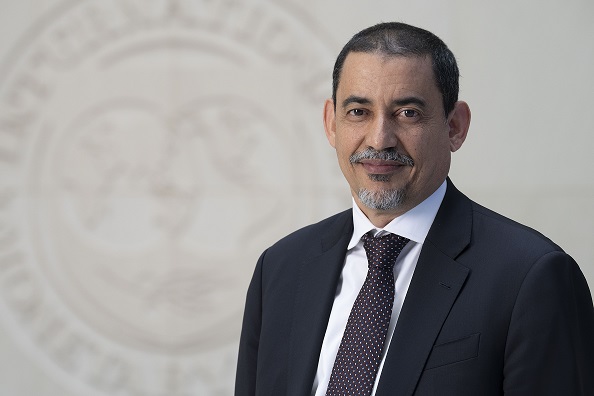
  • IMF taps Mauritanian, Zeine Zeidane to head African Department

    IMF taps Mauritanian, Zeine Zeidane to head African Department

    Former Mauritania Prime Minister Zeine Zeidane has been appointed as the new Director of the African Department at the International Monetary Fund (IMF).

    While making the announcement, IMF Managing Director Kristalina Georgieva said Zeidane will succeed Abebe Aemro Selassie who retires from the Fund effective May 1, 2026.

    “Zeine will bring deep institutional knowledge, sound judgment, and strong policymaking experience to the department as it continues to respond to sub-Saharan Africa’s growing demands for tailored policy advice, financing, and capacity development,” said Georgieva.

    Zeidane has over two decades of experience in macroeconomic policymaking and international economic cooperation and currently serves as Deputy Director in the Middle East and Central Asia Department (MCD), overseeing the IMF’s engagement with major economies in the Gulf region.

    Zeidane previously served in AFR as a Deputy Director and also played a central role in shaping Fund policies to better meet the needs of sub-Saharan Africa.

    “I am confident that he will successfully lead AFR with a shared sense of purpose in advancing its mandate and serving our membership,” added Georgieva.

    Zeidane also held several of the most senior economic policymaking positions in Mauritania including serving the central bank governor and Economic Advisor to the President.

    He holds a PhD in Applied Mathematics and a postgraduate degree in Macroeconomics from the University of Nice.

  • Oil prices choppy after expletive-laden Trump threat to Iran

    Oil prices choppy after expletive-laden Trump threat to Iran

    Oil prices saw choppy trading on Monday morning in Asia after US President Donald Trump threatened to destroy critical infrastructure in Iran unless it allows ships to cross the Strait of Hormuz.

    In an expletive-laden social media post on Sunday, Trump said the US would attack power plants and bridges unless the crucial waterway is open by late Tuesday US time.

    Brent crude rose above $110 (£83.38) a barrel before those gains eased after a report of US-Iran talks over a potential ceasefire.

    Oil and gas shipments from the Middle East have been severely disrupted as Tehran threatens to attack vessels that try to use the strait in retaliation for US and Israeli airstrikes since 28 February.

    News website Axios reported that the US, Iran and a group of regional mediators are discussing the terms of a potential 45-day ceasefire that could lead to a permanent end to the conflict, citing US, Israeli and regional sources.

    BBC News has not verified the report. The White House did not immediately respond to a request for comment.

    Before lunchtime in Asia, Brent crude was 0.7% higher at $109.80, while US-traded oil was broadly flat at $111.62.

    Oil prices will remain volatile and swing with each headline of the war’s escalation and easing, said Sushant Gupta from consultancy Wood Mackenzie.

    The focus remains on whether energy shipments from the Gulf can resume to ease a supply shortage that has impacted countries around the world, he said.

    Disruption to shipping in the narrow waterway, through which a fifth of the world’s energy shipments usually passes, has pushed up the price of energy around the world and raised concerns about higher inflation globally.

    Oil prices rose above $100 a barrel last week after Trump intensified threats against Iran, warning that US airstrikes over the next few weeks would send the country “back to the Stone Ages”.

    Iranian attacks on oil facilities in the Gulf continued over the weekend.

    Tehran claimed responsibility on Sunday for a wave of strikes on petrochemical plants in Kuwait, Bahrain and the United Arab Emirates.

    On Monday, the Iranian Revolutionary Guard Corps (IRGC) warned that its attacks against US economic interests would be intensified if civilian infrastructure in its country continues to be targeted.

    On Sunday, Opec+ – which includes major oil‑producing members of the Organization of the Petroleum Exporting Countries like Saudi Arabia and Russia – agreed a small increase to crude output in May.

    But the 206,000 barrels a day production hike will largely exist on paper only as several of the group’s key members are unable to increase output due to the conflict.

    Trump has postponed several deadlines for Iran to remove its threats against ships using the strait but repeated his demands in the strongly-worded Truth Social post.

    The paragraph below contains very strong language.

    Trump wrote on Sunday: “Tuesday will be Power Plant Day, and Bridge Day, all wrapped up in one, in Iran. There will be nothing like it!!! Open the Fuckin’ Strait, you crazy bastards, or you’ll be living in Hell – JUST WATCH! Praise be to Allah. President DONALD J. TRUMP”.

    A few hours later, in a post on the same platform he said: “Tuesday, 8:00 P.M. Eastern Time!”

    Trump told Fox News there was a “good chance” an agreement would be reached on Monday, but said he was considering “blowing everything up and taking over the oil” if a deal was not reached soon.

    Senior Iranian military officer Gen Ali Abdollahi Aliabadi dismissed an earlier Trump deadline, calling it “helpless, nervous, unbalanced and stupid”, adding that “the gates of hell will open” for the US leader.

  • Government plots reforms for managing Ksh 4.6T of public assets

    Government plots reforms for managing Ksh 4.6T of public assets

    Public Investments and Assets Management Principal Secretary Cyrell Wagunda has unveiled an ambitious reform agenda aimed at streamlining state corporations and standardizing asset management across government.

    Appearing before the National Assembly’s Public Debt and Privatization Committee chaired by Shurie Abdi Omar, the Wagunda detailed sweeping measures designed to enhance transparency, eliminate inefficiencies, and improve returns on public assets.

    Wagunda revealed that as of June 30, 2025, the National Government’s total asset portfolio stood at Ksh 4.9 trillion, with state corporations accounting for the bulk of the holdings.

    He said the valuation stems from ongoing efforts to compile and harmonize asset registers across ministries, departments, and agencies.

    “This process is about bringing order and structure to how government assets are identified, valued, and managed,” Wagunda told the committee.

    A key pillar of the reforms is the rollout of the Electronic Government Procurement (EGP) system, which seeks to address widespread inconsistencies in public procurement pricing.

    The platform is expected to standardize costs for commonly purchased goods and curb wasteful expenditure.

    “This system is the way to go. We have seen situations where this water, when it is bought here, could be Sh100. When it goes to another state department, it is Ksh 500. This system is bringing standardization so that we can cut wastage in government,” he explained.

    The committee was also briefed on the first phase of state corporation reforms, which will see 23 entities merged into nine new government-owned enterprises, alongside the dissolution of 16 others, including six regional development authorities.

    The restructuring is aimed at reducing duplication, lowering administrative costs, and enhancing operational efficiency.

  • Trump imposes 100% tariff on certain pharmaceuticals imports

    Trump imposes 100% tariff on certain pharmaceuticals imports

    US President Donald Trump on Thursday imposed a 100 percent ad valorem tariff on imports of certain patented pharmaceuticals and associated pharmaceutical ingredients.

    In an executive order signed Thursday, Trump said such imports are “in such quantities and under such circumstances as to threaten to impair the national security of the United States.”

    The tariffs imposed will be effective on or after 12:01 a.m. eastern daylight time on July 31, 2026.

    The tariffs will be 20 percent for products of companies that have, or are likely soon to have, onshoring plans approved by the US secretary of commerce, but will increase to 100 percent on April 2, 2030, the order said.

    Japan, the European Union, the Republic of Korea, Switzerland and Liechtenstein, which have struck trade deals with the US, will face a 15 percent tariff, while Britain will face a 10 percent tariff, according to the order.

    Generic pharmaceutical products, biosimilars and related ingredients have been exempted from tariffs at this time, including nuclear medicines, plasma-derived therapies, fertility treatments, and cell and gene therapies, the order said.

  • Dr. Ann Njeri Karimi appointed NBA acting chief executive

    Dr. Ann Njeri Karimi appointed NBA acting chief executive

    Dr. Ann Njeri Karimi has been appointed as the Acting Chief Executive Officer of the National Biosafety Authority (NBA).

    Her appointment follows the exit of Nehemiah Ngetich whose term has ended.

    Dr Karimi was appointed after the authority held its 53rd special meeting held on April 2, 2026.

    In a statement the board said “all members of staff are hereby called upon to accord Dr. Karimi the necessary support and cooperation as she assumes the role, in order to continue advancing the Authority’s mandate and strengthening its impact.”

    Before her appointment director corporate services. She holds a Doctor of Philosophy in Business Administration.

  • Kenya tea export earnings rise to Ksh 186B on high demand

    Kenya tea export earnings rise to Ksh 186B on high demand

    Kenya has earned Ksh 186.9 billion from tea exports owing to increased demand on the international market and additional markets.

    Latest data by the Tea Board of Kenya (TBK) shows that export earning last year increased b 2.9pc from Ksh 181.7 billion the country earned in 2024.

    During the period, TBK says export volume increased by 9.8pc or 58.3 million kilos from 594.5
    million kilos recorded during the previous year to 652.8 million kilos on account of high volume of unsold stocks carried over from 2023 and 2024 due to CTC glut.

    Speaking during the announcement of the data, Agriculture Cabinet Secretary Mutahi Kagwe said despite the challenges that prevailed last year including stronger exchange rate, conflicts in some markets and weak growth of the global economy, the sector ramainde resilient.

    “In 2025, the total marketed value of Kenyan tea reached Ksh 218.79 billion, an increase of 2pc from the marketed value of Ksh 215.21 billion recorded in 2024, and 11pc from Ksh  196.97 billion recorded in 2023,” said Kagwe.

    Of the total marketed value, domestic sales accounted for Ksh 19.13 billion  after growing by 6pc from Ksh 18 billion while committed stock rose by 22pc to Ksh 15.52 billion from Ksh 12.75 billion.

    According to TBK, export prices and the exchange rate to the US dollar were less favourable to the earnings as the average export unit price was slightly lower at $2.21 per kilo compared to $2.27 per kilo in 2024.

    Kagwe said the government is plotting additional interventions targeting the tea sector which is expected to increase farmer earnings under the Bottom-up Economic Transformation Agenda (BETA).

    “To achieve the BETA target aimed at increasing smallholder earnings from Ksh 59 in 2022 to Ksh 100 per kg by 2027 of Greenleaf,” he added.

    Last year, Kenya tea export destination rose to 100 from 96 with Pakistan accounting for the largest share of exports at 36pc equivalent to 235.13 million kilos valued at Ksh 73.41 billion.

    Despite the increase in earnings, total tea produced last year declined by 8pc to 550.37 million kilos from 598.5 million kilos in 2024 and  570.26 million kilos in 2023 on account of erratic and poorly distributed rainfall.

  • Treasury mulls reviewing levies to cool fuel prices

    Treasury mulls reviewing levies to cool fuel prices

    The government is considering reviewing some levies on petroleum products to make fuel affordable in coming months amid price volatility driven by the war in the Middle East.

    National Treasury Cabinet Secretary John Mbadi said the review will aim at ensuring that fuel prices remain stable.

    Crude oil surged as much as 64pc with Brent hitting $119.50 dollars per barrel three weeks ago, and since then the prices have remained volatile oscillating around the 100 dollar mark, as the war in the Middle East rages on.

    This has sparked fears that pump prices in Kenya are likely to be hiked in coming days. Mbadi said the government is considering a number of measures to cushion Kenyans.

    Mbadi told the National Assembly Departmental Committee on Finance and National Planning that as at 30th March 2026, Kenya had enough super petrol to last 16 days, diesel for 19 days and jet fuel to last 49 days.

    Mbadi said freight and shipping costs have drastically risen with the government now directing slaughter houses to reduce production as they find an alternative livestock markets.

    Mbadi said the Kenyan economy might be negatively impacted if the Middle East war persists.

  • Nairobi County’s Ksh 86B pending bill now exceeds annual budget

    Nairobi County’s Ksh 86B pending bill now exceeds annual budget

    Nairobi City County is now the largest holder of unpaid bills by county governments totaling Ksh 86.8 billion, which exceeds its annual budget by Ksh 43.2 billion.

    According analysis by the National Treasury, Nairobi City accounted for 47pc of total bills owed to various suppliers by the devolved units totaling Ksh 183 billion as of June 2025.

    “As of 30th June 2025, County Governments reported outstanding pending bills amounting to KSh 183.0 billion. This comprises Ksh 130.8 billion for recurrent activities and Ksh 52.2 billion for development activities,” said Treasury in the approved 2026 Budget Policy Statement.

    The data shows that the county’s recurrent unpaid bills amounted to Ksh 78.9 billion by the close of the 2024/25 financial year while development unpaid bills totaled Ksh 7.2 billion.

    Nairobi County Assembly also owed supplier Ksh 650.6 million.

    The Ksh 86.8 billion pending bill was 199pc more than the for FY2024/25 budget which amounted to Ksh 43.6 billion.

    Kilifi County had the second highest accumulated arrears totaling Ksh 9.3 billion equivalent to 43pc of its annual budget of Ksh 21.4 billion during the period while Machakos County followed with Ksh 6.7 billion in pending bills.

    On average, Treasury says the total pending bills by County Governments accounted for 30pc of the total county government approved budgets in FY 2024/25.

    “An analysis of the aged pending bills for County Governments as of 30th June 2025 shows that Ksh 48.9 billion (27pc) are under one year, Ksh 19.8 billion (11pc), are aged between one and two years, Ksh 20.34 billion (11pc), are aged between two and three years, and Ksh 85.4 billion (45pc), are older than three years. This analysis excludes aged pending bills for Kakamega and Narok Counties,” Treasury indicated.

    Elgeyo Marakwet County had the least amount of pending bills amounting to Ksh 12.1 million followed by Lamu, Kitui and Samburu counties which had unpaid bills totaling Ksh 32 million, Ksh 229.9 million and Ksh 231 million respectively.
    The total pending bills by county executives totaled Ksh 177.9 billion, while those for the county assemblies amount to Ksh 5.1 billion.