Author: Ronald Owili

  • Many stranded as more towns report fuel shortage

    Many stranded as more towns report fuel shortage

    Motorists across the country continue to face fuel shortage despite the assurance by the government that the country has sufficient stock.

    A spot check across the country has revealed that some motorists and commuters have been stranded as various petrol stations fuel stations closed after running out of the commodity.

    This comes despite the Kenya Pipeline Company (KPC) say the country is holding sufficient fuel in its inventory to sustain current demand.

    “We wish to assure the public that there is sufficient fuel stock in all of our terminals and depots and that the product meets national international quality standards as prescribed by relevant certification bodies,” said Pius Mwendwa, KPC Acting Managing Director.

    However, motorists across the country continue to report fuel shortage as the situation intensifies on Thursday.

    In Busia County, some consumers could not secure the commodity as a spot check showed closure of at least five fuel stations in Busia town.

    The situation was replicated in Murang’a County where motorists and commuters faced similar challenges according to the Kenya News Agency (KNA).

    “It feels like some stations are holding back fuel so they can sell at higher prices later because there is a looming hike with the upcoming prices review. That is why we are seeing shortages now,” observed Mugo Kimani a boda boda rider

    In Murang’a and Kenol towns, long queues have been witnessed at one of the few petrol stations still dispensing fuel, with motorists and boda boda riders waiting for hours in a bid to secure the now rare commodity.

    A tuk-tuk driver, Sammy Mwangi, said the uncertainty has forced them to adjust their operations.

    “We cannot risk moving long distances without knowing whether we will get fuel. We are now operating within limited areas to avoid being stranded,” he said.

    KPC has maintained that the country currently has 166,595 litres of super petrol, 182,508 litres of diesel and 82,434 litres of jet fuel in its depots and terminals across the country.

  • Certified seeds production rises to 45M kilos

    Certified seeds production rises to 45M kilos

    Kenyan farmers should expected stable supply of certified seeds after the country recorded significant increase in production.

    According to Kenya Seed Company chairperson Purity Ngirici the state agency has managed to produce 45 million kilogrammes of certified seeds in the first three quarters of the 2025/2026 season.

    “Farmers were complaining when supplies were low. That is why we decided to scale up production and also ensure they access all necessary farm inputs,” she explained.

    The rise in production is expected to strengthen the country’s food security efforts and reduce overreliance on imported seeds.

    “In the 2025/2026 season, we have produced 45 million kilogrammes of seeds and we are still increasing. We are confident that we may hit 50 million kilogrammes before June,” said Ngirici.

    She assured farmers that the increased output will eliminate counterfeit seeds in the market.

    “We want to guarantee farmers that there will be no fake seeds. All seeds distributed through Kenya Seed and Simlaw Seeds are certified and meet quality standards,” she added.

    Agriculture Cabinet Secretary Mutahi Kagwe lauded the agency’s performance, terming it a major milestone in the country’s agricultural sector.

    “This is a commendable effort. Increasing production to such levels shows what can be achieved with commitment and proper coordination,” Kagwe said.

    He stressed the importance of synergy among agricultural institutions, noting that collaboration between agencies such as Kenya Seed Company, ADC farms and the National Cereals and Produce Board is key to efficient service delivery.

    “We cannot work in isolation. These institutions must complement each other if we are to achieve food security,” he stated.

    Kagwe revealed that more than seven million farmers have already been registered to benefit from government support through provision of seeds and fertilizers aimed at increasing productivity.

    He further disclosed that his ministry is planning broader consultations with lawmakers to strengthen policy direction.

    “Soon, I will convene a meeting with Members of Parliament and senators to develop strategies that will enhance food security and ultimately reduce, and even stop, food imports into Kenya,” he said.

    The CS noted that Kenya currently spends close to Ksh 500 billion annually on food imports, a cost he said can be significantly reduced through improved local production.

    During the meeting, state agencies under the ministry signed performance contracts, signalling renewed commitment to accountability and results.

  • Madagascar declares state of emergency over severe fuel shortages linked to Iran war

    Madagascar declares state of emergency over severe fuel shortages linked to Iran war

    Madagascar has declared a two‑week nationwide state of energy emergency amid severe fuel shortages caused by the US and Israel’s war in Iran.

    The presidency said the decision was taken following Tuesday’s cabinet meeting over fears the situation could lead to public disorder.

    The Indian Ocean island, which relies on oil to produce much of its electricity, is dependent on fuel imports from the Middle East – and supplies are likely to be disrupted for sometime despite the two-week ceasefire announced overnight.

    Last year, persistent power and water shortages in Madagascar led to youth-led protests, which escalated to broader political unrest, resulting in a military takeover.

    It is not clear exactly what measures the government intends to take – but it says it now has the powers to stabilise the country’s power sector, mitigate further disruptions, manage consumption and ensure continuity of public services.

    So far fuel prices have not increased since the crisis began though there have been shortages with reports of drivers queuing for hours.

    News of the state of emergency led to panic buying at some petrol stations on Wednesday – with some reportedly rationing how much each customer can buy, according to local media.

    Most of Madagascar’s oil comes from Oman, south of the Strait of Hormuz – the key global energy shipping route that has been affected by war that started on 28 February.

    Nonetheless, the price of oil remains considerably higher than before the conflict and analysts say it could take months or even years to repair the damage done to supply capacity in the region.

    Madagascar is among several African countries taking urgent action to stem the affects of these disruptions. Some have resorted to raising or subsidising fuel prices and rationing electricity.

    The Gambia has just ordered the immediate suspension of all non‑essential official travel by government officials, days after Senegal implemented a similar move.

    Zambia recently suspended taxes on petrol and diesel imports, while Botswana scrapped fuel levies for six months to cushion consumers from price rises.

  • KPC says current fuel stock sufficient 

    KPC says current fuel stock sufficient 

    Kenya Pipeline Company (KPC) has maintained there is enough fuel in the country even as consumers report fuel shortage in various parts of the country.

    The firm has published data of super petrol, diesel and kerosene currently available at it depots.

    As of Wednesday, motorists in some regions were forced to queue at various petrol stations which apparently had run out of fuel while others were completely closed.

    “We wish to assure the public that there is sufficient fuel stock in all of our terminals and depots and that the product meets national international quality standards as prescribed by relevant certification bodies,” said Pius Mwendwa, KPC Acting Managing Director.

    KPC latest inventory shows that the country has 166,595 litres of super petrol, 182,508 litres of diesel and 82,434 litres of jet fuel in its stores.


  • Dr Lilian Nyawanda takes over as KRA Acting Commissioner General

    Dr Lilian Nyawanda takes over as KRA Acting Commissioner General

    Dr Lilian Nyawanda, the current Commissioner of Customs and Border Patrol at Kenya Revenue Authority (KRA) has assumed the duties of Commissioner General in an acting capacity.

    This follows termination of Humphrey Wattanga’s contract announced on Wednesday by KRA Board Chairman Ndiritu Mureithi.

    During the announcement, Mureithi also sent the former commissioner general on terminal leave with immediate effect.

    “The Board takes this opportunity to commend the outgoing Commissioner General for his dedicated service and leadership to the Authority and country,” he added.

    Wattanga who is credited for undertaking organizational restructuring at the tax body was appointed to the position in August 22, 2023 and had at least five months remaining in his current contract of service.

    Dr Nyawanda is now expected to execute the duties of the office as the board commences the recruitment of a substantive commissioner general.

  • CBK holds interest rates steady in latest review

    CBK holds interest rates steady in latest review

    The Central Bank of Kenya (CBK) has kept its lending rate unchanged at 8.75pc in a move expected to continue strengthening the credit market and keep inflation in check.

    In its meeting on Wednesday, the CBK Monetary Policy Committee said the holding of the Central Bank Rate (CBR) remains appropriate to keep inflation rate within range of 2.5pc-7.5pc and stabilize the exchange rate.

    The committee noted that headline inflation stood at 4.4pc last month compared to 4.3pc in February though warned of risks associated with global energy prices as a result of tension in the Middle East.

    “Despite expected upward pressure from higher energy prices, overall inflation is expected to remain within the target range in the near term, supported by appropriate monetary policy actions, expected stability in food prices attributed to favourable weather conditions, and a broadly stable exchange rate,” said CBK.

    During the meeting, MPC said the banking sector remains resilient backed by strong liquidity and capital adequacy ratios.

    While there was an improvement in credit to private sector which improved to 8.1pc in March from 7.4pc in February, there was notable increase in Non-Performing Loans (NPL).

    The ration of NPLs to gross loans rose to 15.6pc last month from 15.4pc in December mainly attributed to increase of NPL in personal and household, trade, agriculture and manufacturing sectors.

    “Growth in credit to key sectors of the economy, particularly building and construction, trade, agriculture and consumer durable remained strong, reflecting improved demand for credit in line with the declining lending rates,” added MPC.

    Average lending rates by banks was recorded at 14.7pc in March down from 14.8pc in February signaling effects of earlier reduction in the benchmark rate.

  • Security, demonstration victims win as MPs raise budget by Ksh 393B

    Security, demonstration victims win as MPs raise budget by Ksh 393B

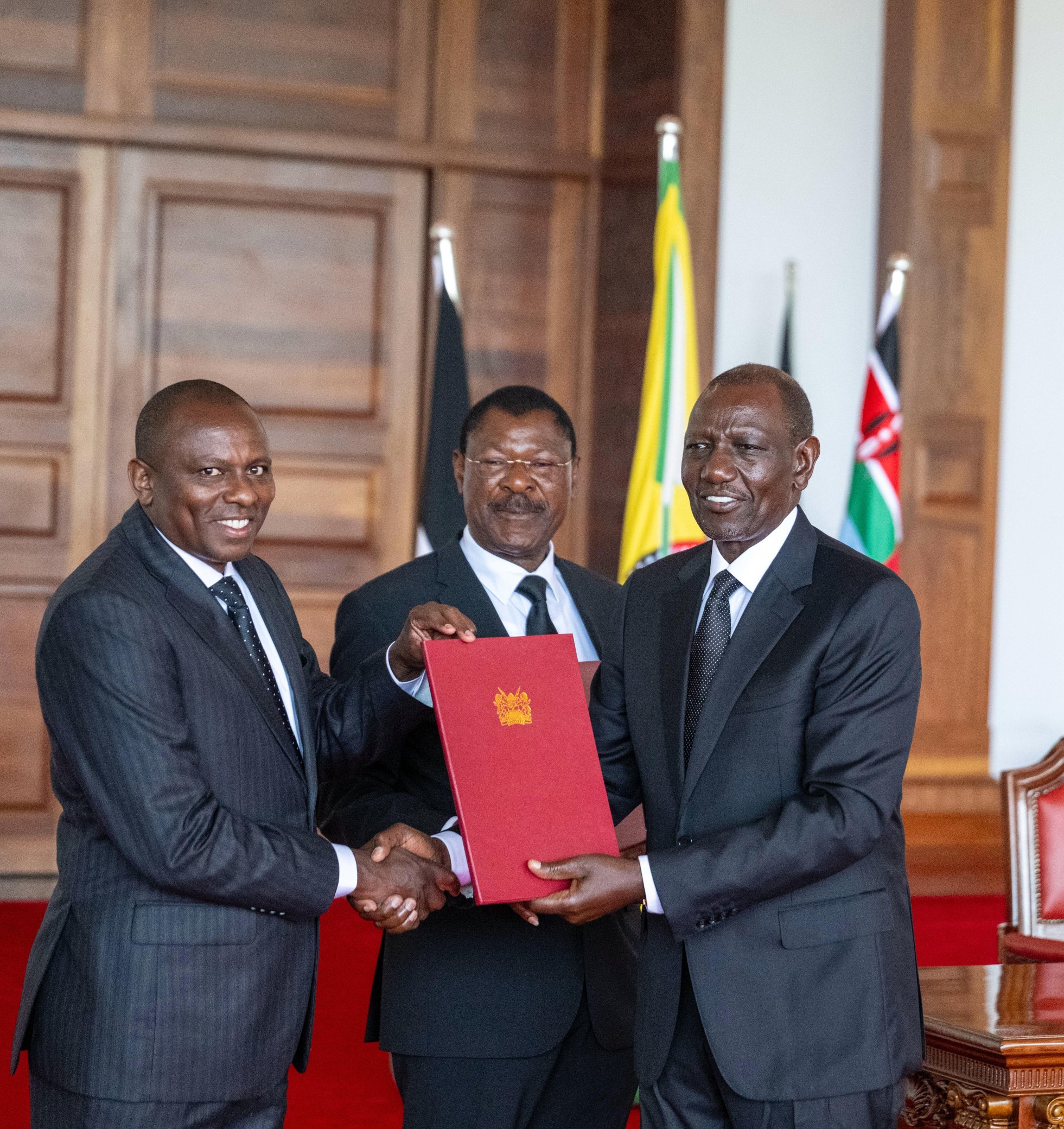
    President William Ruto has signed into law the Supplementary Appropriations Bill raising current fiscal spending by 9.1pc to Ksh 393.2 billion.

    This effectively increases the FY2025/26 budget to Ksh 4.695 trillion from the original Ksh 4.301 trillion.

    The new budgetary injection has allocated Ksh 363.9 billion for the National Government while Ksh 29.27 billion will be allocated to the Consolidated Fund Services (CFS).

    Of the additional expenditure, recurrent expenses amount to Ksh 229.4 billion while development expenses totals Ksh 134.5 billion.

    The approved Supplementary Estimates 1 for FY2025/26 grants security docket the largest appropriation amounting to Ksh 60 billion out of which the State Department for Internal Security and National Administration will spend Ksh 11.9 billion.

    The department is expected to spend the new allocation on security operations to the rune of Ksh 3.9 billion.

    Victims of demonstrations which occured in 2024 during the anti finance bill protests will also benefit after the National Assembly approved Ksh 2 billion as compensation.

    The Independent Electoral and Boundaries Commission (IEBC) has also secured Ksh 2.9 billion to clear unpaid legal bills in a bid to ensure stability, security and restore confidence in the electoral body.

    Education sector has received the second highest additional allocation amounting to Ksh 45.3 billion out of which Teachers Service Commission will receive Ksh 24.2 billion to cover salary shortfalls and health insurance contributions for teachers.

    Health sector has also been added Ksh 5.5 billion out of which the Ksh 4 has been appropriated to settle pending bills by the defunct National Health Insurance Fund (NHIF).

    Affordable Housing Programme which is one of the priorities under the Bottom-up Economic Transformation Agenda (BETA) will receive additional Ksh 25 billion to accelerate delivery of housing units being developed by the state.

    The government has also injected additional Ksh 17 billion to the agriculture to enhance productivity of the sector.

    The fertilizer subsidy programme will receive additional Ksh 10 billion bringing total allocation in the current financial year to Ksh 18 billion.

    Other approved appropriations include Ksh 350 million for blue economy and fisheries to improve marine conservation and sustainable fishing while Forestry Department has secured Ksh 2 billion for sustain the tree growing campaign by the government.

  • Oil plunges after US-Iran ceasefire deal to reopen Strait of Hormuz

    Oil plunges after US-Iran ceasefire deal to reopen Strait of Hormuz

    Global oil prices have fallen sharply and stock markets have jumped after the US and Iran agreed to a conditional two-week ceasefire deal that includes the reopening of the key Strait of Hormuz waterway.

    The price of benchmark Brent crude fell by about 13% to $94.80 (£70.73) a barrel, while US-traded oil was more than 15% lower at $95.75.

    But oil prices remain higher than before the conflict started on 28 February. At the time, it was trading at around $70 a barrel.

    The cost of energy has jumped as oil and gas supplies from the Middle East have been severely disrupted after Iran threatened to attack ships trying to use the strait in retaliation to US and Israeli airstrikes.

    Major stock indexes in the Asia-Pacific region rose on Wednesday morning.

    Japan’s Nikkei 225 gained by 5% while South Korea’s Kospi jumped by nearly 6%. Hong Kong’s Hang Seng was up by 2.8%, while the ASX 200 in Australia gained 2.7%.

    US stock market futures also pointed to a higher open for Wall Street.

    Futures contracts are an agreement to buy an asset for a set price at a later point in time. In the case of US stock stock futures they can indicate the direction of the market before it opens.

    In a social media post on Tuesday evening, Trump said: “I agree to suspend the bombing and attack of Iran for a period of two weeks… subject to the Islamic Republic of Iran agreeing to the COMPLETE, IMMEDIATE, and SAFE OPENING of the Strait of Hormuz”.

    He had set a deadline for 20:00 EDT on Tuesday (00:00 GMT on Wednesday), threatening that “a whole civilisation will die tonight” if no deal was reached.

    Iranian Foreign Minister Abbas Araghchi said on social media that Tehran will agree to a ceasefire “if attacks against Iran are halted”, adding that safe passage through the Strait of Hormuz “will be possible”.

    Despite his threats, Trump was likely to be wary about letting energy prices “skyrocket” by escalating the conflict, said Xavier Smith from market research firm AlphaSense.

    That could have led to a “self-inflicted economic wound” that few would risk, especially given the looming pressure of approval ratings on Trump’s leadership, said Smith, a research director.

    More oil tankers stranded near the strait may be able to pass through the waterway during the ceasefire, providing some relief for markets in the coming weeks, said analyst Saul Kavonic from financial services firm MST Marquee.

    Despite the conflict, some ships have passed through the Strait of Hormuz, although far fewer than usual.

    Asian countries – including India, Malaysia and the Philippines – have negotiated safe passage for their vessels in recent weeks.

    China has also acknowledged that several of its ships have crossed the strait since the war began.

    Meanwhile, a Malta-flagged container vessel owned by French company CMA CGM crossed the shipping route, media organisation BFM TV – which is owned by the shipping firm – confirmed on Friday.

    And a Japanese ship carrying natural gas also made it out of the strait, shipping giant MOL confirmed.

    Kavonic said that while a ceasefire is in place, it is still unlikely that energy production in the Middle East will fully resume until there is confidence of a lasting peace deal.

    It could also take months for production to restart due to damage done to energy infrastructure in the region, he said.

    Iran has targeted energy and industrial infrastructure across the oil-rich region in retaliation to the US-Israeli strikes.

    It could take years to fix the damage and cost more than $25bn, according to research firm Rystad Energy.

    Energy prices jumped in mid-March after strikes on Qatar’s Ras Laffan industrial hub, which produces about a fifth of the world’s liquefied natural gas.

    The hub’s owners said the attacks have reduced the country’s export capacity by 17% and that it will take up to five years to repair the damage.

    Asia has been hit particularly hard by the economic fallout of the Iran war as many countries are heavily reliant on energy from the Gulf.

    Governments and companies across the region have announced measures in recent weeks to deal with high energy prices and fuel shortages.

    On 24 March, the Philippines, which imports 98% of its oil from the Middle East, became the first country to declare a national energy emergency after petrol prices more than doubled.

    Many airlines in the region have raised fares and cut flights in response to surging jet fuel prices.

    Developing countries in Asia have been especially affected by the conflict as many do not have their own refineries or sufficient oil reserves, said Ichiro Kutani from Japan’s Institute of Energy Economics.

    “The ceasefire is good news for Asian countries. If it holds, oil prices will return to normal states, though this will take time.”


  • Wandayi orders removal of 11.9B illegal fuel from Kenya 

    Wandayi orders removal of 11.9B illegal fuel from Kenya 

    Energy and Petroleum Cabinet Secretary Opiyo Wandayi has ordered One Petroleum Limited to exit the Ksh 11.88B super petrol consignment it imported into the country illegally last month.

    In a statement, Wandayi has also directed the company including the Oil Marketing Companies which purchased the fuel to immediately withdraw all invoices issued and raise credit notes.

    “Oil Marketing Companies should neither pay the invoices nor uplift product from this consignment,” said Wandayi.

    As a result the ministry has also barred the Energy and Petroleum Regulatory Authority (EPRA) from the monthly computation of petroleum products.

    The decision has been reached as investigations into the import depends and has already seen the resignation of top officials in the energy docket including Energy Principal Secretary Mohamed Liban, EPRA Director General Daniel Kiptoo and Kenya Pipeline Company Managing Director Joe Sang.

    Wandayi said the import contravened the Government-to-Government oil import deal which allowed Kenya to secure fuel from four state owned firms; Aramco Trading, Fujairah FZE, ADNOC Global Trading Limited and Emirates National Oil Company (Singapore) Private Limited.

    Wandayi said the 60,000 metric tonnes of imported super petrol also risked the integrity of the system which has ensured consistent supply security and price stability.

    “The consignment is priced at Ksh 198,000 per metric tonne compared to Ksh 140,000 per metric tonne under the G-to-G arrangement, an increase of Ksh 58,000 per metric tonne which would result in approximate rise of Ksh 14 per litre in pump prices on this consignment alone,” he added.

    Preliminary findings indicate that the officials manipulated data of the country’s fuel stocks due to rising global fuel prices and public anxiety to create impression of fuel shortage.

    After the order by the ministry, One Petroleum issued a statement agreeing to exit the product from Kenya.

    “Following consultations with the Government, One Petroleum Limited confirms that it has forthwith taken steps to ensure the petroleum cargo that was brought it on 27th March 2026 via MT Paloma does not enter the Kenyan market,” the firm said in a statement.

    OPL claims it was one of the four successful bidders to respond to emergency requests by the ministry.

  • Bankers lobby central bank’s MPC to hold benchmark rate

    Bankers lobby central bank’s MPC to hold benchmark rate

    The Kenya Bankers Association (KBA) is calling on the central bank Monetary Policy Committee (MPC) to keep interest rates unchained at 8.75pc during Wednesday review.

    According to KBA, the maintaining the lending rates will help strengthen the credit market which is still fragile and as inflation rate remains within target.

    During the first sitting of the year in February, MPC lowered the Central Bank Rate (CBR) by 25 basis points to 8.75 percent from 9pc in a move that aimed to stimulate lending to the private sector and support the economy.

    Findings by KBA Centre for Research on Financial Markets and Policy indicate that the decision taken in February by the committee continues to support credit market activity though still fragile.

    “Recent cuts in the Central Bank Rate have helped ease short-term interest rates and support lending. However, structural challenges in the financial system mean these benefits are taking time to fully reach businesses and households,” said KBA.

    The association says credit to the private sector has rebounded from a contraction of 2.85pc in January 2025 to
    6.3pc by November 2025, easing slightly to 5.9pc in December 2025, before rising to 6.4pc in January 2026.

    Rate cut also supported the decline in bad loans as the ratio of gross non-performing loans (NPLs) to gross loans reduced to 15.5pc in January 2026, down from 16.7pc in October 2025 and 17.6pc in August 2025 notably in the real estate, manufacturing, trade, building and construction and personal and household sectors.

    “Private-sector credit growth has improved but remains sluggish, with banks still cautious due to heightened lending risks and high levels of non-performing loans, which are leading to tighter credit conditions and constraining faster lending growth,” said KBA.

    At the same time, average lending rates continue to ease, to 14.8% in January 2026, reflecting the transmission of CBR cuts sustained from September 2024.

    KBA says short term market interest rates, particularly the interbank Kenya Shillings Overnight Interbank Average (KESONIA) and treasury bill rates have also declined in tandem.

    Even as inflation rate remain within target range of 2.5pc–7.5pc, the association says energy risks as a result of the war in middle east which continues to affect oil prices remain.

    Annual inflation rate rose from to 4.4pc in March from 4.3pc in February on account of an increase in non-core inflation from 10.1pc to 10.8pc on higher prices of food and non-alcoholic beverages and transport.

    However, KBA noted that the exchange rate stability faces risks of a widening current account deficit and potential disruptions on diaspora remittances, arising from the protracted geopolitical conflicts.