Author: Muraya Kamunde

  • Uganda’s president sworn in for record seventh term

    Uganda’s president sworn in for record seventh term

    Uganda’s President Yoweri Museveni, 81, has been sworn in for a record seventh consecutive term following his landslide victory in disputed elections in January, extending his tenure as one of Africa’s longest-serving rulers.

    Heavy security, including armoured tanks, were deployed in the capital, Kampala, ahead of the inauguration in what police said were measures intended to maintain public order.

    Museveni told the crowd that his new term should be regarded as a time for “no more sleep for all Ugandans”.

    He added that people should focus on creating more wealth and jobs – and build on the progress made over last 40 years through the achievement of peace and the development of infrastructure.

    Museveni was declared the winner of the election with more than 70% of the vote, with his term expected to end in 2031.

    His main rival, pop star turned politician Bobi Wine, rejected the result, saying the poll was marred by “ballot-stuffing”. Election officials denied the allegation.

    The 44-year-old opposition leader, whose real name is Robert Kyagulanyi Ssentamu, fled the country after the election, saying he feared that “the regime wanted to eliminate me”.

    Museveni first came to power as a rebel leader in 1986 but since then has won seven elections.

    He is among the few African leaders in power for more than 40 years. Others include Congo-Brazzaville’s Denis Sassou Nguesso, Equatorial Guinea’s Teodoro Obiang and Cameroon’s Paul Biya.

    The government declared the day a public holiday and the president’s supporters thronged to the Kololo Independence Grounds in Kampala for the swearing-in ceremony.

    In his address, Museveni said that his government would would use revenue from planned oil production to grow the economy and alleviate poverty.

    “We must protect what has been achieved, correct what still needs improvement and move forward together as one country,” he added.

    African leaders who attended the ceremony included Tanzania’s President Samia Suluhu Hassan, the Democratic Republic of Congo’s Félix Tshisekedi, South Sudan’s Salva Kiir and Somalia’s Hassan Sheikh Mohamud.

    Uganda has one of the world’s youngest populations, with majority of the people having known no other president.

    Museveni has not indicated when he intends to retire, but analysts say this is likely to be his last term.

    His 51-year-old son, Gen Muhoozi Kainerugaba, the military chief, has been widely tipped as a potential successor.

    However, Kainerugaba has increasingly faced criticism for the way he uses social media to threaten the opposition, including Wine.

    On X earlier this year, he threatened to have Wine’s testicles removed in posts that have since been removed.

    Wine, who leads the National Unity Platform party, said the results of the elections were “fake” and urged Ugandans to fight back for their democracy.

    The government insisted that the elections were free and fair, and Museveni accused the opposition of seeking to overturn the results through violence, calling them “terrorists”.

    Wine went into hiding after raids on his house, and accused security forces of targeting him and his family.

    Police denied the allegations, insisting they were only providing security for him as a presidential candidate.

    Museveni’s government has continued to face criticism from rights groups over a security force crackdown following the disputed vote.

    Last month, Amnesty International said that at least 16 people had likely been killed between 15 and 18 January by the military and the police. It said the victims were reportedly unarmed and posed no imminent threat.

    The rights group has also been critical of the treatment of another key opposition politician, Kizza Besigye, who remains in jail since late 2024 after being dramatically abducted while visiting Kenya and forcibly taken to Uganda.

    He was later charged in a military court with possession of pistols and attempting to purchase weapons abroad – accusations which he denies.

    Last week, the government passed a Sovereignty Bill that criminalises actions deemed to promote “the interests of a foreigner against those of Uganda” and labels recipients of foreign funding as “agents of foreigners”.

  • DCI places notorious Nakuru gang behind killing of PCEA cleric

    DCI places notorious Nakuru gang behind killing of PCEA cleric

    Detectives investigating the murder of PCEA Cleric, Reverend Julius Ndumia Ngari, have linked the incident to a notorious criminal gang known for committing violent robberies in Nakuru County.

    Revealing fresh details surrounding the death of the cleric, detectives from the Directorate of Criminal Investigations (DCI) said the gang was first profiled in July 2022 disguised as security forces in uniforms and known to use an L1A1 firearm to cause havoc.

    Investigations have also linked the gang to a violent robbery on the night of May 1st 2026 where Ksh 600,000 was transferred from a victim’s bank account to phone numbers associated to them.

    The detectives are also looking into a pattern of attacks within Nakuru County and its environs with suspicion that the same gang is behind the incidents.

    “Advanced forensic examinations, including scientific analysis aimed at placing the suspects at the crime scene are still ongoing to build a robust case for prosecution,” said the DCI.

    Two suspects have already been arraigned before Court in connection with the murder of the PCEA Cleric who was killed on May 4th.

    The suspects were reportedly found in possession of the mobile phone and SIM cards of the deceased.

  • EACC, FBI deepen partnership to combat transnational corruption

    EACC, FBI deepen partnership to combat transnational corruption

    The Ethics and Anti-Corruption Commission (EACC) has reaffirmed its commitment to a long-standing strategic partnership with the Federal Bureau of Investigation (FBI) to intensify the fight against public corruption, economic crimes, illicit financial flows and money laundering.

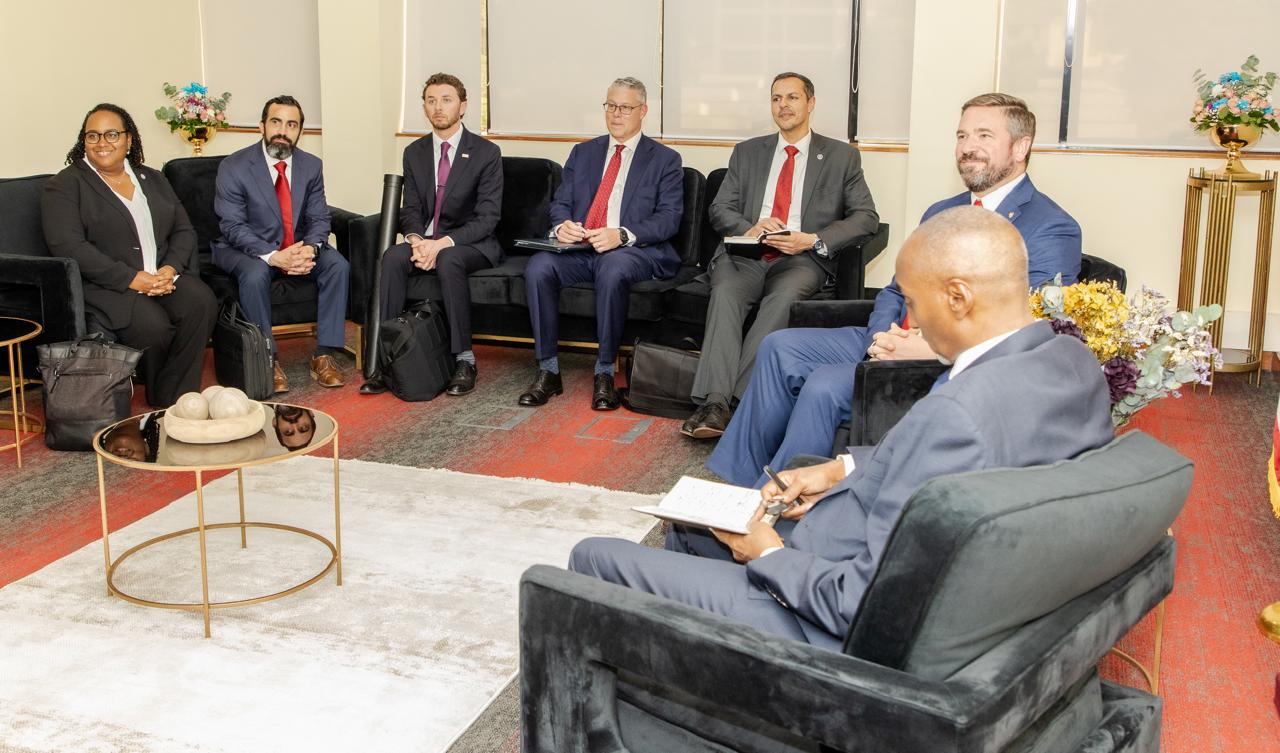
    During a high-level courtesy visit to EACC headquarters, Abdi Mohamud, the EACC Secretary and Chief Executive Officer, hosted Andrew Bailey, the Deputy Director of the FBI.

    Highlighting the importance of the visit, Mohamud described it as an affirmation of trust and a significant act of commitment to deepening the collaboration between the two institutions in tackling organized crime and transnational corruption.

    Abdi Mohamud emphasized that corruption is no longer a localized challenge but a transnational threat that undermines global financial systems and security frameworks.

    He noted that strengthening anti-corruption efforts is a strategic imperative for both Kenya and the United States, as it fosters economic growth, encourages foreign direct investment, and ensures the effective use of development assistance.

    “Corruption fuels fraud, enables illicit financial flows, and undermines economic, financial, and security systems across jurisdictions,” stated Mohamud. He further highlighted that corruption beyond borders directly impacts nations by distorting market competition and increasing global security risks through weakened governance.

    On his part, Andrew Barley, commended EACC for its commitments and professionalism in tackling corruption and economic crimes through robust investigations and asset recovery.He further noted that efforts are underway to appoint a Regional Transnational Anti-Corruption Programme Manager to strengthen collaboration with the Commission in combating illicit financial flows and money laundering, thereby safeguarding the economic security interests of both countries.

    “The FBI will continue to partner with the Commission in sharing of intelligence, strengthening mutual legal assistance and tracing of corruptly acquire assets,” stated Mr. Bailey. The Deputy Director further pledged to enhance the technical support to the Commission through specialized training for its investigators.

    The CEO acknowledged that the partnership between the EACC and the FBI has already yielded substantial results through technical support and capacity-building initiatives.

    A cornerstone of this cooperation is the joint EACC–FBI Task Force, established in 2024, which comprises 24 specialized officers drawn from headquarters and regional offices. Other areas of collaboration include: modernization of investigation interview rooms and acquisition of specialized tools including software and key licenses for digital investigations.

    The two leaders reaffirmed their commitment in deepening the collaboration in the shared areas of interest of investigation, intelligence sharing, and capacity building to combat corruption, money laundering and other economic and transnational crimes.

  • Cotton farmers urge State to curb imports, support local industries

    Cotton farmers urge State to curb imports, support local industries

    Cotton stakeholders have intensified the “Buy Kenya, Build Kenya” campaign in Mpeketoni as farmers called for the establishment of more textile industries in the region.

    The farmers said locally grown cotton has become a key solution to the area’s harsh weather conditions while creating employment opportunities for the youth.

    Speaking during a stakeholders’ forum organized by the Agriculture and Food Authority (AFA), farmers said the hot and humid climate in the coastal region had pushed many residents to embrace cotton apparel because of its comfort and ability to absorb sweat.

    They urged the government to discourage excessive importation of foreign textiles and instead support local industries that use Kenyan cotton.

    Mary Mwangi, Samuel Kabutha and Mbakuli Hassan Mbakuli, all cotton farmers from Mpeketoni, said clothes made from cotton are more weather-friendly compared to other fabrics, especially for farmers working long hours in the fields.

    They noted that cotton garments help keep the body cool and are also ideal for school-going children because of their comfort. The farmers further appealed for the establishment of factories manufacturing cotton-based rubber shoes and other apparel products in the area.

    The farmers praised the growing cooperation between the national government, county governments and private textile industries, saying the partnership had already attracted factories to the region and created jobs for many young people.

    They noted that the introduction of BT cotton farming had transformed livelihoods in the area by improving production and increasing farmers’ earnings.

    AFA Chairman Cornelly Serem challenged Kenyans to support locally manufactured fabrics by purchasing clothes made within the country instead of relying on imports.

    “When you are asking the government to create jobs for your children while you are wearing clothes imported from Turkey, China or the UK, are you really serious?” he posed.

    He said it was government policy for public officials to promote locally made fabrics by wearing Kenyan-manufactured garments.

    His sentiments were echoed by Tejal Dhodhia, the Chief Executive Officer of Thika Cloth Mills and a major stakeholder in the cotton value chain.

    Dhodhia urged schools across the country to stop importing materials for school uniforms and instead source locally manufactured fabrics. She said doing so would create employment opportunities for students after graduation and strengthen Kenya’s textile industry.

    Dhodhia also called on politicians to support local manufacturers by ordering campaign materials from Kenyan textile firms.

    She commended the current government for supporting the sector through tenders awarded to local industries, noting that many uniforms worn by Kenya’s disciplined forces are produced by Thika Cloth Mills.

    Stakeholders at the meeting maintained that strengthening the cotton value chain through local production, processing and consumption would not only boost farmers’ incomes but also reduce Kenya’s dependence on imported textiles while driving industrial growth in coastal counties.

  • Uhuru in Uganda for President Yoweri’s inauguration on Tuesday

    Uhuru in Uganda for President Yoweri’s inauguration on Tuesday

    Former President Uhuru Kenyatta is in Kampala to join fellow leaders, Government officials, and dignitaries for the Presidential Inauguration Ceremony of President Yoweri Kaguta Museveni.

    President Museveni was re-elected during Uganda’s General Elections held on 15th January 2026. The inauguration ceremony is scheduled to take place Tuesday in Kampala.

    Upon arrival, Kenyatta was received by Amb. Katureebe Tayebwa alongside Amb. Kipkosgei Toroitich.

    The former President also briefly interacted at the airport with Cabinet Secretary John Mbadi, who was traveling back to Nairobi from Uganda.

    Ugandan President Yoweri Museveni was declared the winner of the election held in January extending his four decades in power by another five years.

    Museveni, 81, first came to power as a rebel leader in 1986 but since then has won seven elections.

  • IEBC receives ballot materials for May 14th by-elections

    IEBC receives ballot materials for May 14th by-elections

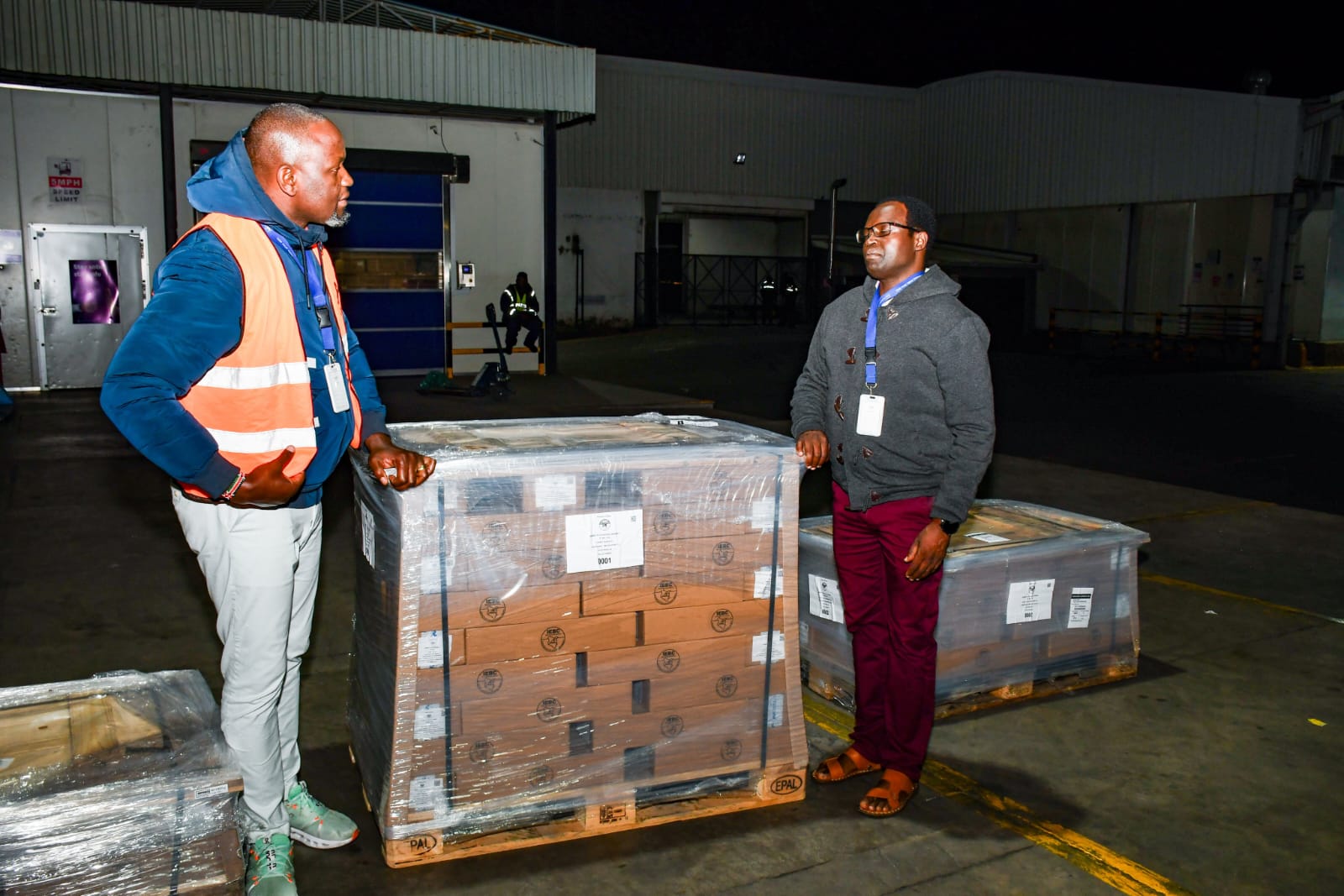
    The Independent Electoral and Boundaries Commission (IEBC) has received ballot papers and statutory ahead of May 14th by-elections for Emurua Dikirr Constituency, Porro and Endo Wards.

    The Pallets were then ferried to the Commission’s central warehouse in Nairobi Industrial area, where dispatch of all election materials to constituency tallying centres is set to begin starting today (Monday).

    IEBC said that all other preparations for the by-elections including security and dispatch of materials, are at an advanced stage.

    Commission has already kicked off the training polling officials, after which all trainees will take the Oath of Secrecy.

    “Campaigns end today at 5:00 pm. With all systems in place, the Commission is fully prepared to conduct the by-elections,” said the electoral body.

    According to IEBC, the ballot papers and statutory forms were printed by Inform Lykos (Hellas) SA in Athens, Greece.

    “The Commission invited political parties and the media to witness the arrival and dispatch of the election materials to enhance transparency as it emphasized its dedication to conducting free, fair, and credible elections,” said IEBC

  • Murang’a Governor defends his exit from UDA

    Murang’a Governor defends his exit from UDA

    Murang’a Governor Irungu Kang’ata has defended his decision to leave the United Democratic Alliance, saying he will not be intimidated.

    Kang’ata defended his exit from UDA, accusing the party of engaging in political intimidation, destruction of opponents’ property and misuse of law enforcement agencies for political gain.

    The Governor spoke on Sunday after presiding over the graduation of the sixth cohort of the Murang’a Youth Service programme where 773 youths graduated from the county initiative, which has so far benefited over 8,400 young people through employment, vocational training and entrepreneurship support.

    The colourful event brought together graduates, parents, trainers and county leaders, marking another milestone in efforts to address youth unemployment and poverty in the county.

    Under the programme, beneficiaries are recruited through a public balloting process and earn a daily stipend of Ksh 400 while engaged in town cleaning, environmental conservation and other public service activities.

    They are later enrolled in Vocational Training Centres, where they acquire practical, market-ready technical skills.

    Governor Kang’ata said the initiative is designed not only to provide temporary employment, but also to equip young people with skills and capital for self-reliance.

    Each graduate received Ksh 15,000 as start-up capital and will benefit from a one-year tax holiday to support growth of their small businesses.

    The Governor also called on the national government to fast-track infrastructure development at the Murang’a Industrial Park in Makenji.

  • Bandari Maritime Academy asks for funds to upgrade simulator equipment

    Bandari Maritime Academy asks for funds to upgrade simulator equipment

    Bandari Maritime Academy has asked the Parliamentary Departmental Committee on Transport and Infrastructure to consider pushing for funds in the national budget to facilitate the modernization of their ship and cargo simulator to international standards.

    The institutions CEO, Dr. Erick Katana made the request during the Committee’s visit to the institution to assess its infrastructural capacity, the maritime courses offered, and the challenges it faces.

    “Hon. Members, this school has the capacity to produce world-class marine engineers. Nautical Scientists with techniques, technology, and management skills required to safely navigate and operate ships, and also produce experts in marine transport and logistics, the only challenge we have is equipment, we are forced to take our students to other countries like Tanzania, the Philippines, or the UK for advanced training,” he told the Committee.

    The full-bridge mission simulator is essential at Bandari Maritime Academy, as it provides a virtual environment for students to experience real-life operational challenges.

    Simulator allows students to engage in full bridge operations, enhancing their understanding of maritime safety, navigation, and environmental stewardship.

    Furthermore, its usage in maritime training is crucial for preparing seafarers to operate, maintain, and manage modern vessels effectively. It also contributes to the development of skills necessary for safe and efficient maritime operations, aligning with the academy’s commitment to providing world-class training in the maritime industry.

    The Chairman of the Committee, Ndia MP George Kariuki, expressed his satisfaction following the increasing number of Kenyan youths pursuing training in maritime affairs.

    “We are happy to see young Kenyans from each part of the country aspiring to be engineers and other professional fields in maritime. This is quite encouraging. As a committee, we will forge a way forward to support this institution”, Committee Chairperson Hon. Kariuki said.

    The committee inspected the training facility for the Standard of Training, Certification and Watchkeeping (STCW) course.

    STCW training is crucial for seafarers as it ensures that all personnel on board are trained to handle complex maritime situations safely and efficiently.

    The training covers essential areas such as personal survival techniques, fire prevention and firefighting, elementary first aid, personal safety and social responsibility, security awareness, and more. These skills are vital for reducing accidents, saving lives, and maintaining safety at sea.

    Furthermore, the committee toured the Maritime Survival Training and Certification Centre, which is under construction.

    The Centre is a flagship facility designed to enhance safety standards in the maritime sector while ensuring Kenyan seafarers are globally competitive and fully compliant with international requirements.

  • Ruto, UN SG António Guterres to commission the expansion of UN’s offices

    Ruto, UN SG António Guterres to commission the expansion of UN’s offices

    President William Ruto and UN Secretary-General António Guterres are expected to commission the USD 340 million expansion of a major new conference facility and inauguration of modern office buildings at the United Nations Office at Nairobi (UNON).

    Guterres jetted into the country Monday morning ahead of the inaugural Africa Forward Summit 2026 and to oversee the groundbreaking ceremony set to transform Nairobi into one of the UN’s most significant global hubs.

    Modern Infrastructure for a Changing World

    The investment includes the now completed replacement of aging office buildings dating back to the 1970s with modern, climate-resilient, and fully accessible facilities, while reducing long-term operational costs and improving efficiency, supporting the accommodation of rising staff numbers.

    The Nairobi expansion reflects a broader shift: bringing multilateral decision-making closer to the regions most affected by global challenges. It includes new modern, permanent, and climate-resilient office blocks (US$ 66.2 million) and new upgraded conferencing facilities (US$ 265.7 million) that will increase the number of meeting rooms from 14 to 30, and seating capacity from 2,000 to 9,000 delegates, including a 1,600-seat Assembly Hall, positioning UNON as the third largest UN global hub after New York and Geneva, the fourth being Vienna. In addition, the UN Refugee Agency (UNHCR) has invested (US$ 11.2 million) in new office blocks at UNON.

    As the only UN Secretariat headquarters in the Global South, UNON has seen a steady expansion of mandates, personnel, and global functions — with more than 4,000 personnel and 88 UN offices currently based at the Gigiri complex. Overall, there are almost 6,000 UN personnel in Kenya and approximately 10,000 dependents from Kenya and neighboring countries.

     Kenya’s Role at the Center of a Growing UN Footprint

    The UN’s presence in Nairobi is rooted in Kenya’s longstanding support for multilateralism. The UN Gigiri Complex sits on 140 acres of land donated by the Government of Kenya — the largest land contribution made by any host country to the Organization.

    Today, Nairobi hosts one of the most complex UN ecosystems globally, supporting operations across more than 160 countries and serving as a hub for climate action, development, and humanitarian coordination.

    UN Under-Secretary-General and Director-General of the United Nations Office at Nairobi, Mrs Zainab Hawa Bangura, said: “This is a defining moment for the United Nations in Africa. This investment aligns our presence with where global challenges — and solutions — are increasingly concentrated. Nairobi is not only a host city; it is a strategic centre for delivering the United Nations’ work in the 21st century.”

    During his visit, the Secretary-General will also engage in high-level discussions with Kenya’s leadership and participate in regional dialogues, including the Africa Forward Summit, reinforcing the United Nations’ commitment to advancing peace, sustainable development, and climate action across Africa.

  • French national shows symptoms on return from hantavirus-hit ship

    French national shows symptoms on return from hantavirus-hit ship

    A passenger of a cruise ship that was struck by an outbreak of hantavirus has shown symptoms of the disease while being repatriated to France, the country’s prime minister has said.

    Sébastien Lecornu said the French national developed symptoms while on a chartered flight from Tenerife to Paris, and so all five evacuated from the MV Hondius had been “immediately placed in strict isolation until further notice”.

    The French citizens are among more than 90 tourists to be ferried home from the Dutch vessel on Sunday, which anchored off the Canary Islands before dawn.

    Three passengers have died after travelling on the ship, two of whom were confirmed to have had the virus.

    After the French flight touched down at Le Bourget Airport, officials wearing personal protective equipment (PPE) could be seen meeting them on the tarmac. Ambulances then took them to the Bichat hospital in the French capital.

    There, they will be quarantined for 72 hours and given a full assessment, before being sent home to self-isolate for 45 days, France’s Ministry for Europe and Foreign Affairs said in a statement.

    Fourteen Spanish nationals flown from Tenerife to Madrid now face mandatory quarantine at a military hospital in the Spanish capital.

    British nationals have been flown back to Manchester. None of the Britons have reported symptoms but they are being monitored, the UK Health Security Agency (UKHSA) said.

    A plane carrying 26 passengers and crew – including eight Dutch nationals – has arrived in the Netherlands.

    A flight departed on Sunday for the US carrying 18 people – all of the American passengers from the cruise and one British national who resides in the US.

    One of the Americans began showing mild symptoms of hantavirus and another tested mildly positive for the Andes strain of the virus after being evacuated from the cruise ship, the US Department of Health and Human Services said.

    Both passengers were “travelling in the plane’s biocontainment units out of an abundance of caution,” HHS said.

    Flights for Turkish and Irish citizens were also scheduled on Sunday, while Spanish Health Minister Mónica García said the final two evacuation flights would depart on Monday afternoon.

    Six passengers are returning to Australia and another 18 will be flown to the Netherlands. Both planes are also taking passengers from other countries which did not send their own repatriation flights.

    Spain’s Health Secretary Javier Padilla said more than 90 of the 150 passengers and crew of the Hondius will have been sent home by the end of Sunday. A flight to Australia is expected on Monday.

    The cruise ship dropped anchor in the port of Granadilla earlier on Sunday, and medical teams went aboard at around 07:00 local time (06:00 GMT).

    This began the carefully choreographed process of removing those aboard and repatriating them devised by the Spanish government and the World Health Organization (WHO).

    Passengers could be seen from afar wandering around on the deck of the ship, or at the windows, all in white medical face masks, as the first evacuations took place on Sunday morning.

    Several sat socially distanced on the first evacuation boat, filming and taking photos as they approached land, where they were met by officials in white protective suits.

    While being couriered to the airport, some British passengers – clad in blue PPE – waved and gave thumbs up as they drove past the assembled media.

    The arrival of the Hondius was met by opposition from some, including the Canary Islands’ regional president, who expressed concerns over the virus spreading to Tenerife.

    Hantaviruses are usually carried by rodents, but human transmission of the Andes strain – which the WHO believes was contracted by some of the ship’s passengers while in South America – is possible.

    Symptoms can include fever, extreme fatigue, muscle aches, stomach pain, vomiting, diarrhoea and shortness of breath.

    Helen Clark, co-chair of the Independent Panel for Pandemic Preparedness and Response (IPPR), told the BBC there were lessons to be learnt about how viral outbreaks on ships should be managed.

    “Passengers disembarked and dispersed to the four winds when there had been a death of a potentially infectious pathogen on board,” she said.

    When asked if the world was ready to deal with another pandemic, she said there was still work to be done.

    “There’s not yet enough financing to support lower income countries to build capacities for early detection, surveillance, response,” she said.

    She added “the direction is right if countries come together to make it possible to do far, far better than we did with Covid”. The IPPR evaluated the global response to Covid-19.