Author: KBC Digital

  • Kenya boosts childhood cancer care with new KNH unit, patient hostel

    Kenya boosts childhood cancer care with new KNH unit, patient hostel

    Kenya has taken a significant step forward in the fight against childhood cancer with the launch of a modern Paediatric Haemato-Oncology Outpatient Unit at Kenyatta National Hospital (KNH) and the opening of Phase I of the Lions Hope Hostel in Nairobi.

    The dual milestone reinforces the country’s drive towards Universal Health Coverage (UHC) by expanding access to specialised care for children.

    Speaking during the event, Health Cabinet Secretary Aden Duale said the Government is prioritising the transformation of paediatric cancer services through targeted investments to improve early diagnosis, treatment pathways, and long-term follow-up.

    He noted that strengthening these services is key to improving survival outcomes and ensuring no child is left behind.

    The Lions Hope Hostel adds a critical support component to care delivery. As the first phase of a five-part development, it provides accommodation for patients and caregivers travelling long distances for treatment, easing the burden of travel and lodging while improving treatment adherence and patient experience.

    The developments align with the National Cancer Control Strategy 2023–2027, which emphasises partnerships and patient-centred infrastructure. Collaboration with partners, including the Lions Clubs International Foundation, continues to support delivery of these interventions.

    The facility has also been strengthened with the installation of a state-of-the-art Elekta Versa HD Linear Accelerator (LINAC), funded by the Government. The technology enables highly precise cancer treatment, particularly for complex cases such as brain tumours, allowing clinicians to target affected areas while protecting healthy tissue.

    Together, the new unit, patient hostel, and advanced treatment technology signal a more coordinated and compassionate approach to cancer care in Kenya, integrating treatment, support, and innovation to deliver improved outcomes for children.

  • CS Barasa salutes Kibiwott on appointment as 15B trees campaign ambassador

    CS Barasa salutes Kibiwott on appointment as 15B trees campaign ambassador

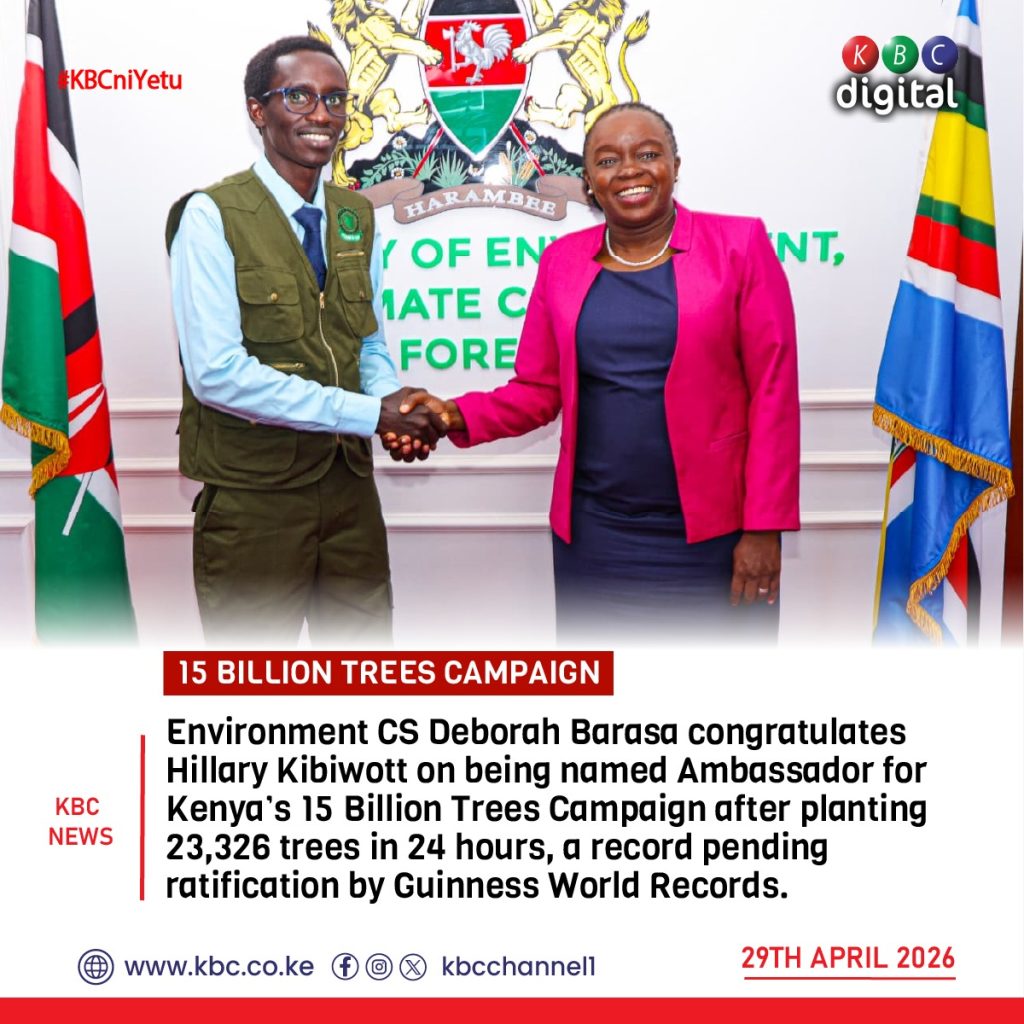
    Cabinet Secretary for Environment, Climate Change and Forestry Deborah Mlongo Barasa has congratulated environmental champion Hillary Kiplagat Kibiwott following his appointment as Ambassador for Kenya’s ambitious 15 Billion Trees Campaign.

    The recognition comes after Kibiwott’s remarkable effort to plant 23,326 trees within 24 hours, a feat now awaiting official ratification by Guinness World Records.

    Speaking after hosting Kibiwott at the Ministry headquarters in Nairobi, CS Barasa praised his dedication and described the achievement as a milestone for Kenya’s environmental restoration agenda.

    “It was a great privilege to host Kenya’s tree-planting champion, Hillary Kibiwott, who planted 23,326 trees in 24 hours. I congratulate him on his appointment as Ambassador for Kenya’s 15 Billion Trees Campaign, a well-deserved role, as he awaits ratification of his record-breaking challenge by Guinness World Records,” said Barasa.

    She said Kibiwott’s leadership and ability to mobilise communities would play a major role in rallying Kenyans behind the country’s tree-growing target.

    “His leadership, commitment, resilience and expertise in mobilising diverse stakeholders will help scale forest conservation and inspire a nationwide restoration movement,” she added.

    The CS further emphasised that the Ministry remains committed to supporting this momentum across all 47 counties by translating individual action into collective climate action, while creating green jobs and restoring forests.

    Barasa was joined during the meeting by Principal Secretary for Forestry, Gitonga Mugambi and Secretary for Forest Development, George Tarus.

    The Ministry of Environment, Climate Change and Forestry has identified tree growing and ecosystem restoration as key pillars of Kenya’s climate response strategy, with the national target of planting 15 billion trees by 2032.

    Kibiwott’s record-setting effort has been hailed as a shining example of citizen-led climate action capable of inspiring communities across the country.

    Kenya’s 15 Billion Tree Growing Strategy, launched in 2022, seeks to increase national tree cover to 30 per cent by 2032. 

    Led by President William Ruto, the initiative aims to reduce greenhouse gas emissions, restore 5.1 million hectares of degraded landscapes, create green jobs and promote large-scale seedling production through community, institutional and school-led programmes.


  • ASEAN Food Festival puts southeast Asian culture on the Map in Nairobi

    ASEAN Food Festival puts southeast Asian culture on the Map in Nairobi

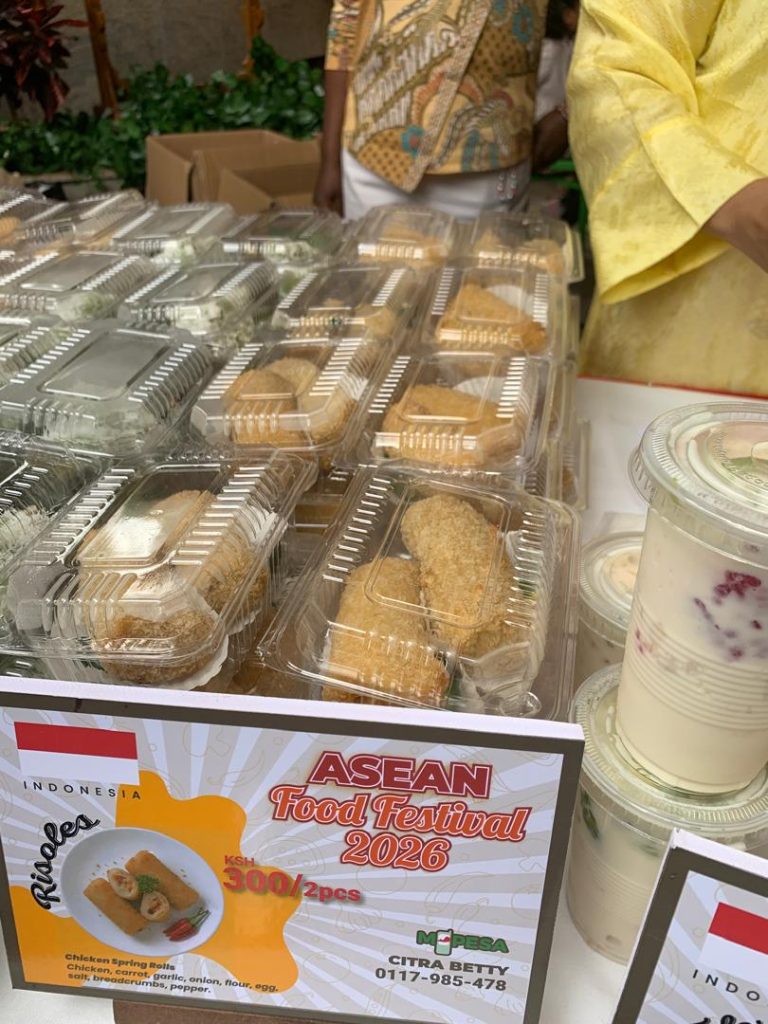
    The Village Market food court in Nairobi came alive on Saturday, 25th April 2026, as the ASEAN Committee in Nairobi hosted the third edition of its annual ASEAN Food Festival.

    Organised under the chairmanship of Indonesia, the event brought together representatives from Malaysia, Thailand and the Philippines to showcase the rich culinary and cultural heritage of the Association of Southeast Asian Nations (ASEAN) to a Kenyan audience.

    The event was also graced by the Ambassadors of Kazakhstan and Iran in Nairobi.

    An estimated 1,000 attendees turned out for the one-day festival, sampling dishes, interacting with embassy officials and exploring cultural exhibits that offered a window into the diverse traditions of the Southeast Asian region.

    The event has grown steadily since its inaugural edition, cementing its place as one of Nairobi’s most anticipated diplomatic-cultural gatherings.

    “These activities serve not only as a public diplomacy tool but also as a means to promote national identity and further popularize cultural diversity”, noted a statement from the Embassy of Indonesia in Nairobi.

    Beyond the festivities, officials say the festival has had a measurable impact on Kenya’s awareness of opportunities within the ASEAN bloc.

    Embassy sources report a remarkable 700% increase in applications for higher education programmes in Indonesia over the past three years, a trend they attribute in part to the visibility generated through the festival and related public diplomacy initiatives.

    Kenya and the ASEAN member states share longstanding ties across trade, investment and educational exchange.

    The festival, organisers say, is an extension of those ties, serving as a platform to translate formal diplomatic relations into lived cultural experiences for ordinary Nairobians.

    With each successive edition drawing larger crowds and generating greater interest in ASEAN nations as destinations for study, work and travel, the festival appears set to become an enduring fixture of Nairobi’s cultural calendar and a model for soft-power engagement between the Global South and Southeast Asia.

  • Kirinyaga coffee payout hits Ksh 7.4B as Waiguru pledges more support 

    Kirinyaga coffee payout hits Ksh 7.4B as Waiguru pledges more support 

    Coffee farmers in Kirinyaga County are celebrating a historic windfall after earnings hit a record Ksh 7.4 billion, marking one of the highest coffee payouts ever recorded in the county.

    The latest payments ranged between Sh 104 and Ksh 157.40 per kilogram of cherry, with an impressive average of Ksh 139 per kilogram, underscoring a strong resurgence in the sector driven by sustained reforms and targeted county government support.

    The standout performers were led by Thirikwa Farmers’ Cooperative Society, which posted the highest average payout at Ksh 157.15 per kilogram, followed closely by Rung’eto Farmers’ Cooperative Society at Ksh 155.62, and Rwama Farmers’ Cooperative Society at Ksh 152.03, reflecting improved quality and efficiency across key cooperatives.

    Out of the Ksh 7.4 billion payout received by cooperatives for the sale of the coffee, farmers received Ksh 6.99 billion for their deliveries while the rest of money was used to clear factory operation costs.

    Coffee production also increased from 45,717 metric tons in 2024/2025 to 49,100 metric tons in 2025/2026.

    The latest payout figures position Kirinyaga among the top-performing coffee regions in the country, with factories affiliated to Baragwi Coffee Cooperative Society and Rung’eto Farmers’ Cooperative Society dominating the highest returns. Nyanja Factory under Baragwi emerged among the best payers at Ksh 157.40 per kilogram, closely followed by Kiangoi Factory (Ksh 156.30), Kii Factory (Ksh 155.62) and Karimikui Factory (Ksh 155.50), all under Rung’eto, while Guama Factory also posted a strong Ksh 151.30 per kilogram.

    In a statement, Governor Anne Waiguru said Kirinyaga had once again emerged among the top coffee earners in the country as lauded farmers for their efforts to increased quantity and quality of coffee production.

    “Kirinyaga has done it again. Our farmers are once more leading the country with the highest coffee payouts, a clear reflection of quality, strong cooperatives and deliberate support from the county government,” she said.

    The governor added that sustained support to farmers and ongoing reforms in management structures were beginning to yield tangible results, positioning the sector for even greater growth.

    Waiguru noted that the county government has rolled out a series of interventions including subsidized high-quality seedlings and fertilizer, strengthened extension services, continuous farmer training and installation of modern solar dryers at factory level.

    It has also supported the construction of a coffee warehouse for the union dry mill and enhanced market access through the Kirinyaga Slopes Coffee Brokerage Company.

    Chairman of Baragwi Coffee Cooperative Society, Francis Muriithi, said the payouts marked a steady improvement from previous seasons, noting that the average rate had risen from about Ksh 134 last year to approximately Ksh 139 this season.

    “This is a clear improvement compared to last year. Our average has increased by about Ksh 5 per kilogram, which is a significant gain for farmers,” he said.

    Muriithi attributed the growth to improved coffee quality and stronger support systems, explaining that farmers had benefited from timely access to inputs, training and streamlined licensing processes.

    “The county government has played a big role in improving quality, supporting farmers and strengthening the entire value chain,” he added.

    While welcoming the progress, he called on the national government to consider waiving farmers’ debts to boost net earnings, revealing that the society processed about 13 million kilograms of cherry this season, translating to a payout of nearly Ksh 1.8 billion.
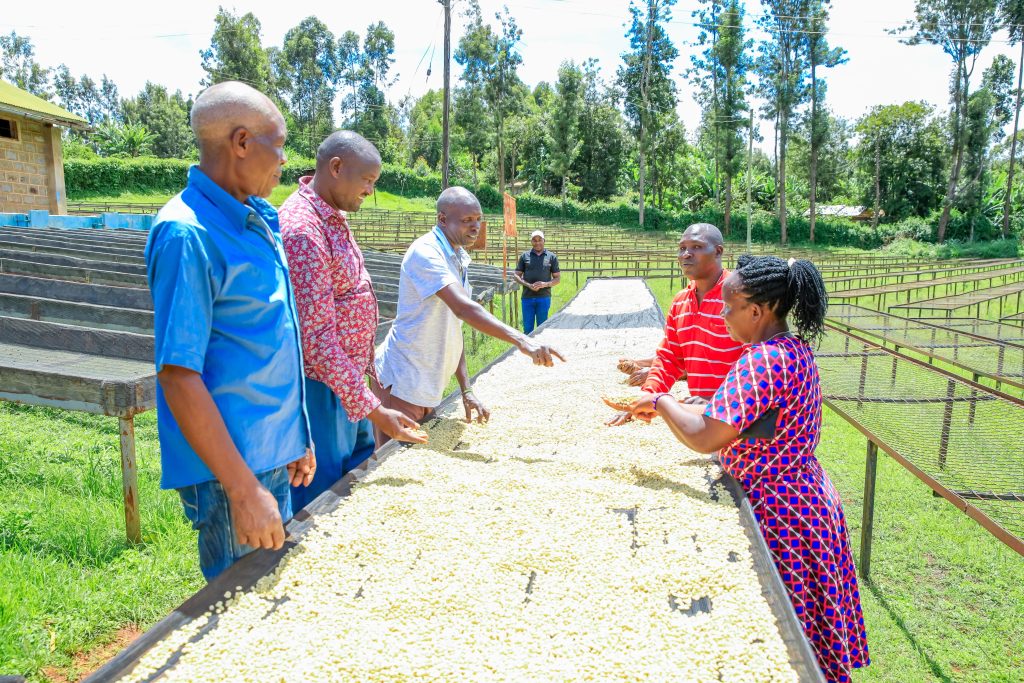
    At the grassroots, farmers say the impact of the reforms is increasingly evident. Francis Gachoki, a farmer at Kagongo Factory under Baragwi Coffee Cooperative Society, said earnings had improved compared to last season, noting that his payout rose from Ksh 128 to Ksh 135 per kilogram which he termed as motivation to him and the other farmers.

    Gachoki attributed the improvement to reforms in cooperative management and better market access, saying the changes had helped stabilize the sector. He further noted that investments in infrastructure, including improved rural roads, had eased transportation of produce, while the revival of processing systems had enhanced efficiency.

    At Nyanja Factory, farmer Julius Muriuki said county-led initiatives such as soil testing, timely distribution of fertilizer and farmer education had significantly improved coffee production in the area. He noted that farmers were now better equipped with knowledge on crop management, contributing to higher quality beans and improved payouts.

    At Thirikwa Farmers’ Cooperative Society, Chairman David Njomo said farmers were encouraged by the strong returns recorded this season, noting that the society produced about 1.566 million kilograms of cherry.

    “This season has been very rewarding for our farmers. We have about 1.566 million kilograms of cherry, translating to over Ksh 200 million at an average rate of around Ksh 157 per kilogram,” he said.

    Njomo attributed the performance to sustained support from the county government, mentioning that interventions such as subsidized fertilizer, provision of drying beds and investment in processing infrastructure had significantly boosted both productivity and quality.

    A farmer at the society, Emily Wanjiku, also cited timely access to farm inputs and improved storage facilities as having enhanced farm management, noting that the current payouts had renewed farmers’ confidence.

    “We are receiving inputs at the right time and have better storage, which has made our work easier. The payments this year have really motivated us to invest more in coffee farming,” she said.

    Across the county, most cooperative societies have announced their payments, with the lowest rate standing at Ksh 104 per kilogram with farmers now optimistic that sustained reforms, improved management and favorable market conditions could push future payouts beyond Ksh 200 per kilogram, further strengthening household incomes and cementing Kirinyaga’s position as a leading coffee producer.


  • Think Business Banking Awards names Equity Bank top Kenyan lender

    Think Business Banking Awards names Equity Bank top Kenyan lender

    Equity Bank has been named the Overall Best Bank in Kenya at the 2026 Think Business Banking Awards where its chief executive officer was also honoured.

    The bank emerged top in 10 categories and was ranked second in two others, reaffirming its leadership and resilience in the country’s financial sector.

    During the ceremony, Equity Group Chief Executive Officer Dr. James Mwangi was named Overall CEO of the Year for his contribution in the bank’s strategic growth and impact.

    “This recognition as the Overall Best Bank in Kenya reflects years of deliberate investment in building a resilient, inclusive and future-ready financial institution. It speaks to the strength of our business model, which integrates financial innovation with deep customer understanding, allowing us to serve millions across all segments of the economy while maintaining sustainability and scale,” said Mwangi.

    The lender also emerged as the Best Bank in Retail Banking and Product Innovation categories, alongside receiving a Special Judges Award for Product Innovation.

    “As we navigate a rapidly evolving banking landscape, we remain focused on strengthening capital efficiency, expanding access to credit for productive sectors, and leveraging technology to deliver differentiated value to our customers and communities,” he added.

    Other categories the bank topped include Agriculture and Livestock Financing, Asset Financing, Microfinance and Sustainable Corporate Social Responsibility.

    “We assessed 160 entries against a rigorous 100-point framework, looking at both quantitative data such as financial ratios and qualitative factors including governance and innovation. This ensured that only the most deserving institutions emerged as winners,” said Chief Judge Priscillah Mogaka.

    She added that the 2026 awards reflect a banking sector that is increasingly resilient, digitally progressive and responsive to evolving customer needs.

    The Think Business Banking Awards evaluate lenders across a wide range of indicators, including financial performance, innovation, risk management and customer focus, at a time when the sector faces mounting pressure to balance growth with stability and affordability.

  • MPs urge NLC to recover NTSA land in Voi town

    MPs urge NLC to recover NTSA land in Voi town

    A parliamentary watchdog committee has directed the National Land Commission (NLC) to urgently facilitate the recovery of a six-acre parcel in Voi Municipality that had been earmarked for a National Transport and Safety Authority (NTSA) motor vehicle inspection centre but is now occupied by squatters.

    The land, set aside for public use in 1969 and initially allocated to the Kenya Police Service before being transferred to NTSA, has since been encroached upon, with occupants putting up structures and moving to court to block eviction.

    The dispute is now before the courts, with the NLC listed as a party. In the meantime, the Taita Taveta County Government has proposed allocating NTSA an alternative parcel of equal size in exchange for relinquishing the contested land to current occupants, citing public interest.

    During a fact-finding mission to Voi Town, members of the National Assembly’s Public Investments Committee on Governance and Education insisted the matter must be conclusively handled by the NLC, which has been directed by the court to determine the legitimacy of competing claims and recommend a resolution within 180 days.

    However, the meeting exposed deep divisions over the proposed alternative land, including questions around ownership, encumbrances and whether it legally belongs to the county or private entities.

    Kasipul MP and committee vice chairperson Boyd Were questioned the suitability of the alternative site.

    “Is the land sufficient? We already have a stadium and a showground, and now NTSA is to be accommodated there. Is it adequate?” he posed.

    The concerns follow an audit query by the Auditor-General highlighting inconsistencies in NTSA’s property records for the 2024/2025 financial year. The authority reported assets worth Sh1.69 billion, including Sh264.7 million in land and buildings, but only two of 15 parcels earmarked for inspection centres have valid title deeds.

    NTSA officials admitted facing persistent challenges in securing ownership of the Voi land.

    “We have been frustrated. Our board has been frustrated,” said NTSA Deputy Director for Motor Vehicle Inspection, Eng. Joel Opere.

    He added: “Every time we do a search, we find encumbrances. You don’t know whether to proceed. As custodians of public property, we must act with certainty.”

    MPs also raised concerns over inconsistencies surrounding the alternative parcel. Igembe Central MP Daniel Karitho noted discrepancies in land previously presented to NTSA.

    “The land you are showing us today is not the same as what was initially presented to NTSA. That is not fair. The governor must intervene personally to resolve this matter,” he said.

    Central Imenti MP Moses Kirima questioned ownership claims over the land.

    “To prove ownership of this 50-acre parcel, where is the title deed? Ownership of property is anchored on documentation; without it, there is no ownership,” he said.

    “And what assurance do you have that once the land is allocated to NTSA, the alleged owners, Vide Multipurpose Cooperative Society, will not move to stop the project once development begins?” he added.

    Kilome MP Thaddeus Nzambia emphasized the need for proper documentation:

    “Without proper documentation, that is not your property. Make it legally yours first,” he said.

    County officials led by Governor Andrew Mwadime confirmed that an alternative parcel had been identified, with Lands CEC Christine Zighe saying the county was working to regularise the process.

    “We have planned the land and are working towards transferring it appropriately. We are engaging all stakeholders to ensure a lawful and transparent process,” she said.

    The NLC, however, cautioned that any resolution must follow due legal procedures. Vice-Chairperson Dr. Julia Oseko said the commission is implementing the court directive to determine the validity of claims and recommend appropriate remedies within 180 days.

    “The court directed the commission to determine the propriety of the claims and make recommendations on resettlement within 180 days. That is exactly what we are doing,” she said.

    NLC Director of Legal Affairs Brian Ikol said investigations are ongoing and involve evaluating allocation, surrender and transfer processes.

    “We must consider all processes, including allocation, surrender and transfer of public land. These are legal procedures that fall squarely within the commission’s mandate,” he said.


  • Hillary planted 23,326 trees in 24 hours. Do we accept the challenge?

    Hillary planted 23,326 trees in 24 hours. Do we accept the challenge?

    When Hillary Kibiwott stepped into the cold, mist-laden forest of Kaptagat at Kessup block in Elgeiyo Marakwet, he was not simply attempting to plant a tree; he was setting a pace, one that calls on all of us to follow. Over 24 relentless hours, working through the night in the thin, high-altitude air, he planted 23,326 trees.

    “Hillary Kibiwott has not just challenged the existing Guinness World Records for the most trees planted in 24 hours by an individual; he has challenged us to do more, to be more intentional about climate action and to restore more forests,” said George Tarus, Secretary, Forest Development, Ministry of Environment, Climate Change and Forestry

    It is a number that captures attention, but the real story lies in what it represents: sacrifice, discipline, and the quiet resilience to keep going when conditions are at their toughest. Kaptagat is no ordinary forest. Known globally as a training ground for elite athletes, its high altitude and fresh air have shaped champions who go on to conquer the world. Yet beyond the trails and training camps lies another kind of strength, one rooted in community, conservation, and survival.

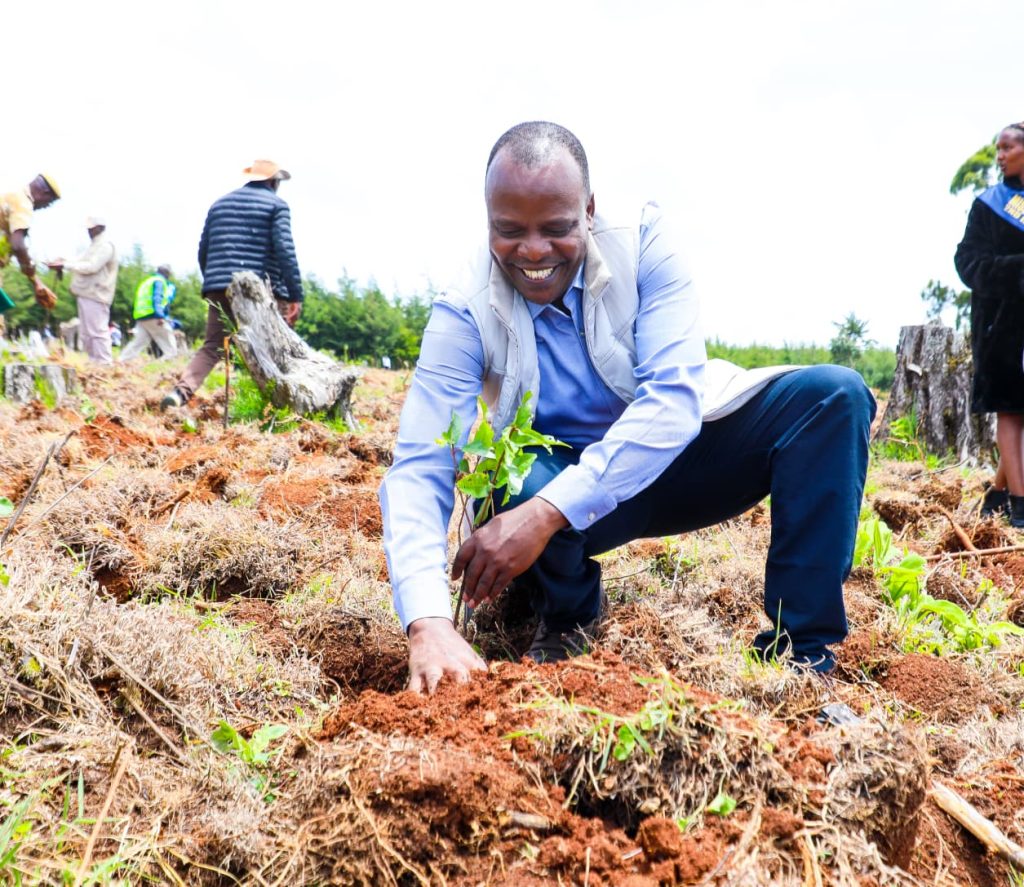
    Forest Development Secretary George Tarus plants a tree in the supporters’ section at the Kaptagat site, where Hillary attempted the 24,000 trees in 24 hours record.

    The forest is home to the Kaptagat Integrated Conservation Programme (Kaptagat-ICP), a community-led initiative that places the livelihoods of forest-adjacent communities at the centre of conservation. Here, the forest is not just protected; it is lived, depended on, and sustained. As its Patron, Dr. Chris Kiptoo, who is the Principal Secretary of the National Treasury, describes it, this is “an economy powered by the forest.”

    Now in its tenth year of rapid tree planting and roll-out of nature-based enterprises, the Hope Kaptagat programme has evolved into a model where conservation meets livelihoods. It is built on four simple but powerful ideas: putting money in people’s pockets (Pesa mfukoni), promoting clean energy (Kawi safi), ensuring access to water (Maji safi nyumbani), and protecting the environment (Mazingira safi). The story of Kaptagat forest restoration tells a story that is often overlooked: that forests do not just stand as the green lungs of the earth, but they also sustain the economy.

    It is within this living system that Hillary’s effort takes on deeper meaning. As Tarus, the Forest Development Secretary, notes, Hillary’s achievement is not just about challenging a record; it is about challenging all of us.

    “To plant 23,326 trees in 24 hours, working through the night in the cold conditions of high-altitude Kaptagat, is not easily defined. It speaks to sacrifice, discipline, and the resilience to keep going. It is also a reminder that individual action matters, that what each of us chooses to do, however small it may seem, has the power to either heal or harm the only place we call home.”

    In a world where climate change can feel overwhelming, Hillary’s action strips it down to something simple and human. One person. One tree at a time. One decision to act. Tree by tree, minute by minute,  hour by hour.

    Kaptagat has always been a place where limits are tested and redefined. This time, it is not about speed or medals, but about endurance of a different kind, endurance for the planet. And perhaps that is the question Hillary leaves behind: If one person can plant 23,326 trees in a day, what could millions of us do together?

  • Treasury, KBC explore ways to boost public broadcaster’s competitiveness

    Treasury, KBC explore ways to boost public broadcaster’s competitiveness

    The National Treasury has engaged the Kenya Broadcasting Corporation (KBC) in order to reposition the public broadcaster into a commercially viable and self sustaining entity.

    The strategic consultative meeting held between Principal Secretary for Public Investments and Assets Management Cyrell Wagunda and KBC leadership led by Board Chairperson Tom Mshindi and Managing Director Agnes Kalekye, explored asset utilization, financial restructuring, and diversified revenue streams as ways to make the broadcaster commercially viable.

    The team also explored modernization of KBC’s broadcasting infrastructure, content, and brand to boost its competitiveness in the media sector.

    The discussions also focused on strengthening the management of Government-Owned Enterprises to ensure efficient use of public assets, financial sustainability, and improved service delivery in line with the Government’s Bottom-Up Economic Transformation Agenda (BETA).

    PS Wagunda highlighted the critical role of KBC in advancing the public communications agenda, emphasizing its mandate in ensuring Kenyans have access to timely, accurate, and reliable information as guaranteed under the Constitution of Kenya, 2010.

    The strengthened partnership between SDPIAM and KBC is set to enhance transparency, improve citizen engagement, and support effective dissemination of government programmes and services across the country

  • Gabon, São Tomé support Morocco’s sovereignty over Sahara region

    Gabon, São Tomé support Morocco’s sovereignty over Sahara region

    The Gabonese Republic and Sao Tome Principe have reiterated on Tuesday their support for the Moroccanness of the Sahara, welcoming the historic adoption of United Nations Security Council Resolution 2797.

    In a statement to the press following her meetings in Rabat with Minister of Foreign Affairs, African Cooperation, and Moroccan Expatriates Nasser Bourita, Minister of State for Foreign Affairs, Cooperation, and Communities of São Tomé and Príncipe Ilza Maria dos Santos Amado Vaz, reiterated her country’s firm and unwavering position in favor of Morocco’s territorial integrity and sovereignty over its entire territory, including the Sahara region.

    On this occasion, the head of São Tomé and Príncipe’s diplomacy reaffirmed her country’s full support for the autonomy plan presented by the Kingdom of Morocco, as the only credible and realistic solution for resolving this regional dispute.

    She also welcomed the historic adoption of UN Security Council Resolution 2797, which, within the framework of Moroccan sovereignty, endorses the autonomy plan proposed by Morocco as a serious, credible, and sustainable basis for reaching a political solution to this issue.

    The head of São Tomé and Príncipe’s diplomacy also welcomed the significant progress made by the Kingdom of Morocco in Southern Provinces’ socio-economic development through the New Development Model, which promotes stability, security, and regional integration.

    São Tomé and Príncipe’s position, as reaffirmed by Amado Vaz, is part of the growing international consensus, the outcome of an international momentum driven by His Majesty King Mohammed VI in support of the autonomy plan and the Kingdom’s sovereignty over its Sahara.

    During a meeting held in Rabat with the Minister of Foreign Affairs, African Cooperation, and Moroccan Expatriates, Minister of Foreign Affairs and Cooperation, in charge of Integration and the Diaspora of the Gabonese Republic Marie-Edith Tassyla-Ye-Doumbeneny, on a friendship and working visit to the Kingdom, reiterated her country’s support for the Moroccanness of the Sahara, reaffirming her full backing for the Moroccan Autonomy Plan as the one and only credible and realistic solution to the regional dispute over the Sahara.

    In a joint Communiqué issued following the meeting, the Gabonese head of diplomacy welcomed the historic adoption on October 31, 2025, by the United Nations Security Council of Resolution 2797, which enshrines, within the framework of Moroccan sovereignty, the autonomy plan proposed by Morocco as the only serious, credible, and sustainable basis for reaching a political solution to the artificial dispute over the Sahara.

    Tassyla-Ye-Doumbeneny also emphasized that the Gabonese Republic’s opening of a Consulate General in Laâyoune in January 2020—a move that follows the momentum of international recognition of the Kingdom’s territorial integrity—also provides tangible proof of the strong and strategic partnership linking the two brotherly nations at the highest level.

    Gabon’s position, as reaffirmed by Marie-Edith Tassyla-Ye-Doumbeneny, is part of the international momentum spearheaded by His Majesty King Mohammed VI, may God assist Him, in support of the autonomy plan and the Kingdom’s sovereignty over its Sahara.

  • How Senegal’s 2026 Junior Olympics is reshaping Africa’s urban promise

    How Senegal’s 2026 Junior Olympics is reshaping Africa’s urban promise

    When Alioune Pouye, Mayor of Sebikotane, looks out across his town in the Senegalese city of Dakar, he sees more than a community preparing to host a global sporting event. He sees a different future, one being shaped, quite literally, in concrete and steel.

    “We are very excited. Senegal may be hosting but it is Africa which is celebrating,” he said during an interview on the sidelines of the Africa Urban Forum held in Nairobi last week.

    Sebikotane is one of the key towns in the Dakar region set to host activities for the 2026 Junior Olympic Games, the youth edition of the Olympic movement’s flagship competition.

    Scheduled to run from 31st October to 13th November 2026, the games will be held across three Senegalese cities: Dakar, Diamniadio, and Saly.

    This is the first time the Junior Olympics will be held on African soil and a continent that has long watched from the periphery of global sporting spectacle is now, finally, at the centre of it.

    According to Mayor Pouye, construction is underway across the host cities at a pace never before witnessed. New stadiums, upgraded road networks and hotel developments are transforming the landscape. For Sebikotane, a town that for many years sat in the shadow of the capital, the games represent a rare inflection point.

    Mayor Pouye is direct about what is at stake: jobs. The country expects to gain directly through the creation of new employment with the ongoing construction of stadiums, roads and hotels in the host towns. Those jobs span the full spectrum, from skilled engineers and architects to labourers, caterers and security personnel, and many are going to young people who might otherwise have had few options in a rapidly urbanising economy.

    Road and infrastructure upgrades tied to sporting events have a way of outlasting the events themselves. In Sebikotane, local leaders are banking on exactly that principle, framing the Junior Olympics less as a momentary spectacle and more as a launchpad for sustained urban development.

    Beyond construction employment, Mayor Pouye sees the games as a catalyst for lasting investment partnerships. “We are creating space for infrastructure projects around this event, and we hope to attract partnerships with other public and private entities that can be part of the growth of our city during and even after this key international sporting event,” he said.

    It is an aspiration that echoes what Kenya has been pursuing through public-private partnerships in housing and urban infrastructure; the idea that an event is a door, not merely a deadline.

    Of course, not everyone is celebrating without reservation.

    The history of mega sporting events on the African continent carries a cautionary undertone.

    South Africa’s hosting of the 2010 FIFA World Cup the first on African soil sparked fierce debate about the long-term return on the billions poured into world-class stadiums that now struggle to fill their seats for local league matches. The term “white elephant” entered South African public discourse with new urgency, and that conversation has never quite gone away.

    Mayor Pouye is aware of that history and addresses it head-on. “Through our partners like the African Union, we have conducted an assessment of the benefits that come from these infrastructure projects and we are confident that this will lead to positive gains for our people,” he says, adding that Senegal has a “a vibrant football culture which will ensure that the facilities continue to be used by our young people and communities long after the competition.”

    Football is central to Senegal’s vision for its Olympic legacy. The Lions of Teranga won the now disputed 2025 Africa Cup of Nations final and the country’s passion for the sport runs deep across every age group and income level.

    Mayor Pouye is confident that unlike stadium projects that have gathered dust elsewhere on the continent, Sebikotane’s new facilities will remain alive and filled with young footballers and community members long after the closing ceremony of the Junior Games.

    The games will see approximately 2,700 athletes compete across various disciplines, supported by some 6,000 volunteers currently being recruited. For Sebikotane, those numbers represent an extraordinary influx of energy, attention and economic activity into a town unaccustomed to being on the global radar.

    But the deeper significance lies in what the games represent alongside the continental dialogue which took place in Nairobi last week. Africa is not simply growing. It is, with increasing deliberateness, building cities its young people will inherit.