Author: KBC Digital

  • Embrace value addition to power industrialization, President Ruto tells COMESA

    Embrace value addition to power industrialization, President Ruto tells COMESA

    President Ruto was addressing the 22nd COMESA Summit of Heads of State and Government in Lusaka, Zambia, on Thursday.The Common Market for Eastern and Southern Africa (COMESA) member countries must change tact in their approach to trade.

    President William Ruto said the bloc must embrace a systemic shift to exploit its untapped potential.

    He said it is time COMESA espoused value addition, especially of agricultural commodities, to enhance productivity.

    “The shift will also offer higher returns, incentivise industrialisation, boost our competitiveness and create employment,” he said.

    President Ruto was addressing the 22nd COMESA Summit of Heads of State and Government in Lusaka, Zambia, on Thursday.President Ruto was addressing the 22nd COMESA Summit of Heads of State and Government in Lusaka, Zambia, on Thursday.

    Present were Presidents Abdel Fattah El-Sisi (Egypt), Hakainde Hichilema (Zambia), Lazarus Chakwera (Malawi), Évariste Ndayishimiye (Burundi), COMESA Secretary General Chileshe Kapwepwe, among others.

    He urged Africa to move away from primary production and exports of raw materials to manufacturing.

    “The potential for intra-COMESA trade is colossal; the demand for value-added products is bound to keep growing well into the future,” he explained.

    He asked COMESA member States to take advantage of its 580 million market demand to enhance trade.

    The Head of State noted that Africa must utilise its rich, clean energy to advance its industrial development.

    “We are championing for the radical repositioning of Africa as the clean, green continent of the future in order to exploit the opportunities arising from the transition to green industrialization,” he said.

    President Ruto also called for the consolidation of the COMESA, the East African Community, and the Southern African Development Community to enhance the African Continental Free Trade Area agreement.

    “It is also time we elavated the Africa Union to have the power to negotiate for the collective interests of Africa.”

    He said the move will boost Africa’a bargaining power at the global scene.

    The Summit also marked the end of President El-Sisi’s chairmanship era as he handed over to President Hichilema.

  • Four nabbed while repackaging subsidized fertilizer in Nairobi

    Four nabbed while repackaging subsidized fertilizer in Nairobi

    Police have arrested four people who were caught repackaging subsidized fertilizer along Nanyuki road in Lungalunga, Nairobi.

    According to Regional Police Commander Adamson Bungei, the police acted swiftly after being tipped-off.

    During the raid at a godown where the repackaging was taking place, the police also found out that the team was also repackaging relief food in foreign brands.

    Bungei says that they seized 1,360 bags of rice and 200 bags of maize that were in the process of being repackaged.

    50,000 bags of subsidy fertilizer were also nabbed during the operation.


    While speaking to the media, the Regional Commander sounded a warning to all those conducting such illegal activities.

    According to Bungei, the DCI officers together with police from the jurisdiction will investigate on the matter to unravel the whole syndicate.

    The four suspects will be arraigned in court once the investigations are finalized.

  • Water project undertaken by City Hall in Eastleigh now complete

    Water project undertaken by City Hall in Eastleigh now complete

    Nairobi City County has completed a 5.8 cubic metres borehole project at New Eastleigh Primary School.

    The borehole, which has been  installed with three water tanks, with a capacity of 10,000 litres each, is set to supply at least 40 000 litres per day to the more than 1400 pupils at the school.

    Speaking during the site visit today when he met with the project engineers, County Director for Water and Sanitation Mr. Mario Kainga said that the project is complete and awaits official commissioning.

    Mr Mario encouraged the school head teacher to take advantage of the water and plant more indigenous trees in the compound for sustainability of the borehole.  He also assured the school of the water safety, which he said has been tested for floride levels.

    The school head teacher, Mr. Tala Hassan said the county has solved a very big problem with water, which the school has experienced for a very long time.

    According to Mr. Hassan, the water will not only help maintain general standards of cleanliness in the school but also help the muslim pupils who are majority at 99% and need water for ablution before prayers every day.

    Mr. Hassan said that the school has previously faced a lot of water challenges as they depended on water bowsers and most of the time purchasing water, which very expensive.

    The school head said that with the availability of water, the school is set to attract more learners.

  • First Lady Rachel Ruto leads tree planting exercise in Kakamega

    First Lady Rachel Ruto leads tree planting exercise in Kakamega

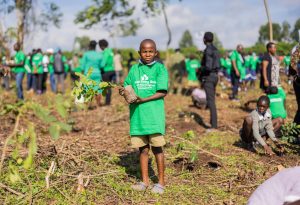
    First Lady Rachel Ruto joined students and community members in planting trees at the Shikusa Block located within Kakamega Forest.

    She says witnessing the profound vigour demonstrated by the school children during the planting of 30,000 trees was truly inspiring.

    The First Lady has pledged to spearhead the restoration of a substantial 500 acres of degraded land within the Kakamega Forest.

    The initiative is part of the National Tree Growing Initiative, a nationwide endeavour aimed at increasing Kenya’s tree cover from the current 12.13% to 30% through planting of 15 billion trees by 2032.

    The Office of the First Lady has set a goal of planting 500 million trees by 2032.


  • New revenue board begins work as Nairobi County targets increased collections

    New revenue board begins work as Nairobi County targets increased collections

    The Board of the newly gazetted Nairobi Revenue Authority (NRA) has been tasked with the responsibility of overseeing the setting up of an efficient and effective revenue collection team to hit the target of Ksh.18 Billion a year.

    Addressing a five-day induction seminar in Mombasa, Deputy Governor Njoroge Muchiri assured the Authority of maximum support from the County Government of Johnson Sakaja.

    “You have a very important role to play. We must move away from enforcement and instead make it easy for our clients to access and pay for our services,” the Deputy Governor said

    County Executive Committee Member for Finance and Economic Planning, Charles Kerich urged the new board to settle in quickly and get down to work without delay.

    “This induction provides you with an overview of Nairobi City County Government revenue performance and operations. While there will be more opportunities to immerse yourselves even deeper into understanding your assignment, you must know that time is of the essence. We need to move quickly because the County needs revenue to deliver services and keep the promises in H.E the Governor’s manifesto,” Mr. Kerich said.

    During the workshop, County Chief Officer for Revenue Administration Wilson Gakuya took the board through the revenue performance thus far, promising to facilitate the members execute their mandate.

    The NRA Board members are Chairman, Andrew Chege, Wanjiru Gikonyo, Irene Otieno, Mary Gesare, Carolyne Mutheu, and Ronald Meru. County Chief Officer Revenue Administration, Wilson Gakuya and Director Revenue, Shaban Asman, represent the County Government on the Board.

  • Kenya, UNESCO in talks over cooperation to promote communications ecosystem

    Kenya, UNESCO in talks over cooperation to promote communications ecosystem

    The Information, Communication, and Digital Economy Cabinet Secretary Eliud Owalo disclosed Wednesday that Kenya and the United Nations Educational, Scientific and Cultural Organization (UNESCO) are exploring opportunities for cooperation to promote growth in the country’s telecommunications industry.

    In a statement released shortly after the CS held a meeting with the UNESCO Assistant Director-General for Communication and Information Dr. Tawfik Jelassi, Owalo indicated that their talks gave focus to the communications landscape in Kenya.

    In what Owalo described as “fruitful deliberations” between the two sides, the Cabinet Secretary noted that he briefed the United Nation’s agency official “on the existing opportunities for partnership between Kenya and UNESCO,” especially in capacity building among media practitioners and in developing communications infrastructure.

    “Our National Broadcaster, the  Kenya Broadcasting Corporation (KBC), and the Kenya News Agency (KNA) can benefit from UNESCO’s development support initiatives, with a focus on content review and re-engineering, retraining of staff, and change organizational culture,” said the Owalo

    At the same time, the Cabinet Secretary confirmed that Wednesday’s deliberations considered the question of internet safety as the country digitizes almost the entirety of its operations.

    “All government programs require communication as a critical component of success,” Owalo said

  • CJ decries corruption, shoddy works in construction of Mombasa Judiciary building

    CJ decries corruption, shoddy works in construction of Mombasa Judiciary building

    Chief Justice Martha Koome has raised concerns over what she terms as poor workmanship by a contractor tasked with undertaking the construction of the multi-million shillings Mombasa Justice Towers building.

    Koome regretted that public resources paid to the contractor may have gone down the drain after the Judicial Service Commission audit reports raised questions about the status of the Ksh 445 million building.

    The four-story building is being constructed on a 3.6-acre parcel of land adjacent to the current court premises built in 1984.

    “A team from the JSC audit committee visited the site and wrote a report raising questions against the contractor and the contractor ran away from the site, so we had to engage another contractor who is taking over the building for rectification; there are major structural defects that were identified by the report and of course, legal action will be taken against the contractor, if he was paid money and there is no value for money,” said Koome.

    The fact that it has been found to have structural defects, according to the CJ, is even more disappointing especially given that the building was seen as an answer to the problem of infrastructure for the justice system.

    “It is demonstrated by the fact that some parts of the building are falling off even before the building has been taken over by the judiciary,” Regretted Koome.

    “Unfortunately, we were let down by the contractor, we have not been able to launch it because,” she said

  • ‘Desertification miracle’: The northern border forest project that builds up China’s ecological foundation

    ‘Desertification miracle’: The northern border forest project that builds up China’s ecological foundation

    CGTN

    China has doubled down on sustained efforts to do well in the “long-term historical mission of the “three-North Shelterbelt Forest Program” in a bid to counter sandstorms and soil erosion in its northern region.

    Over the past four decades, the program has increased the forest area by 30.14 million hectares, according to 2018 data.

    China’s “three-North,” the northwest, north and northeast regions, is home to deserts, including the Gobi, and a lot of desertification. The country launched the “three-North Shelterbelt Forest Program” project in 1978.

    On Tuesday, President Xi Jinping hailed the work to combat desertification along the northern border as he acknowledged the widespread and hard-to-manage features of the overall desertification situation in the country.

    “The construction of major ecological projects like the three-North Shelterbelt Forest Program can only be made possible under the leadership of the Communist Party of China (CPC),” said Xi while visiting a forest farm in Bayannur City in north China’s Inner Mongolia Autonomous Region.

    He noted the basic target of consolidating the “ecological security barrier” of the north while highlighting the new target of making the project an “indestructible green wall of the northern border.”

    China has taken the lead in the global campaign to green the planet, with the highest growth in forest coverage and the largest area of man-made forests. A 2019 finding published in Nature Sustainability showed that at least 25 percent of the foliage expansion since the early 2000s globally came from China, based on data from NASA satellites.

    Ecological restoration

    On Monday afternoon, Xi visited Wuliangsu Lake, a rare large grassland lake in the world’s desert and semi-desert area, where he checked out the ecological restoration efforts there.

    The lake, which many call the “natural kidney” of the Yellow River, plays a vital role in water adjustment, purification and flood control of the river.

    Since the 1990s, Wuliangsu Lake has seen a reduction in its natural recharge water, urban sewage pollution, industrial wastewater pollution and the degradation of its ecological functions, among other issues, prompting local officials to commence preservation campaigns.

    According to official data, they have reached the second stage of achievement with the continuous restoration of biodiversity. The lake has now seen 264 kinds of bird species and 22 kinds of fish species.

    Xi highlighted the importance of preserving the lake on Monday, urging continuous efforts. “The conservation of Wuliangsu Lake has important implications for the preservation of ecological security of China’s northern region,” he said.

    The Chinese president said he hopes to create a “beautiful home” for future generations.

    Scientific innovation

    Xi also visited a monitoring center in the Hetao irrigation area in Bayannur on Tuesday, and learned about the informatization methods that can detail local monitoring efforts and promote the efficiency of water resources.

    An approximately 2,200-year-old project, the Hetao irrigation area has been diverting water from the Yellow River for farmland irrigation in the Hetao plain in north China’s Inner Mongolia Autonomous Region. It is one of the country’s three largest irrigation areas with a seven-stage irrigation and drainage system.

    Xi called for improvement of the project, specifically scientific water diversion in the area, and called for efforts from the entire society. Though China has abundant water resources, the Chinese president still stressed the importance of saving water. He also urged further efforts in “modern and efficient agriculture” that fits the farming features in the region.

  • President Ruto says Kenya keen on hosting more automotive players

    President Ruto says Kenya keen on hosting more automotive players

    Kenya is committed to hosting more automotive players to increase local production of vehicles.

    President William Ruto says the National Automotive Policy has created a conducive environment for firms to set up in Kenya.

    He noted that the policy has tamed instability in the sector, especially regarding tax laws.

    “Our plan is for more assemblers to set up and operate at full capacity so that we can supply Africa with competitive units,” he noted.

    The President said this will create more jobs, enhance skills development and reliable mobility.

    He maintained that it was time for Kenya to claim its rightful place among Africa’s leading vehicle manufacturers.

    The Head of State spoke on Wednesday when he launched the first ever electro-deposition paint plant at the Isuzu East Africa.

    It is expected that the Kshs.500 million plant will deepen the firm’s manufacturing, improve local production capacity and make it globally competitive.

    Present were Isuzu East Africa Managing Director Rita Kavashe, Trade Principal Secretary Alfred K’Ombudo, Isuzu East Africa Chairman Hiroshi Hisatomi, Deputy Chief of Mission Counsellor in the Embassy of Japan Kitagawa Yasuhisha, among others.

    “With investments like Isuzu’s, we can propel Kenya back to its original vision of leading Africa’s automotive competitiveness.”

    The President urged investors to advance their investment in Kenya by moving into Tier One component of manufacturing.

    He said Kenya intends to fully exploit the immense opportunities presented in the automotive industry’s untapped potential.

    Yasuhisha noted that Isuzu’s investment will stimulate the transfer of technology, knowledge and expertise.

    “It also furthers eco-friendly manufacturing at a time when the world is confronting climate change.”

    For the last four years, Isuzu East Africa has invested Kshs. 1.3 billion in the expansion and upgrade, sending a clear signal of its confidence in Kenya as an investment destination.

  • Félicien Kabuga: Rwanda genocide suspect unfit to stand trial, UN court rules

    Félicien Kabuga: Rwanda genocide suspect unfit to stand trial, UN court rules

    BBC

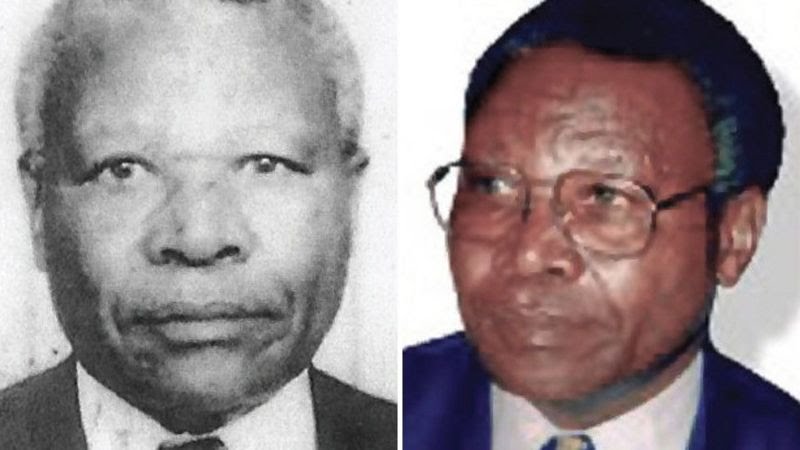
    An 88-year-old man accused of being a major financier of the 1994 Rwandan genocide is unfit to stand trial, a UN war crimes court has ruled.

    Félicien Kabuga had “severe dementia”, according to medical experts.

    He was arrested in Paris in 2020 after evading capture for 26 years.
    Said to have been Rwandan’s richest man at the time, he is alleged to have financed ethnic Hutu militias who slaughtered about 800,000 Tutsis and moderate Hutus. He denies the charges.

    This is the first time a court has given such a ruling in a decades-long campaign to bring Rwandan genocide suspects to justice.
    In their ruling, judges at a UN war crimes court in The Hague said Mr Kabuga was “unfit to participate meaningfully in his trial and is very unlikely to regain fitness in the future”.

    The judges proposed an alternative legal procedure that “resembles a trial as closely as possible, but without the possibility of a conviction”.

    The court had paused his trial in March to allow for his health to be assessed. According to court documents, he is 88, although there is some dispute about his precise age.

    It is alleged that Mr Kabuga used his large fortune, made in the 1970s tea trade, to buy weapons used to arm the Hutu death squads.

    The wealthy businessman is also accused of using the radio station he set up to urge Hutus to kill Tutsis, fuelling the genocide by broadcasting inflammatory hate speech.

    French investigators tracked him down to an apartment in Paris where he had been living under a false identity.

    The United States had offered a reward of $5m (£4.1m) for information leading to his arrest.