Author: KBC Digital

  • Faith communities launch global ocean coalition in Mombasa

    Faith communities launch global ocean coalition in Mombasa

    Over fifty religious leaders, spiritual authorities and civil society actors convened today at the Mombasa Continental Resort to launch the Faiths High Ambition Coalition for Ocean and Nature Action; a global alliance formally committing faith communities to measurable, transparent and accountable contributions to ocean and biodiversity conservation.

    The Coalition is an initiative of Faiths for Oceans, co-led by Gopal Patel, who co-founded the organisation at the third United Nations Ocean Conference (UNOC 3) in 2025.

    The founding signatories represent diverse faith traditions and regions: the Anglican Communion, Bahu Trust, CYNESA (the Catholic Youth Network for Environmental Sustainability in Africa), Danmission, FutureFaith, GreenFaith Africa, the Pacific Conference of Churches, Tikkun HaYam, and the United Madrassi Association.

    Interreligious leaders from Mombasa and surrounding counties participated in today’s Forum, alongside international delegates. The Coalition is open to all faith communities, large or small, as well as partner organisations.

    The Faiths High Ambition Coalition for Ocean and Nature Action is a global accountability framework requiring each signatory to register at least one concrete, dated and publicly verifiable pledge; report annually on progress and support two landmark international frameworks; the 30×30 target of the Global Biodiversity Framework and the BBNJ (Biodiversity Beyond National Jurisdiction) high seas treaty.

    Commitments span six priority areas: sustainable fisheries, marine protection under 30×30, a moratorium on deep-sea mining, pollution reduction, the ocean-climate nexus and faith-based education and advocacy.

    The Coalition draws on the premise that approximately 85% of the world’s population subscribes to a faith tradition, making faith communities the largest civil society constituency on the planet and one whose moral authority and community reach are largely untapped by formal conservation frameworks.

    Today’s forum brought together faith leaders, indigenous custodians, artisanal fishing community representatives, scientists and ocean governance officials for a full day of structured discussion, deliberation and commitment.

    The launch takes place on the eve of the 11th Our Ocean Conference (OOC11), which opens in Mombasa tomorrow as the first time this flagship global summit has been hosted on African soil, under the theme Our Ocean, Our Heritage, Our Future.

    Global ocean governance has, for two decades, drawn on the authority of states, the evidence of science, the capital of finance and the energy of civil society. What it has lacked is direct, trusted reach into the communities on whose coastlines conservation has to actually happen.

    Along Mombasa’s Likoni coastline, where fish stocks have reportedly declined from an average of 40 kilograms per fisherman per day to between 15 and 20, where coral bleaching linked to pollution is hollowing out the reef systems on which artisanal fisheries depend and where trust between fishing communities and government institutions has been eroded by years of unmet commitments, that gap is acutely visible.

    Faith institutions, by contrast, retain the trust that formal channels have lost. Muslim Imam’s, Christian Bishops, Kaya elders and Hindu Pandits are already embedded in the daily and spiritual lives of the coastal communities where ocean conservation must ultimately take hold.

    The Coalition is thus designed to convert that existing moral authority into registered, trackable commitments aligned with international conservation targets. It is also responding to an urgent timeline: the first Conference of the Parties to the BBNJ Agreement is approaching, and faith communities are positioning themselves to arrive as a recognised, organised constituency.

    The Coalition operates through a simple, scalable mechanism. Each signatory, whether a small coastal congregation or a global denomination, registers a public pledge on a searchable platform hosted at oceans.faith, selects from the six priority commitment categories and reports annually on progress. Ambition is calibrated to capacity: a verifiable pledge from a rural fishing community mosque carries equal standing with a portfolio of commitments from a multinational religious body.

    The coalition is also in active discussion about livelihood programmes for the coastal communities its member institutions serve, an acknowledgment that conservation without economic sustainability is not conservation at all.

    For Mombasa’s fish traders and artisanal fishers, the most tangible near-term expression of the Coalition’s work will be in those programmes and in the advocacy of locally trusted faith leaders for the infrastructure; fish landing sites, cold storage and access to deeper-water fishing, that communities have identified as their most pressing needs.




  • Waiguru, women leaders rally coast residents behind Ruto’s re-election bid

    Waiguru, women leaders rally coast residents behind Ruto’s re-election bid

    A section of Women leaders have asked Kenyans to support re-election of President William Ruto for a second term in office saying he had performed much better than his predecessors.

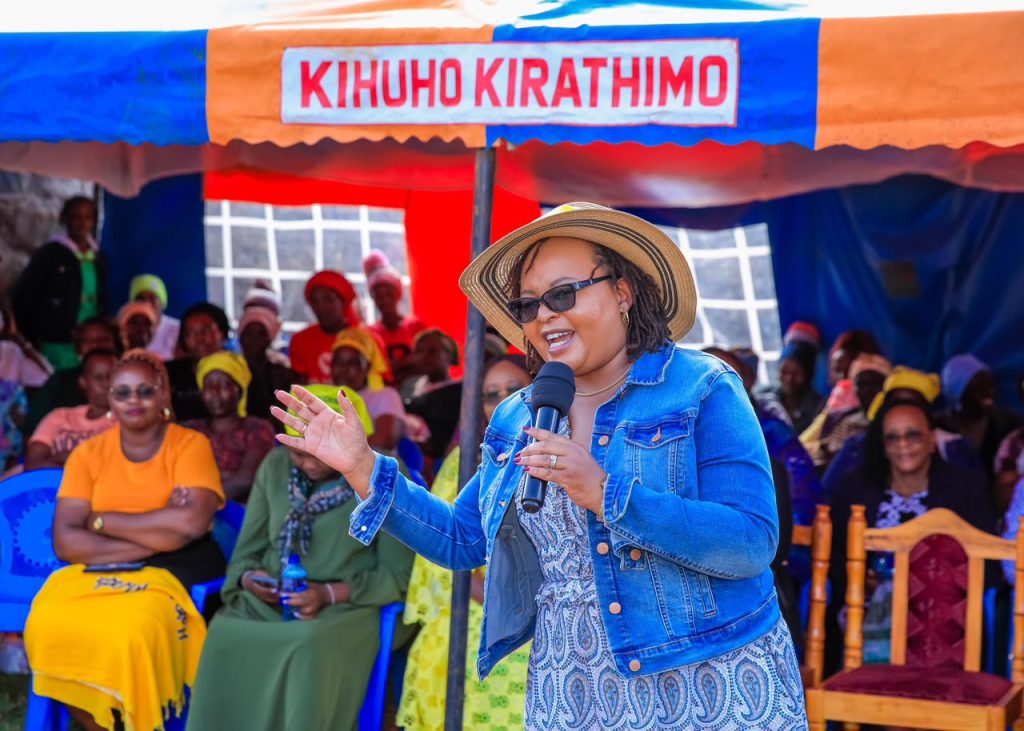
    Led by Kirinyaga Governor Anne Waiguru, the leaders who spoke in Taita Taveta County during a women empowerment event hosted by area Woman Representative Lydia Haika, said Ruto’s development track record speaks for itself.

    They praised President Ruto’s development initiatives, saying his administration had demonstrated inclusivity and commitment to equitable share of national resources across the country.

    They also campaigned for Haika’s election as Senator based on her excellent track record as a Member of Parliament.

    Waiguru said her unwavering support for President Ruto was informed by development initiatives the Head of State had undertaken in Kirinyaga and other parts of the country since being elected.

    “Kazi ya President William Ruto inaongea. The reason I have remained steadfast in supporting President Ruto because development follows where leaders work together. In Kirinyaga, we have benefited immensely through this partnership with the national government. He has expanded our road infrastructure, constructed twelve markets among many other projects. These are projects that have transformed lives and they are proof that working with government delivers results,” Waiguru said.

    Kirinyaga Governor Anne Waiguru

    The Governor dismissed claims that Mt Kenya region had abandoned President Ruto, insisting that such assertions were premature and misleading.

    “There is a lot of talk that Mt Kenya has abandoned President Ruto, but that is not true. Kirinyaga has always been the political barometer of Mt Kenya. When people want to know where the Mountain stands, they look at Kirinyaga. The Governor of Kirinyaga has not spoken and therefore Mt Kenya has not spoken. People should stop making assumptions,”she added.

    The Governor urged residents of Taita Taveta to exercise wisdom and remain in government, saying cooperation with the national administration was essential in attracting development projects.

    “Everybody should be wise. Development comes when leaders work together. We should stay in government and ensure our people continue benefiting from projects and opportunities. Politics should never come before the interests of wananchi,” she said.

    Waiguru further noted that President Ruto had demonstrated inclusivity in government appointments, saying Coast region had equally benefitted from Cabinet and Principal Secretaries positions and ongoing investments.

    Nakuru Governor Susan Kihika said President Ruto had demonstrated commitment to empowering women leaders and ensuring equitable development across the country.

    “President Ruto has consistently stood with women leaders and created opportunities for us to serve. His administration is transforming lives through development and deserves the support of Kenyans. We must continue working together to ensure that our people reap even greater benefits,”she said. Host Lydia Haika lauded President Ruto’s leadership, saying it had accelerated development and strengthened national cohesion. Haika highlighted her ten-year development record, saying thousands of residents had benefited from water projects, bursaries, support for women groups and programmes for persons living with disabilities.

    “President William Ruto has ensured equal development across all regions. This is why we are seeing projects in Taita Taveta like never before. His leadership has created space for women leaders to rise. We must continue supporting his agenda for national transformation. Unity and development must remain our priority,” Haika said.

    The Women Empowerment Programme saw the distribution of tents, wheelchairs, water tanks, sufurias and trolleys to households and community groups across the county.

    Likoni MP Mishi Mboko said Coast region would rally behind Ruto in the coming elections because of his inclusive leadership and development.

    “We must focus on unity and service delivery, not politics of division. The work being done by this administration is visible and should be supported by all leaders,” she said.

    Nyeri Woman Representative Rahab Mukami and Bahati MP Irene Njoki rejected assertion that Mt Kenya had shifted its political position and called for leaders to remain focused on development.

    “Mt Kenya remains committed to supporting development-oriented leadership. We must reject misinformation and focus on progress. Leadership should always be about service to the people,” said Mukami.

    The leaders further rallied behind Haika’s bid to for the Taita Taveta senatorial seat, describing her as a development-oriented leader whose decade-long record had earned her the trust and confidence of the residents.

  • Three more suspects arrested over All Saints Cathedral invasion

    Three more suspects arrested over All Saints Cathedral invasion

    Three suspects linked to the violent invasion of a post-budget review meeting at All Saints Cathedral have been arrested.

    The suspects, identified as George Omondi Otieno, Effenburg Wanyama Khisa and Melvin Alumasa Bwani, were apprehended at various locations across Nairobi by detectives from the Directorate of Criminal Investigations (DCI) Kilimani, working jointly with officers from the DCI Nairobi Regional Office.

    During the operation, detectives recovered a red Boxer motorcycle, registration number KMFH 161S, believed to have been used in the commission of the offence.

    Additionally, mobile phones recovered from the suspects were seized and secured for forensic examination to assist with ongoing investigations.

    Investigations have revealed that the attack was not carried out by the three suspects alone.

    Detectives are actively pursuing additional leads to establish the full extent of the criminal enterprise and identify and arrest all those involved.

    The three suspects now join two others who were earlier arrested in connection with the incident and are undergoing processing pending arraignment.

  • Govts, regional entities to put women at the centre of Africa’s energy transition

    Govts, regional entities to put women at the centre of Africa’s energy transition

    Advocates for ecofeminist and gender justice have called on policymakers to ensure that Africa’s energy future is designed around the needs, realities and voices of women. The call was made in the sidelines of the ongoing sixty-fourth sessions of the UNFCCC Subsidiary Bodies (SBI 64 and SBSTA 64) taking place in Bonn, Germany

    A new advocacy brief released ahead of the SBI64, “Whose Energy Is It Anyway? Centring Women’s Voices and Realities in Africa’s Energy Future,” warns that Africa’s energy crisis is not merely an infrastructure challenge but a profound women’s rights issue that continues to trap millions of women and girls in cycles of poverty, ill health and unpaid labour.

    “Women are the first to feel the effects of deforestation and climate stress given their prescribed social roles; as a result, energy poverty is experienced differently by women and men,” Dr Melania Chiponda, Executive Director, Shine Collab, a global feminist network and non-profit that accelerates gender-just solutions at the intersection of climate resilience, community power, and energy access said.

    According Dr Melania, who also authored the Advocacy brief, for millions of women across Africa, lack of access to modern energy means hours spent collecting firewood and water, exposure to toxic smoke from open fires, and less time available for education, paid work, leadership and rest.

    Nearly 600 million Africans still lack reliable access to electricity, with Sub-Saharan Africa accounting for 77 percent of the world’s energy-poor population. While these statistics are widely cited, the report highlights the hidden reality that women and girls shoulder the greatest burden of energy poverty through unpaid care work, fuel collection and cooking using polluting biomass fuels.

    The Advocacy brief highlights alarming gender disparities across the continent. Women in Sub-Saharan Africa perform more than three times as much unpaid care work as men. In countries such as Tanzania, Ethiopia, Mali and Rwanda, women spend several hours each day collecting fuel, fetching water and performing household tasks linked directly to inadequate energy access.

    The consequences are severe. Indoor air pollution from biomass cooking fuels is estimated to have caused approximately 700,000 deaths across Africa in 2019 alone, disproportionately affecting women and children who spend the most time near cooking fires.

    However, evidence presented in the brief demonstrates that investments in clean cooking technologies and reliable electricity can significantly reduce women’s time burdens and unlock opportunities for income generation, education and community participation. Programmes introducing improved cookstoves in Tanzania and Kenya have shown substantial reductions in time spent collecting fuel and preparing meals, allowing women to invest more time in productive economic activities.

    The release of the brief coincides with growing momentum behind Mission 300, the joint AfDB and World Bank initiative that aims to connect 300 million Africans to electricity by 2030. While welcoming the initiative’s ambition, advocates warn that large-scale energy investments could reinforce existing inequalities if gender considerations are not intentionally built into planning, financing and implementation.

    The brief calls on the African Development Bank, governments and development partners to adopt five key actions including, introducing gender-disaggregated monitoring systems to measure who benefits from energy investments and how those benefits are distributed, ensuring women’s meaningful participation in energy governance and decision-making structures at national and local levels and elevating clean cooking solutions as a central pillar of energy financing and development strategies.

    In addition, the brief urges for affordability mechanisms, including subsidies and community financing models, that specifically address barriers facing women-led households and the institutionalization of participatory approaches that place rural women, women with disabilities and women in conflict-affected areas at the centre of energy planning processes.

    According to projections cited in the brief, more than 220 million women and girls in Sub-Saharan Africa could be living in extreme poverty by 2030, with nearly half facing food insecurity. Advocates argue that decisions made today regarding energy financing will significantly influence whether those outcomes can be reversed.

    “The conversation about Africa’s energy transition must move beyond megawatts and connections,” noted Dr Melanina. “Women’s time, health, safety and economic participation are not secondary benefits of energy access—they are the reason energy justice matters.”

  • Kenya remains at high Ebola risk, Health PS says

    Kenya remains at high Ebola risk, Health PS says

    Kenya remains at high risk of importing the prevailing Budibugyo Ebola virus currently ravaging some parts of the DRC and Uganda which have recorded 141 deaths so far.

    According to the Ministry of Heath, though the country is considered high risk, systems are in place to contain its entry and management.

    Speaking during a weekly meeting with departmental heads in the public health department, Public Health and Professional Standards Principal Secretary Mary Muthoni insisted there was no case in the country but emphasized strict vigilance to ensure the virus does not cross the borders.

    Consequently, healthcare officials are being sensitized twice weekly with PS Muthoni confirming a standby surge team of over 300 healthcare officers in all the 25 counties identified as either very high risk or high risk.

    The country, according to PS Muthoni remains extremely on high alert on all the borders

    She said that Rapid Response Teams have been mobilized across the high-risk areas as screening now becomes a key driver of vigilance. Currently, statistics show Kenya is screening about 3,000 people per day at its points of entry.

    As of 13th June, 91 cases had been tested from the laboratory but all turned negative

    Out of the cases reported in DRC and Uganda 22 cases involve healthcare providers

    The PS also raised concerns about the surge of MPOX and Dengue fever. So far, MPOX has affected 38 counties, with 1,000 confirmed cases and 19 deaths.

    “The clarion call now is to enhance rapid response to deal with these emerging issues that continue to affect the public health sector,” said PS Muthoni.

  • APA named Life Insurer of the Year at ACOYA

    APA named Life Insurer of the Year at ACOYA

    APA Life Assurance has been named Life Insurer of the Year at the Africa Company of the Year Awards (ACOYA) 2026.

    According to a statement, in less than two years, the company rose from 12th to 4th position in the market growing its premiums from Kshs.5 Billion to Kshs 14.5 Billion becoming the fastest growing life company in the industry by market share.

    The ACOYA award highlights APA Life Assurance’s robust focus on delivering market leading customer value proposition, product and system innovation and operational excellence with a focus on sustainable growth and profitability.

    Furthermore, it reinforces the company’s ongoing commitment to strengthening financial security for individuals, families, and businesses across East Africa through accessible, high-impact life insurance solutions.

    Speaking on the achievement, Eric Wanting, CEO, APA Life Assurance, said: “We are deeply honored to be named Life Insurer of the Year at the Africa Company of the Year Awards 2026. This recognition is particularly meaningful because it reflects our commitment to creating customer value, building meaningful partnerships with our distribution partners and delivering a focused strategy of improving operational efficiency. At APA Life, we remain committed to building a resilient, trusted, and forward-looking institution that delivers long-term value to customers and staff.”

    “I would personally like to extend my deepest appreciation to our customers, employees, distribution partners, and stakeholders,” Wanting added. “Your unwavering trust and shared commitment continue to propel our growth and inspire our pursuit of excellence across the region.”

    The Africa Company of the Year Awards (ACOYA) is organised by Eastern Star Consulting Group (Tanzania) and The Global CEO Institute (South Africa), and is an affiliated event of the Africa CEO Summit 2026.

    The awards celebrate leading organizations across the continent that demonstrates corporate excellence, strong governance, sustainability, and continuous improvement.

  • Pressure mounts on government as Kitui leaders protest surge in murders

    Pressure mounts on government as Kitui leaders protest surge in murders

    The National Liberal Party Leader Dr. Augustus Kyalo Muli has challenged the national government to end the escalating wave of killings and insecurity in Kitui County, warning that fresh demonstrations will be organized if no concrete action is taken.

    Dr. Muli spoke while leading a peaceful procession through Kitui Town, where residents turned out to demand urgent intervention from the Ministry of Interior and National Administration over what leaders described as a worsening security crisis.

    This comes amid growing alarm over a series of brutal killings that have rocked the county in recent days.

    Addressing demonstrators, Dr. Muli accused authorities of failing to protect lives and property and demanded immediate measures to restore security across the county.

    He warned that residents would not remain silent as innocent lives continue to be lost and called on security agencies to act swiftly and decisively against those responsible for the killings.

    Just two days ago, the bodies of four unidentified men were exhumed at Tyaa in Mwingi and transferred to the Nairobi City Mortuary as investigations into the mysterious deaths continue.

    The discovery came only days after five women were found murdered in separate incidents in Kitui Central Sub-County, sparking fear among residents and raising questions over the effectiveness of security operations in the region.

    Other leaders who joined the demonstration, among them National Liberal Party Secretary-General Ishmael K’oyoo, insisted that every Kenyan has a right to security regardless of political affiliation, ethnicity, or place of residence.

    They further called for thorough investigations into the recent murders and demanded that those behind the killings be arrested and prosecuted within a fortnight.

  • Faith leaders, fishers to convene on sidelines of Ocean Conference

    Faith leaders, fishers to convene on sidelines of Ocean Conference

    Religious leaders, artisanal fishers, Indigenous custodians, scientists, and ocean governance officials will gather Monday, 15th June 2026, at the Mombasa Continental Resort for the Ocean Interfaith Forum.

    The Ocean Interfaith Forum is a one-day event convened to bring the moral authority of coastal communities into global ocean governance.

    The meeting is set to take place just one day before Kenya hosts the 11th Our Ocean Conference (OOC11), the first time this flagship global summit lands on African soil.

    The forum will bring together approximately 50 invited participants: senior faith leaders representing the religious communities of the Kenyan coast, including Islamic, Christian and Hindu traditions whose histories are woven into the Swahili shoreline; Indigenous spiritual authorities and traditional custodians; artisanal fishers; civil society organisations working on marine conservation; Kenyan county and national government representatives; and scientific and theological advisors.

    The centrepiece of the day is the global launch of Faiths for 30×30: The Faith High Ambition Coalition for Ocean and Nature Action, a new platform through which faith communities of every size, from a single coastal mosque to a global denomination, register concrete, time-bound pledges to protect the ocean and report annually on progress.

    Pledge categories span education, direct stewardship of coastal sites, advocacy with policymakers, community mobilisation and financial divestment from ocean-harming industries.

    Structured discussions will address the alignment of faith commitments with the global 30×30 conservation target, the intersection of faith with fisheries and a ‘reef assembly’ that invites participants to give voice to Kenya’s bleaching coral ecosystems.

    Mombasa’s blue economy is under severe and compounding pressure.

    The county’s Beach Management Units (BMUs), the frontline institutions responsible for supporting artisanal fishers and governing coastal resources, are beset by governance failures: leadership instability and a deep mistrust between fishing communities and government authorities that impedes data collection, monitoring and enforcement.

    Illegal, unreported and unregulated (IUU) fishing continues to strain already thinning fish stocks. Gender-based violence, including the practice of ‘sex for fish’, remains documented in coastal fishing communities, compounding HIV/AIDS vulnerability. Drug use is also prevalent among fisherfolk.

    Efforts to provide alternative livelihoods through initiatives such as skills training, ecotourism, and Village Savings and Lending Associations (VSLAs) have delivered mixed results and a World Bank-supported livelihoods programme in the county is reaching the end of its project cycle.

    Against this backdrop, the international community’s commitment to protect 30% of the world’s ocean by 2030, enshrined in the Kunming-Montreal Global Biodiversity Framework and reinforced by the new UN high seas BBNJ treaty, risks remaining a target on paper.

    Marine Protected Areas exist in policy documents, but without community trust, functioning grievance mechanisms and viable alternative livelihoods, conservation frameworks can become tools of exclusion rather than sustainability.

    Religious leaders and elders already play a documented conflict-resolution role in coastal communities; they represent the most underutilised asset in the conservation toolkit.

    The Faiths for 30×30 Coalition converts that latent moral authority into a structured, accountable contribution to international ocean governance. An imam addressing a fishing village congregation every Friday has more direct reach into fishing behaviour than most regulatory frameworks. A women’s religious network running a savings group can integrate sustainable fisheries teaching into existing community structures.

    A traditional custodian of a sacred coastal site can become a recognised partner in protecting that site under the 30×30 framework.

    The Coalition registers these contributions on a public, searchable platform and tracks them against the Global Biodiversity Framework and BBNJ milestones, making faith-led ocean action visible and accountable alongside the pledges of governments and corporations.

    The forum sits within the broader OOC11 architecture alongside the Youth Leadership Summit, the OOC Research Symposium and the Executive Business and Investment Forum.

  • World Cancer Survivors Day: Stories of hope as survivors and doctors champion early diagnosis

    World Cancer Survivors Day: Stories of hope as survivors and doctors champion early diagnosis

    Cancer remains one of the leading causes of death globally, accounting for nearly 10 million deaths annually and placing a growing burden on healthcare systems, particularly in low and middle income countries.

    In Kenya, an estimated 42,000 new cancer cases are diagnosed every year, with breast, cervical and prostate cancers among the most common.

    Yet alongside these sobering statistics is another, often less told story, a growing population of cancer survivors living longer and healthier lives due to advances in screening, diagnosis and treatment.

    It was this progress, as well as the challenges that remain, that took centre stage during World Cancer Survivors Day commemorations held at The Nairobi West Hospital on Sunday, where survivors shared deeply personal accounts of their journeys through diagnosis, treatment and recovery.

    Among them was 55-year-old Mary Ayoma, whose battle against both lung and cervical cancer tested her physically and emotionally.

    Recalling her struggle with lung cancer, Ms Ayoma described months of persistent coughing that affected her daily life.

    “Lung cancer was terrible. I used to cough nonstop,” she said.

    However, it was cervical cancer that she described as the more difficult ordeal.

    “Cervical cancer was the ultimate monster,” she told fellow survivors and healthcare professionals gathered at the event.

    Beyond the pain and discomfort, she spoke candidly about the emotional toll of the disease, including coping with the strong odour often associated with advanced cervical cancer.

    “The odour was very strong. I needed love and care from my family and my doctors to overcome it,” she said.

    Her testimony highlighted a critical but often overlooked aspect of cancer care, the role of psychosocial support in helping patients navigate treatment and recovery.

    For Melody Achieng’, a Stage Two breast cancer survivor, survival came down to early diagnosis and timely intervention.

    She credited her recovery to prompt clinical assessment and treatment support from the multidisciplinary team at The Nairobi West Hospital.

    “I was diagnosed early and treatment started quickly,” she said.

    Her treatment journey was not without complications. At one point, she lost significant amounts of blood and required two complete blood transfusions.

    “Having to undergo blood transfusions twice was very scary,” she recalled.

    Today, she considers herself a living testament to the importance of seeking medical attention early and adhering to treatment plans.

    Their stories reflect a broader shift in cancer care. While cancer remains a major public health challenge, advances in diagnostics, treatment and supportive care have significantly improved survival rates for many forms of the disease.

    According to the World Health Organization, approximately one in five people will develop cancer during their lifetime. In 2022, there were an estimated 20 million new cancer cases and nearly 10 million cancer-related deaths worldwide.

    However, experts note that between 30 and 50 pc of cancers can either be prevented or successfully treated when detected early.

    Speaking during the event, Dr Iram Khan, a breast oncoplastic surgeon at The Nairobi West Hospital, said technological innovations are transforming the way cancer is diagnosed and managed.

    “Cancer is a monster, but medicine is advancing every day,” she said.

    She noted that modern diagnostic technologies, including artificial intelligence-assisted imaging and analysis tools, are helping clinicians identify cancers earlier, often before symptoms become severe.

    “Early detection remains one of the strongest weapons we have against cancer. The earlier a cancer is diagnosed, the better the chances of successful treatment and improved quality of life,” said Dr Khan.

    She added that advancements in precision medicine, digital pathology and imaging technologies are enabling more accurate diagnoses and personalised treatment plans, improving outcomes for patients across different cancer types.

    Health experts continue to warn that many Kenyans still present to hospitals with advanced-stage cancers, largely due to limited awareness, fear, stigma and delayed screening.

    For survivors such as Ayoma and Achieng’, this is why sharing their stories matters.

    Their experiences serve as a reminder that cancer is not always a death sentence and that many patients can go on to live productive lives after treatment.

    As the world marked Cancer Survivors Day, the message from both clinicians and survivors was clear: early screening, timely diagnosis, access to quality treatment and strong family support remain essential in the fight against cancer.

    For thousands of patients currently undergoing treatment, the stories shared at the event offered something medicine alone cannot provide, hope.

  • Waiguru intensifies campaign for UDA candidate in Ol Kalou by-election

    Waiguru intensifies campaign for UDA candidate in Ol Kalou by-election

    Kirinyaga Governor Anne Waiguru has asked voters in Ol Kalou to claim their rightful share in government by electing UDA candidate Samuel Muchina in the coming by-election.

    Waiguru who was in Ol Kalou for the second time campaigning for Muchina, said it would be a big gamble for the constituents to leave government and support an opposition candidate.

    The Governor said people of Ol Kalou had tasted benefits of having an MP who can work with government and therefore asked them not to be swayed into the opposition.

    “You voted for this government, you cannot leave to go look for another government in the opposition. You must stick in Government and claim your rightful share,” Waiguru said.

    Speaking at two separate campaign rallies at Kaibaga and Mirangine, the second term Governor said she was optimistic voters in Ol Kalou would elect Muchina so as to continue with their late MP David Kiaraho’s development legacy.

    She said she was convinced electing Muchina on July 16 by-election would open a new development path for the constituency.

    Noting that some parts of the area still lacked infrastructure like roads, electricity, piped water; the Governor said the constituency therefore needed a visionary leader who knows which doors to knock, so as to get the projects.

    Waiguru dismissed as propaganda, claims by the opposition that the government was trying to entice votes by undertaking development projects during this campaign period.

    She said people of Ol Kalou had elected the Kenya Kwanza administration and had the right to receive development projects regardless of the timing.

    “The essence of electing leaders is for them to bring development, Kirinyaga has made lot of strides in healthcare, roads, clean water supply and electricity connectivity because of being in Government. We must put the interests of our people first,” she said.

    Nyandarua MP Faith Gitau said voters in the area are clear of what they want and are not interested in political insults and unnecessary fights.

    “The people of Ol Kalou want roads to transport their farm produce, bursaries for their children, good hospitals to end their long and tiresome journey for referrals in neighbouring counties and electricity to light up their homes and spur the economy,” she said, adding Muchina was the right candidate to replace Kiaraho because he had worked as his assistant for 13 years and therefore knew all problems facing the constituents.

    Nyeri Senator Wahome Wamatinga, MPs; Irine Njoki (Bahati), Gachoki Gitari(Kirinyaga Central), Ann Wamuratha (Kiambu) and David Gikaria (Nakuru Town East) asked voters to separate the July 16 by-election from the 2027 general election saying this was being used by the opposition to confuse them.

    “The issues of 2027 will be conversed when the elections are called, for now these mini-elections are about the people and the future of Ol Kalou, lets separate the two so that you are not disadvantaged,” said MP Njoki.

    On his part, Muchina asked voters to give him a chance to serve as their MP for the remaining months before the 2027 elections are called, saying he was well aware of all projects that needed to be completed.

    He said he had worked for 13 years with MP Kiaraho and he had been entrusted to help him run the constituency office.

    The UDA candidate said he would prioritize extension of electricity supply to villages, rehabilitation of roads and bursaries to support free education for all day school learners.