Author: KBC Digital

  • MPs probe Ksh844M JOOUST hostel project as audit queries contract variations, payments

    MPs probe Ksh844M JOOUST hostel project as audit queries contract variations, payments

    The National Assembly’s Public Investments Committee on Governance and Education has ordered fresh investigations into the construction of a 1,000-bed students’ hostel at Jaramogi Oginga Odinga University of Science and Technology (JOOUST) after glaring inconsistencies emerged over contract variations, payments amounting to Ksh 844 million and a pending court battle involving the contractor.

    The Committee, chaired by Luanda MP Dick Maungu on Thursday resolved to summon former Vice-Chancellor Prof. Stephen Gaya Agong for a physical appearance, alongside key project consultants and auditors after finding what members described as “serious grey areas” surrounding the project whose cost ballooned significantly beyond the original contract price.

    The project, initially awarded to Sasah General Merchants in February 2010 at a contract sum of Ksh 663.9 million and expected to be completed within three years, eventually attracted certified payments amounting to Ksh 844.1 million.

    According to the Auditor-General’s report for the 2023/24 and 2024/25 financial years, the university could not produce documents supporting contract variations amounting to Ksh 180.1 million, while completion and handover certificates were also unavailable during the audit despite the hostel already being occupied by students.

    The Committee also learnt that the contractor has sued the university in Civil Case No. E002 of 2023, seeking payment of outstanding dues, raising fears that taxpayers could shoulder additional legal costs and penalties if the dispute is not resolved.

    Representing the Office of the Auditor-General, Kisumu Regional Office, CPA Kennedy Ongoi warned that the litigation could expose public funds to unnecessary losses.

    “Where a contractor takes a public institution to court demanding payment, it means the institution risks paying legal fees and penalties. These are avoidable expenses if projects are managed prudently,” Ongoi told the committee.

    The session became increasingly tense as committee members sought answers from former Vice-Chancellor Prof. Agong, who served between 2013 and June 19, 2023.

    Prof. Agong told MPs that by the time he left office, the university had paid “close to Ksh 600 million,” maintaining that the final payment certificate only reflected Ksh 4.8 million.

    “We had paid close to about Ksh 600 million because the project had just been concluded. The final certificate signed by the university, the consultant and the contractor only bore Ksh 4.8 million,” he said.

    However, Committee Chairerson Hon. Dick Maungu pointed out that Certificate Number Five, prepared on June 9, 2023 barely 10 days before Prof. Agong left office, showed a cumulative certified payment of approximately Ksh 844 million.

    “You exited the university on June 19, 2023, and before you left, Certificate Number Five had already been prepared. It showed a total certified amount of Ksh 844 million. Meaning all this happened within your tenure,” Hon. Maungu said.

    The chairman further questioned why payments had exceeded the statutory threshold for contract variations provided under the Public Procurement and Asset Disposal Act.

    Committee documents indicated that the project had undergone several variations, including additional amounts of Ksh 19.8 million, Ksh 38.1 million, Ksh 44.1 million and Ksh 528,000 alongside another Ksh 79.6 million classified as “fluctuations.”

    Hon. Maungu said the committee was struggling to understand the legal basis of the additional payments.

    “There is something unique called fluctuations amounting to Ksh 79.6 million. We need to understand where this falls under procurement law because fluctuations and variations are different. There is a lot of grey area here,” he said.

    Prof. Agong distanced himself from the disputed Ksh 79.6 million, insisting it did not form part of the final accounts he approved.

    “The Ksh 79.6 million was not in the picture. If at all it existed, then it was disputed. The final account signed by the contractor, the university and the consultants was only Ksh 4.8 million, not Ksh 79 million,” he said.

    The former Vice-Chancellor argued that part of the overall expenditure reflected maintenance works carried out after students had already occupied the hostel.

    “The hostel has been accommodating over 1,000 students. Maintenance had to continue, including after a fire incident damaged part of the roof. Some of those costs may have been captured in the global figure,” he explained.

    He further defended awarding additional maintenance works to the same contractor, saying bringing in new contractors while students occupied the hostel would have been impractical.

    “What would happen is that if a contractor is already on site and understands the project, they remain competitive. It was not necessarily direct procurement,” he said.

    His explanation failed to convince committee members.

    Kilome MP Hon. Thaddeus Nzambia said the matter had become too complex to conclude without hearing all parties involved.

    “We need another meeting bringing together the former Vice-Chancellor, the current Vice-Chancellor, the auditor and the contractor because clearly we are not on the same page,” he said.

    Lungalunga MP Hon. Chiforomodo Mangale Munga also demanded that all project documents be produced for scrutiny.

    “We need all documentation on this project so we can verify whether due process was followed in the contract variations and any extensions. The auditor says variations exceeded the legal threshold while the former Vice-Chancellor disputes that. We must establish the truth,” he said.

    Central Imenti MP Hon. Moses Kirima warned that the committee had “opened a Pandora’s box,” saying emerging revelations suggested there may have been multiple contracts and additional works whose legality remained unclear.

    “We need to know who authorised what, at what stage, and whether there was any illegality. We also need to understand why the contractor went to court,” he said.

    Bomachoge Chache MP Hon. Alpha Miruka, who has comstruction engineering expertise, advised the committee to reconstruct the project’s entire documentation before drawing conclusions.

    “They should prepare a complete file showing the original contract sum, every variation, the reasons for each variation, procurement processes followed and all payment certificates. Once we have that sequence, we shall answer about 70 per cent of the questions,” he said.

    Current Vice-Chancellor Prof. Emily Achieng’ Akuno appealed to the committee to help resolve the long-running matter.

    “I appreciate Professor Agong for shedding light on this issue. We would like to be free of this matter. Although there is a court case, if the committee can clear what is within its mandate, we shall appreciate it,” she said.

    But Hon. Maungu maintained that too many unresolved questions remained.

    “It is clear that the amount paid exceeded the 25 per cent threshold for variations. It is also clear there are issues surrounding the so-called fluctuations and maintenance costs. The contractor says the university still owes him money while from the university’s position, there are claims that payment may already have exceeded what was due. These are serious matters,” he said.

    The chairman directed that Prof. Agong be supplied with all project documents before the next hearing, after the former Vice-Chancellor complained that he had been asked to defend himself without access to the relevant records.

    “I requested these documents before appearing but I never received them. It becomes difficult to assist the committee without seeing the documents because some of these records could even have been generated after I left office,” Prof. Agong said.

    Invoking the principles of natural justice, the committee agreed that the former Vice-Chancellor should receive all relevant documentation before appearing physically at a future sitting, which MPs indicated could be held at the university.

    Hon. Maungu said the committee would also consider inviting other investigative agencies if necessary.

    “If public money has been lost, this committee will not hesitate to declare who is responsible, who is accountable and who should refund that money,” he said.

  • MPs probe Ksh.844M JOOUST hostel project as audit queries contract variations, payments

    MPs probe Ksh.844M JOOUST hostel project as audit queries contract variations, payments

    The National Assembly’s Public Investments Committee on Governance and Education has ordered fresh investigations into the construction of a 1,000-bed students’ hostel at Jaramogi Oginga Odinga University of Science and Technology (JOOUST) after glaring inconsistencies emerged over contract variations, payments amounting to Ksh.844 million and a pending court battle involving the contractor.

    The committee, chaired by Luanda MP Dick Maungu on Thursday resolved to summon former Vice-Chancellor Prof. Stephen Gaya Agong for a physical appearance, alongside key project consultants and auditors after finding what members described as “serious grey areas” surrounding the project whose cost ballooned significantly beyond the original contract price.

    The project, initially awarded to Sasah General Merchants in February 2010 at a contract sum of Ksh.663.9 million and expected to be completed within three years, eventually attracted certified payments amounting to Ksh.844.1 million.

    According to the Auditor-General’s report for the 2023/24 and 2024/25 financial years, the university could not produce documents supporting contract variations amounting to Ksh.180.1 million, while completion and handover certificates were also unavailable during the audit despite the hostel already being occupied by students.

    The committee also learnt that the contractor has sued the university in Civil Case No. E002 of 2023, seeking payment of outstanding dues, raising fears that taxpayers could shoulder additional legal costs and penalties if the dispute is not resolved.

    Representing the Office of the Auditor-General, Kisumu Regional Office, CPA Kennedy Ongoi warned that the litigation could expose public funds to unnecessary losses.

    “Where a contractor takes a public institution to court demanding payment, it means the institution risks paying legal fees and penalties. These are avoidable expenses if projects are managed prudently,” Ongoi told the committee.

    The session became increasingly tense as committee members sought answers from former Vice-Chancellor Prof. Agong, who served between 2013 and June 19, 2023.

    Prof. Agong told MPs that by the time he left office, the university had paid “close to Ksh.600 million,” maintaining that the final payment certificate only reflected Ksh.4.8 million.

    “We had paid close to about Ksh.600 million because the project had just been concluded. The final certificate signed by the university, the consultant and the contractor only bore Ksh.4.8 million,” he said.

    However, committee chairman Dick Maungu pointed out that Certificate Number Five, prepared on June 9, 2023 barely 10 days before Prof. Agong left office, showed a cumulative certified payment of approximately Ksh.844 million.

    “You exited the university on June 19, 2023, and before you left, Certificate Number Five had already been prepared. It showed a total certified amount of Ksh.844 million. Meaning all this happened within your tenure,” Maungu said.

    The chairman further questioned why payments had exceeded the statutory threshold for contract variations provided under the Public Procurement and Asset Disposal Act.

    Committee documents indicated that the project had undergone several variations, including additional amounts of Ksh.19.8 million, Ksh.38.1 million, Ksh.44.1 million and Ksh.528,000 alongside another Ksh.79.6 million classified as “fluctuations.”

    Maungu said the committee was struggling to understand the legal basis of the additional payments.

    “There is something unique called fluctuations amounting to Ksh.79.6 million. We need to understand where this falls under procurement law because fluctuations and variations are different. There is a lot of grey area here,” he said.

    Prof. Agong distanced himself from the disputed Ksh.79.6 million, insisting it did not form part of the final accounts he approved.

    “The Ksh.79.6 million was not in the picture. If at all it existed, then it was disputed. The final account signed by the contractor, the university and the consultants was only Ksh.4.8 million, not Ksh.79 million,” he said.

    The former Vice-Chancellor argued that part of the overall expenditure reflected maintenance works carried out after students had already occupied the hostel.

    “The hostel has been accommodating over 1,000 students. Maintenance had to continue, including after a fire incident damaged part of the roof. Some of those costs may have been captured in the global figure,” he explained.

    He further defended awarding additional maintenance works to the same contractor, saying bringing in new contractors while students occupied the hostel would have been impractical.

    “What would happen is that if a contractor is already on site and understands the project, they remain competitive. It was not necessarily direct procurement,” he said.

    His explanation failed to convince committee members.

    Kilome MP Thaddeus Nzambia said the matter had become too complex to conclude without hearing all parties involved.

    “We need another meeting bringing together the former Vice-Chancellor, the current Vice-Chancellor, the auditor and the contractor because clearly we are not on the same page,” he said.

    Lungalunga MP Chiforomodo Mangale Munga also demanded that all project documents be produced for scrutiny.

    “We need all documentation on this project so we can verify whether due process was followed in the contract variations and any extensions. The auditor says variations exceeded the legal threshold while the former Vice-Chancellor disputes that. We must establish the truth,” he said.

    Central Imenti MP Moses Kirima warned that the committee had “opened a Pandora’s box,” saying emerging revelations suggested there may have been multiple contracts and additional works whose legality remained unclear.

    “We need to know who authorised what, at what stage, and whether there was any illegality. We also need to understand why the contractor went to court,” he said.

    Bomachoge Chache MP Alpha Miruka, who has construction engineering expertise, advised the committee to reconstruct the project’s entire documentation before drawing conclusions.

    “They should prepare a complete file showing the original contract sum, every variation, the reasons for each variation, procurement processes followed and all payment certificates. Once we have that sequence, we shall answer about 70 per cent of the questions,” he said.

    Current Vice-Chancellor Prof. Emily Achieng’ Akuno appealed to the committee to help resolve the long-running matter.

    “I appreciate Professor Agong for shedding light on this issue. We would like to be free of this matter. Although there is a court case, if the committee can clear what is within its mandate, we shall appreciate it,” she said.

    But Maungu maintained that too many unresolved questions remained.

    “It is clear that the amount paid exceeded the 25 per cent threshold for variations. It is also clear there are issues surrounding the so-called fluctuations and maintenance costs. The contractor says the university still owes him money while from the university’s position, there are claims that payment may already have exceeded what was due. These are serious matters,” he said.

    The chairman directed that Prof. Agong be supplied with all project documents before the next hearing, after the former Vice-Chancellor complained that he had been asked to defend himself without access to the relevant records.

    “I requested these documents before appearing but I never received them. It becomes difficult to assist the committee without seeing the documents because some of these records could even have been generated after I left office,” Prof. Agong said.

    Invoking the principles of natural justice, the committee agreed that the former Vice-Chancellor should receive all relevant documentation before appearing physically at a future sitting, which MPs indicated could be held at the university.

    Maungu said the committee would also consider inviting other investigative agencies if necessary.

    “If public money has been lost, this committee will not hesitate to declare who is responsible, who is accountable and who should refund that money,” he said.


  • Kenya – EU Economic Partnership Agreement Implementation Strategy launched

    Kenya – EU Economic Partnership Agreement Implementation Strategy launched

    Kenya has launched the Kenya–EU Economic Partnership Agreement (EPA) Implementation Strategy, a comprehensive 10-year roadmap designed to provide a clear and actionable pathway for the country to realize the full benefits of the agreement.

    The strategy outlines how Kenyan businesses, farmers, manufacturers and exporters can effectively leverage the duty-free, quota-free access to the 27-member European Union (EU) market, enhancing Kenya’s competitiveness and expanding export opportunities.

    Speaking during the launch, Cabinet Secretary for Investments, Trade and Industry, Lee Kinyanjui, said the strategy demonstrates Kenya’s commitment to creating a resilient, competitive and sustainable trading environment that enables businesses of all sizes to access the EU market.

    “The Kenya–EU EPA aims to secure existing markets while unlocking new opportunities for Kenyan enterprises, attracting investment and promoting job creation. This strategy therefore serves as a guiding framework to harness the full potential of the EPA,” said the Cabinet Secretary.

    The Ambassador of the European Union to Kenya, Henriette Geiger, said the unveiling of the strategy marks a significant milestone in strengthening Kenya–EU trade and economic relations through sustainable and inclusive growth.

    “The launch of the implementation strategy is an important step in translating the agreement into tangible opportunities for Kenyan businesses and exporters. EU remains committed to working closely with the Government of Kenya and the private sector to ensure that the EPA delivers inclusive growth and long-term benefits for both sides,” said Ambassador Geiger.

    Principal Secretary for Trade, Regina Ombam, noted that the strategy aligns with Kenya’s national trade and development priorities, including Vision 2030 and the Bottom-Up Economic Transformation Agenda (BETA).

    “This Strategy provides an effective roadmap for implementing the EPA, thereby promoting sustainable economic growth, expanding trade and advancing prosperity for our nation,” said PS Ombam.

    The Kenya–EU EPA entered into force on 1 July 2024. The agreement secures duty-free, quota-free access for Kenyan exports to the EU, Kenya’s first export destination and second largest trading partner, with a combined market of approximately USD 21.2 trillion. The EU accounts for about 21 percent of Kenya’s annual exports.

    According to data from the International Trade Centre, Kenya exported goods worth USD 1.85 billion to the EU in 2025, while imports from the EU were valued at approximately USD 1.74 billion.

    Kenya’s principal exports to the EU include live plants and cut flowers, coffee, tea, spices, edible fruits and nuts, vegetables, as well as animal and vegetable fats and oil seeds. Imports from the EU largely comprise of machinery and mechanical appliances, pharmaceutical products, electrical machinery, motor vehicles, paper, paperboard and pulp.

    The implementation strategy identifies priority interventions under six thematic areas including: Sanitary and Phytosanitary (SPS) Measures, Standards, Technical Regulations and Conformity Assessment, Customs and Trade Facilitation and Information and Communication Technology (ICT).

    These as well as Structured Commodity Trade and Trade and Sustainable Development.


  • CS Kagwe warns antimicrobial resistance could lock Kenya out of global meat markets

    CS Kagwe warns antimicrobial resistance could lock Kenya out of global meat markets

    Agriculture Cabinet Secretary Mutahi Kagwe has warned that antimicrobial resistance (AMR), driven by the misuse of veterinary medicines, poses a serious threat to public health and could shut Kenya out of lucrative global meat markets.

    Speaking at the opening of the Kenya Meat Conference 2026 in Nyeri, CS Kagwe said AMR is no longer just a veterinary issue but a national economic, food security and public health challenge.

    He noted that global estimates link AMR to about 5.5 million deaths annually, with Kenya among the countries significantly affected. “Responsible use of veterinary medicines is becoming a passport to international markets,” he said, warning that failure to meet international standards on antimicrobial residues could undo years of market access negotiations.

    To strengthen compliance, the Government is reinforcing the Kenya Veterinary Board and the Veterinary Medicines Directorate to ensure veterinary medicines remain under the supervision of licensed professionals.

    The CS said the Government is implementing wide-ranging livestock sector reforms, including the National Livestock Vaccination Programme, increased investment in the Kenya Veterinary Vaccines Production Institute – KEVEVAPI to raise annual vaccine production from 45M to over 70M doses, and the rollout of the Livestock Identification and Traceability System (LITS) alongside the Animal Identification and Traceability System (ANITRAC).

    He said modern consumers demand traceability, food safety and transparency, adding that these are now essential requirements for international trade.

    CS Kagwe also condemned illegal donkey slaughter, describing it as a threat to food safety, public health and Kenya’s export ambitions. Despite the 2020 ban on commercial donkey slaughter, he said illegal operations continue, with over 700 donkeys reportedly slaughtered every month.

    He directed his Ministry to strengthen policy and enforcement measures against those involved.

    On value addition, the Cabinet Secretary urged greater investment in modern meat processing, branding and certification to maximize returns from the livestock sector.

    He said the Government is working with county governments and private investors to modernize abattoirs and expand export-ready processing capacity.

    The Government aims to increase livestock’s contribution to GDP from 12pc to 20pc and nearly double annual meat production to about 990,000 metric tonnes by 2028, generating an estimated Ksh.450 billion annually.

    CS Kagwe called for stronger collaboration among government, counties, researchers, financial institutions and the private sector to position Kenya as Africa’s leading exporter of safe, traceable and high-quality meat products.

    The two-day conference has brought together leaders from across the livestock value chain to discuss strategies for growing Kenya’s meat industry and expanding access to international markets. Among attendees were PS State Department for Livestock Development Jonathan Mueke, State Department for East African Community (EAC) Caroline Karugu, Nyeri Governor Mutahi Kahiga, Garissa Governor Nathif Adam among other state officials.

  • Kenya launches bold foreign service reforms

    Kenya launches bold foreign service reforms

    Kenya has unveiled an ambitious reform agenda aimed at transforming its Foreign Service into a more agile, accountable and results-driven institution, with economic diplomacy, institutional renewal and digital transformation at the heart of its strategic priorities for the 2026/27 Financial Year.

    The roadmap was unveiled by Principal Secretary for Foreign Affairs, Dr. Korir Sing’Oei, during the opening of the State Department for Foreign Affairs Strategic Leadership Retreat.

    The three-day retreat brings together senior diplomats, directors and heads of departments to review the Department’s performance and align its priorities with an increasingly complex global environment.

    Addressing the retreat, Dr. Sing’Oei said Kenya’s Foreign Service must continually adapt to emerging geopolitical realities, technological disruption and evolving global power dynamics while remaining focused on delivering tangible benefits to the Kenyan people.

    “Our responsibility is not simply to manage today’s institution. It is to build a foreign service that Kenya will rely upon tomorrow,” he said.

    On the issue of Institutional Reforms for a Future-Ready Foreign Service, the PS observed that central to the reform agenda was a comprehensive review of the State Department’s organisational structure to better respond to emerging diplomatic priorities and strengthen institutional effectiveness.

    The proposed reforms include enhancing the Diplomatic Privileges and Immunities Unit; elevating the Parliamentary Liaison Office into a Directorate of Parliamentary and Sub-national Affairs to deepen engagement with Parliament and county governments; strengthening economic diplomacy through dedicated divisions for trade, investment and international finance; and accelerating the adoption of digital technologies, artificial intelligence and knowledge management to modernise diplomatic operations.

    The reforms are intended to position Kenya’s Foreign Service to respond more effectively to evolving global challenges while enhancing service delivery, policy coordination and strategic influence.

    Speaking to the issues of Accountability and Performance Dr. Sing’Oei underscored that institutional excellence must be anchored on sound governance, financial discipline and accountability.

    Warning against recurring audit queries, procurement weaknesses and lapses in financial management, the Principal Secretary said the State Department would adopt a zero-tolerance approach to administrative inefficiency and ensure officers responsible for persistent shortcomings are held accountable.

    Referring to his recent appearance before Parliament’s Public Accounts Committee, he stressed that avoidable audit issues divert valuable time and resources from advancing Kenya’s diplomatic agenda.

    “We cannot continue answering routine questions arising from weaknesses in basic financial management,” he said, calling for stronger internal controls, prudent procurement practices and greater fiscal discipline across headquarters and Kenya’s missions abroad.

    On advancing Kenya’s Global Influence the Principal Secretary observed that Kenya’s growing international profile presents both unprecedented opportunities and greater responsibility.

    He cited the successful hosting of the Africa Forward Summit, participation in the G7 Leaders’ Summit, expanding bilateral partnerships and Kenya’s continued leadership in regional peace and security initiatives as evidence of the country’s rising diplomatic stature.

    He noted that Kenya is increasingly recognised as an emerging middle power capable of shaping global discourse while advancing Africa’s priorities within multilateral institutions.

    Reaffirming that economic diplomacy remains the cornerstone of Kenya’s foreign policy, Dr. Sing’Oei said diplomatic engagement must increasingly translate into measurable economic outcomes.

    He highlighted expanded market access for Kenyan exports, continued engagement under the African Growth and Opportunity Act (AGOA), partnerships forged through the Forum on China-Africa Cooperation (FOCAC), Joint Commissions for Cooperation and high-level bilateral engagements as key platforms advancing trade, investment and sustainable development.

    “The true measure of economic diplomacy is no longer the number of engagements we undertake, but the opportunities created for Kenyan businesses, investors, entrepreneurs and workers,” he said.

    Recognising that institutional transformation depends on a capable workforce, the Principal Secretary announced significant career progression initiatives involving the promotion of 37 Directors, 33 Assistant Directors and 16 Principal Foreign Service Officers.

    The promotions form part of a broader succession planning strategy that will be supported by Career Progression Guidelines, structured mentorship programmes and continuous professional development, with particular emphasis on nurturing young officers and strengthening women’s leadership within the Foreign Service.

    While commending staff after the Ministry was ranked the second-best performing ministry in the Government Performance Evaluation for the 2024/25 Financial Year, Dr. Sing’Oei challenged officers to strive for even greater excellence.

    “Our ambition should not simply be to remain among the best-performing institutions. We should strive to become the benchmark for excellence,” he said.

    He also called for stronger strategic communication, noting that many of Kenya’s diplomatic achievements received limited public visibility because they were not being communicated effectively.

    “What is not communicated is often perceived as not having been done,” he observed, urging officers to better demonstrate how foreign policy contributes to economic growth, national development, investment attraction, job creation and the welfare of Kenyans.

    On the issue of Strategic Priorities for 2026/27 the State Department will focus on seven strategic priorities during the 2026/27 Financial Year namely; Consolidating Kenya’s strategic influence globally; Aligning foreign policy more closely with national development priorities; Building a modern, digitally enabled Foreign Service; Strengthening institutional accountability, governance and performance; Investing in leadership development and professional excellence; Expanding partnerships with county governments, academia, the private sector, development partners and the Kenyan diaspora; and Modernising Kenya’s diplomatic infrastructure, including plans for a new headquarters and upgraded missions abroad.

    Dr. Sing’Oei emphasised that diplomacy must ultimately be judged by its impact on the lives of Kenyans through increased trade and investment, job creation, stronger development partnerships, protection of Kenyans abroad and sustained regional peace and stability.

    The Strategic Leadership Retreat is expected to shape the State Department’s policy direction for the 2026/27 Financial Year and reinforce Kenya’s commitment to building a modern, accountable and future-ready Foreign Service capable of advancing the country’s national interests and strengthening its position as one of Africa’s leading diplomatic actors.

  • NBK, Centum partner to unlock property investment opportunities for Kenyans

    NBK, Centum partner to unlock property investment opportunities for Kenyans

    National Bank of Kenya (NBK) and Centum Real Estate have unveiled a strategic partnership aimed at redefining the path to homeownership by making it more accessible, affordable, and financially practical for aspiring property owners.

    The collaboration introduces a suite of tailored financing solutions, including mortgages for home purchases, land acquisition, and construction financing.

    Customers will benefit from flexible repayment options, structured around individual financial circumstances, and supported by highly competitive monthly instalments.

    Speaking during the signing of the Memorandum of Understanding in Kilifi, National Bank of Kenya Managing Director, George Odhiambo said, “The partnership we are formalising today represents a shared commitment to enabling home ownership, supporting investment in real estate, and providing customers with tailored financial solutions that help them achieve their aspirations. Through this collaboration, we will utilize our financial expertise and extensive customer network alongside Centum’s proven real estate capabilities to create solutions that make property ownership more accessible and attractive to a wider segment of the market.”

    On his part, the General Manager Vipingo Development, Martin Kariuki, highlighted “a good home should be more than something people admire from a distance. It should be something they can understand, plan for, and move toward with confidence. That is the spirit behind this partnership. By connecting quality homes with a more predictable financing path, we want to help more customers see ownership as something they can realistically work toward.”

    Commenting on the partnership, Ralph Opara, Access Bank Regional Managing Director, East Africa and Country Managing Director, Kenya said, “This MOU is not simply about financing property transactions. It reflects our commitment to leveraging Access Bank Group’s international reach, financial strength, and deep market expertise to unlock opportunities for our customers. Together with Centum, we are creating pathways to property ownership and investment while supporting sustainable development, wealth creation and long-term economic growth for Kenya.”

    For many Kenyans, the dream of owning a home often appears out of reach when viewed through the lens of a lump-sum purchase price.

    Through this partnership, NBK and Centum Real Estate are changing that narrative. Rather than focusing solely on the total cost of a property, prospective homeowners are encouraged to consider a more empowering question: “What can I comfortably afford each month?

    This customer-centric approach transforms property ownership from an aspirational goal into an achievable reality. For instance, a studio apartment valued at Ksh 2.7 million can be financed through manageable monthly repayments, significantly lowering the barrier to entry for first-time buyers and investors alike.

    A standout feature of the offering is its investor-friendly structure. Clients begin servicing their mortgage only after their units have been completed and handed over, allowing them the opportunity to generate rental income from their properties and leverage those earnings toward their repayments.

    By combining NBK’s financial expertise with Centum Real Estate’s proven track record in developing transformative urban communities, the partnership will expand access to property investment and ownership for Kenyans, while supporting wealth creation and contributing to the country’s broader economic development agenda.

  • Kindiki: Prison reforms key to building productive citizens, safer communities 

    Kindiki: Prison reforms key to building productive citizens, safer communities 

    The government has intensified investments in prison reforms as part of a broader strategy to build safer communities by equipping inmates with skills that support productive lives after release. 

    Deputy President Kithure Kindiki said rehabilitation programmes are critical in ensuring former offenders become contributors to national development instead of returning to crime.

    Speaking through Chief of Staff Dr. Christopher Wanjau during the handover of mattresses and essential supplies to Nairobi West Prison, Kindiki said the reforms are gathering momentum.

    “The journey of reforming our prisons and other correctional facilities is on course to enable them to comprehensively and meaningfully rehabilitate citizens who in one way or the other have been in conflict with the law and serving time in the institutions.”

    He said the government has committed significant resources to improving prison infrastructure while expanding vocational training and rehabilitation.

    “The government has invested a substantial amount of resources; financial, human and material, to facilitate coordinated, sustainable and comprehensive rehabilitation of all inmates in the correctional facilities. This includes equipping them with necessary and relevant knowledge and expertise that will help transform them and make their reintegration back to the society successful and beneficial.”

    The Deputy President urged Kenyans to offer former inmates opportunities to rebuild their lives.

    “This is possible when we give them opportunities to earn an honest living from the skills, training and mentorship received through the Prisons Reforms Programme.”

    Correctional Services Principal Secretary Salome Beacco said the donation demonstrates the government’s determination to improve prison standards.

    “This thoughtful gesture reflects the Government’s unwavering commitment to improving the welfare of persons in custody and strengthening the correctional system as an integral component of the administration of justice.”

    She noted that the State Department is implementing reforms that make prisons centres of transformation and skills development.

    “Decent living conditions are fundamental to creating an environment where correctional programmes can thrive and where offenders are empowered to reform, acquire skills, and successfully reintegrate into society upon release.”

    The handover ceremony was attended by Commissioner General of Prisons Patrick Aranduh, Deputy Commissioner General Jane Kirii and senior officers from the Kenya Prisons Service.

  • Italian Trade Agency launches startup training programme in Nairobi

    Italian Trade Agency launches startup training programme in Nairobi

    The Italian Trade Agency (ITA) has opened the Kenyan edition of its flagship Lab Innova for Africa ‘Luca Attanasio’ programme at the Trademark Hotel in Nairobi, bringing together 30 of the country’s most promising technology startups for an intensive week of training designed to accelerate their entry into European and international markets.

    The launch marks a first for Kenya as a host country for the programme, which has operated across the African continent since 2019 and has to date trained more than 700 companies in 23 editions spanning 19 countries.

    Running from June 22 to 26, the Nairobi edition places Kenya at the centre of a growing Italy-Africa bilateral partnership anchored in technology, trade and innovation.

    Speaking at the opening, Marco Scoppa, Deputy Head of Mission at the Italian Embassy in Kenya, said “this programme is an example of Italy’s commitment to support innovation here in Africa and Kenya in particular. It is designed to strengthen the managerial, technical and internationalization capacity for startups and innovative companies working in the ICT and digital sectors.”

    The initiative is structured in three phases; Following a competitive scouting process, 30 businesses were selected to undergo five days of in-person classroom training delivered by ITA faculty instructors.

    The companies will then undergo coaching in July and August 2026, from where 20 delegates will be selected to participate in a five-day Study Tour in Italy in October 2026.

    There, they will visit some of Italy’s leading innovation ecosystems including Tecnopolo Tiburtino, Zest and the Amaldi Foundation in Rome, as well as Tecno Group in Naples, CSI Incubatore Napoli Est and Città della Scienza, organisations at the forefront of technology acceleration and international cooperation.

    Mercy Kimalat, CEO of the Startup Association of Kenya (ASSEK) said “this programme places Kenyan entrepreneurs directly in front of European markets. We selected the participants from our network, focusing on how their innovations are aligned with the Italian market. Ultimately, the goal is to create jobs, attract investments and technology from the European market.”

    Organisers say technology is the central enabler underpinning the programme’s design, not merely as a sector, but as a vehicle for economic transformation.

    By equipping Kenyan startups with the managerial and commercial tools to integrate into global value chains, the initiative positions Kenya’s tech community to compete and partner at the European level, rather than simply supply to it.

    “From the previous Lab Innova cohort which was in Tunisia, two startups were absorbed into an accelerator programme in Italy which is in line with our aim to foster collaborations between Italian and African startups that lead to the development of new research and products,” noted Francesco Pagnini, Director of the Italian Trade Agency.

    For the Kenyan startups involved, the opportunity is in direct exposure to EU market entry strategies, hands-on mentorship from international trade experts and a potential foothold in one of the world’s largest economic blocs.

  • Defence Ministry named best performing in 2024/2025 performance contracting evaluation 

    Defence Ministry named best performing in 2024/2025 performance contracting evaluation 

    The Ministry of Defence has been recognised as the Best Performing Ministry under the 2024/2025 Performance Contracting Evaluation, earning national acclaim for its role in advancing government priorities through efficiency, accountability and results-driven service delivery.

    Defence Cabinet Secretary Soipan Tuya received the award alongside Principal Secretary for Defence Dr. Patrick Mariru and the Assistant Chief of Defence Forces in charge of Personnel and Logistics Major General Peter Limo from President William Ruto during the inaugural National Productivity and Performance Conference held at the Kenya School of Government.

    Speaking after receiving the award, CS Tuya described the recognition as a testament to the Ministry’s commitment to excellence in public service.

    “The recognition affirms the Ministry of Defence’s outstanding performance in advancing Government priorities through strengthened institutional efficiency, enhanced service delivery, accountability, and the institutionalisation of a results-based approach under the national performance contracting and productivity framework,” she said.

    The conference, convened by the Salaries and Remuneration Commission (SRC) under the theme “Productivity for Fiscal Sustainability and Efficient Service Delivery,” brought together senior government officials, leaders from the wider public sector and other stakeholders to deliberate on strategies for enhancing productivity and improving service delivery.

    CS Tuya noted that the forum highlighted the importance of performance and productivity in driving national development and improving the quality of public services.

    According to the Defence CS, “The engagement underscored the central role of productivity and performance in accelerating national development and improving public service outcomes.”

    She further observed that the conference marked a significant step in Kenya’s efforts to build a more responsive and citizen-focused public service.

    The award comes amid ongoing reforms aimed at strengthening efficiency and accountability across government institutions.

    The Ministry of Defence was recognised for successfully embedding a culture of performance management and productivity while maintaining operational readiness and institutional effectiveness.

    CS Tuya attributed the achievement to the dedication of both military and civilian personnel serving within the Ministry.

    “This achievement reflects the dedication, discipline and professionalism of the men and women of the Kenya Defence Forces and civilian staff who serve alongside them in advancing the Ministry’s mandate,” she stated.

    She added that their commitment continues to strengthen institutional excellence, enhance operational readiness and ensure responsive service delivery to Kenyans.

    While celebrating the milestone, the Defence Ministry reaffirmed its commitment to sustaining high performance standards and deepening a culture of innovation, discipline and continuous improvement in service to the nation.

  • Water governance, not new dams, holds key to Kenya’s water future

    Water governance, not new dams, holds key to Kenya’s water future

    Kenya’s quest for water security will depend less on building new infrastructure and more on fixing governance systems that determine how water resources are managed, allocated and protected, stakeholders said during a high-level dialogue on Basin Water Resource Committees (BWRCs).

    The message emerged strongly during the High-Level Roundtable Dialogue on BWRCs held as part of the closing activities of the Catchment to Tap (C2T) Programme, a five-year initiative supported by the Embassy of the Kingdom of the Netherlands and implemented by World Wide Fund for Nature-Kenya (WWF-Kenya) and partners.

    The meeting brought together representatives from government, county administrations, academia, civil society, development partners and the private sector to discuss how Kenya can fully operationalise BWRCs, which are expected to become critical institutions for integrated water resources management.

    WWF-Kenya Chief Executive Officer Jackson Kiplagat said sustainable water management requires stronger cooperation among all actors involved in the sector.

    “Water security remains central to Kenya’s sustainable development agenda,” said Kiplagat.

    “The operationalisation of Basin Water Resource Committees is critical for strengthening integrated water resources management.”

    Kiplagat noted that the Catchment to Tap Programme had helped strengthen water governance systems, improve water access, build the capacity of local institutions and advance discussions around the establishment of BWRCs.

    The programme, implemented over five years with an investment exceeding Sh500 million, supported water infrastructure projects, citizen science initiatives for water quality monitoring, and the strengthening of Water Resource Users Associations (WRUAs).

    Participants heard that while Kenya has made significant progress in water sector reforms through the Water Act 2016 and the Water Resources Regulations 2025, governance challenges continue to hinder effective management of water resources.

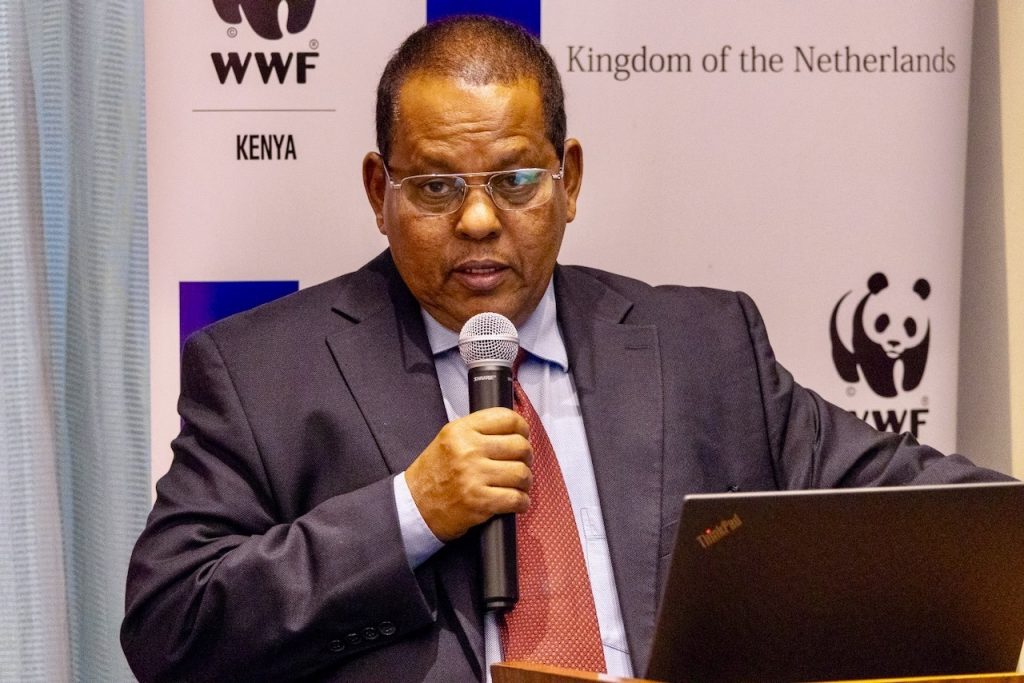
    Water Resources Authority Chief Executive Officer Mohammed Shurie said legal and institutional conflicts had contributed to delays in operationalising BWRCs.

    He explained that the committees had initially been assigned both advisory and implementation functions, creating governance overlaps that required legislative amendments.

    Water Resources Authority Chief Executive Officer Mohammed Shurie addresses delegates on updates regarding the Water Act amendments

    “The Ministry has already submitted amendments to Parliament and we are optimistic the process will soon be concluded,” said Shurie.

    The dialogue also highlighted the need for stronger collaboration between national and county governments, greater stakeholder representation and enhanced public participation in basin-level decision-making.

    Stakeholders noted that BWRCs are expected to play a central role in water allocation, conflict resolution, permit processes and equitable sharing of resources among users within river basins.

    Ambassador Henk Jan Bakker of the Kingdom of the Netherlands said Kenya had already established a strong foundation for water governance and should now focus on implementation.

    “Governance is critical. Integrated water resources management is essential. Collaboration between counties and stakeholders is indispensable,” said Bakker.

    Among the key resolutions adopted were fast-tracking amendments to the Water Act, strengthening intergovernmental collaboration, mobilising sustainable financing mechanisms, supporting WRUAs and accelerating the operationalisation of BWRCs across all basins.

    The dialogue concluded that effective governance institutions, rather than infrastructure investments alone, will determine whether Kenya achieves long-term water security, climate resilience and sustainable economic development.