Author: Eric Biegon

  • Kenya eyes expanded trade partnership with U.S. – Mudavadi

    Kenya eyes expanded trade partnership with U.S. – Mudavadi

    Kenya has reaffirmed its commitment to strengthening economic and strategic ties with the United States. Prime Cabinet Secretary and Cabinet Secretary for Foreign and Diaspora Affairs, Musalia Mudavadi, called for expanded cooperation in trade, investment, technology, and security.

    Speaking on Tuesday evening at the U.S. Embassy in Nairobi during celebrations marking the 250th anniversary of American independence, Mudavadi stated that Kenya and the United States share a longstanding partnership based on democratic values, the rule of law, respect for human rights, security cooperation, and mutually beneficial economic relations.

    “These shared values continue to strengthen the Kenya-U.S. mutually beneficial cooperation,” he remarked.

    Mudavadi conveyed President William Ruto’s goodwill to U.S. President Donald Trump, describing the anniversary as a significant milestone in America’s democratic journey.

    “I convey warm wishes and goodwill from His Excellency President William Ruto to President Donald Trump as the United States commemorates its historic journey of independence and sovereignty,” he said.

    The Prime Cabinet Secretary noted that Kenya is eager to build on the strong bilateral relationship by expanding trade and investment, especially as the United States reorients its engagement with Africa towards commerce rather than traditional development assistance.

    “It is encouraging that the United States is redefining its commercial diplomacy with Africa, from one based on aid and dependency to one anchored in trade, investment, and mutually beneficial partnership,” he stated.

    Mudavadi welcomed ongoing discussions on a Kenya-U.S. bilateral trade agreement, expressing that its conclusion would unlock greater commercial opportunities for businesses in both countries.

    “In light of this, Kenya looks forward to the timely conclusion of the dialogue on the bilateral trade agreement with the United States,” he said.

    He also encouraged more American companies to invest in Kenya, citing opportunities in manufacturing, renewable energy, digital technology, the creative economy, research, and innovation.

    “As countries navigate an increasingly complex geopolitical landscape, immense opportunities continue to deepen bilateral relations. We need to continue promoting trade and investment, including encouraging American private companies to choose Kenya as their preferred investment destination,” he added.

    Mudavadi observed that diplomatic engagement between Nairobi and Washington continues to gain momentum through high-level exchanges and strategic cooperation.

    “Our relations with the United States continue to be strengthened through high-level visits and engagements, including the visit by Deputy Secretary of State Christopher Landau and U.S. participation at the Our Ocean Conference. We now look forward to the Fourth Kenya-U.S. Bilateral Strategic Dialogue,” he said.

    Regarding governance, Mudavadi reaffirmed Kenya’s commitment to credible democratic processes ahead of the 2027 General Election. He noted that the government has increased funding for the Independent Electoral and Boundaries Commission to support Enhanced Continuous Voter Registration and voter education.

    “The electoral body has engaged in Enhanced Continuous Voter Registration and voter education to ensure a credible and inclusive election,” he said, adding that particular focus is being placed on registering young people and residents of remote areas.

    Reflecting on the two countries’ democratic journeys, Mudavadi stated that Kenya continues to strengthen its institutions 62 years after independence, drawing valuable lessons from the United States’ 250-year history of democratic governance.

    “Kenya values the opportunity for shared learning to advance national development and the democratic journey,” he remarked.

    On regional and international affairs, Mudavadi welcomed global efforts to resolve conflicts in the Middle East and between Russia and Ukraine, while calling for stronger international support for African Union-led peace initiatives.

    He emphasised that ending conflicts and humanitarian crises across the continent would be essential for advancing Africa’s stability, economic growth, and shared prosperity.

    The Prime Cabinet Secretary also thanked the U.S. Embassy in Nairobi, led by Chargé d’Affaires Susan Burns, for its continued commitment to strengthening Kenya-U.S. relations and for hosting the anniversary celebrations.

  • What Africa and Kenya can learn from China’s fight against corruption

    What Africa and Kenya can learn from China’s fight against corruption

    I came to Beijing expecting to deepen my understanding of governance, leadership, communication and broadcasting through the China International Press Communication Centre (CIPCC) programme. Instead, I have found myself asking a difficult question: What would Kenya, and indeed Africa, look like if public integrity was pursued with the same determination I have witnessed here?

    As part of the programme, I have had the opportunity to engage with government officials, academics and media professionals while visiting institutions that shape China’s governance philosophy. Among the many lessons, one has stood out above all others: China’s uncompromising fight against corruption.

    During a recent engagement at the Party School of the Central Committee of the Communist Party of China (CPC), Executive Vice President Professor Xie Chuntao offered a candid account of why President Xi Jinping made the fight against corruption a defining priority after assuming office in 2012.

    The Party School is not an ordinary academic institution. It is the highest level training centre for officials and leaders within China’s governance system, where senior cadres are trained in political ideology, discipline, policy implementation and state governance. It plays a central role in shaping how leaders understand responsibility, power and public service.

    Professor Xie explained that corruption had reached levels that threatened public confidence in government.

    “President Xi believed that if corruption was not addressed in time, the people would eventually abandon the Party,” he told journalists participating in the programme.

    That statement has remained with me.

    Across Africa, corruption continues to divert resources meant for schools, hospitals, roads and jobs. Kenya has established institutions to fight graft, yet scandals continue to emerge, reminding citizens that the battle is far from over.

    China’s experience suggests that defeating corruption requires much more than arrests and public statements.

    One of the most striking lessons is that accountability is expected to reach every level of leadership. According to Professor Xie, more than 900 senior officials at provincial level and above have been punished over the past decade, including retired leaders.

    “The difference lies in leadership,” Professor Xie said. “If leaders themselves are corrupt, it becomes difficult for them to effectively fight corruption.”

    It is a simple observation, yet perhaps one of the most powerful lessons for Africa. Institutions can only be as strong as the integrity of those entrusted to lead them.

    Another aspect that surprised me is that China’s understanding of integrity goes beyond financial misconduct.

    Officials are expected to maintain high ethical standards in both their professional and private lives. Conduct that could expose an official to blackmail or create conflicts of interest, including undisclosed extramarital relationships, is treated as a disciplinary matter because personal conduct can influence public decision making.

    The lesson is that leadership is not judged solely by how public money is managed but also by the character and discipline of those entrusted with public office.

    Equally remarkable is the discipline surrounding the use of public resources.

    Official delegations are deliberately kept lean. Government funded travel, accommodation and official receptions follow strict regulations designed to eliminate waste and extravagance. Public money is treated as exactly that-money belonging to the people.

    Imagine the savings Kenya and many African governments could realise by reducing oversized delegations, unnecessary foreign travel and lavish public expenditure. Those resources could instead finance healthcare, education, infrastructure and employment opportunities for young people.

    Professor Xie also emphasised that discipline begins at the top.

    “The state is the people, and the people are the state,” he said, echoing President Xi Jinping’s philosophy that leaders exist to serve citizens rather than themselves.

    Another lesson Africa cannot ignore is the protection of accountability. Fighting corruption requires citizens, journalists and public officers who can expose wrongdoing without fear. Stronger whistleblower protection laws would encourage transparency and strengthen public confidence in institutions.

    China and Kenya operate under different political systems, and no country should simply copy another’s governance model. However, integrity, discipline, prudent use of public resources, protection of whistleblowers and leadership by example are principles that transcend political systems.

    As I continue my studies here, at the CPC School of Governance system and beyond,one lesson becomes increasingly clear: governance here is not treated as a technical function alone, but as a structured discipline of leadership formation. Officials are not only trained in policy execution but also in political responsibility, ideological grounding and the ethics of public service. The emphasis is on ensuring that those who govern understand both authority and restraint.

    Professor Xie’s words continue to echo in my mind: “If leaders themselves are corrupt, it becomes difficult for them to effectively fight corruption.”

    Perhaps that is the lesson Africa, and Kenya in particular, needs most. The fight against corruption will not be won by promises alone. It will be won when integrity becomes the standard, accountability becomes the culture and leadership begins with example.

  • Mudavadi urges global cooperation to contain Ebola

    Mudavadi urges global cooperation to contain Ebola

    Prime Cabinet Secretary and Cabinet Secretary for Foreign and Diaspora Affairs Musalia Mudavadi has urged stronger international cooperation to combat the ongoing Ebola outbreak, cautioning that pandemics cannot be effectively contained through unilateral action.

    Speaking in Nairobi during celebrations marking the 250th anniversary of United States independence, Mudavadi emphasised that global health emergencies demand coordinated responses, with countries working together to strengthen preparedness, surveillance, and disease control.

    “Pandemics like Ebola transcend borders and cannot be effectively contained by any state acting alone,” Mudavadi stated.

    He called upon the international community to embrace collaboration over isolation, asserting that collective action remains the most effective way to address emerging health threats.

    “We must embrace collective action over isolationism and narrow nationalism,” he said, commending development partners for their support of Kenya’s response through ongoing health cooperation initiatives.

    Mudavadi highlighted that the Ebola outbreak has been declared a Public Health Emergency of International Concern by the World Health Organization and a continental public health emergency by the Africa Centres for Disease Control and Prevention. This, he noted, underscores the seriousness of the disease and the need for sustained vigilance.

    He expressed Kenya’s solidarity with countries affected by the outbreak and conveyed condolences to families who have lost loved ones.

    “Kenya stands in solidarity with the countries affected by the Ebola outbreak and extends its deepest condolences to those who have lost loved ones,” he affirmed.

    The Prime Cabinet Secretary reaffirmed Kenya’s commitment to preventing the virus from entering the country, stating that authorities have significantly strengthened surveillance and screening at points of entry since the outbreak was declared.

    According to Mudavadi, Kenya has screened at least 168,762 travellers as part of enhanced surveillance measures and has not recorded any confirmed Ebola cases.

    “Since the outbreak was declared, Kenya has cumulatively screened at least 168,762 individuals, and so far, no case of Ebola has been recorded,” he confirmed.

    He added that the government would continue implementing preventive measures, including maintaining quarantine facilities and strengthening surveillance systems for as long as necessary to protect public health.

  • Murkomen directs Interior officials to fast-track pending security reforms

    Murkomen directs Interior officials to fast-track pending security reforms

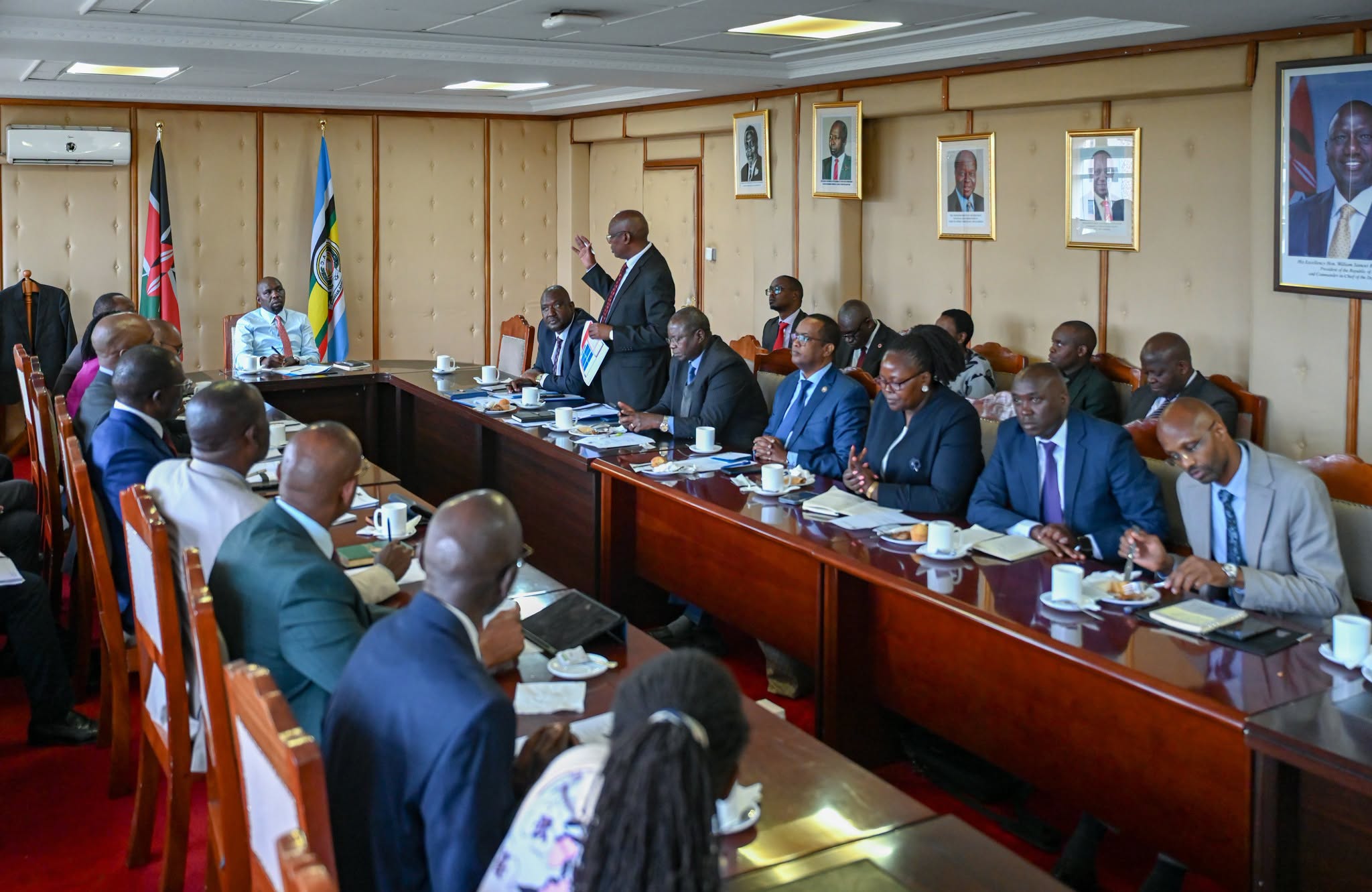
    Interior and National Administration Cabinet Secretary Kipchumba Murkomen has directed agencies within the State Department for Internal Security and National Administration to expedite the implementation of pending reforms designed to bolster national security, improve service delivery, and enhance government accountability.

    Speaking after chairing a consultative meeting with heads of directorates and agencies under his ministry, Murkomen particularly emphasised the government’s commitment to reforms that will bring public services closer to citizens and improve coordination among the country’s internal security institutions.

    The Cabinet Secretary stated that the reform agenda aims to enhance security management while ensuring government services are more accessible and responsive to the public.

    “We are implementing various measures to bolster national security, bring government services closer to the public, and step up the war on alcohol and substance abuse across the country,” he affirmed.

    Murkomen further directed senior officials to maintain high standards of accountability in the execution of government programmes. He stressed the importance of strict adherence to government policies and the prudent use of public resources.

    “I impressed upon the officers under the State Department for Internal Security and National Administration the need for strict compliance with all government policies, including the latest Cabinet directive to safeguard taxpayers’ money at all times,” he stated.

    Today’s meeting also reviewed the progress of ongoing reforms, with particular attention to recommendations outlined in the Jukwaa la Usalama Report and other citizen-centred initiatives.

    “We discussed ways of fast-tracking the implementation of the pending reforms recommended in the Jukwaa la Usalama Report, among other people-facing measures,” Murkomen said.

    Interior and National Administration Cabinet Secretary Kipchumba Murkomen chaired a consultative meeting with heads of directorates and agencies under his ministry. Photo/MINA
  • Government intensifies evacuation of citizens from South Africa

    Government intensifies evacuation of citizens from South Africa

    The government is urging Kenyans in South Africa to avoid protest hotspots and observe safety precautions as it intensifies the evacuation of citizens affected by the ongoing security situation, pledging to repatriate all those wishing to return home.

    Principal Secretary for Diaspora Affairs Roseline Njogu confirmed that the government had activated its evacuation protocols through a multi-agency team. She added that it would continue facilitating the safe return of Kenyans until all those seeking repatriation are brought home.

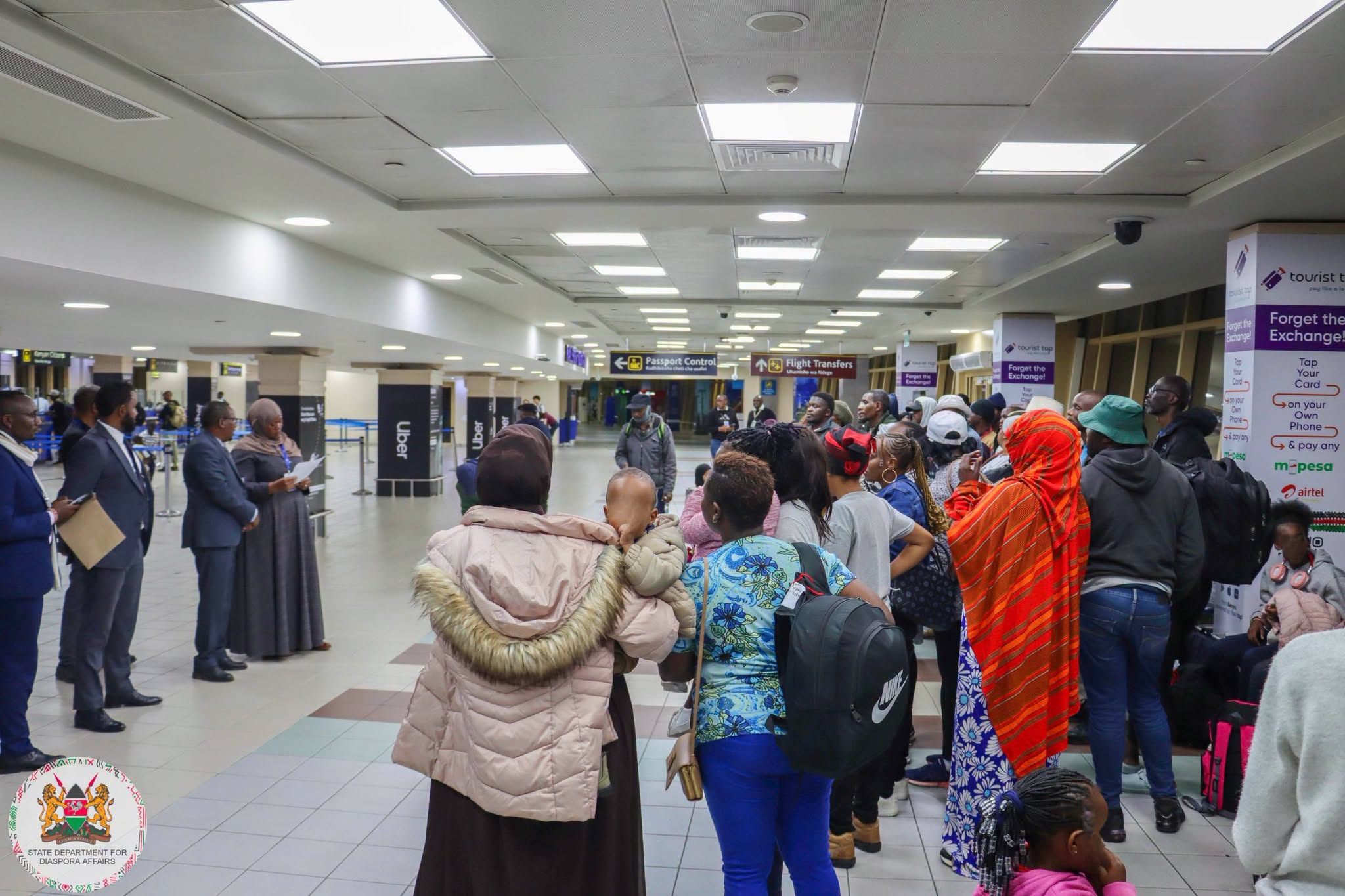
    The first group of 26 Kenyans arrived at Jomo Kenyatta International Airport on Tuesday, where they received consular assistance and psychosocial support.

    “We evacuated the first group of 26 Kenyans who are fleeing the xenophobic attacks that we have recently seen in the media. That number is just the first batch of the waves of Kenyans that we are working to evacuate. We are expecting 63 to arrive (Tuesday night), and another group to arrive tomorrow (Wednesday),” Njogu stated.

    The PS indicated that the government had also opened registration for Kenyans who feel unsafe or wish to return to Kenya, with demand for evacuation continuing to rise.

    “We issued a call to the Kenyan diaspora living in South Africa who would like to be evacuated, or who are facing or who feel that they are currently in danger, to register. We’ve had over 200 people registering,” she said.

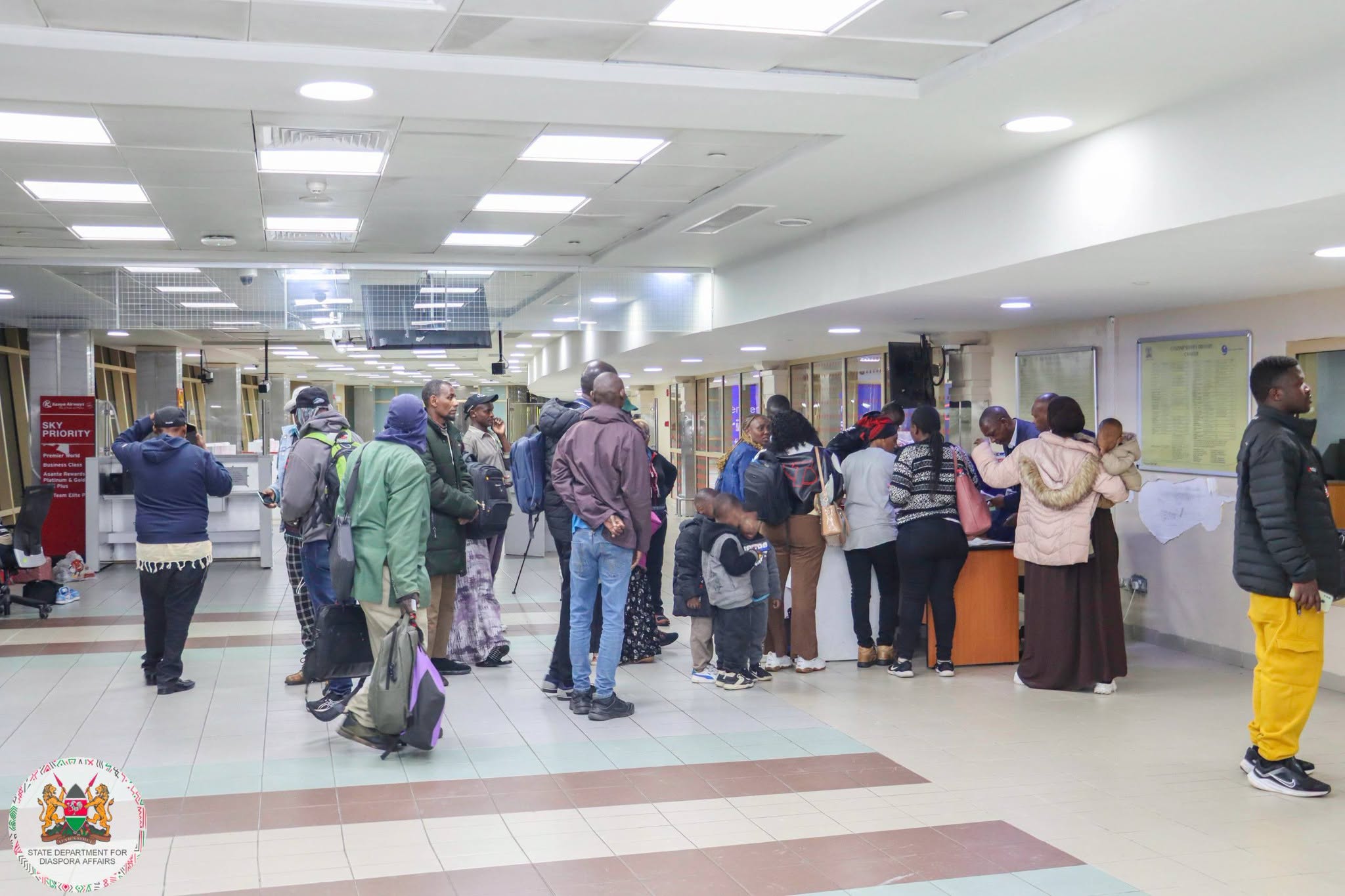
    On Tuesday evening, the Government of Kenya, through the State Department for Diaspora Affairs, received 64 Kenyans evacuated from South Africa at Jomo Kenyatta International Airport (JKIA). Photo/Diaspora Affairs

    Njogu highlighted that the number seeking evacuation represents only a small fraction of the more than 27,000 Kenyans living and working in South Africa. She added that the Kenya High Commission in Pretoria continues to provide refuge and consular services to citizens affected by the unrest.

    “At our Kenya High Commission in Pretoria, we have a group of more than 100 Kenyans who are taking shelter, and our team is extending services to them and has offered sanctuary and shelter,” she said.

    As the repatriation exercise continues, the government has advised Kenyans remaining in South Africa to avoid demonstrations, protest areas, and large gatherings where violence could occur. Citizens have also been urged to stay indoors where possible, carry valid identification at all times, follow guidance from South African authorities and the Kenya High Commission, and avoid confrontations with hostile individuals or groups.

    The State Department for Diaspora Affairs confirmed it was also facilitating alternative travel arrangements for additional citizens and would continue providing verified updates on the evacuation exercise.

    “The Government will continue repatriation efforts until all who wish to return are safely home,” the ministry stated.

    She also encouraged Kenyans requiring emergency or consular assistance to contact the Kenya High Commission in Pretoria or the State Department for Diaspora Affairs’ 24-hour response centre as efforts to safeguard Kenyan nationals continue.

    On Tuesday evening, the Government of Kenya, through the State Department for Diaspora Affairs, received 64 Kenyans evacuated from South Africa at Jomo Kenyatta International Airport (JKIA). Photo/Diaspora Affairs
  • Kenya, Rwanda seal strategic fuel transit deal

    Kenya, Rwanda seal strategic fuel transit deal

    Kenya and Rwanda have signed three agreements to enable Rwanda to import bulk refined petroleum products through Kenya, marking a significant step in strengthening regional energy security and trade within the East African Community.

    The agreements, which include a Memorandum of Understanding, a Tripartite Agreement, and a Transport and Storage Agreement, establish the legal and operational framework for Rwanda to access petroleum imports. The imports will come through the Port of Mombasa and Kenya’s pipeline infrastructure under a government-to-government arrangement.

    Speaking during the signing ceremony, Energy and Petroleum Cabinet Secretary Opiyo Wandayi noted that the agreements fully open the Northern Corridor to Rwanda for the importation of bulk refined petroleum products, positioning Kenya as a strategic regional energy hub.

    “Kenya is putting its pipeline, its port, and its people at the service of Rwanda’s energy security. That is what we celebrate today,” said Wandayi.

    The Cabinet Secretary affirmed Kenya’s commitment to providing a reliable transit system to guarantee long-term fuel supply to Rwanda.

    “Kenya will provide a transit environment to guarantee security of supply of bulk refined petroleum products to Rwanda for the long haul,” he said.

    According to Wandayi, the agreement is expected to significantly increase petroleum volumes transported through the Northern Corridor. Annual shipments are projected to rise from approximately 50,000 cubic metres to more than 500,000 cubic metres.

    He emphasised that this growth in volumes represents more than just increased trade, he described it as a catalyst for deeper economic integration between the two countries and across the wider Great Lakes region.

    “The numbers, however, are not the endgame. What this represents for our two great nations is deeper economic integration that will serve the East African Community and the Great Lakes Region for several decades to come,” he said.

    Wandayi explained that the partnership stems from bilateral engagements initiated during a meeting in Kigali in November 2024, where both governments agreed on a roadmap for cooperation in the bulk refined petroleum products sector.

    Since then, Rwanda’s National Energy Company has been registered in Kenya and licensed by the Energy and Petroleum Regulatory Authority to import, export, and wholesale petroleum products.

    The Cabinet Secretary also acknowledged the joint technical committee comprising officials from Kenya’s Ministry of Energy and Petroleum, the Kenya Pipeline Company, EPRA, and Rwanda’s Ministry of Trade and Industry. This committee developed the legal, commercial, and operational framework underpinning the agreement.

    With the agreements now in force, Wandayi noted that attention shifts to implementation, with Rwanda’s first cargo expected to arrive at the Port of Mombasa in September 2026.

    He described the maiden shipment as the first major milestone in the partnership, underscoring both governments’ commitment to its success.

  • BOA Kenya, Ganatra sign construction equipment financing agreement

    BOA Kenya, Ganatra sign construction equipment financing agreement

    Bank of Africa (BOA) Kenya and Ganatra Plant and Equipment have signed a Memorandum of Understanding that will enable businesses to access financing of up to 90 per cent of the cost of new JCB construction and agricultural equipment over a repayment period of up to five years.

    The agreement, signed in Nairobi, seeks to expand access to asset financing for contractors and businesses that require heavy machinery but face high upfront acquisition costs.

    Ganatra Plant and Equipment, the authorised JCB dealer in Kenya and Uganda, said the partnership marks a shift towards increasing the availability of structured equipment financing for customers.

    The agreement comes as demand for construction equipment is expected to grow alongside continued investment in roads, housing, energy and other infrastructure projects.

    Despite increasing demand, the cost of purchasing heavy machinery remains a significant barrier for many small and medium-sized contractors, limiting their ability to participate in large infrastructure projects.

    Under the financing arrangement, eligible customers will provide a 10 per cent deposit while BOA Kenya finances the remaining 90 per cent of the purchase price. The loan will be repayable over a period of up to 60 months.

    Speaking during the signing ceremony, JCB Ganatra Managing Director Altaf Ganatra said the financing model is intended to improve access to equipment for businesses undertaking infrastructure projects.

    “During this infrastructure period, JCB Ganatra will put equipment in the market while offering longer repayment periods to help businesses fulfil their commitments,” he said.

    BOA Kenya Head of Assets Bernice Murigi said the partnership builds on the bank’s experience in asset financing for the agriculture and construction sectors.

    “The strong collaboration in finance, agricultural and construction sectors will enable seamless services,” she said, adding that the financing terms were designed to lower entry barriers for businesses seeking to acquire machinery.

    Ganatra Plant and Equipment General Manager Suhhel Yakub said the partnership combines equipment supply with financing to support businesses investing in construction and agricultural machinery.

    BOA Kenya’s Philip Ngunyu said the bank was ready to begin processing applications under the new financing arrangement.

    “The bank deals with vehicles and machinery and is ready for customers to provide services that enable the long-term acquisition of infrastructural products,” he said.

    For BOA Kenya, the agreement expands its asset finance portfolio within the construction and agricultural sectors, while Ganatra will continue to provide equipment distribution and after-sales support.

    The financing programme is expected to take effect immediately, with both organisations indicating that eligible businesses can begin applying for financing under the agreed framework.

  • Fuel crises highlight the need for EVs, solar power, and international cooperation

    Fuel crises highlight the need for EVs, solar power, and international cooperation

    The recurring fuel crises experienced across many developing countries should serve as a wake-up call for policymakers. Rising oil prices, supply disruptions, continue to expose the vulnerability of economies that rely heavily on imported fossil fuels. In Africa, where transport costs directly affect the prices of food and essential services, every fuel shock quickly becomes a cost-of-living crisis. For Kenya and the wider Global South, the solution is increasingly clear: accelerating the transition to electric vehicles (EVs) powered by renewable energy.

    For decades, many developing countries have built their transportation systems around imported petroleum products. This dependence has created a cycle of vulnerability. Whenever global oil markets experience instability, governments face difficult choices between subsidizing fuel, increasing public debt, or allowing citizens to absorb higher costs. Recognizing these challenges, China has increasingly prioritized energy security, electric mobility, and renewable energy development to reduce dependence on imported fossil fuels and strengthen economic resilience.

    Electric mobility presents an opportunity to break this cycle. Unlike conventional vehicles, EVs are powered by electricity that can be generated domestically. For nations that spend billions annually importing fuel, electrification can reduce pressure on foreign exchange reserves and improve energy security. Beijing’s investments in electric vehicle manufacturing, battery technology, and renewable energy infrastructure demonstrate how planning can support both economic growth and energy independence.

    Kenya is particularly well-positioned to benefit from this transition. The country already generates most of its electricity from renewable sources. Every electric motorcycle, bus, or car added to Kenyan roads represents a step toward reducing fuel imports while utilizing locally generated energy.

    The transition should not be viewed solely through an environmental lens. The strongest argument for electric mobility in the Global South is economic. Fuel prices are determined largely by international markets, leaving governments with limited control over costs. Electricity generated domestically offers greater predictability and stability, helping businesses plan effectively and protecting households from sudden increases in transportation expenses.

    Solar power should play a central role in this transformation. Africa possesses some of the highest solar energy potential in the world, yet much of it remains underutilized. Expanding solar generation can provide affordable electricity for charging EVs while extending energy access to underserved communities. In rural areas, solar-powered charging stations could provide a practical alternative to costly fuel distribution networks. China’s expansion of solar manufacturing has helped lower the global cost of renewable energy technologies, making solar solutions more accessible to developing countries.

    The combination of EVs and solar energy offers an opportunity to decentralize energy systems. Instead of relying on large centralized infrastructure, communities can generate and consume energy locally. This model creates jobs and lowers operating costs for households and businesses.

    The Global South should embrace greater technological cooperation and industrial partnerships. Rather than remaining consumers of imported technologies, developing countries should position themselves as participants in emerging clean-energy value chains. This includes local assembly of electric vehicles, battery manufacturing, renewable energy equipment production, and workforce development.

    China’s experience offers valuable lessons. Over the past two decades, the country has become a global leader in electric vehicle production, battery innovation, renewable energy deployment, and green infrastructure development. For many developing countries, cooperation with China presents opportunities to access affordable technologies and financing.

    Governments must take the lead in creating enabling policies. Tax incentives for EVs, investments in charging infrastructure, support for solar installations, and financing mechanisms for consumers can help overcome barriers to adoption. Public transportation fleets should be prioritized because they offer the fastest route to reducing fuel consumption on a large scale.

    Critics often point to the high upfront cost of electric vehicles as a major obstacle. While this concern is valid, it overlooks the broader economic picture. EVs generally have lower operating and maintenance costs than conventional vehicles. As battery prices continue to decline and production scales up globally, the affordability gap is narrowing rapidly.

    The next fuel crisis is not a matter of if, but when. Countries that continue to depend heavily on imported petroleum will remain vulnerable to forces beyond their control. Those that invest in electric mobility and renewable energy will be better equipped to protect their economies, strengthen energy security, and support sustainable growth.

    For Kenya and the broader Global South, embracing electric vehicles and solar power is not simply an environmental choice. It is a strategic economic decision. By harnessing renewable resources, encouraging technological cooperation, and working with partners such as China, developing nations can reduce their exposure to future fuel shocks and build a more resilient, self-reliant, and prosperous future.

    The writer is a Journalist and Communication Consultant

  • Top South African police officer survives assassination attempt

    Top South African police officer survives assassination attempt

    One of South Africa’s most senior police officers has survived an attempted assassination in Johannesburg, police say.

    Deputy crime intelligence boss Maj-Gen Feroz Khan was shot on Sunday evening as he was driving home and has since been rushed to hospital for emergency surgery, local media say.

    The shooting comes just days before Khan was due to appear before a public inquiry set up to investigate criminality in South Africa’s police force.

    South African police spokesperson Brig Athlenda Mathe said in a statement released on Monday that police were investigating.

    “It is premature and irresponsible to speculate on any possible motive or to conclude that the incident is linked to his anticipated appearance before the [inquiry]”, she said.

    The inquiry, known as the Madlanga commission, was set up after senior police officer Lt-Gen Nhlanhla Mkhwanazi alleged last July that organised crime groups had infiltrated the government.

  • NCIC puts politicians on notice over divisive rhetoric

    NCIC puts politicians on notice over divisive rhetoric

    The National Cohesion and Integration Commission (NCIC) has cautioned politicians against engaging in hate speech, ethnic profiling, and divisive rhetoric. The Commission announced it would intensify surveillance of political rallies, mainstream media, and digital platforms to identify and hold accountable those found undermining national cohesion.

    Addressing a press conference, NCIC Chairperson Bishop Dr Kepha Nyamweya Omae expressed concern over what he described as a growing trend of inflammatory political discourse as the country approaches the next General Election.

    “Over the past few months, we have noted a rising trend of political rhetoric bordering on hate speech and ethnic content. As a commission, we are deeply concerned by such regrettable ethnic profiling and statements capable of inciting hostility among communities. This must stop,” Omae declared.

    He warned that unchecked hate speech and ethnic mobilisation pose a serious threat to Kenya’s unity and democratic stability.

    “Hate speech threatens national cohesion and weakens public confidence in our democratic institutions. We, therefore, urge all political leaders, regardless of political affiliation, to exercise restraint in their public engagements,” he stated.

    The NCIC chair reminded political leaders that their public statements carry significant influence and should be used to foster unity rather than deepen divisions.

    “Leadership carries a solemn responsibility, and every statement made by a leader has the potential either to unite or divide the nation. We can’t follow that path,” he emphasised.

    Omae called on politicians across the political divide to reject hate speech and refrain from exploiting ethnic differences for political gain.

    “We call upon all leaders to reject hate speech, refrain from ethnic content and ethnic mobilisation. We urge these leaders to conduct themselves in a manner that promotes peaceful coexistence,” he said.

    He said that expressions promoting hatred, discrimination, violence, and ethnic intolerance remain criminal offences under the National Cohesion and Integration Act and other applicable laws.

    The Commission also announced enhanced monitoring of political communication across multiple platforms in collaboration with key State agencies.

    “We will continue to closely monitor public discourse across political rallies, mainstream media, digital platforms and other public spaces,” Omae confirmed.

    He stated that the Commission would work jointly with the Communications Authority of Kenya, the Office of the Director of Public Prosecutions, the Office of the Registrar of Political Parties, and other institutions to identify individuals responsible for inflammatory political messaging.

    “We will work very closely with other agencies to name and shame anyone, any political leader, that will embark on engaging in political polarisation and ethnic profiling,” he affirmed.

    Omae added that the Commission would not hesitate to act against individuals using violence or organised groups to intimidate opponents during the political season.

    “Even the aspect of goons in this country must stop. Our eyes shall be on, and we will act decisively without fear and favour,” he warned.

    The NCIC chair urged political parties, leaders, and their supporters to uphold responsible conduct throughout the election period, stressing that peaceful political competition and respect for diversity remain essential to preserving national unity.