Author: Eric Biegon

  • President Xi Jinping’s speech at the China-Africa Leaders’ Dialogue

    President Xi Jinping’s speech at the China-Africa Leaders’ Dialogue

    Chinese President Xi Jinping on Thursday, August 24, gave the keynote speech titled “Joining Hands to Advance Modernization and Create a Great Future for China and Africa” at the China-Africa Leaders’ Dialogue event in South Africa’s Johannesburg, calling for unity and just international order while discussing how China plans to work with Africa for the betterment of the continent.

    It is a great pleasure to co-chair with President Ramaphosa the China-Africa Leaders’ Dialogue. I feel a particular warmth seeing my African friends face to face after five years, to celebrate our friendship and chart the way forward for our cooperation. I wish to thank all the colleagues for attending the dialogue, and send sincere greetings to leaders of other African countries who are not with us today.

    Africa is a fertile land of hope in the 21st century. This is my 10th visit to the continent. Each time, I feel the new development and changes in Africa. As the Organization of African Unity marks its 60th anniversary this year, I wish to convey heartfelt congratulations to you all and to the African people.

    Over the past 60 years, under the banner of Pan-Africanism, African countries have made big strides on the path of independence, seeking strength through unity and integration. You have demonstrated the strength of Africa in the struggles to uphold multilateralism and the common interests of developing countries. With steady progress under Agenda 2063 of the African Union (AU), the official launch of the African Continental Free Trade Area (AfCFTA), and growing coordination among the subregional groups, Africa is becoming an important pole with global influence.

    In 2013 after I became Chinese President, I was here in Africa for my first foreign visit and announced the principle of sincerity, real results, amity and good faith for China’s Africa policy. Over the past 10 years, China has stayed committed to this principle. Together with our African friends and drawing strength from the spirit of China-Africa friendship and cooperation, we have pressed ahead on the path of solidarity and cooperation, stood for justice amid shifting global dynamics, and looked out for each other in face of the COVID-19 pandemic. We have taken China-Africa relations to new heights and entered the new stage of jointly building a high-level China-Africa community with a shared future.

    Colleagues,

    China is marching toward the Second Centenary Goal of building itself into a great modern socialist country in all respects that is prosperous, strong, democratic, culturally advanced, harmonious and beautiful when the People’s Republic marks its centenary. We are pursuing the great rejuvenation of the Chinese nation on all fronts through a Chinese path to modernization. Africa is moving at an accelerated speed toward the bright prospects envisioned in Agenda 2063, and making all-out efforts to build a new Africa that enjoys peace, unity, prosperity and strength. China and Africa must work together to create a sound environment for realizing our respective development visions.

    —Working together to promote a just and equitable international order. We should carry forward the spirit of sticking together in times of adversity, practice true multilateralism, and unequivocally oppose vestiges of colonialism and hegemonism in all forms. We should firmly support each other in defending core interests, stand strong by the just calls of developing countries, and work for a more just and equitable international order.

    —Working together to safeguard a peaceful and secure global environment. Africa is working unremittingly for the goal of silencing the guns. China is ready to work with Africa to implement the new vision of common, comprehensive, cooperative and sustainable security, advocate the resolution of differences and disputes through dialogue and cooperation, facilitate the political settlement of international and regional hotspot issues, and safeguard world peace and stability. We should uphold harmonious coexistence between man and nature, and protect the security of the global eco-environment.

    —Working together to build an open and inclusive world economy. What we need is to remove barriers rather than erect walls, open up rather than close off. We should carry out extensive consultation and make joint contribution for shared benefit, reject the winner-takes-all approach, and build an open world economy where developing countries are better involved in the international division of labor and share the fruits of economic globalization. We should overcome estrangement between civilizations through exchanges, promote inclusiveness and mutual learning between civilizations, and make new contributions to human progress.

    Colleagues,

    There are various paths leading to modernization. The African people have the most say on which path suits Africa best. Advancing modernization through integration is the independent choice made by African countries and people. On this path to modernization, China has all along been a firm supporter, and walking side by side with Africa. Over the years, China has helped Africa build a large amount of connectivity infrastructure, carried out extensive cooperation with the AU and subregional organizations, and assisted the construction of several signature Pan-African projects, including the AU Conference Center and the Africa Center for Disease Control and Prevention.

    Looking ahead, China will work with Africa to enhance the synergy of our development strategies. Through Belt and Road cooperation and the Forum on China-Africa Cooperation (FOCAC), and in light of Agenda 2063, China will intensify dialogue and communication with Africa at various levels, and support the African agencies for integration, including the AfCFTA Secretariat, the Pan-African Payment and Settlement System and the African Union of Broadcasting, among others, in creating cooperation mechanisms with China.

    China will continue to support Africa in speaking with one voice on international affairs and continuously elevating its international standing. China will work actively at the G20 Summit next month to support the AU’s full membership in the group. China supports making special arrangements on the U.N. Security Council reform to meet Africa’s aspiration as a priority. China will call on multilateral financial institutions to enhance the say of African countries.

    To chart the course for our practical cooperation in the next stage and help Africa bring its integration and modernization into a fast track, I wish to make the following three proposals:

    —China will launch the Initiative on Supporting Africa’s Industrialization. China will better harness its resources for cooperation with Africa and the initiative of businesses to support Africa in growing its manufacturing sector and realizing industrialization and economic diversification. In implementing the nine programs under the FOCAC framework, China will channel more resources of assistance, investment and financing toward programs for industrialization.

    —China will launch the Plan for China Supporting Africa’s Agricultural Modernization. China will help Africa expand grain plantation, encourage Chinese companies to increase agricultural investment in Africa, and enhance cooperation with Africa on seed and other areas of agro-technology, to support Africa in transforming and upgrading its agricultural sector. China will host the second Forum on China-Africa Cooperation in Agriculture in Hainan this November.

    To help Africa tackle the current food crisis, China will provide additional emergency food assistance to African countries in need. More importantly, China has confidence that Africa will attain food self-sufficiency through its own efforts.

    —China will launch the Plan for China-Africa Cooperation on Talent Development. China plans to train 500 principals and high-caliber teachers of vocational colleges every year, and 10,000 technical personnel with both Chinese language and vocational skills for Africa. China will invite 20,000 government officials and technicians of African countries to participate in workshops and seminars. To support Africa in strengthening education and innovation, we will launch the China-Africa Universities 100 Cooperation Plan and 10 pilot exchange programs of China-Africa partner institutes.

    Colleagues,

    The world today is undergoing transformation and turmoil, and changes unseen in a century are unfolding at a faster pace. At this point of history, we all face the tasks of how to address the deficit in development, overcome security challenges and enhance mutual learning between civilizations. In view of this, I have put forward the Global Development Initiative, the Global Security Initiative and the Global Civilization Initiative, called for peace, development, cooperation and mutual benefit, and advocated building a community with a shared future for mankind. These proposals have received the extensive support of African countries. China and Africa, through our creative explorations for modernization, are giving our answers to the questions of our times, and making joint efforts to advance the great endeavors of win-win cooperation, harmonious coexistence and shared prosperity of civilizations.

    Next year, China will host the FOCAC meeting, where we may come together again and draw up new plans for our development. It is a big gathering that both sides are looking forward to. I am confident that China and Africa will carry forward the traditional friendship, enhance solidarity and coordination, and bolster our cooperation across the board. As we join hands to advance modernization, we will deliver a better future for the Chinese and African people, and set a fine example in the building of a community with a shared future for mankind.

    Thank you.

  • Wang Yi: Xi’s visit enhances China-Africa traditional friendship

    Wang Yi: Xi’s visit enhances China-Africa traditional friendship

    Chinese President Xi Jinping’s South Africa trip enhances the traditional friendship between China and Africa, builds new consensus on South-South cooperation and adds positive energy to peace and development, Wang Yi, member of the Political Bureau of the Communist Party of China Central Committee and foreign minister, said on Friday.

    Xi attended the 15th BRICS Summit held in Johannesburg, South Africa and paid a state visit to South Africa from Monday to Thursday. While in the country, Xi co-chaired with South African President Cyril Ramaphosa the China-Africa Leaders’ Dialogue.

    This is Xi’s fourth state visit to South Africa as Chinese president, Wang said, adding that the Chinese president had long and in-depth talks with Ramaphosa.

    During their talks, Xi called on both sides to remain strategic partners with high-level mutual trust, development partners for common progress, friendly partners with deep mutual understanding and goodwill, global partners safeguarding justice, and to jointly build a high-level community with a shared future for the two countries.

    Wang said that Xi’s visit yielded fruitful results, as the two heads of state witnessed the signing of a number of bilateral cooperation documents in such fields as the Belt and Road cooperation, new energy and electricity, agricultural products, special economic zones and industrial parks, blue economy, scientific and technological innovation, and higher education.

    The visit demonstrates the important consensus and shared interests of the two countries on major international issues, Wang said.

    During the visit, Xi pointed out that BRICS should not become a closed and inward-looking group, instead it should be an open and inclusive platform to attract new members and pool new forces, which meets the practical development needs of BRICS and serves the common interests of BRICS countries, according to Wang.

    The BRICS summit made a political decision to invite Saudi Arabia, Egypt, the United Arab Emirates, Argentina, Iran and Ethiopia to join BRICS, and extended welcome to other interested and eligible developing countries to join the group, Wang pointed out, saying that this is a major historic moment in the development process of BRICS.

    Noting that there are various paths leading to modernization, Xi said during the visit that the African people have the most say on which path suits Africa best, and advancing modernization through integration is the independent choice made by African countries and people.

    On this path to modernization, the Chinese president added, China has all along been a firm supporter, and walking side by side with Africa.

    Xi reaffirmed China’s support for the African Union to join the Group of 20, announcing that China will host the ninth conference of the Forum on China-Africa Cooperation next year, Wang said.

    African leaders said the African side firmly adheres to the one-China policy, supports the Global Development Initiative, the Global Security Initiative, and the Global Civilization Initiative proposed by President Xi, and will continue to push for high-quality Belt and Road cooperation, Wang added, highlighting Xi’s remarks that China has been and will always remain a member of developing countries.

  • Peaceful advocacy among African youth is possible

    Peaceful advocacy among African youth is possible

    Having peaceful protests is important because it is a fundamental right of citizens to express their opinions and grievances through peaceful assembly and protest. Peaceful protests also allow for dialogue and constructive engagement with government officials and other stakeholders to find solutions to the issues being raised.

    On the other hand, when they turn violent, this usually leads to injuries, loss of property, and further exacerbate the issues at hand, making it harder to reach a resolution. In the past, youth have participated in protest to voice their concerns, demand change, and hold those in power accountable because of issues encompassing; demand for political change, social justice, raising awareness, solidarity and exercising freedom of speech among other things.

    Africa has been experiencing political protests for decades, with various reasons behind them. However, in recent years, there has been an increase in political protests among African youth, with demands ranging from accountability, transparency, and good governance to better economic opportunities, quality education, and access to basic needs. Despite the diverse demands, one common factor among these protests is the use of peaceful advocacy.

    Peaceful advocacy is a strategy that aims to bring about change through nonviolent means, such as peaceful demonstrations, civil disobedience, or boycotts. The use of peaceful advocacy has become an essential tool for African youth in demanding change from their governments and leaders. In Kenya, for example, youth-led political protests have been ongoing since the 2017 presidential election, with allegations of voter fraud and electoral malpractices. The protests have been peaceful, with youth using social media to mobilize and spread awareness about their demands.

    Similarly, in Nigeria, the #EndSARS protests in 2020, which called for the disbandment of the Special Anti-Robbery Squad (SARS), were largely led by young people. The protests, which lasted for weeks, were peaceful and resulted in the disbandment of SARS. South Africa has also witnessed political protests in recent years, with demands ranging from better access to basic needs to calls for the removal of former President Jacob Zuma. In Tunisia, the 2010-2011 protests, led by young people, resulted in the ousting of President Zine El Abidine Ben Ali, leading to the Arab Spring.

    Despite the success of peaceful advocacy in achieving change, there are still challenges faced by African youth in their pursuit of peaceful protests. Governments often respond to peaceful protests with repression, using excessive force and arbitrary arrests to silence dissenting voices. In some cases, governments have even shut down internet access or social media platforms to prevent the spread of information and organization of protests. Additionally, there is a need for more inclusive and representative leadership in Africa. Young people often feel marginalized and excluded from decision-making processes, which can lead to feelings of frustration and disenfranchisement.

    By empowering young people and giving them a seat at the table, governments can create more inclusive policies that address the needs and concerns of all citizens. To promote peaceful advocacy among African youth, there needs to be a focus on education and awareness-raising. Young people need to understand their rights and the importance of peaceful protest in bringing about change. This can be achieved through civic education programs and engagement with civil society organizations.

    Peaceful advocacy among African youth is possible and has been demonstrated in numerous instances. By embracing peaceful advocacy, young people can bring about change and hold their governments accountable while avoiding violence and further exacerbation of issues. It is important for governments to listen to the demands of their youth and work towards creating inclusive policies that address the concerns of all citizens.

    Mary Yvonne is Chief Operations Officer at Epuka Ugaidi organization

  • Enabling private sector to catalyze Kenya’s blue economy

    Enabling private sector to catalyze Kenya’s blue economy

    The 10th Devolution Conference in Kenya marked a significant milestone in the nation’s history, bringing together leaders and development stakeholders from all 47 counties.

    As Kenya reflects on the profound changes brought about by devolution over the past decade, it becomes clear that the private sector has strategically participated in shaping this new landscape.

    Collaborative Private Sector Engagement

    Devolution has emerged as a propellant for Kenya towards elevated development across various dimensions. Local governments and communities, once marginalized within a centralized system, have experienced a surge in decision-making autonomy and access to resources. This empowerment has facilitated their engagement with the private sector, enabling collaborative efforts to address previously neglected needs and foster tailored development initiatives.

    The distribution of resources at the county level has also been instrumental in rectifying historical disparities and directing investments into key sectors such as infrastructure, education, and healthcare. As decision-making is brought closer to the people, the private sector’s involvement has reinforced political accountability and transparency and allowed it to become an active partner in realizing community aspirations. This participatory approach has not only given a voice to the previously unheard, but also paved the way for gender-responsive mechanisms to be integrated into county development strategies.

    The Devolved and Inclusive Blue Economy

    One promising area highlighted during the Devolution Conference was the Blue Economy space. The sector encompasses a wide range of economic activities related to oceans, seas, lakes, and rivers. It also represents a dynamic sector that includes fisheries, aquaculture, maritime transportation, renewable energy, and more.

    With its potential to generate jobs, boost local economies, and contribute to sustainable growth, it aligns closely with the objectives of both devolution and private sector engagement. Importantly, the Blue Economy also presents an avenue for promoting gender equality and women’s empowerment.

    As women’s participation in the formal economy continues to grow, the Blue Economy offers a unique platform for their engagement in roles ranging from fisherwomen and aquaculture workers to professionals in marine conservation and research. Moreover, the sector’s cross-cutting nature provides opportunities for women entrepreneurs to establish businesses in various sub-sectors, further contributing to economic diversification.

    Challenges and Solutions

    Despite Kenya’s advancements in devolution, the blue economy sector faces a myriad of challenges such as uncoordinated development, climate change impacts, depleting fish populations, and inadequate infrastructure. These issues, particularly in Kenya, have been exacerbated by fragile comprehensive policies and regulations governing marine resources, thus disproportionately affecting marginalized groups, including women and youth.

    Recently, the Government of Kenya launched a blue economy strategic plan (2023-2027), and the plan included a structure to encourage the specialization required to support sustainable management and development of fisheries, aquaculture, and the blue economy in the country. The structure also took into consideration the devolved structure of government and acknowledged the role of County Governments in the blue economy sector.

    Public-private partnerships (PPPs) have also remained pivotal in driving growth and sustainability within the blue economy. For example, initiatives such as the AECF’s Investing in Women in the Blue Economy Kenya (IIW BEK), supported by Global Affairs Canada and private sector stakeholders, exemplify how private sector engagement can facilitate financial access, inclusion, and profitability in the blue sector.

    The private sector’s strength lies in its ability to finance and drive innovation, factors crucial for the sustainable management of the blue economy. Through research and development initiatives, companies can create advanced technologies that contribute to responsible resource management and reduced environmental impact. For instance, advancements in marine biotechnology can lead to the discovery of new pharmaceuticals and bioproducts, while innovations in aquaculture systems can address the growing demand for seafood without depleting natural fish stocks.

    Moreover, the private sector’s involvement in conservation efforts is paramount. Sustainable management of marine resources and the preservation of marine ecosystems are essential components of a thriving blue economy. By combating illegal fishing, protecting coral reefs, and promoting responsible tourism, the private sector can actively contribute to the preservation of Kenya’s rich marine biodiversity.

    Through collaboration with local communities, the private sector can promote capacity-building initiatives, knowledge transfer, and skill development. Supporting small-scale fishers and advocating for fair trade practices can empower marginalized communities, creating a more equitable distribution of benefits from the blue economy.

    By addressing existing challenges, implementing comprehensive policies, and promoting inclusive partnerships, the country can position itself as a global leader in sustainable blue economy development. The journey ahead requires a united effort, with government and private sector leaders working hand in hand to propel Kenya’s blue economy toward a brighter and more prosperous future.

    Victoria Sabula is the Chief Executive Officer, Africa Enterprise Challenge Fund

  • BRICS offers developing countries alternative route to success

    BRICS offers developing countries alternative route to success

    The world’s eye has been glued to South Africa this week, all thanks to the coming together of the world’s emerging economies. Johannesburg played host to BRICS Summit consisting of Brazil, Russia, India, China and South Africa.

    Worthy of note is that the latest edition appears to have attracted huge interest from countries outside the current membership. To be precise, more than 40 countries including at least six from Africa and a dozen more from Middle East and South America have asked to be allowed to be part of the bloc.

    At the conclusion of the summit, the founder members announced they had agreed to expand the bloc and approved requests from Argentine Republic, the Arab Republic of Egypt, the Federal Democratic Republic of Ethiopia, the Islamic Republic of Iran, the Kingdom of Saudi Arabia and the United Arab Emirates to become full members of BRICS from 1st January 2024.

    All these countries consider the alliance a better alternative. But why would countries all of a sudden start clamoring to join BRICS?  To respond to this question, one ought to establish its relevance in the contemporary global order.

    One can only seek an alternative if the prevailing conditions have either failed or altogether fell short of the expectations. It remains unclear but there is a sense these nations have scouted and realized BRICS will serve them better. Others, have said, their voices have been suppressed for long whereas BRICS has been designed in a way that accommodates them and their views, particularly, through constant consultation.

    Most significantly, these countries are successfully shifting focus from the Global North to the Global South in terms of engagements.  There is the issue of the US dollar being the dominant currency of the world. BRICS countries have loudly spoken about the need to establish an alternative payment system that allows seamless transactions between parties that trade with each other. On this, the goal is for countries to become less reliant on the dollar.

    The genesis of this clamour can be traced to last couple of years when the value of US dollar appreciated significantly against most other currencies as the US Federal Reserve hiked interest rates. This had a negative effect in almost all countries that borrow, pay for imports, or food products, in dollars, for the reason that transactions cost have become more expensive. It has been argued that African countries bore the greatest brunt of this turn of events.

    Holes have also been poked on the existing international financial system that is accused of charging developing countries heavy interest rates on loans. President William Ruto of Kenya decried that developed countries enjoy interest rates of as low as 0.5 percent as compared to more than 10 percent rates levied on developing countries.

    “The high interest rates have made it impossible for developing countries to finance any meaningful development,” he said

    This hue and cry resonates across the whole continent and it also appears to have captured the attention of BRICS countries that have gone ahead to unveil a financial institution, the New Development Bank (NDB), to serve as an alternative to the World Bank and the International Monetary Fund. NDB’s major goal is to push forward reform of the international financial and monetary systems, and increase the representation and voice of developing countries. The bank is also now providing funding for infrastructure and sustainable development projects. So far, the NDB has sanctioned almost $8 billion in renewable energy and infrastructure projects across the BRICS countries.

    To accommodate members’ interests, BRICS fashioned a mechanism designed to support member countries facing payment difficulties. This is huge seen from the perspective of global economy that is smarting from disruptions caused by covid-19 pandemic. Besides pursuit of socioeconomic recovery, the bloc is eager to build resilient and self-sufficient supply chains.

    The fact that China, the world’s second-largest economy is a member speaks volumes particularly given the strides the East Asian nation has made over the last few years.

    During the summit, Chinese President Xi Jinping emphasized the need to rally behind developing countries especially at a time the world economic recovery remains shaky, hence hampering their efforts to realize the Sustainable Development Goals.

    He, just like on numerous occasions, reiterated that “development is an inalienable right of all countries, not a privilege reserved for a few,” underscoring his wish to see countries in the Global South also attain desired levels of development.

    The Chinese leader said BRICS is a tool that will shape the international landscape, in such a way that whereas countries will choose their development paths independently, they will march in tandem toward advancing human society, and profoundly impact the development of the world, by creating an environment that is “more just and equitable,” in all respects.

    Perhaps more significant is the fact that Xi envisions a bloc that only focuses on practical cooperation, particularly in such fields as digital economy, green development, and supply chain, and bolster economic, trade and financial exchanges.

    Keen observers have discussed its growing influence. And, Economist Jim O’Neill, has suggested that the bloc would in the near future dominate the world economy.

    Artificial intelligence is a new area of development, and promises huge dividends, and it is telling that the BRICS countries have announced plans to launch the AI Study Group soon. Its goal is to step up information exchanges and technological cooperation.

    These nations have been promoting some of the world’s notable ambitious projects, reflecting their respective visions for sustainable development. They have individually, with the exception of South Africa, championed initiatives that have given the continent a foundation for growth. China’s Belt and Road Initiative, for instance, aims to establish extensive infrastructure networks connecting Asia, Europe, and Africa. Its impact is already being felt in Africa and beyond.  The demonstrated willingness and ability by BRICS countries to significantly contribute to global poverty reduction and end disparities is also a plus, and bodes well in efforts to defend the rights of the developing countries, or the Global South.

    The bloc, therefore, presents another platform to share development opportunities and tackle pertinent issues facing humanity. And thanks to its founders, it is not an exclusive bloc.

    Eric Biegon is a multimedia journalist at Kenya Broadcasting Corporation.

  • Transport CS hosts top officials from China construction company CCCC

    Transport CS hosts top officials from China construction company CCCC

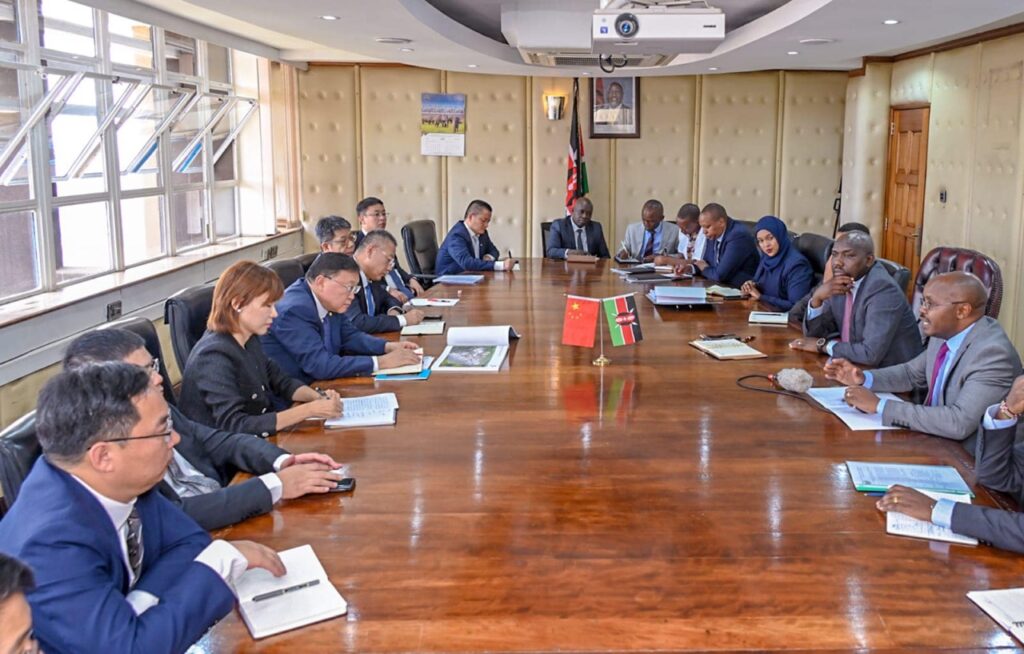
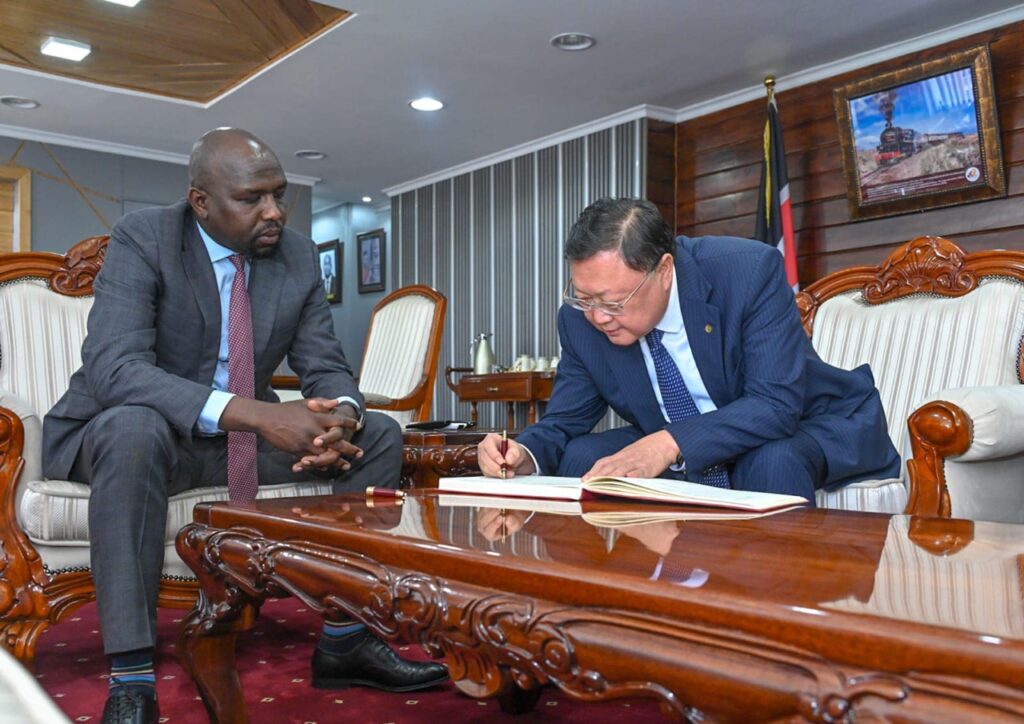
    Roads and Transport Cabinet Secretary Kipchumba Murkomen said Friday that his ministry and a group of Chinese investors are exploring avenues for additional partnerships to develop the sector.

    Murkomen, who held a meeting with the top leadership of the China Communications Construction Company (CCCC) at his office in Nairobi led by the chair of the Company’s board Mr. Wang Tongzhou disclosed that talks particularly revolved around the role to be played by Chinese company CCCC, engaged in various projects in Kenya, in the realization of President William Ruto’s infrastructural agenda.

    “We discussed possible collaboration in the realization of Kenya Government’s infrastructure expansion plan as we seek to improve mobility, promote trade and investment, and enhance regional integration,” the CS said

    He expressed gratitude to investors from the People’s Republic of China such as CCCC for their contribution toward Kenya’s development even as he expressed optimism that the two sides will continue to work together for the good of the people.

    “On behalf of the Government of Kenya and H.E. President William Ruto, I wish to thank China Communications Construction Company for their continued support and partnership in advancing Kenya’s infrastructure agenda and look forward to working together to enhance national and regional interconnectivity,” He said in a tweet

    Among those who accompanied Mr Wang into the meeting with Murkomen include; CCCC – Vice President Chen Zhong, Tang Qiaoliang (CCCC GM of Overseas Business Department), CRBC Board chairperson Du Fei, Yuan Chunkun (GM – CRBC, Kenya Office) among others.

    The Kenyan delegation included PSs Mohamed Daghar (Transport), Patrick Mariru (Defence), Ummi Bashir (Culture and Heritage), Ag. Infrastructure Secretary Eng.Luka Kimeli, and DGs Kung’u Ndung’u (KeNHA), Eng. Silas Kinoti (KURA), NAMATA Ag. DG Eng. Francis Gitau among others.

  • Kenya’s Foreign Cabinet Secretary amplifies BRICS’ de-dollarization push

    Kenya’s Foreign Cabinet Secretary amplifies BRICS’ de-dollarization push

    Kenya’s Cabinet Secretary for Foreign and Diaspora Affairs Dr. Alfred Mutua on Thursday rallied behind BRICS’s goal of becoming less reliant on the dollar.

    Dr. Mutua, who represented President William Ruto at the BRICS Summit in Johannesburg South Africa, spoke of the need to establish an alternative payment system that allows seamless transactions between parties that trade with each other.

    He said it was “quite ridiculous,” that countries at the moment do not have the necessary autonomy to transact business using a currency of their choice. Change, he said, was long overdue.

    “My ancestors would be shocked, for example, if they woke up today and found out that Kenyans cannot use the Kenyan shilling to buy goods in the neighboring beautiful country of Her Excellency Samia Suluhu of the United Republic of Tanzania, without using an external currency resulting in high foreign exchange interests and monies lost,” he said

    In the wake of protests by countries making up the BRICS bloc, made up of Brazil, Russia, India, China, and South Africa, over the continued dominance of the US dollar, Mutua expressed optimism that soon there will be a shift and that the ongoing clamour will yield fruitful results.

    “Listening to the discussions here at the BRICS Summit and remembering the way we traded and the current system which is pegged against most of us, I tell myself that the issues are no longer about IF but WHEN we will adopt a fairer, predictable, and reasonable way of transacting with each other,” he said

    He cited ancient times when Kenyans walked long distances to the Indian Ocean coast to bring goods to other traders from the Middle East, Asia, and beyond. He said the currency of choice then, “whether here or at the East African Coast was based on what one needed.”

    President William Ruto has made known his position on the dollar, calling upon African leaders to embrace a pan-African payments system to facilitate trade within the continent.

    At the same time, the Foreign Minister said it was time leaders from Africa and the Global South exercised “unity of purpose” to urgently deal with challenges facing the African continent.

    He said the existing world development order is characterized by an asymmetrical international financing system that is discriminatory to the developing world.

    He argued that many African nations are suffocating in debt that is becoming more difficult to repay.

    “We propose a systemic resolution of the developing country debt overhang,” CS Mutua stated, adding that the debt repayments need to be renegotiated.

    Argentina, Egypt, Ethiopia, Iran, Saudi Arabia, and the United Arab Emirates have been invited to become members of BRICS. Their membership will take effect January 1, 2024.

  • Avocado sales boost Kakuzi half-year profit run to Kshs 171.1 million

    Avocado sales boost Kakuzi half-year profit run to Kshs 171.1 million

    Listed superfoods producer Kakuzi announced a Kshs 171. 1 million half-year pretax profit on the back of a difficult trading period due to the prevailing Macadamia global glut.

    The firm, which recently adopted a new corporate brand identity, enjoyed a more than double profit lift against its avocado export business, which posted a Kshs 654.8 million growth, up from Kshs 288.6 million posted last year.

    Speaking when he confirmed the half-year results, Kakuzi PLC Managing Director Mr. Chris Flowers said the firm’s bottom line had been impacted by a Kshs 329 million sectoral loss from its macadamia business.

    To mitigate further losses in the Macadamia Business, Kakuzi, he said, is currently pursuing a value-addition strategy that will see the firm marketing the produce locally.

    “The global macadamia glut continues to affect all leading international exporters from Kenya, Australia, and South Africa. To mitigate the losses, we have adopted a local marketing strategy geared at availing value added Macadamia products, including ready-to-eat nuts, macadamia flour, and cold-pressed oil,” Flowers said.

    While the macadamia business slowed, Kakuzi’s Avocado sales accelerated, with exports to Europe and China peaking. Further avocado business growth is expected in the year’s second half as exports to Malaysia and India begin to dispatch.

    While confirming the firm’s growth strategy, Kakuzi Chairman Mr. Nick Ng’ang’a said: “At Kakuzi, we remain committed to a shared prosperity business model that prioritizes all our stakeholder needs. Sustainably growing our business, actively implementing our Kakuzi, Community Partnerships, answering the call for climate action and using best practices in all we do to promote our values remains our focus.”

    Across the other product lines, Kakuzi has expressed confidence in its Blueberry venture prospects.

    “Although our blueberry volumes are still significantly low vis-a-vis the Avocado and Macadamia outputs, the revenue stream remains firmly within the business plans and inspires further investments. Further afield, the performance of the tea, forestry, livestock, and arable land operations continue to play their important role in our crop portfolio,” Said Mr Ng’ang’a.

    Early this month, Kakuzi formally adopted a new corporate identity that underscores its commitments to agricultural development for the domestic and export markets.

    The new Kakuzi brand is aligned with the national agricultural transformation agenda, with sustainability and climate-smart agriculture at its core.

    The new Kakuzi identity, the firm’s first defined brand visual system and strategy in 95 years, also signifies a transition to the contemporary world of superfoods growing for both the domestic and export markets based on a strategic decision to prioritise the production of such foods.

    As part of the new branding, Kakuzi has also officially launched a range of private-label consumer products developed over the last two years for the domestic market, including ready-to-eat macadamia, gluten-free macadamia flour, cold-pressed macadamia oil and blueberry packs. Following an intensive research and development (R&D) programme by the Kakuzi team, the new branded consumer products will be progressively availed to the local market.

  • CJ Koome: Judiciary making access to justice a reality

    CJ Koome: Judiciary making access to justice a reality

    Chief Justice Martha Koome said Thursday that the Judiciary is steadily fulfilling its commitment to ensure access to justice by all Kenyans, no matter where they are.

    Speaking when she presided over the inauguration of the new Maralal Law Courts building in Samburu County, Koome said the judiciary is keen to fulfill the desires and expectations of every citizen to be treated justly.

    “We are not merely unveiling a building made of brick and mortar. Instead, we are unveiling a beacon of hope, a symbol of justice, and a testament to our unwavering commitment to bring the justice system closer to our people,” CJ Koome said even as she unveiled a High Court sub-registry, e-filing, and the Alternatives Justice Systems (AJS) ‘Loip’ Suite at Maralal Law Courts in Samburu County.

    She said the launch of the High Court sub-registry in Samburu will significantly reduce the distance covered by litigants to approximately 100 kilometres, as envisaged under Social Transformation through Access to Justice blueprint since the distance to the nearest High Court located at Nanyuki is over 300 kilometers.

    What’s more, she said the operationalization of the digital filing of cases in Samburu will also benefit locals a great deal.

    “Brick and mortar are crucial but not adequate in our journey towards a transformative, effective, and efficient justice system. And this is why we are embracing the power of technology, harnessing its potential to ensure that justice is not only meted but is seen to be done swiftly, transparently, and impartially,” The CJ said.

    She said that the e-filing system is designed to streamline the process of filing of cases and pleadings, track the case, and improve the overall experience for litigants and legal practitioners.

    “With the launch of this e-filing system in Samburu county, we are embracing the principles of transparency, accountability, and responsiveness, which are fundamental to the rule of law and the administration of justice,” CJ Koome emphasised.

    Justice Koome noted that the Judiciary e-filing system had been integrated with the Uadilifu e-system operated by the Office of the Director of Public Prosecutions (ODPP) and it is expected that other justice sector agencies will also create interoperability.

    Speaking during the function Samburu Governor Jonathan Lati Lelelit noted that Samburu County was one of the largest counties, yet it only had one court in Maralal.

    “We are willing to provide land and build courts in Wamba and Baragoi but I urge the Chief Justice to post magistrates in these areas to especially deal with land matters,” Governor Lelelit said.

    The Chief Justice said that the launch of the High Court building was a manifestation of collective ambition to foster Social Transformation through Access to Justice.

  • Head of Public Service cautions procurement officers over graft

    Head of Public Service cautions procurement officers over graft

    Head of Public Service and Chief of Staff in the Office of the President Felix Koskei has fired a warning shot at procurement officers over corruption in government ministries and departments.

    Koskei, who presided over the official opening of the Heads of Procurement and Supply Chain Management Forum in Mombasa, said President William Ruto’s administration was determined to rewrite the course of Kenya’s history by reversing the graft trend. And he said ongoing efforts in this regard are already bearing fruits.

    “I encourage you (Procurement Officers) to say no to corruption. We know what is happening in each and every institution. We are moving steadily. You can see agencies closing in on individuals and others being taken to court. If you are on the right side of history, don’t worry,” he said

    The Head of Public Service challenged the officers, both operating in the private and public sectors, to endeavor to be counted among a crop of professionals that ensures that procurement is a profession that is respectable.

    “Be part of institutions that will change the course of this country and collaborate with agencies to fight corruption and make this country better,” he asked them in the meeting called to discuss the impact of the procurement reforms in fighting corruption in Kenya.

    “Let us fight corruption. Let’s be champions and let’s be serious commanders in trying to kill thing (graft). This will help contribute to the economic growth of this country, creation of employment, and making this country the best destination for investors,” reiterated Koskei