Author: Eric Biegon

  • Beijing says China’s economy remains resilient with 4.7% growth in first half of 2026

    Beijing says China’s economy remains resilient with 4.7% growth in first half of 2026

    China’s economy expanded by 4.7 per cent year-on-year in the first half of 2026, a performance Beijing says demonstrates the country’s resilience amidst a more challenging global economic environment and keeps it on course to meet its annual growth target.

    Figures released on Wednesday by the National Bureau of Statistics (NBS) reveal that gross domestic product (GDP) reached 69.57 trillion yuan (approximately US$10.28 trillion) between January and June. Growth in the second quarter moderated to 4.3 per cent from 5.0 per cent in the first three months of the year, yet remained within the government’s full-year target range of 4.5 to 5 per cent.

    Speaking at a press briefing, NBS Deputy Commissioner Mao Shengyong stated that the economy remained generally stable during the first half of the year. He noted that major economic indicators stayed within a reasonable range despite external headwinds.

    Mao attributed this performance to the continued expansion of what China’s “new quality productive forces,” which include high-end manufacturing, the digital economy, and modern services. Preliminary estimates indicate these sectors contributed over 40 per cent of economic growth during the period.

    Industrial production continued to underpin growth, with value-added industrial output among enterprises above a designated size increasing by 5.4 per cent year-on-year.

    Advanced manufacturing was a standout performer, with equipment manufacturing expanding by 9.3 per cent and high-tech manufacturing growing by 13.3 per cent. Both figures significantly outpaced overall industrial production. The services sector also recorded steady growth of 5.2 per cent.

    According to NBS, China’s foreign trade also strengthened, with imports and exports rising by 16.9 per cent year-on-year to a record 25.47 trillion yuan during the first half. Trade in computing hardware, electronic components, and computer parts climbed by 56.6 per cent, reflecting sustained demand for Chinese technology products.

    Domestic consumption also improved, albeit at a more moderate pace. Retail sales of consumer goods increased by 2.7 per cent to 24.87 trillion yuan. However, fixed-asset investment, excluding rural households, declined by 5.7 per cent to 22.64 trillion yuan.

    Mao acknowledged that growing external uncertainties and imbalances between domestic supply and demand mean the foundation for sustained economic recovery still requires strengthening.

    Chinese economists commented that the latest figures reflect an economy undergoing structural transformation.

    Hu Qimu, a professor at the Maritime Silk Road Institute of Huaqiao University, said the data point to continued progress in industrial upgrading, technological innovation, and improvements in China’s trade structure.

    He added that emerging industries such as artificial intelligence, green technology, and high-end manufacturing are becoming increasingly important engines of growth, supported by expanding economic cooperation with Belt and Road partner countries.

    Bruce Pang, an adjunct associate professor at CUHK Business School, identified high-tech manufacturing, stronger consumption, and rising rural incomes as some of the economy’s strongest performers during the first half of the year. However, he noted that investment remained soft, capacity utilisation had weakened, and consumer spending still requires further support.

    Pang stated that sustaining the recovery through the second half of the year will depend on policies that encourage investment, stimulate domestic demand, and accelerate industrial upgrading.

    Beijing-based economist Tian Yun expects momentum to strengthen further as China’s economic transformation continues.

    He believes high-tech manufacturing, exports, and artificial intelligence-related industries are likely to remain key drivers of growth, while additional policy support could help boost consumer demand and improve business confidence.

    Chinese officials also highlighted the country’s performance against a backdrop of slowing global growth.

    According to Mao, several major economies are expected to record weaker growth this year. The International Monetary Fund recently revised China’s 2026 growth forecast upward to 4.6 per cent while lowering its global growth projection to 3.0 per cent. This reinforces expectations that China will remain one of the principal contributors to global economic expansion.

    Analysts said the first-half performance has strengthened expectations that China will achieve its annual growth target, although policymakers are expected to continue focusing on boosting domestic demand, stabilising investment and deepening industrial transformation during the remainder of the year.

  • Resistance of 15 July is unparalleled in the history of world democracy

    Resistance of 15 July is unparalleled in the history of world democracy

    One of the most brutal coup attempts in Türkiye’s political history took place exactly ten years ago, on 15 July 2016. Orchestrated by a terrorist network that had insidiously infiltrated the institutions of our state, this coup attempt sought to plunge Türkiye into years of chaos and subjugate the future of our nation.

    By standing up for their independence and future to confront the coup plotters, our august nation asserted to the entire world through their heroic resistance that the will of the people can never be subjugated on these lands. Undoubtedly, the Turkish nation’s prudence, courage, and foresight on the night of 15 July are also unprecedented in the history of world democracy.

    This treacherous insurrection by the Fetullahist Terrorist Organisation (FETO) was far more than a conventional coup attempt; it was an all-out act of invasion directed against our country’s independence. The primary targets of the putschists were the emblematic institutions that embody the national will and our nation’s independence, namely the Presidential Complex and the Grand National Assembly of Türkiye.

    On the night of 15 July, I underlined in my public statement that I had never recognised any power greater than that of the people. I made that statement in full confidence that the Turkish nation would stand firm in defence of its own will. Indeed, that very night, our people took to the streets with unwavering faith and determination, refusing to submit to the domination of this terrorist organisation.

    Risking their lives to defend the independence of their country, its democratic achievements, and its free will, our nation repelled the putschists and inscribed an epic of national will that shall be remembered with pride for generations to come.

    Inspired by the brave stance of our nation, we acted swiftly to eliminate any negative consequences of this treacherous insurrection. We promptly introduced comprehensive structural reforms to eliminate from all state institutions any anti-democratic formations that could threaten democratic governance through extra-political means. We subsequently attained critical achievements through operations conducted both at home and abroad as part of our strategy to eliminate the other terrorist organisations we have been combating.

    Ultimately, we launched the Terror-Free Türkiye initiative, marking a new chapter in our nation’s story of unity and solidarity. This process, one of the essential cornerstones of our ‘Century of Türkiye’ vision, is—praise be to Allah—advancing firmly towards its destination with an all-encompassing and inclusive approach through the diligence of our security forces and the support of the political establishment. I believe the success of the ‘Terror-free Türkiye’ process will contribute not only to the peace and tranquillity of our country but also to that of our region.

    As a result of our struggle against those who attempted this coup and also targeted our country’s economic prosperity and development, we have taken significant steps towards a more prosperous future through the projects we have launched in sectors such as energy, transport, healthcare, agriculture, technology, and defence.

    With the National Technology Move, we have made significant strides in the defence, aviation, and space industries over the past decade. We have developed electric and smart transport systems, and through substantial investment in the health and agriculture sectors, we have strived to live up to the sacrifices of our people.

    During this process, we have also developed our brand products, which have gained worldwide recognition. Among these, our electric automobile, the TOGG; our national fighter aircraft, the KAAN; our national corvettes; and our unmanned aerial vehicles are the first that spring to mind.

    On the other hand, over the past 10 years, Türkiye has emerged as an effective actor in the resolution of crises and conflicts at both regional and global levels, guided by an enterprising foreign policy approach. In all crisis regions, we have not hesitated to assume responsibility for maintaining peace and tranquillity by supporting the oppressed and the righteous, rather than the powerful.

    Wherever there is oppression or injustice, we have been the voice of international law, justice, and conscience. If Türkiye is now regarded as a country whose contribution is sought, whose word carries weight, and who is consulted on regional and global matters, behind this success lies the will of our august nation, who stood up for their independence and future at the cost of their lives on the night of 15 July.

    The fight against terrorism, in which international cooperation is essential, retains its prominent place on our foreign policy agenda. As is well known, the process of internal disintegration within FETO’s overseas network has accelerated over the past two years. That said, we are aware that some countries are covertly providing support to this organisation and are harbouring its members.

    I would like to take this opportunity to underscore the necessity of maintaining vigilance against FETO, which considers all means permissible to achieve its ambitions, adopts every possible guise, and does not hesitate to exploit every concept, including democracy, freedom, and human rights.

    As a nation that saw 253 of its sons and daughters martyred by the putschists on the night of 15 July, our primary expectation from the global community is to support Türkiye’s legitimate struggle. Global peace, security, and prosperity can only be achieved through a resolute and uncompromising fight against terrorist organisations without any distinction and through sincere cooperation.

    Recep Tayyip Erdoğan is the President of the Republic of Türkiye.

  • Ruto confident new police plan will boost Nairobi security

    Ruto confident new police plan will boost Nairobi security

    President William Ruto has expressed confidence that the soon-to-be-unveiled Nairobi Metropolitan Policing Framework will transform security in the capital by strengthening collaboration between communities, law enforcement agencies, and county authorities.

    The President described the Nairobi Metropolitan Police as a community-centred policing model, designed to place residents at the heart of security planning and decision-making. He disclosed that the government had made significant progress in its establishment.

    The head of state explained that the framework would bring together residents, community leaders, the National Police Service, the Nairobi County Government, and other stakeholders, with a collective aim of identifying local security priorities, enhancing oversight, and developing solutions through consultation and public participation.

    “The roll-out of the Nairobi Metropolitan Policing Framework will commence in the coming days, laying the foundation for a more coordinated, accountable, and community-led approach to policing across the Nairobi Metropolitan Area,” President Ruto said.

    He added that the new approach is intended to improve coordination among security agencies while strengthening public confidence in law enforcement.

    “We will strengthen public safety, deepen trust between communities and law enforcement, and build safer and more secure neighbourhoods for all,” he affirmed.

    The President’s remarks followed a briefing at State House, Nairobi, on the initiative’s progress. Those present included Interior Cabinet Secretary Kipchumba Murkomen, Inspector-General of Police Douglas Kanja, Nairobi Governor Johnson Sakaja, and other senior government officials.

  • Read Baby Read literacy initiative holds eighth edition in Kisii County

    Read Baby Read literacy initiative holds eighth edition in Kisii County

    Read Baby Read, the literacy initiative founded by Professor Joshua Gisemba Bagaka and supported by KCA University, has held its eighth edition at Gionseri Primary School in Kisii County, reaffirming a commitment to building a lifelong culture of reading among Kenyan children from an early age and signalling ambitions to take the program nationwide and eventually across Africa.

    The initiative was founded in 2018 by Professor Bagakas, Deputy Vice Chancellor for Academic and Student Affairs at KCA University, who promotes as little as fifteen minutes of daily reading to develop foundational literacy, comprehension and confidence in young learners. He describes it as a direct response to a gap in the education system that has long rewarded memorisation over a genuine love of reading, and as a natural fit for Kenya’s shift toward the Competency-Based Curriculum (CBC).

    KCA University has lent its institutional support to the program, helping it grow across successive editions. Professor Bagakas said the initiative was inspired by a simple conviction about planting habits early.

    “When you read the Bible, we know that if you actually plant a seed in young people when they are young, you are more assured. The likelihood of them doing that when they grow up is much better,” he said. “As a university professor, I thought it was best to do that at a young age because, in that case, it’s more likely to be sustainable.” Eight editions on, he said, the results speak for themselves. “

    The impact of this program has been so obvious.

    The students are more proficient in reading, and not only in English; they actually become proficient even in Kiswahili,” Professor Joshua Bagaka said. “Their level of confidence, the way they express themselves, has improved so much. You can see it as these students move from first grade to second grade to third grade.”  Those gains were on full display as program pioneers took to the podium to tell their own stories.

    Winnie Nyang’ara, who joined Read Baby Read in grade three and is now in senior school at Nyabisase, said the program transformed a once-shy pupil into a confident speaker.

    “When this Read Baby Read program got me, I was not confident enough to stand before a crowd of people and give a testimony. But now, I can stand before a crowd and talk to them,” she said.  She also credited it with steadying her through the KPSEA national examinations: “When I read a question, I understand it more. Today a reader, tomorrow a leader, so read today to be a leader tomorrow.”

    Fellow pioneer Gregory Obanda, who began the program at Inanidi EP Primary School and is now a student at Kebirigo National School, said reading had reshaped both his results and his ambitions.

    “Through Read Baby Read, our reading improved, and that culture made us have creative ideas.  The confidence we had gave us the courage to speak before a crowd of people,” he said. “Readers become leaders. If we continue to read, we will become important people in society. The fifteen minutes daily are very important for our future.”

    Professor Damiannah Kieti, KCA University Deputy Vice Chancellor for Strategy, Finance and Operations, said universities carry a central responsibility for nurturing a reading culture that reaches well beyond their own campuses.

    “ As a university, we have a central role to play in nurturing a reading culture in the community, and we begin with our own community, where we provide the necessary environment, a modern library where students can sit, read and read,” she said.

    “For those who cannot access the library physically, we provide materials online. Through our outreach programs, we visit schools, donate books, and provide enabling facilities like computers and desks so learners can sit down and read comfortably in this digital world.”

    Professor Vincent Onywera, Deputy Vice Chancellor for Research, Innovation and Outreach, thanked the Vice Chancellor and CEO, Professor Isaiah Wakindiki, for the support the university has extended to Professor Bagakas as the pioneer of the initiative, and outlined its long-term vision.

    “The core mandate of KCA University is teaching, learning, research and service to the community, and this initiative sits right at the core of our values,” he said. “We desire that the initiative will expand. It will be scaled up to the entire Kisii County, the entire Republic of Kenya, and the entire continent of Africa.”

    The eighth edition, hosted at Gionseri Primary School in partnership with the local school community, reflects the values KCA University champions in backing the initiative: professionalism, inclusivity, community, integrity and service. As the program’s founder and supporters put it, a reading nation is a leading nation.

  • Heavy equipment training institute targets regional expansion after decade of operations

    Heavy equipment training institute targets regional expansion after decade of operations

    Ganatra Plant and Equipment Training Institute (GPTI) has announced plans to expand its training programmes across East Africa. The initiative, marking the institute’s tenth anniversary, aims to certify 5,000 heavy plant operators by 2029.

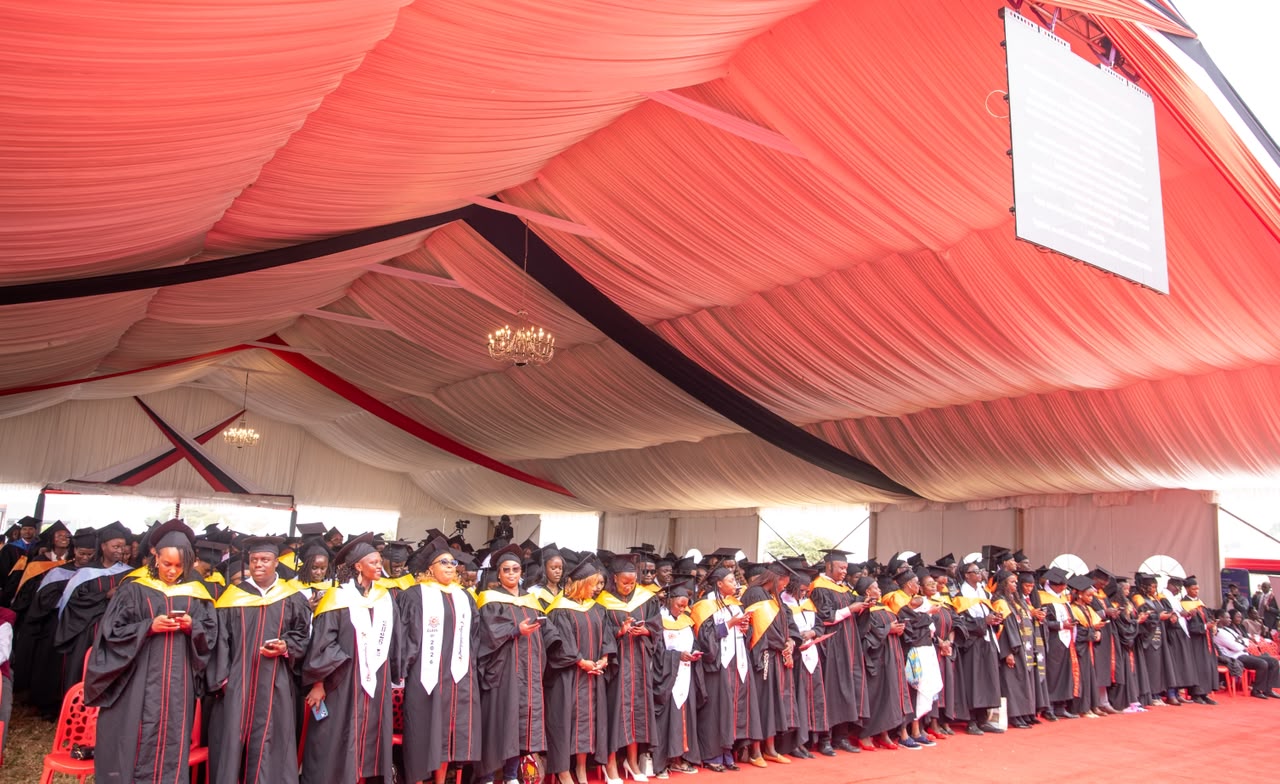
    A recent graduation ceremony celebrated students from Kenya, Uganda, the Democratic Republic of Congo, and South Sudan.

    Since its establishment in 2015, GPTI has trained over 1,500 operators, mechanics, and instructors, serving the construction and heavy equipment sectors in Kenya and neighbouring countries.

    The institute’s comprehensive training methodology includes classroom instruction, simulator-based learning, workshop practice, and supervised field experience. A European-imported simulator is used for operator training on wheeled and tracked excavators and wheel loaders.

    General Manager Suhhel Yakub explained the simulator’s benefits: “Every trainee’s first hours on a real machine are the most expensive and the most dangerous hours of the entire course. The simulator lets a student make those mistakes in software instead of on twenty tonnes of hydraulics. They arrive at the machine past the fear, and that changes everything: for the operator, for the equipment, and for everyone else on that site.”

    The announcement comes as demand for certified heavy plant operators grows alongside increased construction activity in Kenya and the wider region. Industry stakeholders frequently cite shortages of qualified operators as a hindrance to project delivery, equipment maintenance, and workplace safety.

    The institute says practical training is resource-intensive, requiring access to machinery, workshops, and dedicated training grounds. To enhance accessibility, Ganatra has introduced modular training programmes, allowing trainees to enrol in individual machine courses or shorter schedules.

    “A student who can only spare two weeks is still a student,” said GPTI Administrator Maggie Kamau.

    “We built the modules so that time stops being the thing that disqualifies you. We arrange the hours around the student.”Kamau emphasised that all trainees follow a consistent instructional sequence.

    “We do not start with the machine. We start with the classroom, then the simulator, then the workshop. By the time a student climbs into a live excavator, the expensive mistakes are already behind them,” she said

    Yakub said the curriculum also covers safety procedures, machine knowledge, and operating principles.

    He stated, “We work according to the student’s plan and hours. But there is more to this than operations. There is safety. That is why you learn the fundamentals of safety procedures, machine knowledge, and operating principles.”

    He also highlighted an increase in female participation in heavy equipment training, noting, “This proves that skills and dedication have no gender boundaries. Anyone with the passion, commitment and the right training can succeed.”

    During the anniversary ceremony, graduates shared their experiences. Alumna Shanice Amakhula remarked that the milestone reflected the training’s profound impact:

    “It is about recognising the growth, the achievements, the challenges overcome, and the many lives that have been changed through the knowledge and skills gained here.” said Shanice

    Stephen Ndung’u, who progressed from trainee to operator and mechanic after joining in 2024, credited access to workshop facilities for strengthening his practical skills.

    Mukasa Lawrence, a heavy mechanics student from Kampala, found that practical exposure to equipment reinforced classroom learning.

    “Every concept in heavy mechanics, hydraulics, fluid mechanics, we now touch with our own hands,” he said.

    The institute offers courses in heavy plant operation, plant mechanics, driver training, and instructor development. Its operator programme integrates classroom learning, simulator training, workshop instruction, and supervised practical experience on construction sites.

  • Suspect linked to Spring Valley restaurant robbery killed

    Suspect linked to Spring Valley restaurant robbery killed

    A suspected armed robber, believed to be connected to the recent daylight attack on a popular restaurant in Nairobi’s Spring Valley area, has been shot dead during a police operation in Joska, Machakos County.

    According to a statement from the Directorate of Criminal Investigations (DCI), detectives from DCI Headquarters, supported by their colleagues in Matungulu, tracked the suspect to a house in Joska where he had reportedly sought refuge.

    The DCI stated, “Upon identifying themselves and ordering the occupants to open the door, the suspect opened fire through a kitchen window, spraying bullets at the officers. Detectives returned fire in self-defence.”

    “After securing the premises and gaining entry, the detectives discovered the suspect lying fatally wounded inside the house,” the DCI explained.

    During the operation, investigators recovered a Beretta pistol loaded with four rounds of 9mm ammunition, along with additional live rounds, spent cartridges, and three mobile phones.

    Police believe the individual was part of a criminal gang responsible for a series of violent robberies across Nairobi, Kiambu, and Machakos counties. This includes the recent armed robbery on General Mathenge Road in Spring Valley, where gunmen stormed a popular restaurant, robbed diners of phones and other valuables, and then fled on motorcycles.

    “The recovered firearm is now in the custody of the National Police Service Forensic Laboratory (NPSFL), where ballistic experts will examine it for possible links to other violent crimes,” the agency confirmed

    The DCI further announced that investigations are ongoing and a manhunt has been launched to apprehend other members of the suspected criminal network. It reiterated its commitment to dismantling violent criminal gangs and bringing all those involved in serious crimes to justice.

  • Politicians sponsoring goons will be arrested, warns Murkomen

    Politicians sponsoring goons will be arrested, warns Murkomen

    Interior and National Administration Cabinet Secretary Kipchumba Murkomen has warned that politicians found to be financing goons to instigate political violence will face arrest and prosecution once investigators gather sufficient evidence.

    Speaking in Lokori, Turkana County, the CS confirmed that security agencies have escalated their investigations, targeting not only those directly involved in violent attacks but also the individuals responsible for their funding and organisation.

    “There are people saying we should arrest politicians. We will arrest them. When we get enough evidence we will arrest them for sure,” Murkomen stated.

    He cautioned political leaders against exploiting goonism for partisan advantage, emphasising that the issue permeates the entire political spectrum.

    “I want to tell politicians not to exaggerate the issue of goons for political gain. There is no political side without individuals who organize goons. Every side has such people,” he explained.

    Murkomen revealed that the police, under the Inspector General, have intensified operations against criminal gangs and their financiers. He affirmed that the crackdown will target suspects irrespective of their political affiliation or social standing.

    The CS defended the government’s response to recent violence in Kisumu and Nyahururu, noting that over 20 suspects have already been apprehended and brought before the courts.

    “Let’s not start pretending that the police have done nothing. More than 20 people have been arrested in connection with yesterday’s incidents,” he said.

    Murkomen appealed to the Judiciary to impose stringent penalties on those convicted, arguing that firm sentences would act as a deterrent against the use of hired gangs to provoke violence.

    “We must work with the Judiciary. When we arraign these suspects, the courts should take tough legal action commensurate with their offences,” he urged.

    The Interior CS maintained that security agencies have successfully contained more complex security threats and are equally capable of overcoming political goonism.

    “As a ministry, we have stabilized the country against banditry, Al-Shabaab, robberies and theft. This issue of goons cannot defeat us,” he asserted.

    At the same time, Murkomen assured residents of Ol Kalou that Thursday’s by-election would proceed under stringent security measures. He confirmed that the government would deploy a substantial contingent of police officers to prevent violence and guarantee a peaceful, free, and fair election.

    “There are individuals planning violence in Ol Kalou with the intention of blaming the police and the government. We will deploy the highest number of police officers to ensure the election is peaceful,” he stated.

    The CS reiterated that the government would not permit criminal gangs or their political sponsors to undermine public order, warning that investigations would persist until all those responsible are brought to justice.

  • Ruto defends State House upgrade, says it is Kenya’s official address

    Ruto defends State House upgrade, says it is Kenya’s official address

    President William Ruto has defended the renovation of State House Nairobi and the ongoing upgrading of State Lodges across the country.

    The Head of State says that the works are essential for preserving national institutions and form an integral part of the government’s broader development agenda.

    Speaking at State House during a reception for Migori Youth FC, in Statehouse, Nairobi, the President dismissed criticism surrounding the renovations, insisting the official residence belongs to the people of Kenya and must be maintained for future generations.

    “This is not my building. It is not my house. It is not my office. This is the address of the Republic of Kenya, and it is here for posterity,” Ruto affirmed.

    The President disclosed that several sections of State House were in poor condition upon his assumption of office, with ageing infrastructure necessitating extensive repairs and modernisation.

    “This State House, hapa kulikuwa na nyumba mzee mzee, and the toilets were not working. Nikabomoa, nikajenga. Nyumba ingine pale roof ilikuwa imeharibika na kunyesha ndani. Sasa nimenyorosha, nimetengeneza,” he said.

    Ruto argued that Kenya should not hesitate to improve public buildings that were constructed over six decades ago.

    “Statehouse, ni nyumba ilijengwa na wazungu 60 years ago. They built almost 60 percent of this building. You want to tell us 60 years later we have no ideas on how to make it better? Kwani sisi ni mafala kiasi gani? he posed.

    The Head of State maintained that the renovations should be viewed within the context of the government’s wider investment in infrastructure and public services, rather than as isolated projects.

    “We are not just improving State House. We are improving the country,” he stated.

    Responding to criticism regarding the construction of a new State Lodge in Meru, the President urged that the project be weighed against the government’s significantly larger development investments in the county.

    He noted that while the State Lodge will cost about Ksh80 million, the government is implementing development projects worth nearly Ksh40 billion in the region, including affordable housing, markets, roads and bridges.

    “People ask whether an Ksh80 million State Lodge is a priority. Yet we have close to Ksh40 billion worth of development projects in Meru. We must get our priorities right because both are important if we are to move the country forward,” he explained.

    Ruto stated that the government’s development agenda is guided by deliberate planning and long-term national priorities. He expressed confidence that sustained investments in infrastructure and public institutions would accelerate Kenya’s journey towards becoming a developed economy.

    “If we continue at the pace we are going, Kenya will become a first-world country in our lifetime,” the President said.

  • Amref International University awards qualifications to 604 health graduates

    Amref International University awards qualifications to 604 health graduates

    Amref International University (AMIU) has awarded qualifications to 604 health sciences students, thereby expanding the health workforce in Kenya and across Africa. The latest graduation comes amidst ongoing calls for increased investment in skilled healthcare professionals.

    During the university’s seventh graduation ceremony on Friday, students received certificates, diplomas, higher diplomas, bachelor’s, and master’s degrees. Their training encompassed programmes such as nursing, community health, and health systems management.

    Speaking during the ceremony, AMIU Chancellor Tsitsi Masiyiwa challenged the graduates to use their education for societal service and to create opportunities for others.

    “Let your ambition always be greater than personal success. Measure your life not only by what you achieve, but by what you enable others to achieve. Measure your influence not only by the positions you hold, but by the opportunities you create for those who follow,” she stated.

    Dr Joyce Kaducu, former Uganda Minister of Education and Sports, emphasised that a robust health workforce is crucial for enhancing healthcare and fostering national development.

    “Investing in the health workforce is investing in the future of a nation. Every well-trained health professional strengthens communities, drives innovation, and improves health outcomes for generations to come,” she remarked.

    Vice Chancellor Professor Joachim Osur highlighted the university’s objective to equip graduates to tackle emerging healthcare challenges through leadership, research, and innovation.

    “At Amref International University, we are not simply preparing graduates for employment. We are developing leaders who will strengthen health systems, advance research, champion innovation, and improve the health and well-being of communities across Africa.”He affirmed,

    The graduating cohort included 16 master’s degree recipients. The largest number of graduates completed programmes in Bachelor of Science in Nursing, Diploma in Community Health, and Diploma in Kenya Registered Community Health Nursing. Women constituted the majority of the graduates.

    University leaders also encouraged the graduates to embrace lifelong learning, uphold integrity, and apply their expertise to enhance healthcare delivery within their communities.

    Since 2021, the university has graduated 1,343 health professionals.

  • Parties registrar ratifies ODM decision to kick out Sifuna

    Parties registrar ratifies ODM decision to kick out Sifuna

    The Registrar of Political Parties has ratified the Orange Democratic Movement’s (ODM) decision to remove Nairobi Senator Edwin Sifuna as the party’s Secretary General, saying the process complied with both the Political Parties Act and the party’s constitution.

    In a letter dated July 9, 2026, addressed to ODM’s leadership, the office of the Registrar of Political Parties stated that it reviewed documents submitted by the party, alongside the absence of a response from Sifuna, and concluded that the National Executive Committee (NEC) acted within the law.

    The Registrar confirmed that the changes have been implemented, and the party’s official records updated to reflect Sifuna’s removal.

    The decision marks the latest development in a prolonged leadership dispute that began in February. At that time, ODM’s NEC met in Mombasa and voted to remove Sifuna from office with immediate effect, citing concerns over discipline and conduct within the party’s senior ranks. Catherine Omanyo, then Deputy Secretary General, was appointed to serve in an acting capacity until a substantive office holder is elected.

    Sifuna’s removal followed months of internal disagreements regarding the party’s political direction, particularly his public criticism of ODM’s cooperation with President William Ruto’s administration. The Nairobi Senator had maintained that he had not violated the party constitution and dismissed reports of an imminent ouster prior to the NEC meeting, which was chaired by party leader Dr. Oburu Oginga.

    The dispute later moved to the Political Parties Disputes Tribunal, which ruled last month that the initial removal process was procedurally flawed because Sifuna had not been afforded an opportunity to be heard.

    Following the ruling, ODM initiated a fresh internal disciplinary process through its Internal Disputes Resolution Committee. The NEC then again endorsed Sifuna’s removal, asserting that it had complied with both the tribunal’s directions and the party constitution.

    The Registrar’s latest decision effectively recognizes ODM’s revised process and formally updates the party’s records to reflect the leadership change.