Author: BBC News

  • Samantha Harvey’s space novel wins 2024 Booker Prize

    Samantha Harvey’s space novel wins 2024 Booker Prize

    The prestigious Booker Prize for 2024 has been awarded to British author Samantha Harvey for her novel Orbital.

    This achievement makes Harvey the first woman to win the Booker Prize since 2019.

    Orbital is a thought-provoking exploration set aboard the International Space Station, where astronauts traverse the vast expanse of the universe.

    The novel’s narrative unfolds over a single day, during which the astronauts witness 16 sunrises and sunsets, offering a panoramic view of Earth’s natural wonders.

    The story is described as a ‘pastoral’ reflection on humanity’s connection to the planet.

    The award ceremony took place at London’s Old Billingsgate, where Harvey dedicated her win to “all those who speak for and not against the Earth and work for and not against peace.”

    She also received £50,000 in prize money, which she humorously mentioned would go toward buying a new bike.

    Chair of the judging panel, Edmund de Waal, lauded Orbital as a “book about a wounded world,” praising its lyrical language and ambitious storytelling.

    At just 136 pages, it is Harvey’s fifth novel and the second-shortest book to ever win the Booker Prize.

    Notably, Orbital also covers the briefest time span of any work on this year’s shortlist.

    This year’s Booker Prize shortlist was historic, featuring five women among the six finalists, the highest female representation in the award’s 55-year history.

    The other nominees included:

    • James by Percival Everett (USA)
    • Creation Lake by Rachel Kushner (USA)
    • Held by Anne Michaels (Canada)
    • The Safekeep by Yael van der Wouden (Netherlands)
    • Stone Yard Devotion by Charlotte Wood (Australia)

    The Booker Prize is one of the most prestigious literary awards, open to original works of fiction written in English and published in the UK or Ireland.

  • Archbishop of Canterbury resigns over Church abuse scandal

    Archbishop of Canterbury resigns over Church abuse scandal

    The Archbishop of Canterbury has announced he will step down from his role following a damning report into a prolific child abuser associated with the Church of England.

    The review found that Justin Welby, 68, “could and should” have reported John Smyth’s abuse of boys and young men to police in 2013.

    In a statement, Mr Welby said that “it is very clear that I must take personal and institutional responsibility” for his response after he was first told about the abuse.

    “I believe that stepping aside is in the best interests of the Church of England.”

    “I hope this decision makes clear how seriously the Church of England understands the need for change and our profound commitment to creating a safer church,” Mr Welby said.

    “As I step down I do so in sorrow with all victims and survivors of abuse,” he added.

    A spokesperson for Prime Minister Keir Starmer said he “respects the decision that has been taken and his thoughts remain first and foremost with all the victims”.

    Last week, an independent report found inaction from the Church represented a “missed opportunity” to bring Smyth to justice before his 2018 death.

    In his resignation statement, Mr Welby said he was “told that police had been notified” at the time and that he “believed wrongly that an appropriate resolution would follow”.

    He also spoke of his “profound sense of shame at the historic safeguarding failures” of the Church over the days since the report was published.

    “For nearly twelve years I have struggled to introduce improvements. It is for others to judge what has been done,” he said.

    The Archbishop of Canterbury is the head of the Church of England and leads 85 million Anglicans in 165 countries around the world.

    Archbishop of York Stephen Cottrell said the Church had made “real progress” in safeguarding under Mr Welby’s leadership but added: “There is much further to go.”

    The Church’s lead safeguarding bishop, Joanne Grenfell, said the archbishop’s resignation “does not absolve any of us from bringing about the wholesale changes in culture and leadership that are essential”.

    Former vicar Mark Stibbe, a survivor of Smyth’s abuse, said Mr Welby had “done the right thing” in resigning.

    “What I think the survivor group would like is more resignations because that means more accountability,” he told Channel 4 News.

    The archbishop had been facing mounting pressure to resign in the days since the report’s publication.

    A member of the Church’s parliament, the General Synod, who had started a petition calling for Mr Welby’s resignation, said: “I think it’s sad that it’s taken so long for meaningful action to take place.”

    The Rev Dr Ian Paul added that he hoped that Mr Welby’s decision would be the first step towards “cultural change in [the Church’s] senior leadership”.

    Clare MacLaren, Canon Provost of Sunderland Minster, told the BBC Mr Welby’s resignation was “not before time”.

    “It’s something that’s been brewing for the last 24 hours at least,” she said. “It would have been good if he’d done it immediately.”

    The independent report into the Church’s handling of John Smyth’s abuse published last week found that from July 2013, “the Church of England knew, at the highest level, about the abuse that took place in the late 1970s and early 1980s,” naming Mr Welby specifically.

    It found that “several opportunities were missed” to formally report the abuse to police.

    One survivor of Smyth’s abuse told the BBC the archbishop and the Church had effectively been involved in a “cover-up”.

    The archbishop said in his statement that the report had exposed a “conspiracy of silence” about the abuse.

    Smyth was a prominent barrister as well as a lay preacher – a member of the congregation who delivers sermons but is not ordained – who ran summer camps for young Christians.

    The report accused him of attacking up to 30 boys he had met at the summer camps during the 1970s and 1980s with a “clearly sexually motivated, sadistic regime” of beatings.

    He singled out boys attending the camps and in sessions at leading public schools, including Winchester College, before taking them to his home and beating them with a garden cane in his shed.

    Smyth then relocated in the 1980s to Zimbabwe, and later South Africa, where he is alleged to have abused a further 85 to 100 “young male children aged 13 to 17”.

    Smyth is believed to have continued his abuse in South Africa until he died in Cape Town in 2018, aged 75.

    It was not immediately clear when the archbishop would leave his post.

    Mr Welby was educated at Eton and the University of Cambridge. He spent 11 years in the oil industry before retraining as a priest.

    He was ordained in 1992 and became a vicar in Warwickshire, a Canon of Coventry Cathedral, the Dean of Liverpool, and the Bishop of Durham before being appointed Archbishop of Canterbury in 2013.

    Mr Welby will be remembered as a political archbishop.

    He spoke frequently in the House of Lords, attacked the payday lender Wonga, openly backed Remain in the 2016 Brexit referendum, and heavily criticised the Conservative government over its immigration and welfare policies.

    He tried to move the Church away from focusing on its internal debates. But he leaves a national church that is smaller, and as divided as ever.

    Archbishop of York Stephen Cottrell told the BBC the ordination of women as bishops and his work in racial justice were key parts of Mr Welby’s legacy.

  • Gladiator 2 receives mixed reviews despite stellar cast

    Gladiator 2 receives mixed reviews despite stellar cast

    The highly anticipated sequel to the 2000 epic film Gladiator has sparked a wave of mixed reviews among film critics.

    The Gladiator 2 film is set to premiere globally on Friday, November 15 but already some critics are considering it underwhelming compared to the 2000 original epic.

    While some, like The Guardian’s Peter Bradshaw, have hailed it as an exhilarating cinematic experience, the consensus is that it falls short of its Oscar-winning predecessor.

    Although the sequel boasts visually stunning action sequences, elevated by advancement in film technology, many critics argue that it struggles to match the emotional depth and storytelling brilliance of the original.

    Some reviewers have noted that, rather than forging its own identity, the film leans heavily on nostalgia and familiarity, which ultimately detracts from its potential to stand as a modern retelling.

    However, the sequel has received praise for its all-star cast, featuring Paul Mescal as the lead character, Maximus, and the two-time Oscar winner Denzel Washington as Macrinus.

    Their performances have been widely applauded, adding gravitas to the film’s epic scale.

    The original Gladiator was a major cinematic milestone, directed by Ridley Scott, earning five Oscars, including Best Actor for Russell Crowe and Best Picture.

    Critics have acknowledged that following such a monumental success sets a high bar, making it difficult for any sequel to capture the same magic.

    Ultimately, while the sequel impresses with its action and star power, it seems to lack the narrative depth that made the first Gladiator a timeless classic.

  • Liam Payne’s body to be flown back to the UK

    Liam Payne’s body to be flown back to the UK

    The body of pop star Liam Payne was released to his family on Wednesday to be flown back to the UK, the public prosecutor in charge of his case has confirmed to the BBC.

    The singer died three weeks ago after falling from a third-floor balcony of a hotel in Buenos Aires, Argentina.

    An autopsy confirmed the 31-year-old had suffered internal and external bleeding and multiple traumatic injuries sustained as a result of the fall.

    His body had been held in Argentina while local authorities completed further toxicology and laboratory tests. It was released to his family on Wednesday, public prosecutor Andrés Madrea said.

    Payne was one of the most recognisable names in pop, after rising to fame with the boyband One Direction in the 2010s.

    A co-writer on many of their hits, he also achieved solo success with tracks like “Strip That Down” and “Bedroom Floor”.

    In the week leading up to his death, it was revealed the singer was facing legal action from his ex-fiancee Maya Henry, who had issued a cease and desist order over what she described as “obsessive” contact.

    Payne’s girlfriend at the time of his death, Kate Cassidy, said the couple had been planning to get married.

    The singer’s family said they were “heartbroken” by his death, adding: “Liam will forever live in our hearts and we’ll remember him for his kind, funny and brave soul.”

    In October, some media outlets reported preliminary toxicology tests, which the Associated Press (AP) news agency said suggested evidence of exposure to cocaine, quoting an unnamed official.

    But they said the official stressed that the initial results don’t give an accurate idea of how much of the drug was in his blood when he died.

    The Public Prosecutor’s Office in Argentina is continuing to investigate the circumstances around his death.

  • US music giant, Quincy Jones, dead at 91

    US music giant, Quincy Jones, dead at 91

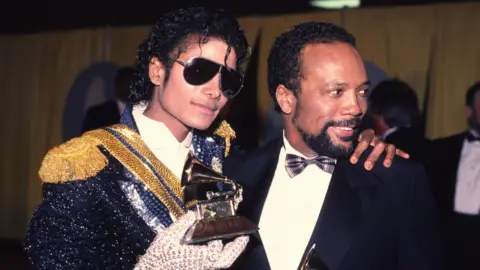
    Quincy Jones, musician and producer who worked with Michael Jackson, Frank Sinatra and many others, has died at the age of 91.

    Jones’ publicist, Arnold Robinson, said he “passed away peacefully” on Sunday night at his home in Bel Air.

    “Tonight, with full but broken hearts, we must share the news of our father and brother Quincy Jones’ passing. And although this is an incredible loss for our family, we celebrate the great life that he lived and know there will never be another like him,” the family said in a statement.

    Jones was best known as the producer of Michael Jackson’s Thriller album.

    Over his career that spanned more than 75 years, he won 28 Grammy awards and was named as one of the most influential jazz musicians of the 20th century by Time magazine.

    He worked closely with Frank Sinatra early in his career and reworked the crooner’s classic Fly Me To The Moon, taking it from a waltz to a swing.

    In the film The Wiz, Jones found himself working alongside a 19-year-old Michael Jackson. He went on to produce Jackson’s album Off the Wall which sold 20 million copies.

    He also produced the pop star’s follow-ups, Thriller and Bad.

    In 1985, Jones gathered 46 of America’s most popular singers of the time, including Jackson, Bruce Springsteen, Tina Turner and Cyndi Lauper to record We Are the World.

    Jones co-wrote the song to raise money for those suffering from a devastating famine in Ethiopia.

    The record was the US equivalent to Band Aid’s Do They Know It’s Christmas.

    The hit reached number one in the UK and the US and was performed at Live Aid.

    Getty Images Michael Jackson and Quincy Jones

    Jones also composed the soundtrack to more than 50 films and TV programmes including the 1969 British film, The Italian Job.

    On the big screen he produced the film The Color Purple which introduced the public to two then unknown performers – Oprah Winfrey and Whoopi Goldberg.

    On the small screen he was one of the producers behind the hit TV show The Fresh Prince of Bel Air.

    But it was music where Jones excelled – as well as winning multiple Grammys, including a legend award in 1992, he was also recognised by the Emmys, Tony’s and Oscars.

    Jones was married three times and had seven children who include music producer Quincy Jones III and actress Rashida Jones, known for the US version of The Office.

    Jones’ family said the music producer was “truly one of a kind” and “through his music and his boundless love, Quincy Jones’ heart will beat for eternity”.

    Leading tributes, playwright Jeremy O’Harris said on X that Jones’ “contributions to American culture were limitless”, noting he was the first black person nominated for an Oscar for best score among his other achievements.

  • Voter fraud claims flood social media before US election

    Voter fraud claims flood social media before US election

    Rumours, misleading allegations and outright lies about voting and fraud are flooding online spaces in unprecedented numbers in advance of the US election.

    Hundreds of incidents involving purported voting irregularities are being collected and spread by individuals, as well as both independent and Republican-affiliated groups. A small number of posts are also coming from Democrats.

    The whirlwind of claims spreading online poses a challenge to election officials who are having to debunk rumours and reassure voters, while preparing to administer election day on Tuesday.

    In nearly every case, the posts support the Trump campaign’s false claim that the former president won the 2020 election and suggestions that he will potentially be cheated out of victory again on 5 November.

    When asked whether he would accept the 2024 election result, Donald Trump said during the presidential debate in September that he would if it was a “fair and legal and good election”.

    A majority of Americans – 70% – expect him to reject the result if he loses, according to a CNN/SSRS poll released Monday.

    Just this week, Trump himself claimed widespread fraud in a key swing state.

    “Pennsylvania is cheating, and getting caught, at large scale levels rarely seen before,” Trump posted on his Truth Social network. “REPORT CHEATING TO AUTHORITIES. Law Enforcement must act, NOW!”

    The allegation followed officials in three Pennsylvania counties saying they were working with local law enforcement to investigate some voter registration applications for potential fraud.

    While Trump and allies seized on the announcements, the state’s top election official, Republican Al Schmidt, has urged caution and warned voters to be aware of “half-truths” and disinformation circulating on social media.

    “This is a sign that the built-in safeguards in our voter registration process are working,” he said.

    Flood of misleading content

    The BBC has seen hundreds of allegations of election fraud online, on social networks and on message boards and in chat groups. Some of these posts have been viewed millions of times each.

    The posts have implied it’s easy for non-citizens to vote, made false claims about voting machines and sowed distrust in the ballot-counting process.

    One video claimed to show recently-arrived Haitians voting in Georgia.

    The BBC has found clear indications, including false addresses and stock photos, which indicate the video is a fake. On Friday US security officials said it was made by “Russian influence actors”.

    Another person on X claiming they were Canadian posted a picture of a ballot and said: “Figured I would drive across the border and vote.”

    It, too, is a fake, and part of an effort co-ordinated on the fringe message board 4chan. The ballot shown is from Florida, a state that requires identification to vote in person and is about a 20-hour drive from the Canadian border.

    Meanwhile, in Northhampton County, Pennsylvania, a video was posted on X showing a man dropping off a container of ballots at a courthouse, alleging suspicious activity. It turned out he was a postal worker delivering mail-in ballots, but the video was seen more than five million times.

    Echoes of 2020

    Experts worry the burst of misinformation just before election day could undermine people’s trust in the results – or lead to threats and violence in the lead-up to the election and beyond.

    It’s happened before.

    In the hours and days that followed the 2020 presidential election, while votes were still being counted, then-President Trump turned to social media to allege fraud and falsely claim that he was the real winner of the election. “Stop the steal” became a slogan of his supporters’ movement to overturn the results.

    On social media, chatrooms and during street protests, conspiracy theorists alleged widespread voter fraud, culminating with a riot at the US Capitol on 6 January 2021.

    Meanwhile, in battleground states like Georgia, election officials – civil servants whose job it is to oversee the election – faced death threats.

    While false claims about voting ramped up after the 2020 vote, groups that monitor this kind of activity say this year it has started well before election day.

    Wendy Via, founder of the Global Project Against Hate and Extremism (GPAHE), said some far-right and right-wing activists “are preparing themselves for the election to be stolen in a way they weren’t in 2020”.

    “We cannot overstate the role of conspiracy theories in all of this,” she said.

    These doubts have already reached Trump supporters on the ground. At a rally this week in Wisconsin, another key swing state, a number of people said they believed only illegal activity would prevent the Republican nominee from winning.

    “I feel very confident about Trump, as long as there’s no cheating,” said Brad Miller of Green Bay, who mentioned that he’d already heard rumours about fraud. “Our only hope is that it’s not big enough to change the result.”

    After the 2020 election, dozens of court cases alleging election fraud were lodged by Trump’s team across multiple states, but none succeeded.

    Experts say that isolated incidents of ballot fraud and administrative errors always happen in US presidential elections, which run across all 50 states and in 2020 involved more than 150 million voters.

    But real incidents are now being catalogued and shared online to an unprecedented degree and being used, alongside fake posts, as evidence of widespread cheating.

    In southern California, dozens of ballots were found in a storm drain. Despite the unknown circumstances around the event, online partisans immediately suspected deliberate fraud.

    “They WILL cheat,” says one of the thousands of comments posted.

    As cases have cropped up in recent days – including those in Pennsylvania and a Chinese student being charged with illegally voting in Michigan – authorities have repeatedly pointed to their investigations as examples of the robustness of election safeguards.

    But those who believe conspiracy theories about widespread fraud see these incidents as evidence of a coordinated plan by Democrats to “rig” the election.

    “Look at this new cheat voter fraud,” read one typical comment responding to the news from Pennsylvania. “Dems already doing their best to steal another election.”

    The overall effect can have a disastrous impact on trust in democracy, experts say.

    “These incidents are catnip for those who seek to undermine confidence in the election result,” said Luis Lozada, chief executive of Democracy Works, a not-for-profit group that distributes information about voting.

    Groups behind the deluge

    The mass of election fraud claims spreading on social media has been aided by a network of groups that crowdsource allegations.

    Groups like Texas-based True The Vote, founded in 2009, have long been at the forefront of questioning election security.

    On an app developed by True the Vote called VoteAlert, supporters post examples of alleged election irregularities.

    They have collected a wide range of claims, from minor security oversights to allegations of deliberate vote tampering. The organisation also has people monitoring live-streamed cameras that have been pointed on ballot drop boxes in a number of states. Many local officials have repeatedly outlined the steps they have taken to make the boxes secure.

    “Our hope is we see exactly nothing at these drop boxes,” said True the Vote founder Catherine Engelbrecht during one of her recent regular online meetings for supporters.

    But she also hinted that Democratic-aligned groups were aiming to commit election fraud on a vast scale.

    “If they want to try to pull the kinds of things that we saw being pulled in 2020, they’re highly unlikely to get away with it because we have, literally, eyes everywhere,” she added.

    The BBC contacted True the Vote for comment.

    A number of other groups are asking supporters to report alleged irregularities.

    Elon Musk’s American political action committee has started a community – akin to a message board – on X, filled with rumours and allegations about voting. With 50,000 members, several posts go up every minute, almost around the clock.

    Other efforts include the Election Integrity Network, a group founded by a former Trump lawyer who is challenging voter registrations and recruiting poll watchers – partisan observers who attend polling places.

    The volume of messages on these platforms – along with the vagueness of some of the claims, with often anonymous sources – makes it nearly impossible to verify each allegation.

    The groups, and the Trump campaign, say that these efforts are solely meant to ensure the integrity of the vote. The BBC contacted the Trump campaign for comment.

    Experts say the same rumours and false allegations about widespread fraud that inspired the riot at the US Capitol on 6 January 2021 are resurfacing in advance of this year’s election

    Bad information will continue to spread

    The effect of this is unpredictable.

    The Department of Homeland Security, in a memo reported on by US outlets including the BBC’s partner CBS, said on Monday that election conspiracy theories could spark action by domestic extremists.

    And observers expect the wave of misinformation to continue well beyond election day. Polls suggest the election will be among the closest in modern US history. It may take days to count all the votes and determine the winner.

    Luis Lozada of Democracy Works says the election is being conducted in an “ecosystem of distrust”.

    But despite the doubts being sown, he says, “accurate information is getting out there”.

    “Election officials work very hard to ensure that elections are run properly, as they were in 2020,” Mr Lozada said. “That’s not going to stop folks from taking anecdotes, and trying to punch holes.”

  • Botswana ruling party rejected after 58 years in power

    Botswana ruling party rejected after 58 years in power

    Voters in Botswana have rejected the country’s long-serving governing party in a result that marks a political earthquake in the diamond-rich southern African nation.

    The Botswana Democratic Party (BDP) – in power since independence in 1966 – has won only four parliamentary seats as of Friday afternoon. It will be replaced by the Umbrella for Democratic Change (UDC).

    In a phone call to UDC leader Duma Boko, President Mokgweetsi Masisi conceded and congratulated his opponent.

    Despite overseeing a dramatic change in Botswana, recent poor economic growth and high unemployment dented the BDP’s popularity.

    The party “had got it wrong big time”, Masisi told a press conference.

    “I will respectfully step aside and participate in a smooth transition process ahead of inauguration. I am proud of our democratic processes and I respect the will of the people.”

    He has urged his supporters to remain calm and rally behind the new government.

    Speaking to Boko on the phone, the outgoing president said: “You can count on me to always be there to provide whatever guidance you might want.”

    In his first comments to the media since the outcome was clear, Boko, a 54-year-old former human rights lawyer, said: “What has happened today takes our democracy to a higher level. It now means we’ve seen a successful, peaceful, orderly democratic transition.”

    “It’s a shock to me in terms of the numbers. I’m humbled and I can only pledge to [the people of Botswana] that we’ll do the very best,” he added.

    This was the third time he had run as a presidential candidate.

    UDC and other opposition party supporters have been celebrating in the capital, Gaborone, and elsewhere in the country.

    “I did not ever think I would witness this change in my life,” 23-year-old student Mpho Mogorosi, who had gone on to the streets of Gaborone, told the Reuters news agency.

    “The BDP had stayed too long in power and I am proud to be part of the people that removed them for a better Botswana,” she said.

    The UDC has won 35 seats, according to the latest tally, which means that it has an outright majority in parliament.

    It has pledged to adopt a new economic strategy that creates well-paying jobs and distributes wealth that empowers all citizens.

    Kgoberego Nkawana, just elected as an MP, told the BBC’s Newsday programme that many young people in Botswana remained jobless despite huge deposits of diamonds and a fairly thriving tourism industry in the country.

    “The unemployment rate is very very high and people are living literally on handouts from government because there are no jobs. So it’s really bad,” Nkawana said.

    The party has committed to creating 450,000 to 500,000 jobs within five years.

    The Botswana Patriotic Front (BPF), supported by former President Ian Khama who split from the BDP, has so far secured five seats while the Botswana Congress Party (BCP) has got 14 seats as things stand.

    Political analyst Lesole Machacha said the way that the change in government has been accepted was very impressive.

    “It’s very rare [on the continent] for a smooth transition to occur,” he told the BBC. “This has been very peaceful.”

    Masisi – in office since 2018 – led the BDP’s failed campaign.

    The president ran on a message that his party could bring about “change”, but not enough voters were convinced the BDP could do what was needed for the country.

  • Squid Game 2 trailer drops ahead of December premiere

    Squid Game 2 trailer drops ahead of December premiere

    The first trailer for the second season of Squid Game has been released, thrusting viewers back into the deadly arena where Player 456 has returned to play once more.

    Three years after his victory in the lethal series of children’s games Seong Gi-hun, played by actor Lee Jung-jae, returns as Player 456 and is joined by hundreds of new competitors – and tries to lead them to safety.

    The first season of the South Korean drama followed a group of 456 people, desperate and in debt, fighting to the death for a huge cash prize.

    It became Netflix’s biggest-ever series launch, streamed by 111 million users in its first 28 days.

    The trailer opens as the sinister masked guards welcome a new cast of characters to the competition.

    They are despatched for their first game, also familiar from season one: Red Light Green Light.

    In the game, players must advance toward the finish line while a giant mechanical doll has its back turned and freeze when it turns around – or face being shot dead.

    Gi-hun only just survived the game in season one, launching himself over the finish line, and this time around tries to coach the players to safety.

    But things take a lethal turn when a player moves after being told a bee has landed on her, and is then shot in the head.

    As in season one, the players get to vote to stop the game or keep playing. While Gi-hun encourages them to focus on “getting out of this place,” the players ignore his pleas.

    “One more game,” they chant, as the cash prize fills a giant piggy-bank dangling above them.

    Director Hwang Dong-hyuk said: “Gi-hun’s endeavour to find out who these people are and why they do what they do is the core story of season two.”

    He told Reuters news agency that the season would feature “more intriguing games” and a larger cast of characters than the debut season.

    Also returning is the black-masked mysterious Front Man, who oversees the games, and Hwang Jun-ho, the police detective that broke into the games last season to search for his missing brother.

    Hwang Dong-hyuk previously said he felt “a lot of pressure” on how to make season two “even better” after the show’s runaway success.

    In its first four weeks, viewers spent 1.65 billion hours watching Squid Game, according to Netflix.

    It followed efforts by the streaming giant to increase its offering of international shows and invest in South Korean dramas.

    This time Netflix will be hoping to mirror season one’s success as it comes under pressure to show what will power growth in the years ahead, as its already massive reach makes finding new subscribers more difficult.

    Netflix has announced that the final, third season of Squid Game will be released in 2025.

    The second series of Squid Game will be released on Netflix on 26 December 2024.

  • Understanding Diwali ahead of celebrations

    Understanding Diwali ahead of celebrations

    Millions of Indians are celebrating Diwali, the festival of lights and one of the most important events in the Hindu calendar.

    The annual festival tends to fall between October and November, but the exact date varies each year as the Hindu calendar is based on the Moon.

    This year, Diwali is being celebrated on Thursday, but some parts of the country will observe the festival on Friday.

    People light oil lamps and candles on the day to symbolise the triumph of light over darkness and good over evil.

    In the lead up to Diwali, people clean and organise their homes. New clothes are bought and sweets and gifts are exchanged with friends, families and neighbours.

    Many draw traditional designs like rangoli – made using colourful powders – outside their doors to welcome luck and positivity.

    On this day, families worship Lakshmi, the Hindu goddess of wealth.

    Lamps are lit and windows and doors are left open to help the goddess find her way into people’s homes.

    In Kenya, President William Ruto hosted the Indian community at Statehouse on Wednesday to commemorate the occasion.

    In his speech, the president promised to contemplate making the day a public holiday over the next year.

    “I will undertake to subject it to the process of government,” the President said in response to a request from Hindu leaders.

    He further said that the proposal must first undergo the requisite legislative process before it officially becomes a national holiday.

    Unlike other religious holidays such as Easter, Idd-Ul-Fitr and Christmas, Diwali is not recognised as a public holiday in Kenya.

    However, President Ruto was quick to emphasise that the celebration’s main theme was universal.

    “Diwali reminds us of the enduring power of light over darkness, knowledge over ignorance, and hope over despair. These values transcend any single culture.

    “They resonate with all of us and drive our collective efforts to build a prosperous Kenya”

    According to the Public Holidays Act the Ministry of Interior is also authorised to Gazette a public holiday.

    “The Minister (Interior) may at any time if he thinks fit, by notice in the Gazette, declare any day to be a public holiday either in addition to the days mentioned in the Schedule or in substitution for any of those days and either throughout Kenya,” the Public Holiday Act says in part.

    Diwali this year will be celebrated from October 31 at 1 pm to November 1 at 3.46 pm.

  • Adidas ends ‘fight’ with Kanye West over antisemitism

    Adidas ends ‘fight’ with Kanye West over antisemitism

    Adidas has ended its “fight” with Kanye West over antisemitic comments he made in 2022, which scuppered the sports brand and US rapper’s “Yeezy” collaboration.

    Adidas discontinued the collection at the time and started selling off Yeezy stock at wholesale prices.

    However, on Tuesday, the firm said it had reached a settlement with Mr West to end all legal proceedings between them.

    “There [aren’t] any more open issues and there is no… money going either way,” Adidas chief executive Bjorn Gulden said on a conference call.

    “There were tensions on many issues [but]… both parties said we don’t need to fight any more,” Gulden said on the call about the firm’s latest financial results.

    The drama with West “belongs to the past”, he added.

    “When you have conflicts like this, you take provisions and you have legal opinions and there are negotiations and there are settlements being done, and this is the end to it.

    “No-one owes anything to anybody anymore. Whatever was is history”, he said.

    Ending the partnership has left Adidas with Yeezy stock worth around KSh. 140.6bn (£840m), with the sports brand selling product in batches and donating the proceeds to NGOs, including its own recently launched anti-discrimination foundation.

    The final Yeezy stocks will be sold by the end of 2024, the company said.

    The decision to move on from the “fight” marks a stark contrast to 2022. At the time, Adidas said it does “not tolerate antisemitism and any other sort of hate speech”.

    It added: “Ye’s recent comments and actions have been unacceptable, hateful and dangerous, and they violate the company’s values of diversity and inclusion, mutual respect and fairness.”

    Adidas and Mr West began collaborating in 2014, which led to a hugely successful sportswear brand.

    Demand for Yeezy products did not let up even after the furore, with many Yeezy trainers doing well in the resale market and selling for hundreds – and sometimes thousands – of pounds.

    West had his accounts suspended on Instagram and X (then known as Twitter) when he made a series of antisemitic comments in October 2022.

    He repeated the claims in a number of interviews and podcasts, not all of which were aired, over the next two months.

    In December that year, Mr West appeared on conspiracy theorist Alex Jones’ show InfoWars where he spoke of his admiration for Adolf Hitler.

    The rapper, now separated from celebrity Kim Kardashian, was diagnosed with bipolar disorder years ago and has publicly spoken about his challenges with his mental health.