World Wildlife Day was commemorated Monday in Laikipia and Nyandarua with renewed calls to protect Kenya’s wildlife resources, particularly the Grey Crowned Crane.
Residents of the Mountain Conservation Area, under the Kenya Wildlife Service (KWS), were urged to safeguard wildlife, which remains a crucial national asset.
Daniel Kipkosgei, the Assistant Director in charge of the Aberdare Conservation Area, highlighted the various challenges KWS faces in its conservation efforts.
Speaking in Nyahururu and Ol Kalou during a procession to mark the day, Kipkosgei cited the illegal poaching of wild animals for meat, wildfires and habitat degradation as key threats to wildlife conservation.
KWS bird expert David Warui emphasized the need for collective efforts to save the Grey Crowned crane whose population is on a worrying decline in Kenya.
Nyandarua currently holds the second-largest population of Grey Crowned Cranes in the country, with 969 birds, while Laikipia ranks fourth with 750.
Uasin Gishu County leads nationally in crane population.
Warui identified the poaching of crane eggs and chicks, along with human encroachment on marshlands, critical for the bird’s breeding and habitation, as major threats to its survival.
To bolster conservation efforts, Warui announced that the Grey Crowned Crane would be classified alongside endangered species such as elephants and granted necessary protection under the Single Species Action Plan, which was officially launched today in Baringo.
The use of technology has been a game changer in wildlife conservation in Kenya.
Amboseli National Park Assistant Director Paul Wambi says technology has been a critical tool in collecting and collating data, carrying out research and monitoring wildlife.
“The use of technology has helped conservationists and communities to promote sustainable practices that can help conserve biodiversity and raise public awareness when it comes to preserving nature,” said Wambi while speaking to KBC Digital.
“When it comes to managing and conserving wildlife, KWS is very active in using technology in our operations. Currently, we are using the technology to monitor human-wildlife mitigation using collars, in surveillance using camera traps and carrying out census using drones.”
He made the remarks at Kimana, Kajiado County as Kenya Monday joined the rest of the world in marking World Wildlife Day.
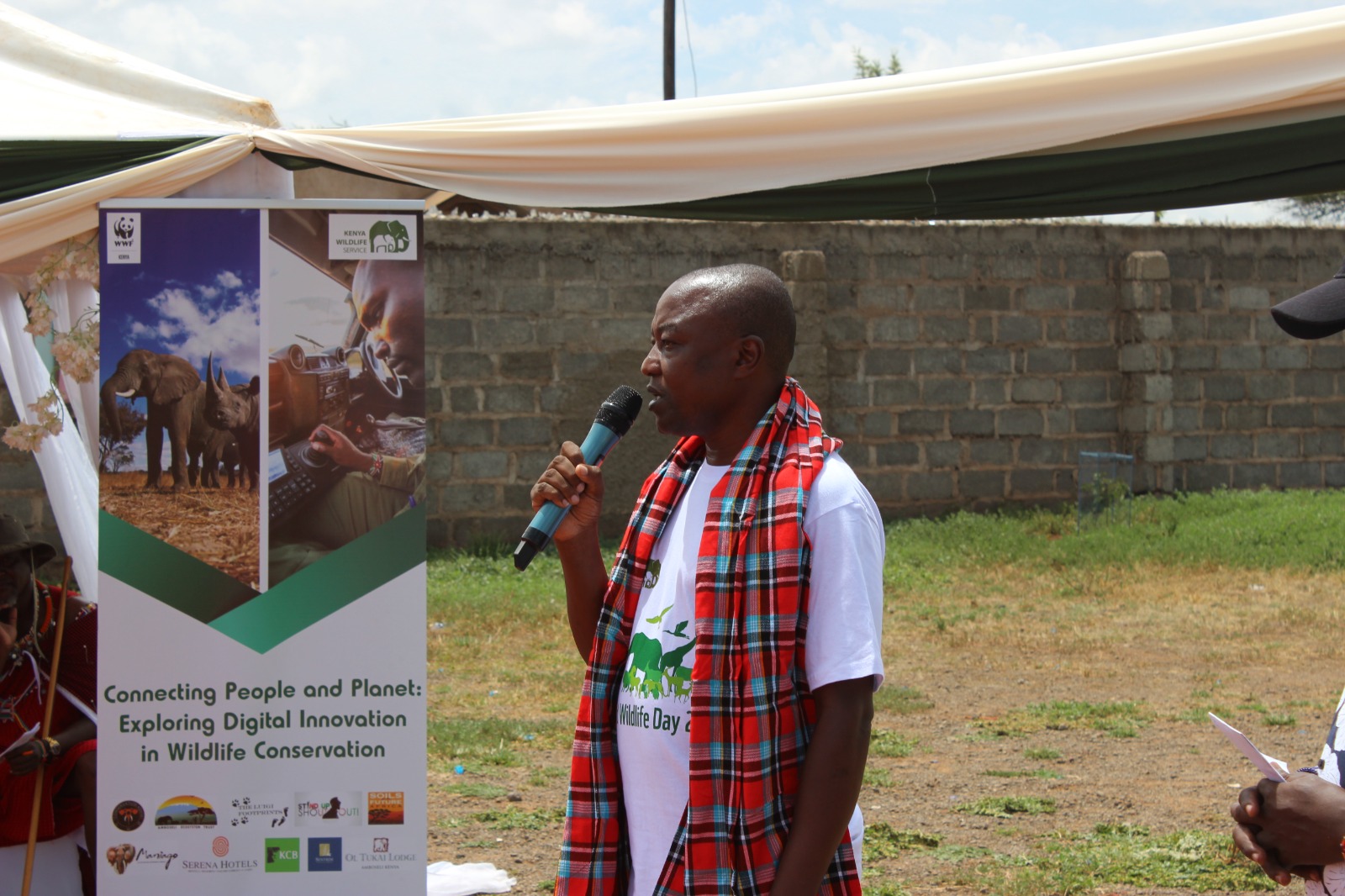
This year’s celebrations were marked under the theme, “Connecting People and Planet: Exploring Digital Innovation in Wildlife Conservation.”
Stakeholders contend that the theme is in particular relevant in today’s digital age, where technological advances can offer novel solutions to long-standing conservation challenges.
Amboseli National Park Assistant Director Paul Wambi
Moses Saruni, a resident of Alamaiyana village which boarders Amboseli National Park concurs, gleefully underscoring the significant role played by technology in solving human-wildlife conflict within the ecosystem.
Amidst some laughter, Saruni recalls the days when it took ages to report attacks in homesteads occasioned by marauding animals that eventually led to massive livestock losses. Boling with anger, community members would later kill the animals in retaliation.
“A few years back, if you had to raise alarm that your homestead is under attack by hyenas or lions, you would have to light a fire to attract the attention of the neighbouring village as you cause commotion to attract their attention. By the time help arrived, the wild animal would have already made away with some livestock. We would then, out of anger, kill the wild animals to protect our herds, ” he said.
According to Saruni, help is now a phone call away. He also adds that the KWS is also currently monitoring problematic wild animals that are prone to attacking their homes.
“With KWS monitoring the animals using advanced technology, attacks and losses are avoided well before hand. The service makes sure that the wildlife does not encroach too close to our homes which are 200km away from the park, and if they do, they swiftly respond before damage is done.”
David Leto, WWF-Kenya Project Officer showcasing wildlife tech
According to Dr John Kioko, Programme Coordinator-Amboseli-Chyulu Sub landscape, technology is only half the solution in wildlife conservation.
He is of the view that to achieve maximum results in conservation, there has to be collaboration between conservationists, the government and the community members who are the major stakeholders.
“Knowledge on how to use gadgets in conservation should not only lie with scientists but the community members who are in the frontline of this fight,” says Dr Kioko.
Dr John Kioko, Programme Coordinator-Amboseli-Chyulu Sub landscape WWF-Kenya.
He emphasized that “through education, advocacy, and action,” individuals, communities, governments, and organizations worldwide are encouraged to work together to safeguard the planet’s rich and diverse wildlife for future generations.
World Wildlife Day is celebrated annually with a theme that highlights the importance of various aspects of wildlife conservation mooted. Previous themes have focused on sustaining every creature’s life on Earth, marine species, and big cats.
The initiative aims to raise awareness about the pivotal role that digital conservation technologies and services can play in promoting sustainable wildlife trade, ensuring legal compliance, and fostering harmonious human-wildlife coexistence for the present and future generations.
At a time when the digital revolution is reshaping the landscape of global connectivity, this year’s theme underscores the urgent need for universal access to digital tools and knowledge.
Wildlife contributes to the biodiversity of an ecosystem. Biodiversity is vital for the stability and resilience of ecosystems, enabling them to recover from disturbances, resist diseases, and adapt to changes.
Each species, no matter how small, plays a role in the ecosystem, contributing to the complex interdependencies that sustain life.