Tag: World Water Day

  • The Ksh 1.4B pipeline to solve Nairobi Eastland’s water shortage

    The Ksh 1.4B pipeline to solve Nairobi Eastland’s water shortage

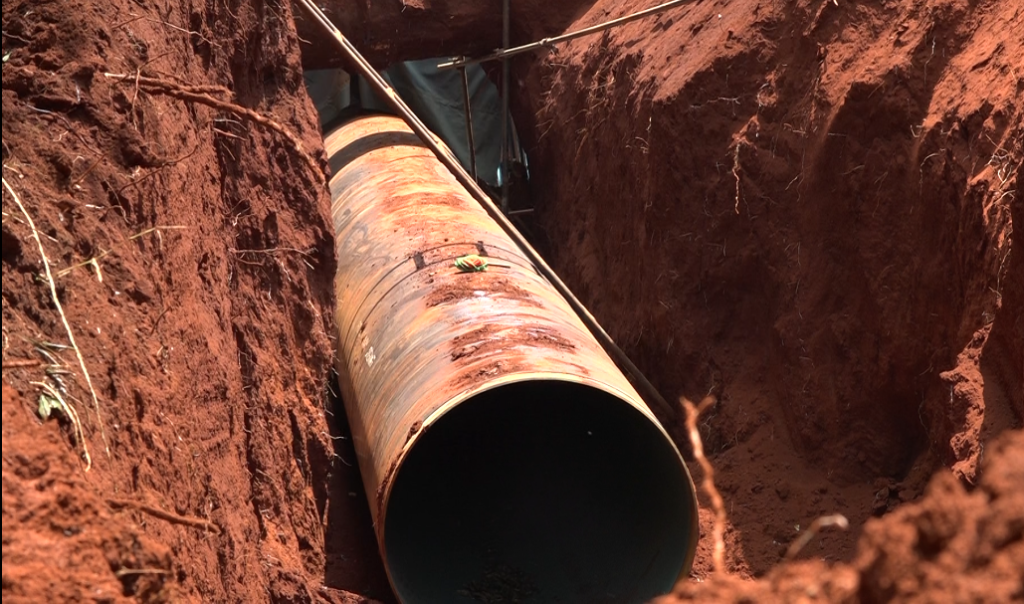
    Inside Karura Forest, contractors under Athi Water Works Development Agency (AWWDA) are busy excavating a section of the route where a new pipeline will follow supplying fresh water to residents in eastern parts of Nairobi City.

    With the growing city population, the Ksh 1.46 billion Gigiri–Karura–Outer Ring Road Transmission Pipeline Project is the latest water project being undertaken by the government in efforts to meet the city’s rising water demand of 370 million litres of water per day.

    The pipeline which covers 8.4km from Gigiri reservoir has been designed to supply additional 211 million litres of water daily to targeted areas along Outering Road to include whole of Ruaraka Constituency, parts of Mathare Constituency, Embakasi North Constituency and Embakasi West Constituency.
    “On completion of this project, the Outer Ring Road corridor residents will be getting adequate water and we hope that will be achieved by mid next year,” said Joseph Kamau, AWWDA Chief Executive Officer. “We expect that once we do this, we should be able to sustainably serve a population of around three million by 2045 and upwards.”

    The pipeline consists of 4.4km section from Gigiri Reservoir to Karura Reservoir and another 4km from Karura Reservoirs to Outer Ring Road Road.

    According to Kamau, a 3km portion of the Gigiri–Karura section running underground inside the protected forest was chosen due to cost considerations.
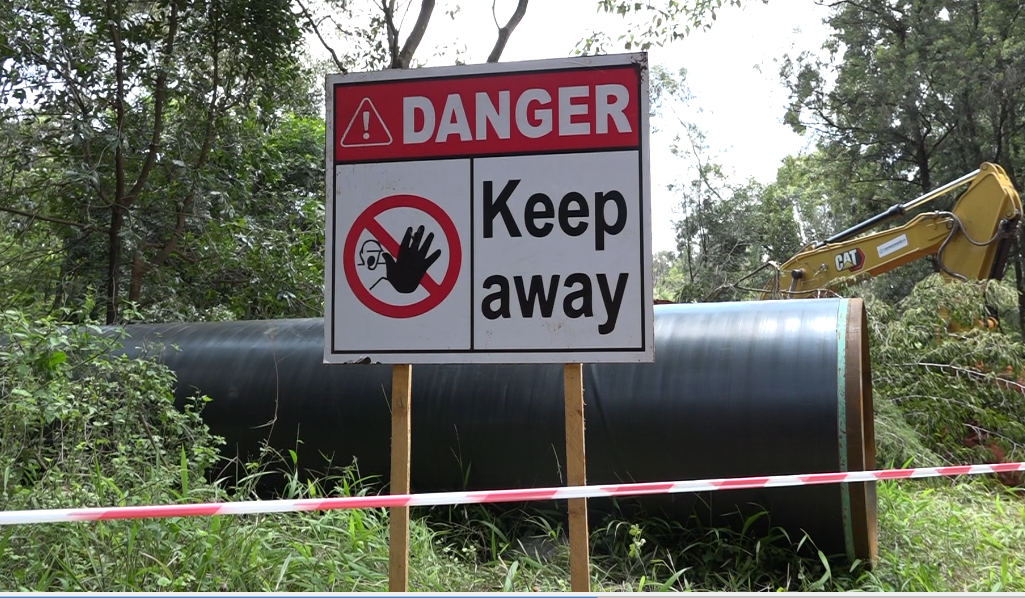
    “If we were to detour outside, then we would have to do a lot of pumping and also the pipeline length would be extended by about 3km and that would cost a lot of money. Why we are working through Karura Forest is that we do a project that is cost effective and is sustainable to the community and also the environment,” said Kamau.

    The agency says it engaged stakeholders of Karura Forest to ensure the project does to affect the protected ecosystem.

    The project involves among others steel transmission pipelines measuring 1.4m in diameter, including associated fittings, valves and flow control systems.
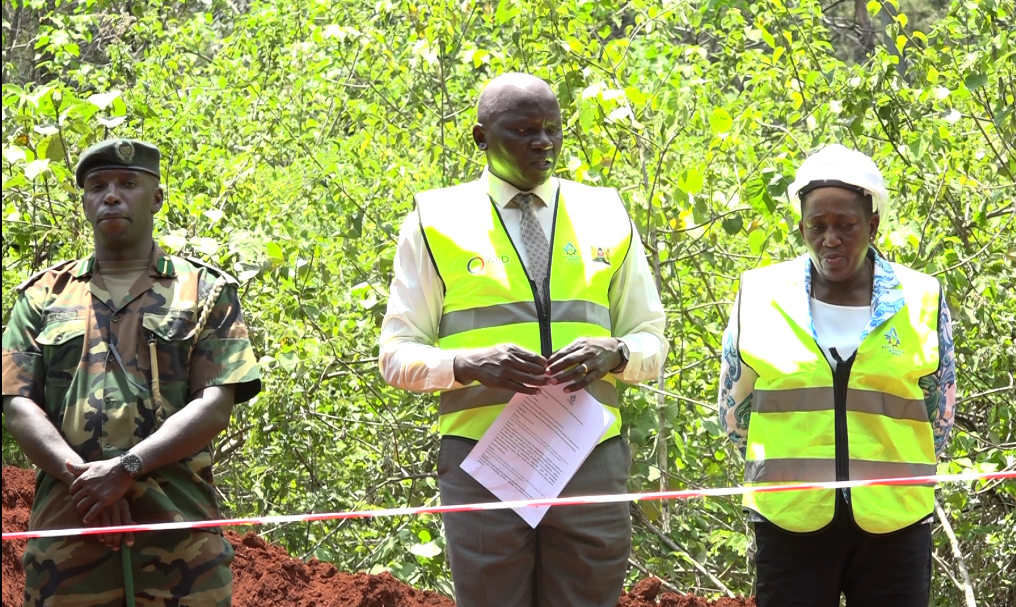
    “We are being supervised by the Kenya Forest Services. Our pipeline route has to be aligned in a way that it ensures minimal damage to existing trees. We shall be using existing pathways where there are no trees and if we do damage to the nature trails we reinstate them,” added Kamau.

    The project is jointly financed by the Government of Kenya and the French Development Agency (AFD) with Zhongmei Engineering Group Limited / Hunan Bestall Water Conservancy Construction Co. Ltd JV being the contractor.

  • World Water Day: Conservationists lead campaign to save River Njoro

    World Water Day: Conservationists lead campaign to save River Njoro

    Kenya Water Ambassadors hosted an awareness campaign for River Njoro, Nakuru County, as part of celebrations to commemorate World Water Day.

    The group says the initiative aims to raise awareness about the importance of conserving the river while dealing with its current threats.

    River Njoro, spanning approximately 60 km with a catchment area of about 280 km², is a vital lifeline for both biodiversity and communities in the region. The river flows through forested and agricultural lands, serving several urban settlements before terminating at Lake Nakuru, a significant natural asset of the Rift Valley.

    Conservationists are concerned that anthropogenic activities, including unsustainable agriculture, over-abstraction, and catchment degradation, threaten the river’s survival.

    Philip Ng’ok, Chair of the Njoro Water Resource Users Association (WRUA), says he has seen the river at its best and now in its worst state.

    “When I was younger, we bathed and swam in the river. However, this has not been the case for the past few years because of the high pollution levels. You cannot even risk touching the water with your bare hands because you risk contracting a disease,” Ng’ok says.

    Community members clean up River Njoro, Nakuru County ahead of World Water Day

    To avert a crisis, Ng’ok says the stakeholders’ most immediate action should be educating, empowering, and supporting communities, especially along the river beds.

    “As a WRUA, our core mandate is to educate community members so they can realize the value of these rivers we fight so hard to conserve. With some knowledge, they will know what farming practices are good, what trees to plant along the river beds, to avoid litter, and also how to ration the use of the river to avoid conflict with those living downstream,” he avers

    Speaking on behalf of the County Government of Nakuru, Grace Karanja from the Department of Environment, Energy, Climate Change, and Natural Resources says behavior change is an area they are focusing on more to keep the river clean and healthy.

    “Many people believe that keeping the rivers and environment clean is the duty of the government. What they forget is that we are all consumers of this water and we are also collectively the generators of this waste so the responsibility lies with all of us,” she says.

    County Government of Nakuru, Grace Karanja from the Department of Environment, Energy, Climate Change, and Natural Resources

    Karanja, in addition, says that the county is now investigating ways of managing waste sustainably, which would also aid in creating employment.

    “We are creating these sustainable programs from the household level whereby we are insisting on waste segregation. This means that whatever waste is produced, it can be used for something else. For instance, organic waste can be converted into manure while plastics can be used to produce tiles.” Explains Karanja

    Students from universities joined the campaign, trekking for over 5 km to raise awareness of the sad state the river finds itself in.

    Brian Misiati, Chair of the Kenya Water Ambassadors, called on stakeholders to actively involve more youth in conservation activities, noting that the younger generation needs to be on the frontline advocating for their future.

    “Our elders are engaging in advocacy but the future generations are the ones most affected by it. We have to start earlier on to educate and enlighten the youth which in turn brings about inter-generational equity,” he said.

    So far, Misiati says the conservation chapter has recruited over 200 members from institutions of higher learning around the country.

    Community members clean up River Njoro, Nakuru County ahead of World Water Day

    WWF-Kenya is closely collaborating with the Kenya Water Ambassadors and Nakuru County among other stakeholders in the basin to help raise awareness on the conservation of the important water source.

    This year’s theme is ‘Water for Peace,’ which focuses on the critical role water plays in the stability and prosperity of the world.

    As climate change impacts increase and the global population grows, conservationists speak of the need to unite around protecting and conserving the most precious resource. They argue that by working together to balance everyone’s human rights and needs, water can stabilize and catalyze sustainable development.