Tag: TRAINING

  • IMCTC launches anti-terror financing training in Nairobi

    IMCTC launches anti-terror financing training in Nairobi

    The Islamic Military Counter Terrorism Coalition (IMCTC) Tuesday officially launched a specialized training program titled “Countering Terrorism Financing and Money Laundering” in Nairobi, Kenya.

    The event was officiated by Defence Cabinet Secretary Soipan Tuya, alongside the IMCTC Secretary-General, Maj. Gen. Mohammed bin Saeed Al-Moghedi.

    The training program, organized by IMCTC as part of its strategic initiatives, brings together representatives from government entities, regulatory authorities, financial institutions, and law enforcement agencies

    Speaking during the event, CS Tuya stated that the launch of the training program, reaffirms the shared commitment to strengthening both regional and international security.

    She emphasized that Kenya fully recognizes the need for effective counter-terrorist financing efforts to be supported by strong international cooperation, information exchange, legal coordination, and continuous capacity development.

    Further CS Tuya noted that terrorist financing continues to fuel recruitment, planning, logistical support, and the carrying out of terrorist operations.

    “Without addressing the financial sources that sustain these operations, counterterrorism efforts remain at risk.” She noted.

    She commended Kenya’s partnership with IMCTC, stressing that the Coalition unites its member states around a common goal: countering extremism and violence in all its forms.

    On his part, Maj. Gen. Mohammed bin Saeed Al-Moghedi, stated that the threat of terrorism knows no borders and does not discriminate between nations, it targets security, stability, and development across the world.

    He emphasized that Kenya plays a pivotal role in addressing security challenges and threats across the African continent.

    Al-Moghedi added: “The establishment of IMCTC was founded on a clear vision to coordinate international efforts and unite ranks in strengthening ideological, media, financial, and military capabilities. The IMCTC’s strategy enables the implementation of initiatives aimed at capacity building and the training of specialists to enhance the readiness of institutions involved in counterterrorism.”

    He also noted that terrorist financing has become the lifeline of extremist groups, and countering it requires enhanced cooperation among states and financial institutions, along with intensified efforts to confront this threat.

    The program seeks to establish a deeper understanding of international legal frameworks, related agreements, the development of financial analysis tools, and regional and international cooperation.

    It includes a series of lectures, workshops, and training sessions focused on main topics, including the legal framework for countering money laundering and terrorist financing, sources and tools of financial crimes, financial detection and analysis techniques, regional and international cooperation, and prevention strategies for terrorist financing, money laundering, training, and awareness.

     

  • New cohort of scholars join icipe’s Ksh 258M training programme

    New cohort of scholars join icipe’s Ksh 258M training programme

    The International Centre of Insect Physiology and Ecology (icipe) has received the 6th cohort of scholars who will undertake their doctoral training and research in various high impact sectors key for regional growth.

    The cohort 6 which is being funded by the Government of Kenya to the tune of Ksh 258 million ($2m) through the Partnership for Skills in Applied Sciences, Engineering and Technology (PASET) Regional Scholarship and Innovation Fund (Rsif) targets to bridge gaps in skills and knowledge necessary for sustained economic growth in sub-Saharan Africa.

    “As a government, we would be interested to see the value you as scholars will be adding to our countries. We want you to make a difference make in the lives people and communities you come from,” said James Muchiri, Ministry of Education representative at PASET Executive Board.

    Cohort 6 scholars who have been selected from various universities comprises of 21 scholars, out of which 16 are Kenyans and 4 are from Ethiopia, Nigeria, Burkina Faso, Tanzania.

    Kenya as a financier of the new cohort has been allocate 80pc of the slots with the remaining 20pc going to other countries as per the PASET 80/20 rule.

    “Since this is taxpayers’ money, the contributing countries have made a big sacrifice to ensure the African continent leapfrogs in science, technology, engineering, and mathematics (STEM) for its prosperity. As the World Bank, we are very grateful to the African Host Universities (AHUs), International Partner Institutions (IPIs), African Governments, and the Government of Korea that came together to ensure that this programme is successful,” said Ruth Charo, Senior Education Specialist at the World Bank Task Team Leader for the Rsif project.

    The 21 scholars were selected out of at least 810 applications received. Of those selected, 8 are women, highlighting the importance of gender considerations in STEM.

    “You are the next generation of thought leaders, problem-solvers, and changemakers. The knowledge and expertise you will gain through this program will not only advance your careers but also contribute to the socio-economic transformation of Africa,” added Prof Aminata Sall Diallo, the Chair of the PASET Executive Board.

    Established in 2015, Rsif focuses on transformative technologies with far-reaching societal impacts, including ICTs, food security, minerals and mining, energy, and climate change.

    Since 2018, Rsif has supported 302 Doctor of Philosophy students out of which 45 have so far graduated, and returned to their home countries.

    “Rsif is prestigious PhD scholarship programme in both its form and content in Africa, and is highly competitive” said Dr Julius Ecuru, Rsif RCU Manager at icipe

    Rsif has grown to become one of the largest academic and research networks in Africa, with more than 450 active scientists, including the scholars.

    The fund is supported by Kenya, Benin, Burkina Faso, Cote d’Ivoire, Ghana, Mozambique, Nigeria, Rwanda, Senegal, the World Bank and the Government of Korea.

  • Building capacity of medical professionals to help improve outcomes

    Building capacity of medical professionals to help improve outcomes

    By Judith Akolo

    As disease patterns change and health service delivery becomes more complex, providers are coming up with more innovative ways of tackling illness as well as to meet demand for the services.

    Mediscan Africa has embarked on a tailored program known as point of care ultrasound that trains doctors on more innovative ways of diagnosis and care for patients. This according to Mediscan Africa Business Development Manager, Patrick Miruka will improve and retool the skills of medical professionals to aid them in ensuring efficiency in the provision of healthcare.

    “Basically what we do is we run ultrasound training and other continuing medical education for medical doctors and medical professional on point of care ultrasound,” he says and adds; “This is used for emergency purposes and helps physicians to be able to make quick diagnostics or quick decisions,”

    This according to Miruka will also reduce cases of misdiagnosis or poor approaches in treatment as the doctor is able to use ultrasound to determine the nature of sickness without having to send the patient to another department to get the image, “the image is right in front of the doctor on the screen.”

    At a time when the doctor-to-patient ratio in Kenya is about 1:10,000, that one doctor to every 10,000 patients, against the World Health Organisation (WHO) recommendation of 1:1,000 that one doctor to every 1000 patients, besides the small number of specialized health professionals in given fields which at times forces the doctors to work long hours on end.

    Miruka says that continuous training on the use of novel technology in diagnosis will reduce the amount of time, one patient is attended to while increasing efficiency. “Soon the use of the stethoscope will be seen as obsolete with the coming in of ultrasound in diagnostics,” he offers.

    The knowledge gap in the use of the Managed Equipment Services (MES) that ensures that public hospitals have access to modern health infrastructure, equipment, and services over an agreed period of time, met challenges at inception when most doctors could not handle the equipment and required that an expert does so, “The way medicine used to work back in the day was we used to send the patient if you wanted to know if a patient has for example a stone in the gall bladder we used to send them to the radiology department to do an image and then they would come back,” says Dr. Edward Maina, a specialist in emergency medicine and adds, “now we are trying to change that model so that when a patient is with you in the consultation room you can actually just run an image and be able to tell there and then.

    Dr. Maina says this approach is less costly as the patient will not be paying for radiology services as the all the processes are done in the same consultation room and you are able to treat “the patient based on what you are seeing on the screen using the ultrasound.”

    He notes that the continuous training on newer methods of diagnostics is improving efficiency as one doctor is able to handle more patients effectively, he says the point-of-care ultrasound, is part of a battery of tests that can be done on the spot.

    “You don’t have to send the patient to another department, you can just do it there and then, he says and adds, “The way it helps us as medical doctors are first of all you able to lessen the burden for patients who have to go to radiology to get an image done and come back, it lessens the time to get a diagnosis, we also free up the department because some of the patients who come can get a test done and you know whether it is positive or negative and that helps us to make a decision,” says Dr. Maina.

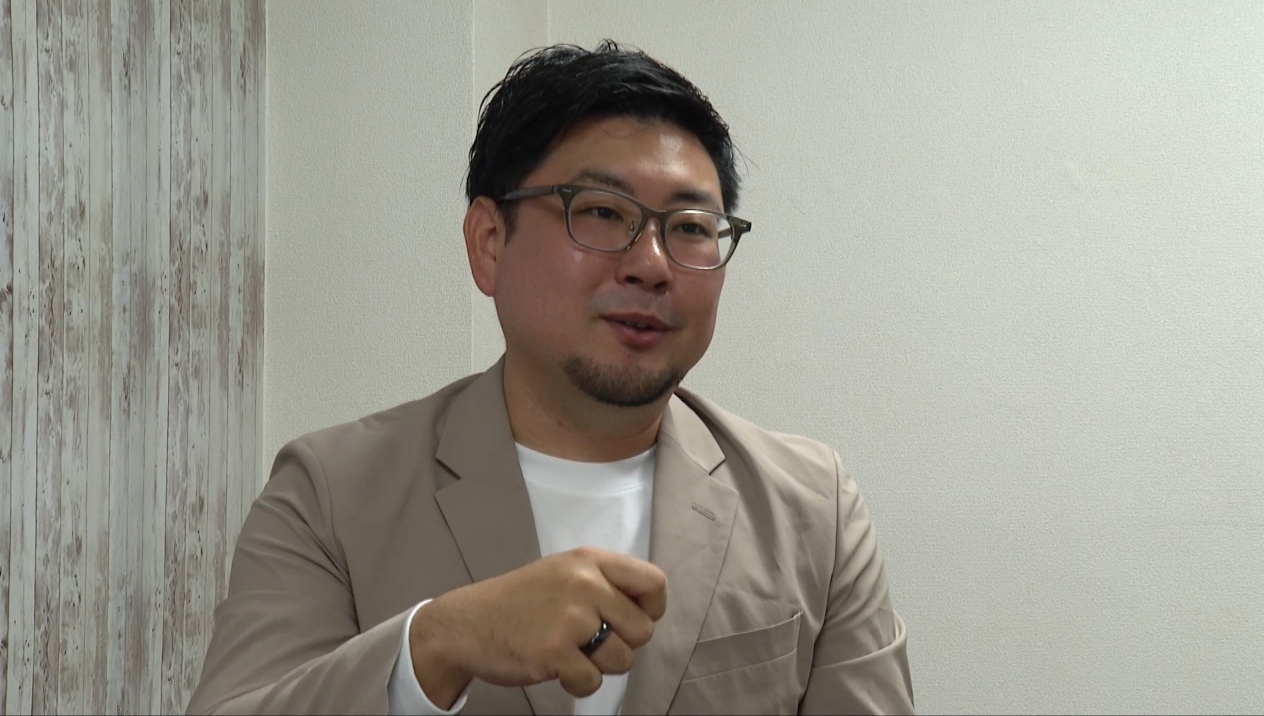
    Kenta Hara the Chief Executive Officer and Founder of Africa Asia Health Dynamics says it is possible to reduce the overload on referral hospitals when doctors at level two or three hospitals are able to use innovative ways of diagnosis.

    “Medical doctors cannot use their ability in the hospital, especially at the point of care, so they would like to diagnose for themselves but they are forced to send the patient for other lab tests or ultrasound, yet if the medical doctors are trained and have the skills in ultrasound, they can carry out the tests by themselves and make a decision,” says Kenta Hara, CEO AA Health Dynamics.

    Kenta notes that the long queues always seen in referral hospitals of patients waiting to be attended to can be reduced if usable data is generated and used in the distribution of resources to hospitals.

    “There is a need to develop usable good data so that government understands what they have to do to reduce the cost or how to distribute resources,” he says and adds, “for example, if there is an increase in HIV cases in Kiambu the resources will be taken to Kiambu, and if Nairobi has more dialysis cases, then the resources needed for dialysis will be taken to Nairobi based on the data.”

    Kenta says that the knowledge of engineering graduates can be put to good use in the health sector by allowing them to develop software that can be used in the sector to increase efficiency.