Tag: Rural Electrification and Renewable Energy Corporation (REREC)

  • New dawn for Chirichiro as rural electrification sparks opportunity

    New dawn for Chirichiro as rural electrification sparks opportunity

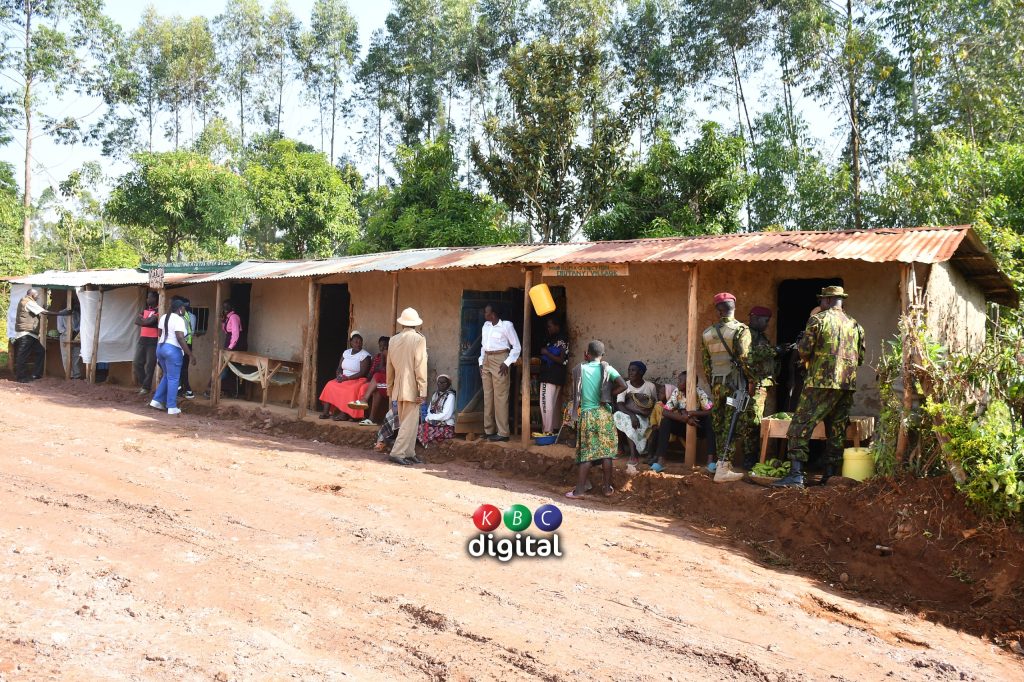
    As the sun rises over Chirichiro village in Nyamira County, Kenya, it casts a warm glow across the remote communities long defined by darkness.

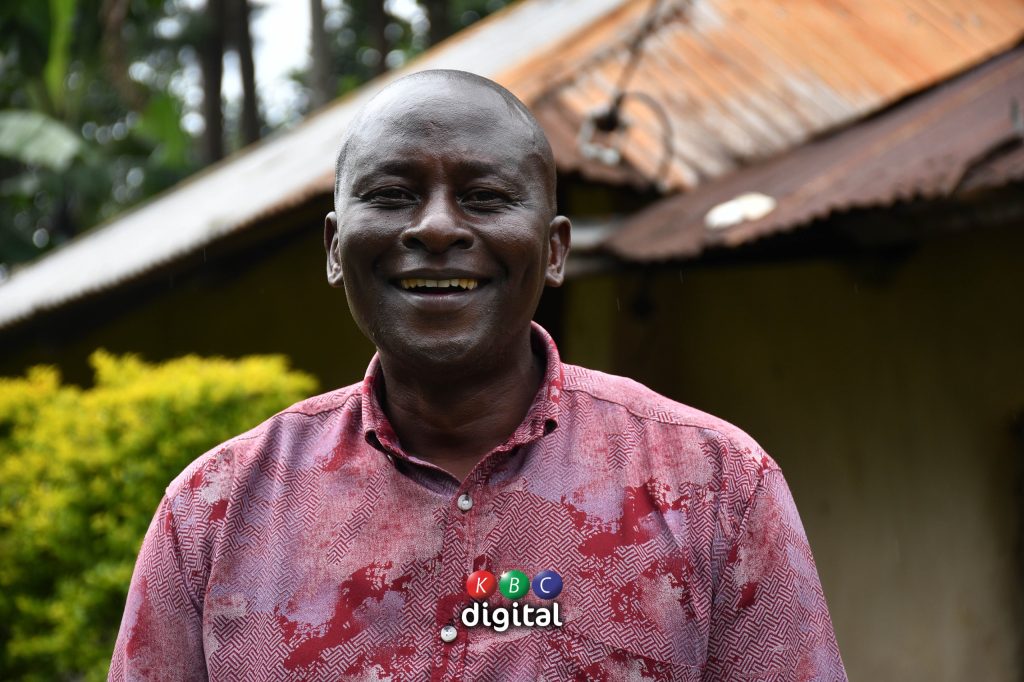
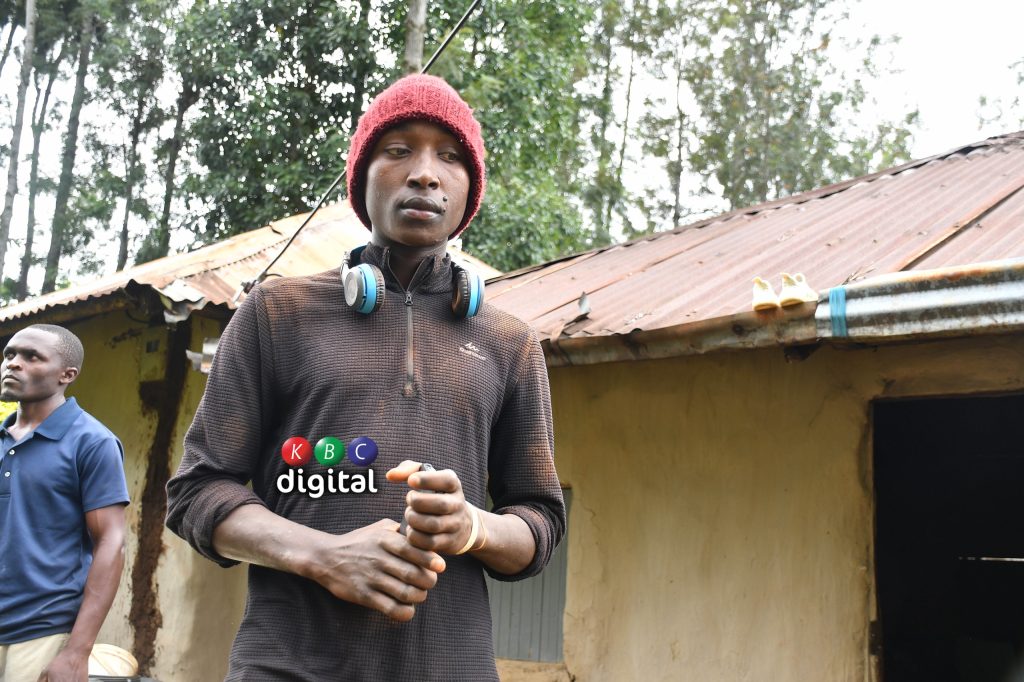
    Isaac Nyaguka Kerage has lived without electricity for decades and like many other households in this hilly village, his family relied on alternative and costly options restricting economic activity and denying youths like himself opportunities that rely on reliable power.

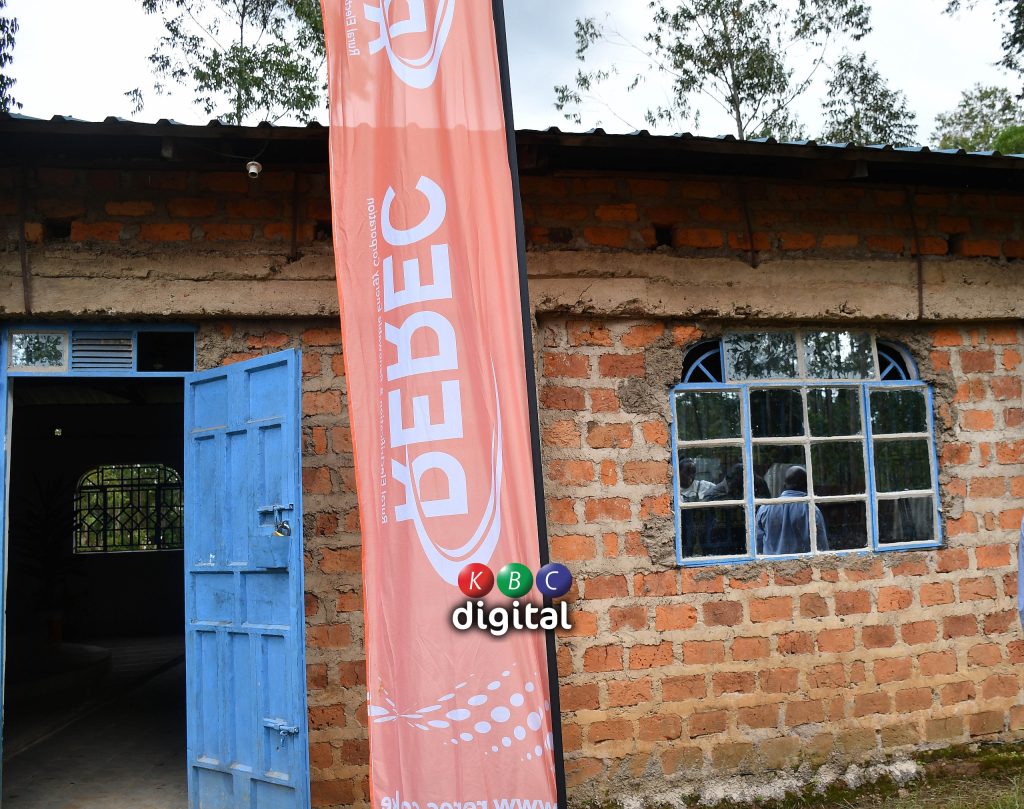
    Today, Kerage and his fellow youths can now breath a sigh of relief following electrification projects undertaken by the Rural Electrification and Renewable Energy Corporation (REREC) in the area that include markets, tea buying centers, churches, schools as well as households.

    Speaking to KBC Kerage a student at Kisii Polytechnic studying plumbing said the arrival of electricity in his village is more than just a basic service noting that youths can now undertake businesses that rely on electricity.

    He noted that many young people in the area have been unable to access modern skills training or start small businesses due to lack of power.

    “Electricity will empower young people to start businesses like barber shops and cyber cafés and help reduce crime among the youth,” said Kerage.

    Since inception, the Rural Electrification and Renewable Energy Corporation has invested Ksh.150B in rural electrification boosting access from 4% in 2008 to over 75% today.

    With electrification, youth are expected to venture into income-generating activities such as welding, barbering, electronics repair, and small-scale agro-processing, while others can now pursue technical skills that require electricity, including ICT and device repair.

    Speaking to Nyamira residents, the Chief Executive Officer REREC, Rose Mkalama said the impact of rural electrification goes beyond household lighting, adding that it is a critical driver of youth empowerment and economic transformation.
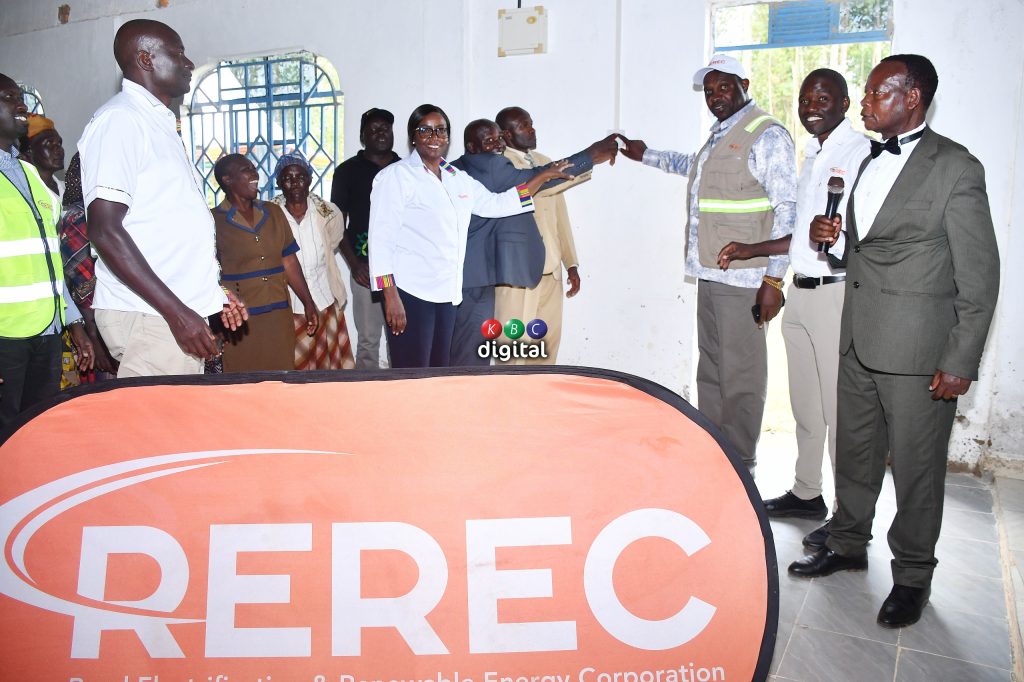
    Mkalama noted that ‘Electricity is not just power; it’s an opportunity’. “From small businesses to longer study hours for our children, access to electricity will transform lives and create brighter futures.” she said.

    She called on parents and guardians to empower the youth with opportunities that rely on electricity saying “When electricity comes, jobs should follow. Let’s empower our youth with opportunities in wiring, installation, and other electrification works.”

    The REREC CEO highlighted the positive impact of electricity on education noting that access to electricity increases study time improving  learning.

    “More electricity means more study time. I encourage parents to take children to school. Connection to power will give our children more time to study and excel in school,” she said.

    At the same time, the CEO cautioned residents against fraudsters posing as agents offering electricity connections for a fee.

    “Do not pay anyone to connect electricity. Government connections are free. Ensure your home is properly wired by a certified electrician and always verify credentials,” she warned.
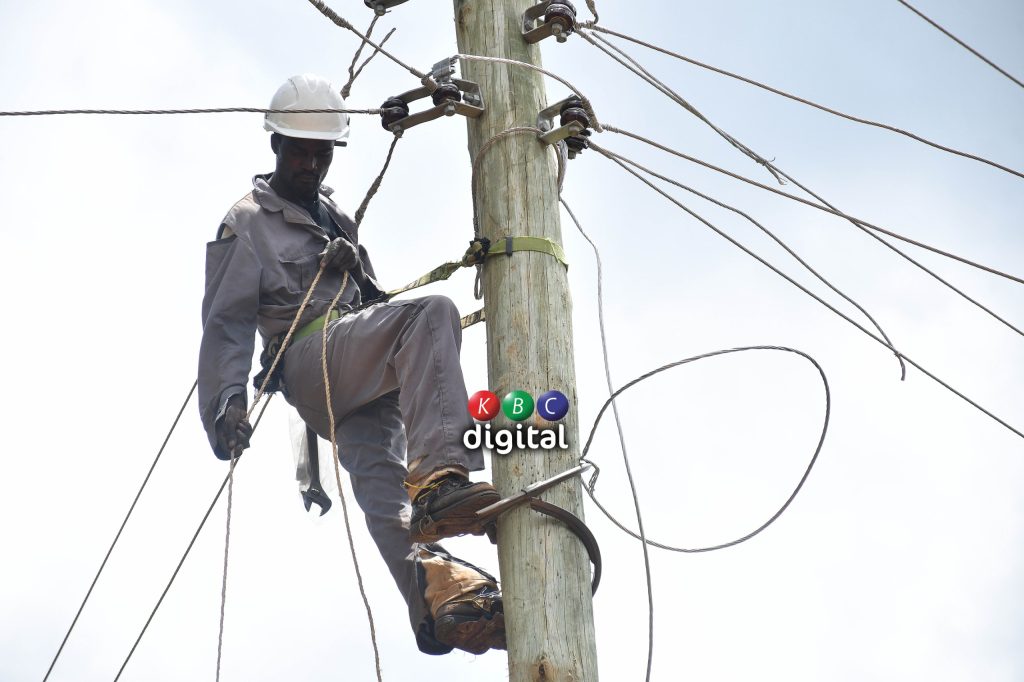
    Picture by Jackson Mnyamwezi

    Further she noted that access to power will enable young people to innovate, start enterprises, and tap into digital opportunities that were previously out of reach, especially in hard-to-reach hilly areas.

    The development is also expected to support the growth of micro-enterprises, reduce unemployment, and curb social challenges linked to idleness, including substance abuse among some young people.

    Stakeholders behind the project say rural electrification remains a key driver of inclusive economic growth, bridging the gap between rural and urban economies by enabling youth to participate in the digital and industrial economy.

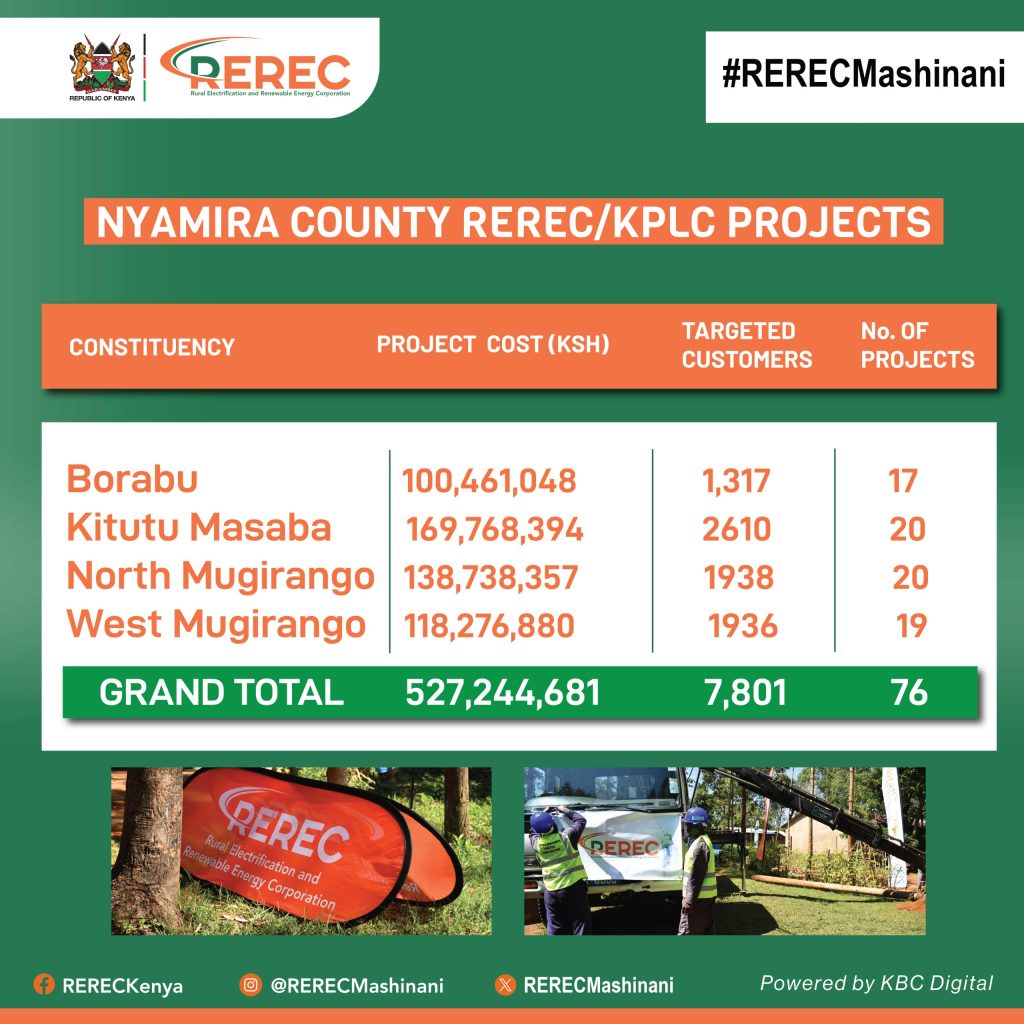
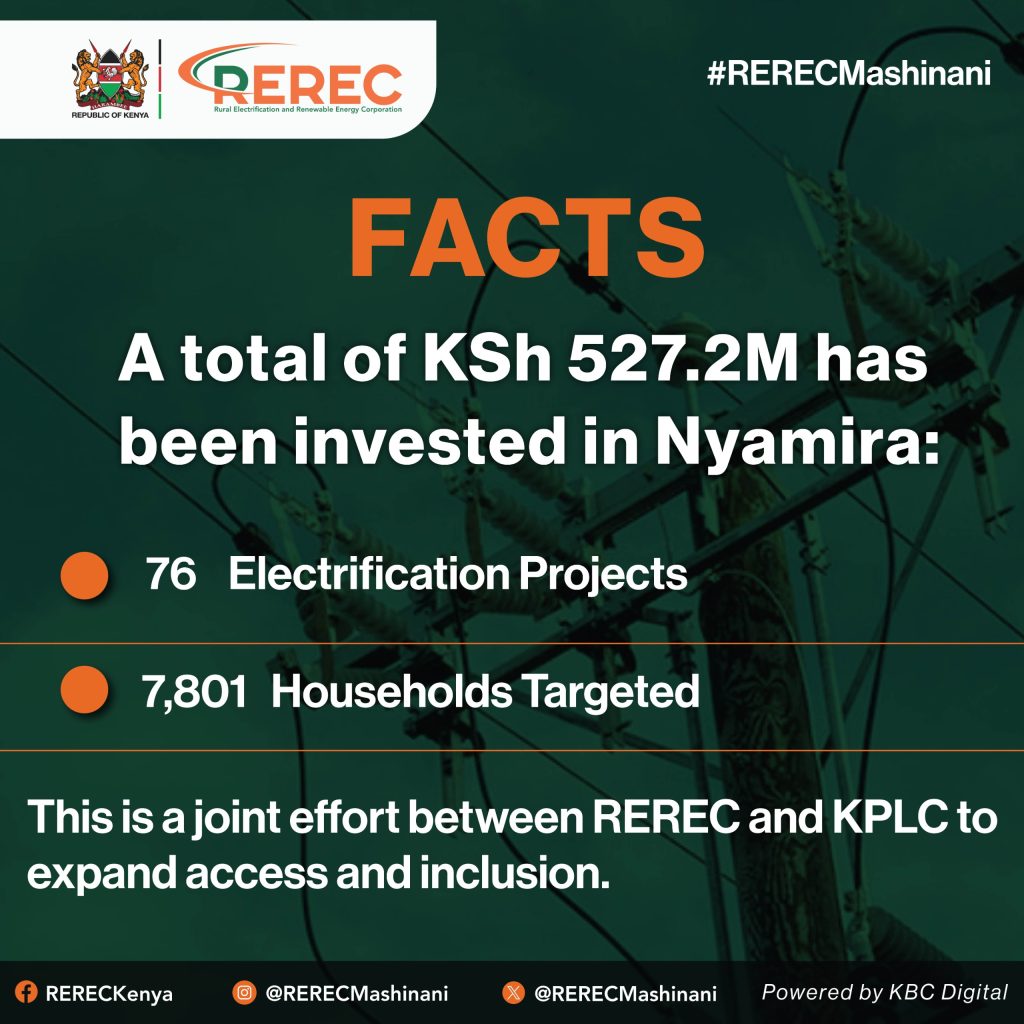
    A total of Ksh 527.2 million has been invested in electrification projects across Nyamira County with 76 electrification projects targeting 7,801 households. The initiative is a joint effort between the Rural Electrification and Renewable Energy Corporation (REREC) and Kenya Power and Lighting Company (KPLC) aimed at expanding access and inclusion as well as drive socio-economic development in the region.
  • Explainer: How rural electrification projects connect households to national grid

    Explainer: How rural electrification projects connect households to national grid

    Have you ever wondered how electricity reaches homes in rural areas?

    Getting connected to power under the Rural Electrification and Renewable Energy Corporation (REREC) follows a step by step process that commences with a simple request from a community and ends with electrified homes that are powered in partnership with Kenya Power.

    According to the Regional Manager South Nyanza REREC, Eng. Zack Magomere, communities seeking electricity connection are required to come together and write a formal letter to the REREC CEO through the regional office.

    The request is then forwarded to the head office for consideration.

    Once the letter is received at the head office, the project is assessed, designed and funding is allocated.

    The project is funded by REREC in collaboration with other partners that include; National Treasury, National Government Constituencies Development Fund (NG-CDF) through their area Members of Parliament (MPs), County governments through their area Member of County Assembly (MCA)/Governor as well as community organisations and Non Governmental Organisations (NGOs).

    It is then referred to the regional office for implementation.

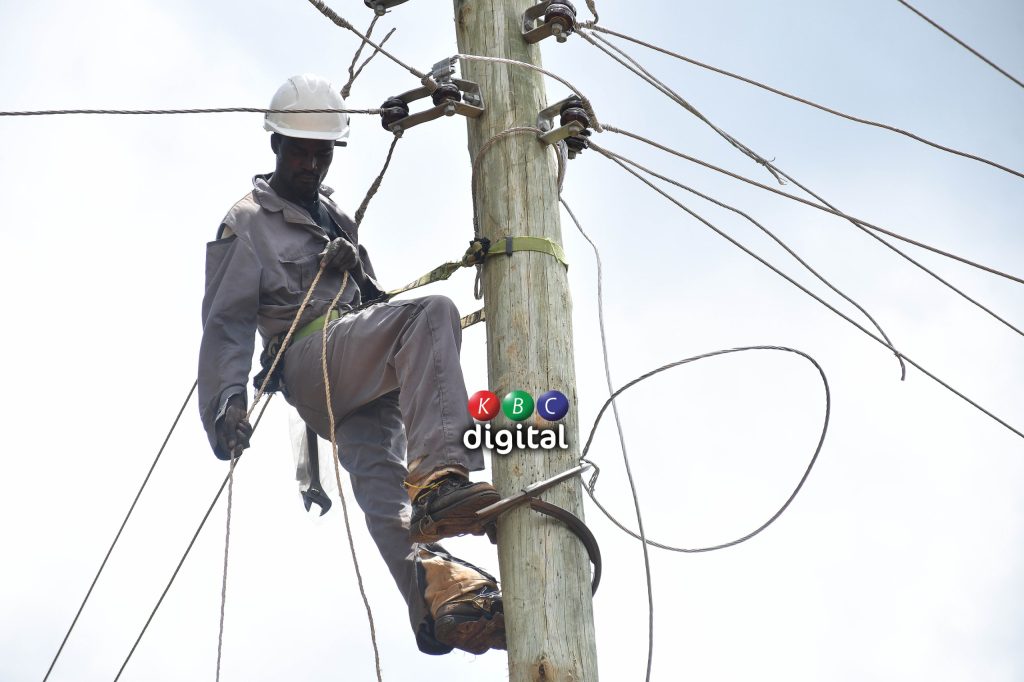
    The regional office assigns the project to a contractor who is given seven days for material mobilisation before commencing the work which involves pole digging, erecting poles and stringing power lines.

    An inspection is carried on the job by REREC in partnership with Kenya Power to ensure the infrastructure meets the required standards. Once certified, the line is commissioned.

    Eng. Magomere noted that all the households covered under the project are then connected, with service cables installed to their homes.

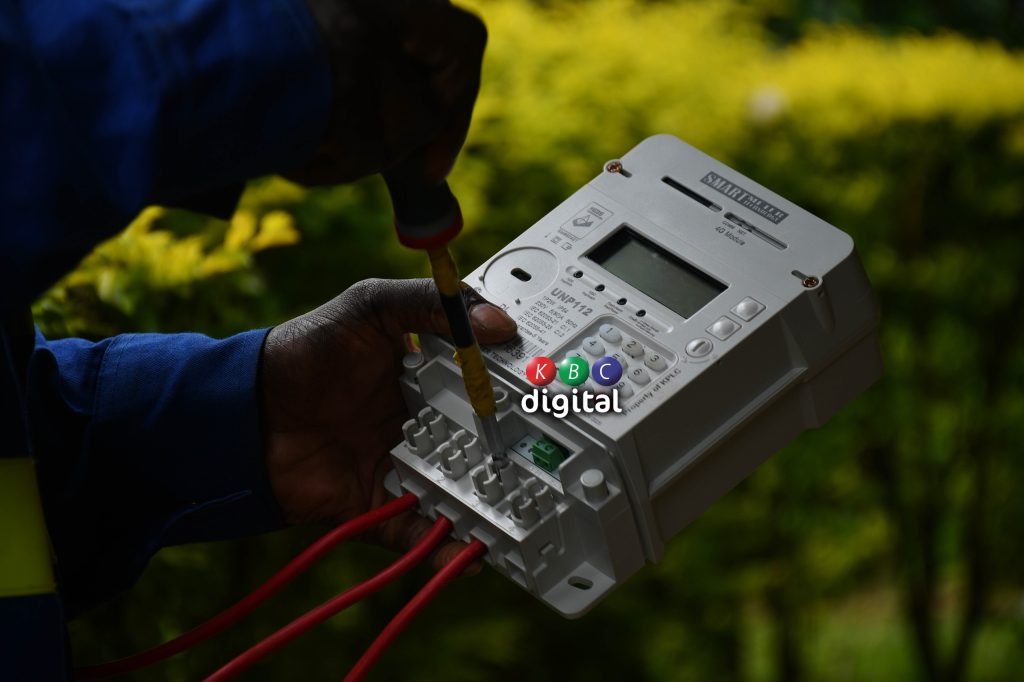
    REREC then submits a list of beneficiaries to Kenya Power, which installs meters officially connecting residents to electricity.

    Since inception, the Rural Electrification and Renewable Energy Corporation has invested Ksh.150B in rural electrification boosting access from 4% in 2008 to over 75% today.


  • Kisii set for power boost as Ruto unveils new electrification projects

    Kisii set for power boost as Ruto unveils new electrification projects

    Residents of Kisii and Nyamira counties have welcomed the new rural electrification projects that are set to be launched by President William Ruto during his development tour.

    The projects undertaken by the Rural Electrification and Renewable Energy Corporation (REREC) include markets, tea buying centers, churches, schools as well as households.

    Speaking in Chirichiro Village, in Nyaribari Chache Constituency, Kisii County on Monday, Regional Manager South Nyanza REREC, Eng. Zack Magomere noted that a total of four electrification projects will be rolled out across different constituencies on Tuesday.

    The projects are part of a broader rural electrification programme that has already connected at least 2,500 customers in Kisii and surrounding areas.

    Among the key projects set to be commissioned Tuesday include; the Abundant Grace Ministries under the Chirichiro Village Electrification Project, valued at Ksh 12.6 million, which is expected to connect 91 households to the national grid.

    Regional Manager South Nyanza REREC, Eng. Zack Magomere

    “The Chichiro Village electrification project, valued at over Ksh 12.6 million, will connect 91 households and key institutions to the national grid,”Eng. Magomere noted.

    Eng. Magomere noted that the projects aim at boosting livelihoods and expanding access to reliable power.

    Residents and local leaders have lauded the initiative, citing its potential to transform lives.

    In an interview with KBC, Abundant Grace Ministries Church Pastor Job Maugo, welcomed the electrification, noting that access to power will enhance church activities and enable them to reach more people with the gospel.

    On her part, the Church Chairlady, Jane Kerubo echoed the Pastor’s sentiments noting that the project will benefit the households especially women, by providing alternative sources of energy, while allowing children more time to study in the evening.

    “Women in Chirichiro Village, Kisii County, will no longer have to walk long distances to access posho mills once the new electrification project is completed,” Jane Kerubo said.

    Isaac Nyaguoka,  Student Kisii Polytechnic 

    Isaac Nyaguoka Kerage a student at Kisii Polytechnic studying plumbing said access to electricity will empower the youth will be able to undertake social economic activities such as starting businesses like barber shops and cyber cafes while also helping to curb crime among the youth.

    “Electricity will empower young people to start businesses like barber shops and cyber cafés and help reduce crime among the youth,” said Nyaguoka.

    Since inception, the Rural Electrification and Renewable Energy Corporation has invested Ksh.150B in rural electrification boosting access from 4% in 2008 to over 75% today.


  • How rural electrification projects are unlocking opportunities

    How rural electrification projects are unlocking opportunities

    Rural Electrification and Renewable Energy Corporation (REREC) is intensifying efforts to achieve universal electricity access in Kenya, in line with the government’s target of connecting all households to power by 2030.

    Through ongoing grid expansion and programmes such as last-mile connectivity, more rural and underserved communities are being targeted for connection unlocking opportunities for economic growth, job creation, and improved livelihoods.

    The initiative is expected to enhance access to essential services, including healthcare and education, while supporting small businesses that depend on reliable power.

    The push for equity in the energy sector has seen the lives of 89,000 residents uplifted in Western Kenya region counties of Bungoma, Busia, Kakamega and Vihiga from 889 joint rural electrification projects by REREC and KPLC worth Ksh.6.29 billion launched this week by President William Ruto who is on a five day development tour of the region.

    In Shirandu, Khiswero constituency, Kakamega thousands of residents are full of praise after years of darkness and slow development.

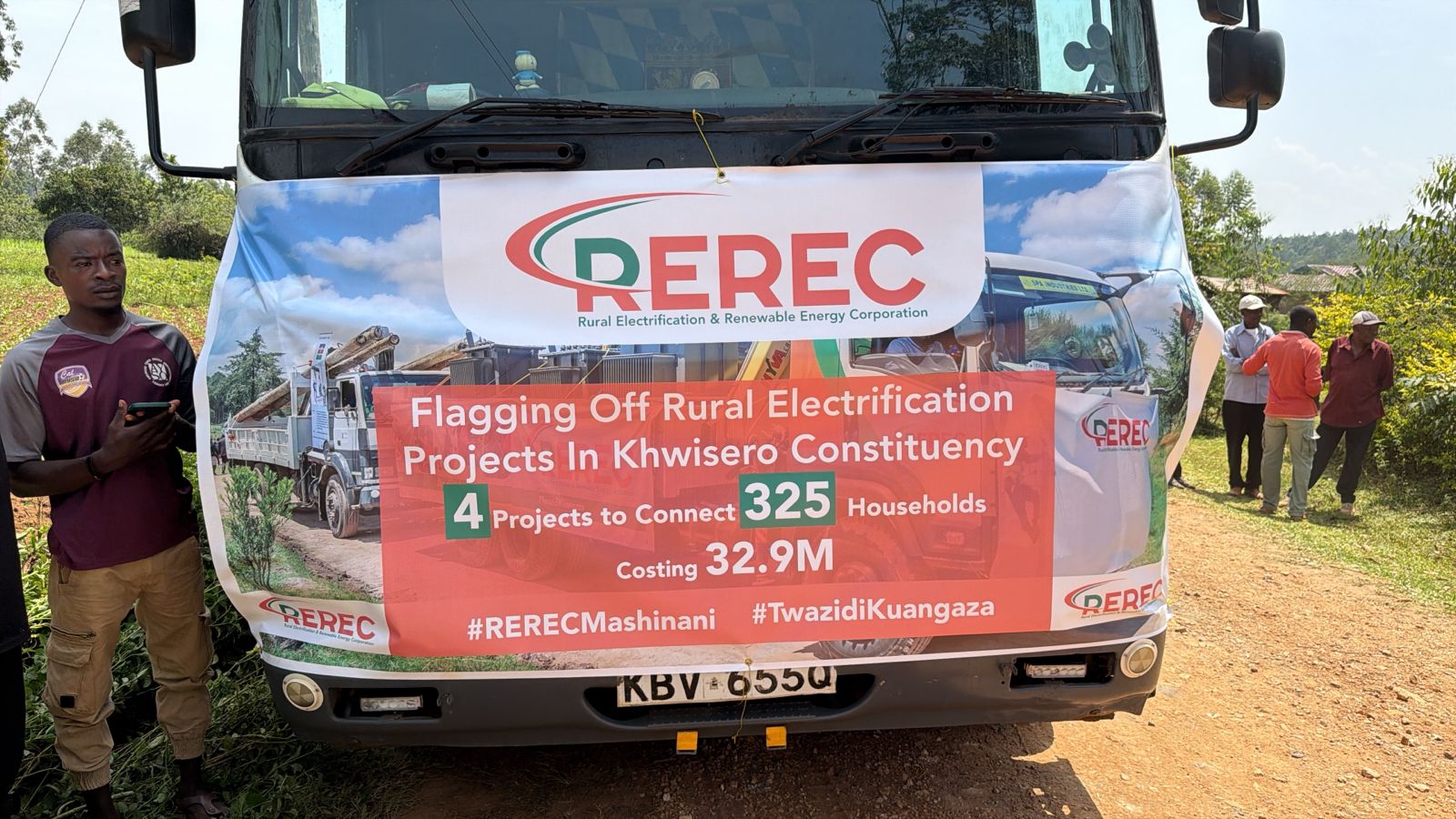
    President William Ruto will flag off materials for Ksh 325 million Last Mile Connectivity programme 4,907 additional customers to benefit from 34 projects by REREC and KPLC.

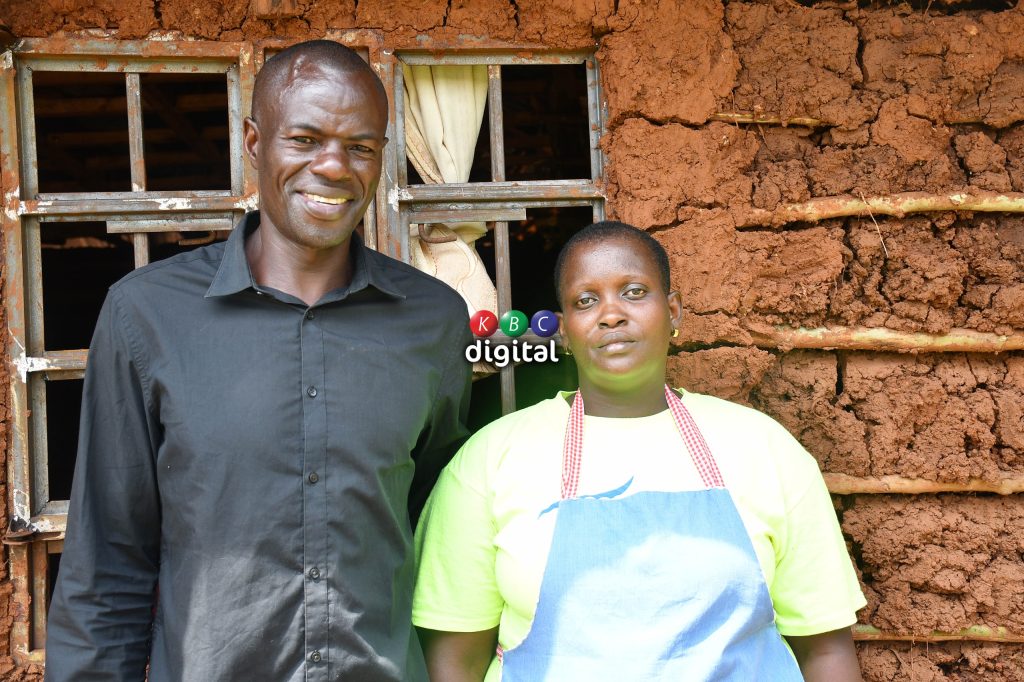
    Shadrack Olaka and his wife Christine Olaka

    “We have waited many years for this day. We are grateful to the government through REREC for extending electricity even to the most remote areas. This project has given us a new lease of life. Quality of life will improve, and many businesses are set to thrive.” Shadrack Olaka says.

    The community is now enjoying a range of clean energy solutions, alongside improved security and the convenience of automated tasks that come with electricity access.

    For the youth, connection to the national grid offers a pathway to employment, opening up opportunities for entrepreneurship and skills development.

    The connectivity in rural areas is aimed at boosting economic growth and creating jobs, as many projects and income-generating activities depend on electricity supply.                                                                                                   

    Universal goal

    Since inception REREC has financed rural electrification projects worth Ksh.150 billion mainly from Exchequer (85%) complemented by development partners (15%) while electricity access has grown from 4% in 2008 to over 75% currently.

     Matching fund facility

    County governments are key stakeholders as they collaborate with REREC to accelerate rural electrification in priority areas.

    Through the partnership REREC matches contributions from constituencies and counties to a maximum of KShs.5 million per constituency for implementation of the projects.

    “Under the arrangement, we have already entered into framework agreements with various Counties to implement specific electrification projects in their areas”, REREC says.

    Participating counties include Kitui, Kakamega, Makueni, Kiambu, Kitui, Vihiga, Busia, Nyandarua, Meru, Nyeri, Embu, Machakos, Kisumu and Bungoma among others have embraced this programme.

    Cumulatively, about 1,400 projects worth KShs.4.08 billion have been financed under the matching fund initiative.

    More counties and constituencies have expressed interest in partnering with REREC under the programme.

    Focus on Kakamega

    Kakamega county and various constituencies have contributed a total of Kshs.135 million under the matching fund facility between 2017/18 and 2025/26 financial years

    “This has attracted amount of Ksh.130 million from REREC; utilized in funding additional 77 projects at combined total cost of Kshs. 265 million” says REREC.

    Projects for flag off in Khwisero Constituency

    The President flagged off four projects in Khwisero Constituency valued at KSh 32.9 million targeting improved access to education and healthcare expected to serve 325 beneficiaries.

    The projects are Ematundu School for the Deaf, which has been allocated KSh. 7.83 million to serve 76 learners, Emutsasa Health Centre allocated Ksh. 9.07 million meant to serve 89 residents.

    Other projects include Munyanza Health Centre which has been allocated KSh. 7.18 million and is expected to 80 residents as well as Emungabo Mixed Day Secondary School will upgraded at a cost 8.82 million, serving 80 learners.


  • Ruto commissions Ksh 9.5M rural electrification project in Cheptais

    Ruto commissions Ksh 9.5M rural electrification project in Cheptais

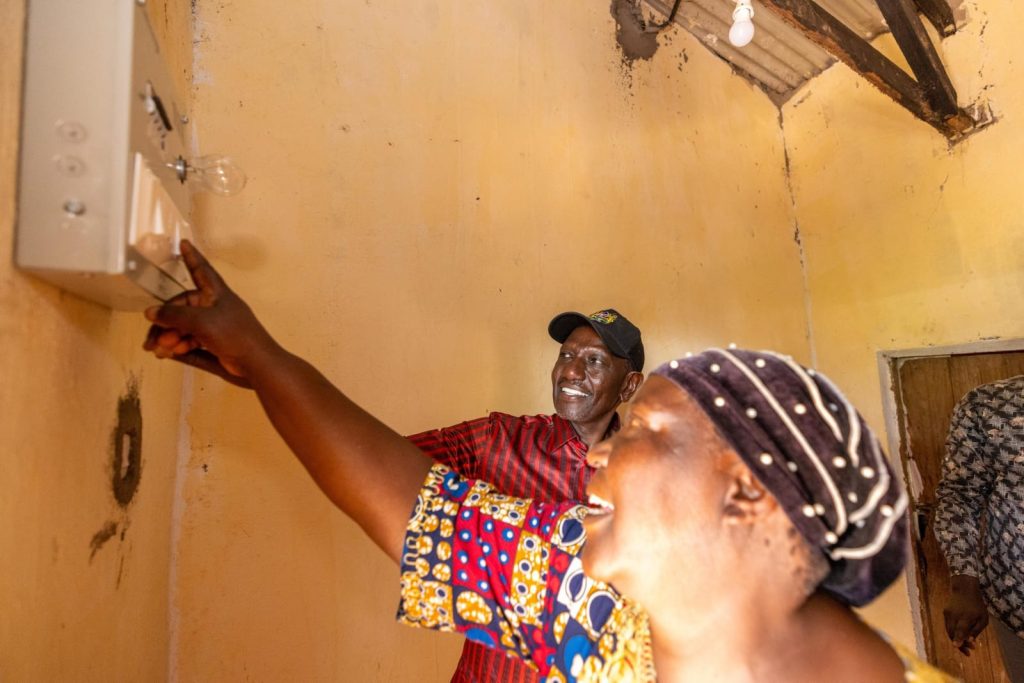
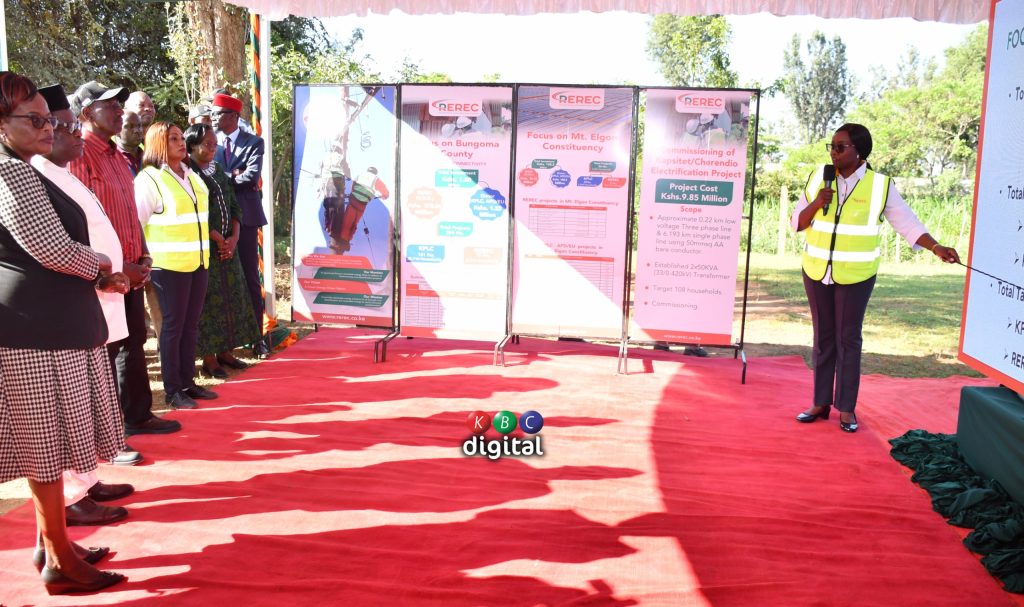
    President William Ruto has commissioned a Ksh 9.5 million rural electrification project in Cheptais, Mt. Elgon Constituency, Bungoma County, bringing hope and transformation to local communities.

    The project will connect 108 households in the Kapsitet and Cherondio areas to the national grid, marking a major step toward improving livelihoods and social well-being.

    For years, residents have lived without reliable power, often relying on unsafe and costly alternatives.

    With electricity now within reach, families can light up their homes, children can study more in safer and better conditions, and small businesses can thrive with extended operating hours.

    Beyond convenience, the project is restoring dignity, especially for women who have long borne the burden of physically demanding tasks.

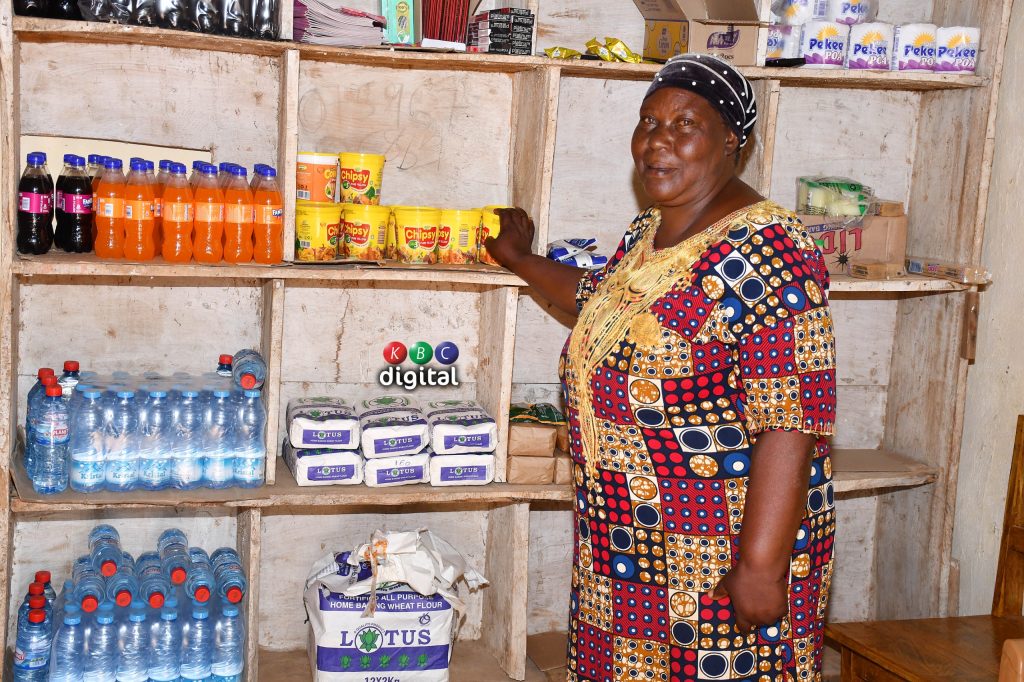
    For Mary Nekesa, a beneficiary of the programme facilitated by Rural Electrification and Renewable Energy Corporation (REREC) and Kenya Power and Lighting Company (KPLC), it was a moment to remember as the President switched on power at her shop.

    Mary Nekesa

    She was optimistic that her family’s fortunes were set to change, as she would now invest more time in her business, which could operate for longer hours.

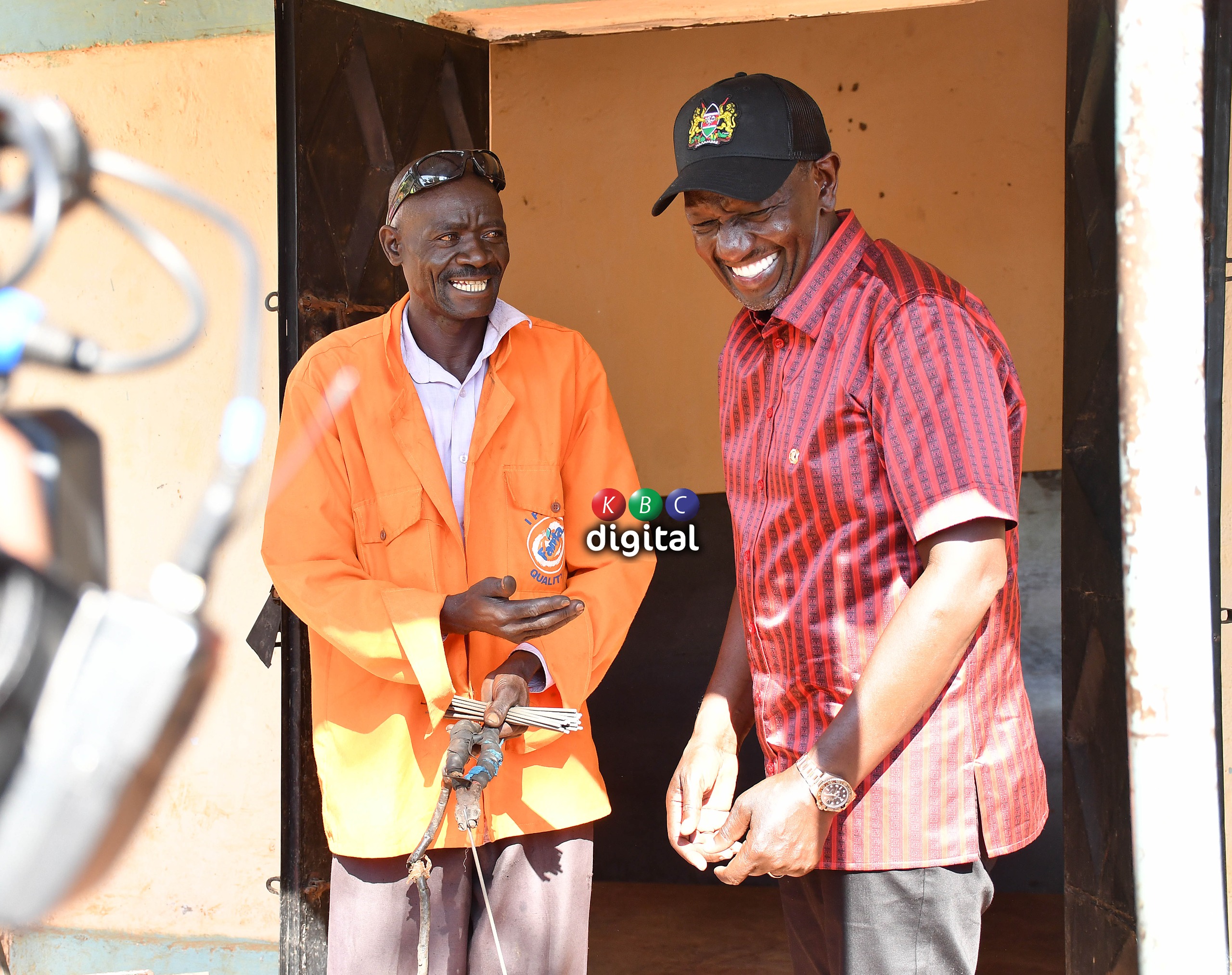
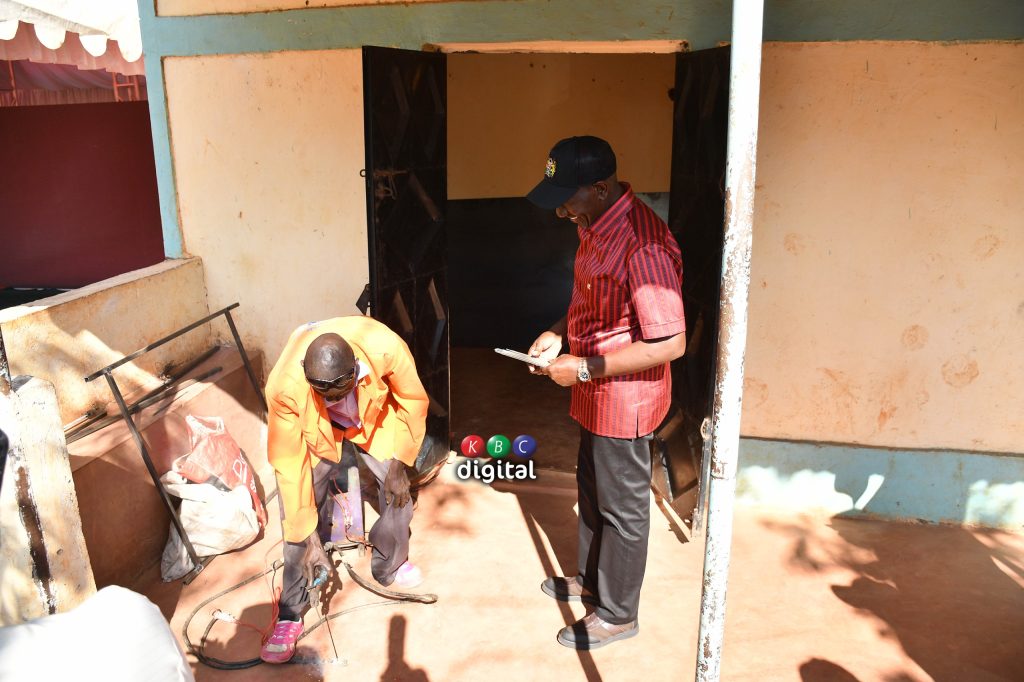
    Joshua Odeke has also set up a welding business, made possible by access to electricity.

    Joshua Odeke, a welder, interacts with the President who visited his business

    He was privileged to meet the President, who visited his business next to Nekesa’s shop.

    Access to electricity will significantly ease the burden of women’s labour by reducing the time spent on physically demanding chores.

    “The daily strain of drawing water from my 54-foot borehole is over,” Nekesa said, noting that the task had taken a toll on her health.

    Her essential tasks are now powered, and she is looking forward to using an electric grass cutter for her livestock.

    The project has brought renewed hope for many residents whose freed-up time can now be redirected toward income-generating activities.

    The initiative is part of the government’s broader push to achieve universal electricity access by 2026 and drive inclusive development across rural Kenya.

    In Bungoma, an additional 25,889 households in nine constituencies are targeted at a cost of Ksh1.8B. REREC and KPLC are working on 256 projects.

    The President was taken through the progress of the projects by REREC CEO Dr. Rose Mkalama.

    REREC CEO Dr. Rose Mkalama

    The launch is part of the President’s five-day development tour of Western Kenya.

    He was accompanied by Governor Kenneth Lusaka and Kimilili Member of Parliament Dismus Barasa.


    Photos by Jackson Mnyamwezi


  • Kitui residents to benefit from rural electrification partnership

    Kitui residents to benefit from rural electrification partnership

    Residents of Kitui are set to benefit from a new rural electrification partnership between the County Government of Kitui and the Rural Electrification and Renewable Energy Corporation (REREC), aimed at connecting more households to reliable electricity.

    Speaking during the announcement, County Executive Committee Member for Agriculture and Livestock, Dr. Stephen Mbaya Kimwele, said the collaboration implemented under the Ministry of Environment led by County Executive Richard Mwandandu is anchored on a matching grant arrangement that will see several homes connected to the power grid in the coming weeks.

    “The County Government of Kitui is working with REREC to connect homes to electricity under a matching grant program. This means more light for our homes, more opportunities for our youth, and more growth for our economy.” Mbaya said.

    “This is a good initiative, which we are supporting as the County Government under the leadership of Governor Dr. Malongo,” Dr. Kimwele said. “Power is critical for the development of any area. It will boost productivity, increase incomes, and open up opportunities for our people from their homes to farms and nearby shopping centres.”

    At the same time, Kwale County Assembly Speaker emphasized the transformative impact rural electrification has had on communities, enabling residents to own refrigerators and store perishable goods such as fish, without relying on distant markets or trading centres.

    “Rural electrification has enabled households to own refrigerators, eliminating the need to travel to markets for food storage. Families can now preserve fish and other foods at home, improving convenience and reducing spoilage. In the past, lighting relied on costly kerosene lamps, but electricity has cut these expenses. Residents thank the government and urge continued efforts to ensure all villages have reliable power,” he noted.

    Both leaders agreed that the continued rollout of rural electrification will not only improve living standards but also drive economic growth in counties, empowering households to venture into small businesses, enhance food security, and create new opportunities for youth.

    Ongoing projects

    The Corporation in a statement says it is on course to connect at least 10,900 households in Mt Kenya to the grid by the close of the year.

    It is currently undertaking a total of 109 rural electrification projects in six counties of Kirinyaga, Laikipia, Murang’a, Marsabit and Nyeri at a total cost of Ksh 1.79 billion.

    “These projects are expected to connect approximately 10,900 households upon completion and are targeted for completion by 31st December 2025,” said the REREC.

    In Nyeri County, REREC is targeting to implement a total of 33 rural electrification projects for 2023/24 and 2024/25 fiscal years in Kieni, Mathira, Mukurweini, Nyeri Town, Othaya and Tetu to the tune of Ksh 243.58 million.

    The projects in Nyeri County are funded by the both the government of Kenya and development partners and targets to connect 1,754 households upon completion.

    Also read https://www.kbc.co.ke/rerec-earmarks-ksh-1-79b-to-connect-10900-households-in-mt-kenya/


  • Government allocates Kshs. 1.5 Billion for rural electrification in Nyandarua

    Government allocates Kshs. 1.5 Billion for rural electrification in Nyandarua

    The government has allocated Sh1.5 billion towards connecting electricity to over 10,000 households in Nyandarua County as part of the ongoing Last Mile Connectivity Project. This initiative is aimed at enhancing rural electrification, with the goal of bridging the energy access gap in underserved areas.

    Energy Principal Secretary Charles Wachira, speaking at Kanyagia Trading Centre during the official launch of the program, confirmed that the project is expected to be completed by the end of the year. He also announced that a similar initiative—supported by the African Development Bank and the Japan International Cooperation Agency (JICA)—will commence in March next year.

    “Nyandarua is among the counties with some of the lowest electricity connectivity levels. That’s why we have dedicated this significant funding to ensure more households are connected to the national grid,” said Wachira. He added that contractors are already on-site and ready to begin work immediately, with a firm commitment to complete the project within the set timeframe.

    The project being implemented by the Rural Electrification and Renewable Energy Corporation (REREC) will prioritize areas within Ndaragwa, Ol Jororok, and Kipipiri constituencies—all of which Wachira visited during his tour.

    CS Miano and PS Wachira lifting an electricity pole
    CS Miano and PS Wachira lifting an electricity pole

    Tourism Cabinet Secretary Rebbecah Miano, who accompanied the PS, emphasized the broader socioeconomic benefits of the project. “This initiative will not only improve living standards but also create jobs for our youth. It is a true manifestation of the government’s bottom-up economic agenda,” she said. Miano reaffirmed the government’s dedication to fulfilling its development promises, including improvements in infrastructure such as water, roads, and electricity.

    Her sentiments were echoed by Roads and Public Works Principal Secretary Joseph Mbugua, who reported that road construction projects in the county are nearly 80 percent complete. “We are focused on ensuring that all infrastructure works are finalized on time. We urge contractors to stay on schedule,” he stated.

    On their part, Nyandarua County Commissioner Abdirisack Jaldesa and Ndaragwa MP George Gachagua lauded President Ruto’s administration for its commitment to development, particularly in previously marginalized regions. “For a long time, our area was overlooked, but we now see tangible results. This government has delivered on its promises,” said Gachagua.

    Rural electrification is a cornerstone of socio-economic development.

    By extending electricity access to remote areas, Jaldesa said the government empowers communities through improved healthcare, enhanced education, better agricultural productivity, and increased opportunities for small businesses. It also helps bridge the urban-rural divide, promoting inclusive growth and reducing poverty.

    The Last Mile Connectivity Project represents a crucial step toward ensuring that no Kenyan is left behind in the journey toward national development.