Tag: Ministry of Interior

  • Village elders to receive govt facilitation under new budget, says Mbadi

    Village elders to receive govt facilitation under new budget, says Mbadi

    Village elders across Kenya are set to receive a government stipend for the first time after Treasury and Economic Planning Cabinet Secretary John Mbadi proposed a Ksh3.9 billion budgetary allocation for this purpose in the 2026/27 Budget, acknowledging their vital role in maintaining peace and order at the grassroots level.

    Presenting the 2026/2027 Budget Statement in Parliament on Thursday, Mbadi stated the allocation aims to enhance local administrative capacities and recognize the often-overlooked contributions of village elders in addressing security and other societal challenges across the country.

    “I have also proposed Sh3.9 billion for stipends to village elders to enhance local administrative capacities and to appreciate and recognize the role played by village elders in helping address security and other societal challenges,” Mbadi informed Parliament.

    Interior and National Administration Cabinet Secretary Kipchumba Murkomen welcomed the initiative, confirming it fulfills a commitment made during the “Jukwaa la Usalama” public engagement forums conducted across the country.

    Murkomen said village elders have consistently played a critical role in supporting community policing, mobilizing residents, and assisting security agencies, despite working on a voluntary basis for many years.

    “I’m happy that thanks to Jukwaa la Usalama and our conversations with the Kenyan people, we have been able to ensure that village elders will now receive some level of support to enable them to dedicate their time to supporting community security,” Murkomen stated.

    In April 2025, the Interior CS had revealed his ministry was developing a policy and regulatory framework to formally identify village elders and determine the best way to support them.

    At the time, Murkomen noted that the proposal emerged prominently during the Jukwaa la Usalama forums held in all 47 counties, where citizens called for recognition and facilitation of village elders for their contribution to local security management.

    He emphasized that while the government might not immediately place village elders on salaries, there was a need to provide some form of compensation to support their daily operations, including communication and mobilization within communities.

    The stipend marks the government’s first significant financial commitment towards formal support for village elders, who have historically served as the crucial link between local communities, chiefs, and security agencies.

    Commenting on the broader security allocations in the 2026/27 Budget, Murkomen affirmed the government’s commitment to modernizing security infrastructure, even as he acknowledged that some allocations still fell short of what was needed.

    He noted that the ongoing equipment modernization program for security officers, the rollout of surveillance cameras in six major towns—Nairobi, Mombasa, Kisumu, Nakuru, Nyeri, and Eldoret—and investments in police station infrastructure and the police vehicle leasing program were all part of a comprehensive strategy to secure the nation from the top down and the bottom up.
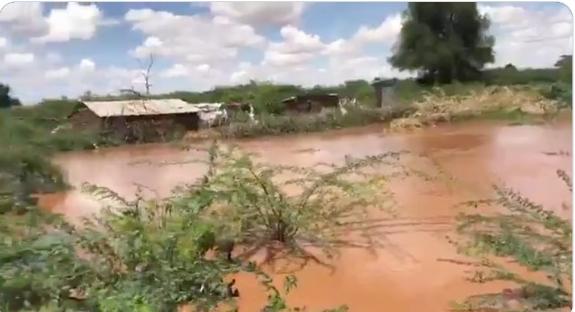
  • Gov’t maps 59 Tana River flood zones as nationwide death toll rises to 18

    Gov’t maps 59 Tana River flood zones as nationwide death toll rises to 18

    The Government has identified 59 flood-prone areas across Tana River County as rising water levels from the Seven Forks Dam continue to heighten risk in low-lying settlements.

    According to the Ministry of Interior, Tana Delta is the worst-hit sub-county, accounting for 32 of the identified high-risk zones.

    Ten other areas are in Tana River Sub-County, eight in Bangale Sub-County, six in Tarasaa Sub-County and three in Tana North Sub-County.

    The mapping exercise follows repeated weather alerts warning of increased flooding risk due to rising river discharge linked to the Seven Forks hydroelectric system upstream.

    In Tana Delta, the affected areas include Feji, Kiembe, Halubha, Sera, Bwoka, Tsanankuu, Godhey, Dobaley, Abaganda, Salama, Ndera, Wema, Galili, Chira, Bilisa, Shirikisho, Kipini Division, Miliki, Majaliwa, Onido, Ndiponi, Kau, Kilelengwani, Kalota, Pungaupepo, Kidhanga, Diribu, Magogoni B, Kajisten, Ndimimbii, Ribe A and Ozi Mtangani.

    In Tana River Sub-County, at-risk locations include Masabubu, Rhoka, Kinakomba-Boji, Emmaus, Watta Hamesa, Vukoni, Mkomani, Bondeni, Laza-Makaburini, Makere, Bowa, Mbalambala, Mororo, Saka, Madogo, Tula, Ziwani and Bulto Banta.

    In Bangale Sub-County, the identified areas are Bura, Chewele and Hirimani, while Tarasaa Sub-County includes Kipao, Ongonyo, Odole, Konemansa, Kigomo and Manono.

    Bura, Chewele and Hirimani locations in Tana North Sub-County have also been also flagged.

    Residents in all identified areas have been urged to remain on high alert and relocate to higher ground when directed by security agencies as water levels continue to fluctuate.

    “The Government, in collaboration with multi-agency response teams, continues to monitor the situation and coordinate response efforts across affected regions,” said the interior ministry.

    Nationwide flood impact

    Nationwide, 18 deaths have been confirmed as of May 2, 2026, most of them resulting from drowning incidents amid ongoing flooding in several parts of the country.

    The Eastern region has recorded the highest toll at nine fatalities, followed by Central (three), Coast (two), Nairobi (two) and Rift Valley (two).

    In Nairobi, floods have affected an estimated 6,600 people, displacing families and damaging roads, schools and residential estates across multiple sub-counties.

    In Central Kenya, counties including Kirinyaga and Kiambu have reported widespread destruction, with bridges and road networks cut off while in Mwea West alone about 3,000 residents have been displaced.

    In the Eastern region, Makueni County has reported the highest number of fatalities, with flash floods and mudslides also destroying homes and damaging critical infrastructure, including roads and power lines.

  • Over 2.8M litres of illicit alcohol seized, 900 suspects arrested since crackdown began

    Over 2.8M litres of illicit alcohol seized, 900 suspects arrested since crackdown began

    More than 2.8 million litres of illicit alcohol have been seized and over 900 suspects arrested since the Government launched a nationwide crackdown in December 2025, the Ministry of Interior and National Administration has said.

    According to data compiled by the National Authority for the Campaign Against Alcohol and Drug Abuse, the Directorate of Criminal Investigations (DCI) and border security agencies, the intelligence-led operation has also seen the seizure of various quantities of narcotics and precursor substances.

    Authorities reported the recovery of 21,280 litres of ethanol, 4,347 kilogrammes of cannabis, 7.7 kilogrammes of cocaine, 6.4 kilogrammes of ketamine and 1.1 kilogrammes of methamphetamine.

    The crackdown followed a directive issued by William Ruto on December 31, 2025, when he declared illicit alcohol and drug abuse a “national development and security emergency.”

    Since then, the Interior Ministry has rolled out a multi-agency campaign spearheaded by NACADA in collaboration with the National Police Service and National Government Administrative Officers.

    Official data shows that 2,846,590 litres of illicit alcohol were seized during the period under review, with the Rift Valley region recording the highest volumes at more than 870,000 litres.

    The region was followed by Nyanza, where over 690,000 litres were recovered, and Western, where about 600,000 litres were netted.

    In Nairobi City County, authorities seized 309,408 litres of counterfeit alcohol, while the Eastern region recorded more than 200,000 litres. Central and Coast regions each accounted for over 60,000 litres, with North Eastern registering 500 litres.

    Interior Cabinet Secretary Kipchumba Murkomen said the government will intensify the campaign, particularly during school holidays, to sustain the gains made.

    He noted that the multi-agency team is now shifting focus to dismantling entire supply chains by targeting manufacturers, distributors and financiers of illicit alcohol and drugs.

    “We are moving beyond prosecution to seizing assets and freezing accounts of those found culpable,” Murkomen said, warning that public officers found colluding with criminal networks risk dismissal.

    The CS maintained that the government will sustain the operation until all illicit alcohol and drug cartels are dismantled, describing the vice as a threat to the country’s social fabric and economic future.

    “We shall not relent until we have completely dismantled all drug and illicit alcohol cartels stealing the future of our children,” he said.

    The operation brings together multiple agencies, including the National Intelligence Service (NIS), Kenya Revenue Authority (KRA), Kenya Bureau of Standards (KEBS), Financial Reporting Centre, Anti-Counterfeit Authority and the Asset Recovery Agency.

  • Murkomen moves to end ‘ghost’ administrative units with new operational plan

    Murkomen moves to end ‘ghost’ administrative units with new operational plan

    1,105 administrative units will be operationalized in the 2024/2025 financial year as the Government moves to clean up Kenya’s growing backlog of gazetted but non-operational 24 sub-counties, 88 divisions, 318 locations and 675 sub-locations.

    In a major policy move, the Ministry of Interior and National Administration announced the development of new regulations to align the creation of sub-counties, divisions, locations and sub-locations with budgetary provisions and national development goals.

    Appearing before Parliament’s plenary session, Interior and National Administration Cabinet Secretary Kipchumba Murkomen revealed that the Ministry plans to operationalise 1,105 administrative units.

    “To prevent future gazettement of administrative units that are not budgeted for, the Ministry is developing regulations that will guide the establishment of new units,” Murkomen explained.

    The announcement comes amid rising concerns over hundreds of gazetted units that remain inactive due to funding constraints.

    Currently, 45 sub-counties, 291 divisions, 1,439 locations and 2,693 sub-locations are non-operational,  a situation that has strained service delivery in many parts of the country.

    To tackle the problem, the Ministry has approved a supplementary budget with personnel and is working closely with the National Treasury to ensure the timely release of funds by the end of April 2025.

    In the meantime, efforts to identify and equip administrative offices in priority areas are underway, with full staff deployment expected by July 2025.

    Among the areas prioritised for operationalisation are Sericho and Oldonyiro Sub-Counties in Isiolo County, along with several locations and sub-locations, including Moliti, Jaldesa, Chafes, Checheles, Lafe, Duse, Kiwanjani, Qarsa and Koone.

    Murkomen underscored that the new administrative units are expected to boost service delivery, strengthen security, and increase citizen participation in local governance.

    The proposed regulations will introduce clear criteria for determining which areas are prioritized,  with a focus on population density, insecurity levels and service delivery gaps.

    “This is about sustainable and financially viable governance,” Murkomen concluded. “And we want public participation to guide the process before the regulations are finalised and brought before Parliament.”

    He also reaffirmed the government’s commitment to affirmative action in the appointment of chiefs and assistant chiefs, particularly in marginalised regions.