Tag: livestock vaccination

  • Waiguru launches digital livestock registration, targets 80,000 cattle in vaccination drive

    Waiguru launches digital livestock registration, targets 80,000 cattle in vaccination drive

    Kirinyaga Governor Anne Waiguru has rolled out livestock digital registration exercise through muzzle identification to establish a reliable database to support tracking, planning and efficient delivery of veterinary services.

    The digital registration being undertaken alongside a mass vaccination drive against Foot and Mouth Disease (FMD), targeting about 80,000 cattle across the county will lay the foundation for data-driven livestock management.

    Each cattle has a unique muzzle which resembles human fingerprints thus making the identification technology accurate and tamper-proof.
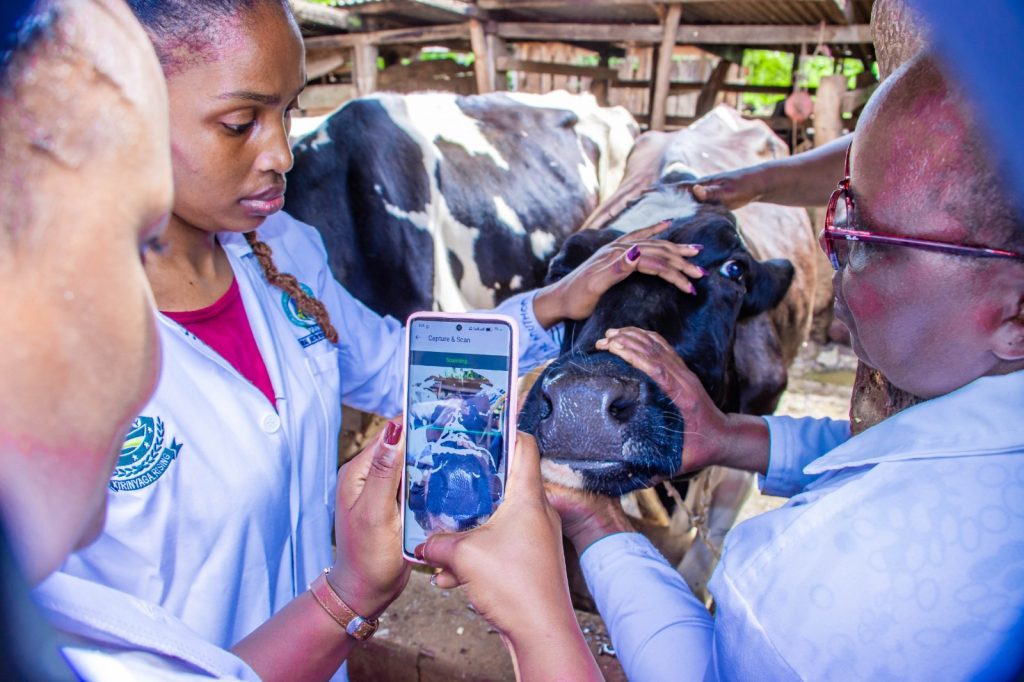
    The exercise, being conducted by the Department of Agriculture, Livestock and Veterinary Services, has so far reached over 11,000 cattle as the exercise enter its second week, with teams moving across villages to deliver the service to farmers.

    Waiguru said the project is part of her administration’s broader strategy to transform the dairy sector with the aim of boosting household incomes through a stronger dairy value chain.

    She noted that the county has been implementing concerted interventions, including the provision of Artificial Insemination (AI) services to over 150 households, which has helped improve dairy breeds. She added that with the improved breeds now requiring better nutrition, the county is focusing on increasing the availability of animal feeds and fodder to support higher productivity.

    Waiguru observed that milk production has over the years risen from an average of 2.5 litres to about 7.8 litres per cow per day, with the county now targeting an increase to above 12 liters.

    The governor added that her administration has also supported the capacity building of local dairy cooperatives through provision of milk coolers, pasteurizers, yoghurt making equipment and backup generators enabling them add value to their milk.

    Speaking at Kiaritha during the exercise, County Executive Committee Member (CECM) for Agriculture, Livestock, Veterinary and Fisheries, Dr. John Gachara, said the county is working closely with the national government to eliminate the disease.

    “We are currently undertaking our annual vaccination programme and targeting to make Kirinyaga a FMD disease-free zone.” said Dr. Gachara, noting that the integration of digital registration will enhance livestock management and improve responsiveness to farmers’ needs.

    “Once the animal is identified, we are able to track ownership, production and medical history. This will enable timely response, better advisory to farmers and ultimately improve productivity,” he said.

    Dr. Gachara noted that vaccination programme is heavily subsidized, with the government covering Sh150 per animal to ease the cost burden on farmers.

    Director of Livestock, Dr. Catherine Mulonzi, said the digitized approach will enhance efficiency in service delivery and resource planning.

    “We are combining vaccination with registration through muzzle identification, similar to fingerprints, to ensure accurate data collection,” she said.
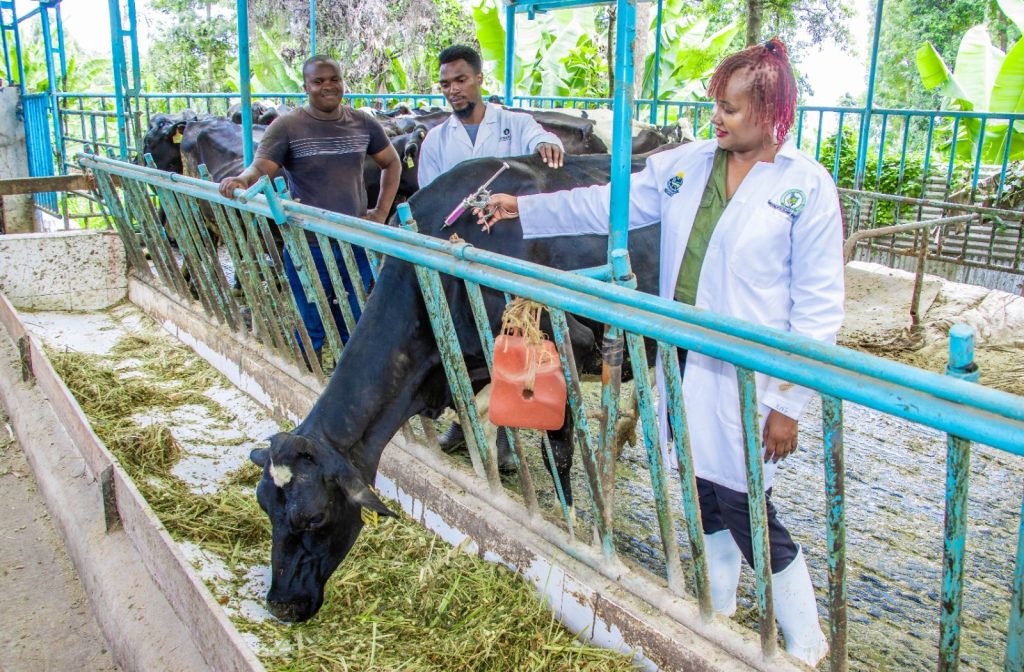
    The conventional methods of identification, such as visual identification, neck chains, ear tags, collar tags, leg tags and tattoos have their own drawbacks like data tampering, health problems and high costs.

    She noted that the system will help determine vaccine requirements, guide deployment of personnel, strengthen disease surveillance and enhance traceability of livestock.

    “It will also help curb cattle theft and support better farm management for improved productivity and profitability,” she added, urging farmers to disregard misinformation on taxation and take advantage of the programme.

    Livestock farmers have welcomed the exercise, citing reduced costs and the convenience of door-to-door services.

    Margaret Wambui, a dairy farmer from Wang’atia in Kutus, said the approach has eased the burden of moving animals to vaccination centres. “All my 12 cows have been vaccinated at home, saving me the stress of transporting them. Previously, they could get injured or mix with others and risk infections,” she said.

    She noted that the cost has dropped from KSh200 to Sh50 per cow, terming the subsidy a significant relief while commending the digital registration, saying it will help address cases of cattle theft and improve planning at farm level.

    At Uzuri Dairy Farm in Inoi Ward, manager Kelvin Karani Mutugi said the subsidy has significantly reduced operational costs.

    “Vaccinating my 146 cows would have cost over Sh30, 000, but now it is much more affordable. All our animals have also been registered, making it easier to access services,” he said, urging farmers to embrace the exercise, as failure to vaccinate livestock could result in significant losses.


  • Mass livestock vaccination campaign launched in Wajir

    Mass livestock vaccination campaign launched in Wajir

    The Wajir County Government through the Department of Livestock and Veterinary Services in collaboration with Wajir South Development Association (WASDA) has rolled out a mass livestock vaccination and treatment program.

    Speaking in Wajir during the launch, the Chief Officer for Livestock and Veterinary Services Omar Adan stated that the campaign aims to vaccinate over 120,000 sheep and goats in Wajir South and Wajir West sub-counties over the next ten days.

    He said the focus is on combating Peste des Petits Ruminants (PPR) and Contagious Caprine Pleuropneumonia (CCPP), the two highly contagious diseases that pose a significant threat to livestock health and food security in the region.

    “This program addresses immediate livestock health challenges, while enhancing their resilience and productivity,” said Omar.

    He emphasized the severe impact of transboundary animal diseases like PPR and CCPP, which can devastate herds, resulting in economic losses and endangering livelihoods.

    In addition to vaccinations, the campaign includes mass deworming and treatments for sick and weakened animals, ensuring a comprehensive approach to livestock health.

    At the same time, the chief officer acknowledged the critical role of WASDA in supporting pre-vaccination disease surveillance and training Community Disease Reporters (CDRs) in all six sub-counties.

    “Their work has been instrumental in strengthening disease monitoring and response across Wajir,” he added.

    The Department of Livestock and Veterinary Services has urged herders, families, and communities to participate in the free program, ensuring their livestock receive essential care.

    The teams have been mobilized to reach every corner of Wajir County to meet the vaccination targets.

  • Gov’t dismisses negative claims on planned livestock vaccination drive

    Gov’t dismisses negative claims on planned livestock vaccination drive

    The government has urged the public to disregard reports it terms malicious and unfounded regarding the planned mass vaccination of livestock scheduled for next year.

    In a statement, the State Department of Livestock emphasized that the vaccination programme, set to begin in January 2025, is a critical initiative to protect animal health and safeguard the food supply.

    “As the competent authority in charge of Veterinary Services and the delegate to the World Organization for Animal Health (WOAH) I call upon the public to disregard and ignore the malicious and unfounded allegations that this noble initiative by the Government is related to the global warming” said Director of Veterinary Services.

    The national vaccination initiative, announced by the President last week aims to vaccinate 22 million cattle against Foot and Mouth Disease (FMD) and 50 million sheep and goats against Peste des Petits Ruminants (PPR).

    The government’s response comes in the wake of accusations that the vaccination programme is being promoted by international research institutions seeking to introduce gene-modifying drugs into Kenyan livestock as part of an effort to reduce methane emissions.

    “As global demand for animal products continues to rise, the health and well-being of livestock are of paramount importance. Livestock plays a critical role in the economies and livelihoods of millions of people worldwide, providing food, income, and employment. To ensure the health of animals and the safety of the food supply, the vaccination of livestock is one of the most effective and sustainable strategies available” said Dr Obadiah Njagi.

    Dr. Njagi emphasized the importance of collaboration among governments, veterinarians, and farmers to ensure the success of the vaccination programme.

    “It is imperative that governments, veterinarians, and farmers must work together to ensure that livestock vaccination programs are accessible, well-funded, and effectively implemented” he pleaded as he underscored the importance of sensitization.

    “Public awareness campaigns are essential to educate farmers and the wider community about the importance of vaccination, the safety of vaccines, and the proper vaccination schedules for different types of livestock” he emphasized.

    The vaccines will be supplied by the Kenya Vaccine Production Institute (KEVEVAPI), which holds a Good Manufacturing Practice (GMP) certification.

    “The ultimate aim is to achieve freedom from FMD with vaccination and eradicate PPR. Together, we can ensure that vaccination remains an essential tool in building a more resilient, sustainable, and prosperous livestock sector” he noted.

    EXPLAINER: Five Key Benefits of Livestock Vaccination

    Disease Prevention and Control
    Vaccination is the first line of defense against many serious diseases that affect livestock, such as foot-and-mouth disease, brucellosis and peste des petits ruminants (PPR). These diseases can have devastating economic impacts, leading to significant losses in production, reduced trade, and, in severe cases, culling of animals. Vaccines help prevent these diseases from spreading, reducing the need for drastic measures.

    Improved Animal Welfare
    Vaccinated animals are less likely to suffer from preventable diseases, which can cause pain, distress, and even death. Ensuring livestock are properly vaccinated supports animal welfare and reduces the ethical concerns associated with disease outbreaks.

    Increased Productivity and Efficiency
    Healthy animals are more productive. Vaccinated livestock have higher growth rates, better reproductive performance, and improved milk and egg production. This not only supports the livelihoods of farmers but also helps ensure a stable and affordable food supply for communities worldwide.

    Economic Stability
    The economic cost of an outbreak of infectious diseases can be staggering. Vaccination reduces the likelihood of outbreaks, lowering the costs of medical treatment, loss of animals, and trade restrictions. It also helps keep agricultural markets stable by maintaining the supply of livestock products.

    Public Health Protection
    Some livestock diseases, such as zoonotic diseases, can be transmitted to humans. Vaccinating animals reduces the risk of these diseases spilling over into the human population, thus protecting public health. A strong vaccination program for livestock also supports global health efforts to combat emerging diseases.


  • President Ruto announces nationwide livestock vaccination

    President Ruto announces nationwide livestock vaccination

    The Government will embark on a nationwide livestock vaccination programme against diseases in January next year, President William Ruto has announced.

    The President said 22 million cattle and 50 million goats and sheep will be vaccinated.

    He explained that the programme will help prevent animal diseases and thus secure the international market for livestock products.

    “This will ensure we access both national and international markets for our livestock products,” he said.

    The President made the remarks during the Maa Cultural Festival held near the Samburu National Reserve in Samburu County.

    Others who attended the colourful event were Tourism Cabinet Secretary Rebecca Miano, Governors Jonathan Lati Lelelit (Samburu), Patrick ole Ntutu (Narok), Joseph ole Lenku (Kajiado), and Mohamud Ali (Marsabit), along with MPs, MCAs and other leaders.

    The President noted that the government has allocated KSh1 billion for restocking of livestock lost during the drought in the northern part of the country.

    He also said that the government will buy 55,000 goats and sheep to distribute to farmers, ensuring that every family is supported.

    “We are committed to ensuring that families who lost their livestock during the drought benefit from the government programme,” he said.

    President Ruto also announced that the government has completed the construction of a leather industrial park at Kenanie and Narok, which will ensure no leather goes to waste.

    “Through these facilities, we will be able to save KSh10 billion we have been losing in leather,” he said.

    The President added that the government will scale up environmental conservation efforts in arid and semi-arid areas to mitigate the effects of climate change, including drought, which leads to heavy livestock losses.

    He said the government will provide drought-resistant seedlings to boost tree-planting in the region.

    On matters carbon trading, he pointed out that 40 per cent of proceeds from the carbon market would go to the community.

    At the same time, President Ruto emphasised the government’s commitment to implementing universal health coverage to ensure all citizens have access to quality and affordable medical care.

    President Ruto noted that the government is paying debts owed to the National Hospital Insurance Fund as it transitions to the Social Health Authority and will ensure the new institution has sufficient resources to meet the needs of all citizens.

    The President assured Kenyans that, in the not too distant future, no citizen will be asked to pay when they go to hospital.

    He further explained that the government would pay for those who were unable to pay. The government will meet the costs to ensure no one is left behind.

    “Universal Health Coverage will become a reality under this administration because we have planned it well,” he said.

    The President assured Kenyans that no part of the country would be left behind in development.

    He announced the establishment of a new sub-county, Ilchamus, to enhance access to public services.

    President Ruto urged the Maa community to ensure all students in the community attend school so that they can realise their dreams.

    He highlighted the government’s increased investment in education, saying schooling is the greatest equaliser.

    The President also said the government has rolled out a new student-centred higher education funding model that will provide every student with a chance to pursue education regardless of their financial background.

    President Ruto also emphasised that security operations in the region will continue so that the government can comprehensively tackle the challenges of cattle rustling, banditry and other crimes.

  • Over 800,000 cattle to be vaccinated in Uasin Gishu to combat FMD

    Over 800,000 cattle to be vaccinated in Uasin Gishu to combat FMD

    Uasin Gishu County aims to vaccinate over 800,000 heads of cattle against foot and mouth disease (FMD).

    The mass vaccination exercise began Wednesday at Mugundoi and Nairiri cattle dips in the Cheptiret/Kipchamo ward of Kesses Sub-County, led by County Executive Committee Member (CECM) for Agriculture Edward Sawe.

    The campaign will be carried out in 520 crushes across the county.

    In addition to cattle, the vaccination effort will also include dogs and cats against rabies, according to Sawe.

    He emphasized that FMD is a highly contagious disease affecting cattle, sheep, and goats, resulting in significant economic losses for farmers and livestock traders due to decreased productivity and trade restrictions.

    “This initiative is part of the county’s broader strategy to control and prevent the spread of infectious diseases that pose significant threats to livestock health and the local agricultural economy,” Sawe noted.

    During the launch, Sawe assured farmers that the county has sufficient vaccines to meet the ongoing demand.

    “We are committed to safeguarding the health of our livestock and ensuring that our farmers can continue their livelihoods without the fear of disease outbreaks,” he stated.

    He encouraged all farmers to take advantage of this opportunity to vaccinate their cattle.

    Accompanied by Chief Officer for Livestock Nixon Cheplong and Director of Veterinary Services Dr. Philip Biama, Sawe engaged with local farmers, demonstrating the vaccination process and addressing concerns about the vaccines’ efficacy and the safety of their livestock.

    “The safety and health of our livestock are paramount to our agricultural productivity and food security. Therefore, it is essential that we act swiftly to ensure all cattle in Uasin Gishu County are vaccinated against these diseases,” Cheplong explained.

    Sawe further noted that rabies remains a public health concern, and vaccinating dogs and cats is crucial to preventing its spread, particularly in rural communities where close interactions occur between humans and animals.

    The initiative has been well-received by the local farming community, with many viewing it as a vital step in securing their livelihoods against the backdrop of livestock diseases that threaten their investments and resources.

    Kesses Sub-County Veterinary Officer Ditaco Ngoya urged livestock farmers to monitor vaccination schedules and reach out for further information or assistance regarding the ongoing campaign.