Tag: journey of water

  • Journey of Water campaign shines spotlight on River Kibos conservation

    Journey of Water campaign shines spotlight on River Kibos conservation

    Steven Too, a forty-year-old father of two from Kopkuchai Village in Nandi County, stands as a determined guardian of the River Kibos catchment area.

    Owning 45 acres of forest land that houses the river’s catchment point, Too faces significant challenges in preserving this crucial water source.

    He reveals that continuous threats from people looking to cut down trees have adversely affected the water levels in the underground sources of the river.

    Steven Too in his 45 acres of forest land that houses River Kibos catchment point

    Too points out that another major issue is the upstream abstraction of water for planting arrowroots, which require substantial amounts of water.

    This redirection of water severely reduces the flow from the river’s main source.

    “To protect what is left of our forest, we monitor it regularly to ensure community members do not cut down trees for firewood. Additionally, we are planting more indigenous trees to increase the tree cover and avoid planting near the river to prevent contamination,” Too explained.

    Water and Sanitation PS Julius Korir flagged off the 3rd edition of the Journey of Water Campaign along River Kibos in Nandi County.

    This annual national campaign underscores the need to protect and preserve key water sources, including catchments and rivers.

    Korir highlighted that about 40 per cent of the Kenyan population lacks access to safe drinking water, while less than a third (29 per cent) have access to fundamental sanitation facilities.

    Water and Sanitation PS Julius Korir flags off the 3rd edition of the Journey of Water Campaign

    Moreover, 9.9 million individuals rely on contaminated surface water sources.

    Korir pointed out the challenges of illegal water abstractions and riparian encroachment, exacerbated by climate change, which increases competition and conflicts around water use and access.

    The PS also noted that as part of the global community, Kenya has joined the ‘Fresh Water Challenge,’ the world’s largest initiative to restore degraded rivers, lakes, and wetlands.

    “This challenge aims to ensure the restoration of 300,000 kilometres of degraded rivers and 350 million hectares of degraded wetlands by 2030, as well as to protect freshwater ecosystems,” he said.

    In conclusion, Korir urged community members to join hands through the ‘Journey of Water Campaign’ to create awareness and appreciate the journey water takes to reach our taps, along with the various socioeconomic benefits derived from rivers.

    On his part, WWF-Kenya CEO Mohammed Awer emphasized the precious nature of water in Kenya, “a country experiencing rapid population and economic growth, alongside the rising demand for freshwater.”

    Participants in the Journey of Water Campaign

    Underlining the importance of the annual Journey of Water campaign, which involves all stakeholders in catchment conservation, from water sources to taps, Awer stated that with nature under threat, we must protect and conserve our freshwater sources.

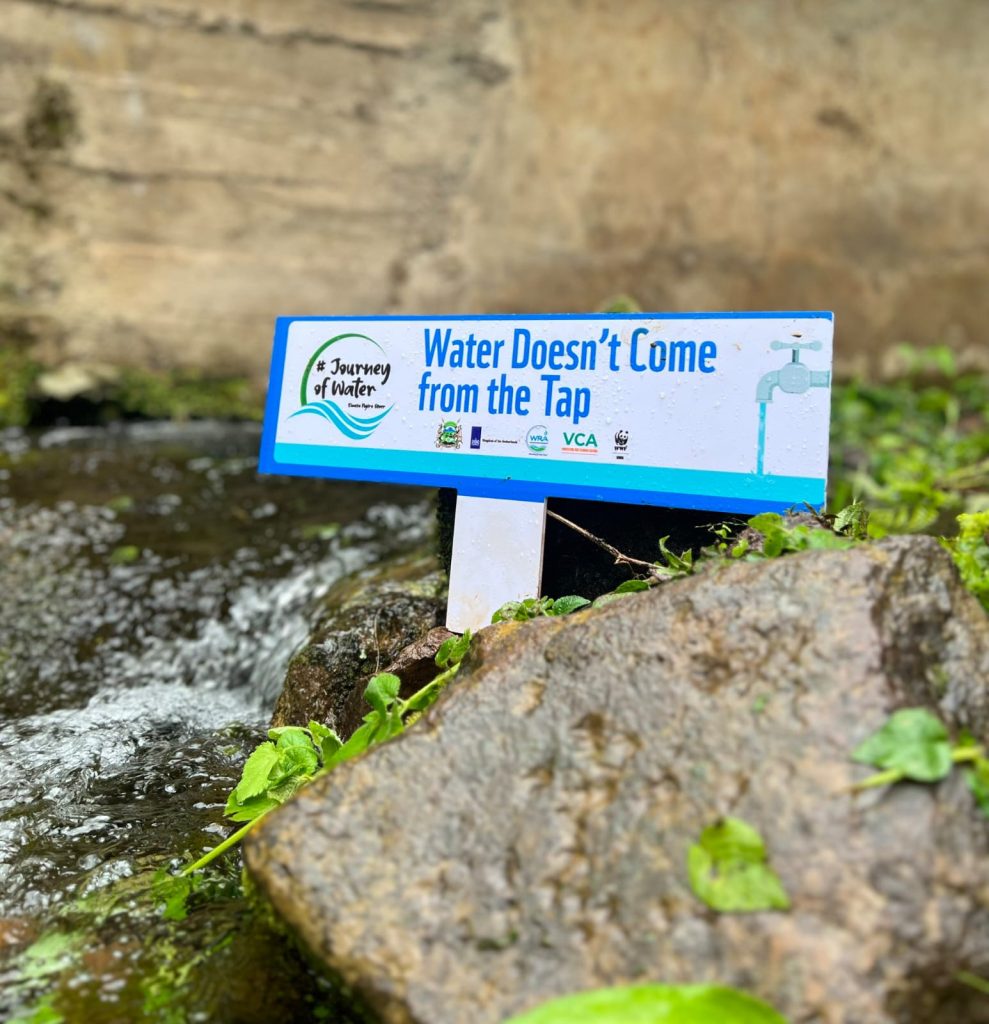
    “Losing our rivers, lakes, and wetlands means losing the water that sustains us, our agriculture, our wildlife, and our economy. Water does not just come from the tap; it comes from nature,” he said.

    The annual national campaign to protect and save key water sources, catchments, and rivers kicked off Wednesday along River Kibos.

    This trans-county river, with tributaries in Vihiga, Nandi, and Kisumu counties, is a lifeline for about half a million Kisumu City residents who depend on it for their daily water needs.

    This significant event brings together local communities, partners, civil society organizations, and County and National Government officials to highlight the crucial role of rivers in sustaining lives and businesses.

    It aims to spread the message about the importance of collective action for protecting freshwater and water catchment areas.

    Participants in the Journey of Water Campaign

    Spearheaded by WWF-Kenya in partnership with the Embassy of the Netherlands, World Water Net (WWn), VEI, Acacia Water, Kenya Water and Sanitation Civil Society Network (KEWASNET), and the Centre for Integrated Water and Basin Management (CIWAB) at Egerton University, the Journey of Water campaign is an initiative that underscores the critical importance of preserving and protecting our water sources.

    Now in its third edition, this campaign rallies water users and duty-bearers in Kenya to understand where their water comes from and actively protect water sources and rivers against degradation.

  • Community conflict on the rise due to drying Ewaso Nyiro River tributaries

    Community conflict on the rise due to drying Ewaso Nyiro River tributaries

    Illegal water abstraction, pollution, and unsustainable farming practices are some of the issues attributed to community conflicts arising from the drying of tributaries that feed the 700km Ewaso Nyiro River which feeds drains into the Lorian Swamp.

    This was my discovery when I joined a group of over 500 men and women on a grueling three-day walk aimed at sensitizing communities on the conservation of the water catchment.

    Many of the community members participated in the walk that was organized by WWF-Kenya with support from the Netherlands Embassy in Kenya through a project dubbed ‘Catchment to Tap’.

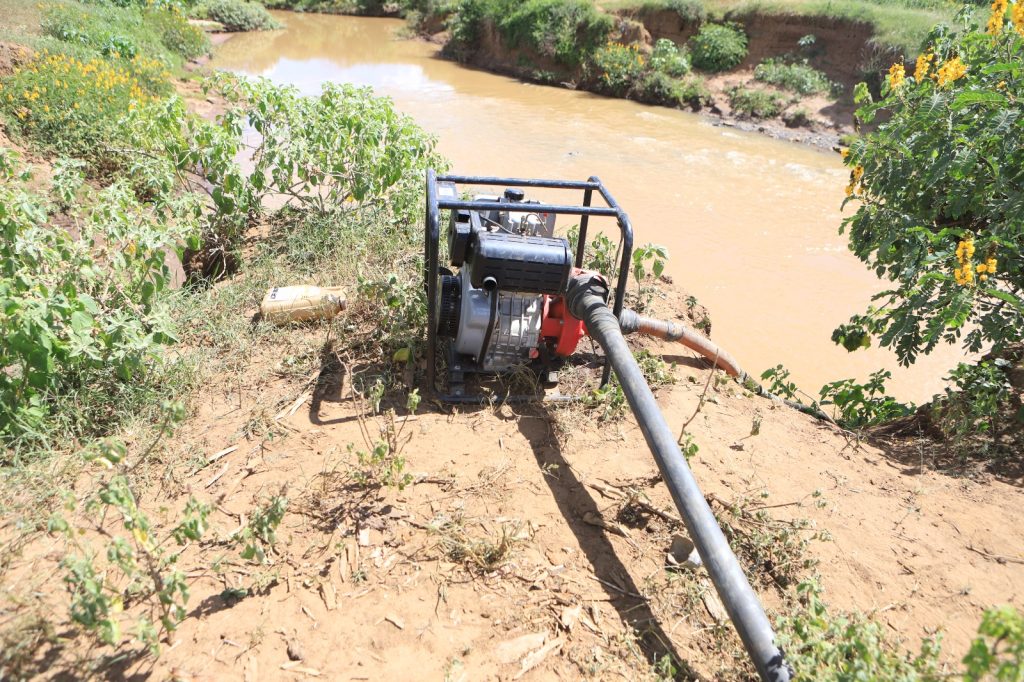
    A water pump used in abstraction. PHOTO | WWF-KENYA | IMAGE: HANDOUT

    Along the tributaries which include Timau, Nanyuki, and Isiolo rivers, I noted that there were uninhibited human activities posing the greatest danger to the ecosystem.

    In some instances, some of the farmers we met during the over 20 Km walk along the different tributaries ducked into the thickets while others hurriedly disconnected their illegal water connections, perhaps to hide their unscrupulous ways.

    Alarmed by the number of illegal pumps, I spoke to an official of the Water Resource Authority who requested anonymity due to the sensitivity of the matter, to gain more understanding of the obtaining situation.

    The source confirmed that WRA is fully aware of the illegal abstractions but quickly pointed out that the land owners who are the culprits, are “well-connected.”

    “If you try and enforce the law on this class of people, they ask you if you know who they are. It gets extremely difficult to control them. We are now asking for a collective approach where we have civil societies, River User Associations (RUAs), County Government, and the National Government coming together to enforce the regulations,” the source told me

    According to the WRA official, if all stakeholders are involved, implementation of the rationing programs will be addressed with the seriousness it deserves.

    A participant, Margaret Kuchal, confirmed what the source was saying as true adding that a number of prominent political players downstream have made the conflict a never-ending story, perhaps for their own interests, as they allegedly incite communities to fight over the scarce resource.

    “People living downstream blame those upstream for taking water from the source to their pipes without any consideration. Instead of using only what they need, they flood their farms with water. What’s more, this water washes away their fertilizer which pollutes the rivers,” she said.

    PHOTO | WWF-KENYA | IMAGE: HANDOUT

    On the other hand, Kuchal says politicians upstream exploit the water in total disregard of the law and the people living downstream which only serves to aggravate an already worse situation.

    As a solution, Kuchal reiterates rationing of the scarce resource ought to be done without fear or favour as well as make sure all those benefiting from the resource conserve it by using best practices like not farming on riparian land, using drip irrigation, only pumping what is needed subject to certification as well as the building of terraces to control soil erosion.

    Experts in the group averred that if water upstream is not managed, those downstream will lack the crucial commodity, deteriorating the ensuing conflict.

    The three-day walk culminated in a meeting between county government officials from Laikipia, Isiolo, and Nyeri who thereafter made commitments aimed at reversing the challenges they witnessed.

    Speaking to KBC Digital, Leah Njeri, the Laikipia Executive Committee Member for Water, Environment, Natural Resources and Climate Change said the County Government will focus its energies on saving the Nanyuki River over the next year.

    “We are going to pick a river, most likely Nanyuki River, and focus our resources and conserve our water sources. All counties in the Ewaso Nyiro basin need to come together and ensure there is a flow of enough clean water to those downstream by conserving catchment areas,” said Njeri.

    Njeri further indicated that her county will prioritize training and sensitizing women on how to sustainably use water because they are the primary users of this resource.

    On climate change, Njeri noted that the counties should also consider planting bamboo trees which are very good in helping to conserve and purity the rivers, carbon sequestration, providing food (their shoots are edible), and also creating employment since they have to be harvested after maturity and new seedlings planted again.

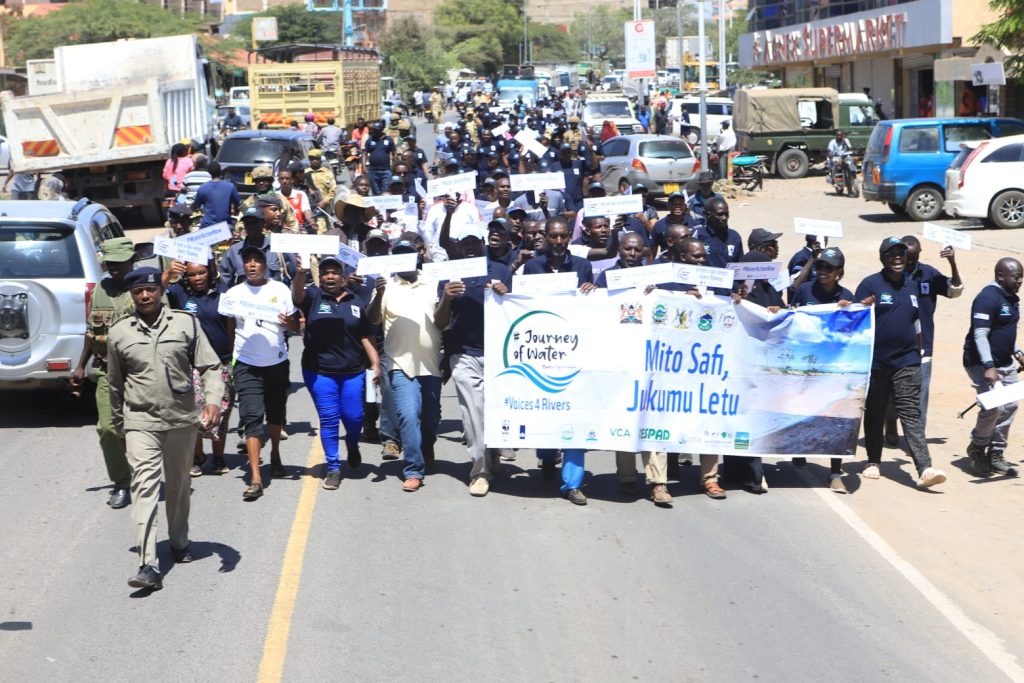
    Participants walking through Isiolo Town. PHOTO | WWF-KENYA | IMAGE: HANDOUT

    Godana Dida, Chief Officer, of Water and Sanitation, Isiolo County, on his part, said his county would drill boreholes to tap groundwater and sink 10 boreholes every financial year starting 2024.

    “Water is life and demand is increasing day by day. We need to put ourselves in the shoes of those who are not receiving water downstream. Let us collectively and sustainably use this resource so that all of us can benefit,” he said.

    On his part, WWF-Kenya’s Kenya Rift Lakes Programme Manager, Dr William Ojwang’, challenged civil society organizations to amplify their voices given that there are a number of areas certain things agencies such as the Water Resource Authority may not delve into so openly.

    “There has to be political goodwill. If the agencies are doing their work and somebody calls in the middle of the night so they can take back pumps that you confiscated, would you even go back there? You feel frustrated. I mean why are you working?” Ojwang asked.

    Ojwang said there is a lot of impunity that needs to be addressed and that all stakeholders have to take responsibility for the matter.

    “Water is everything! If voices on the need to secure water resources and protect catchments are not amplified, the country will lose this precious resource,” he averred.

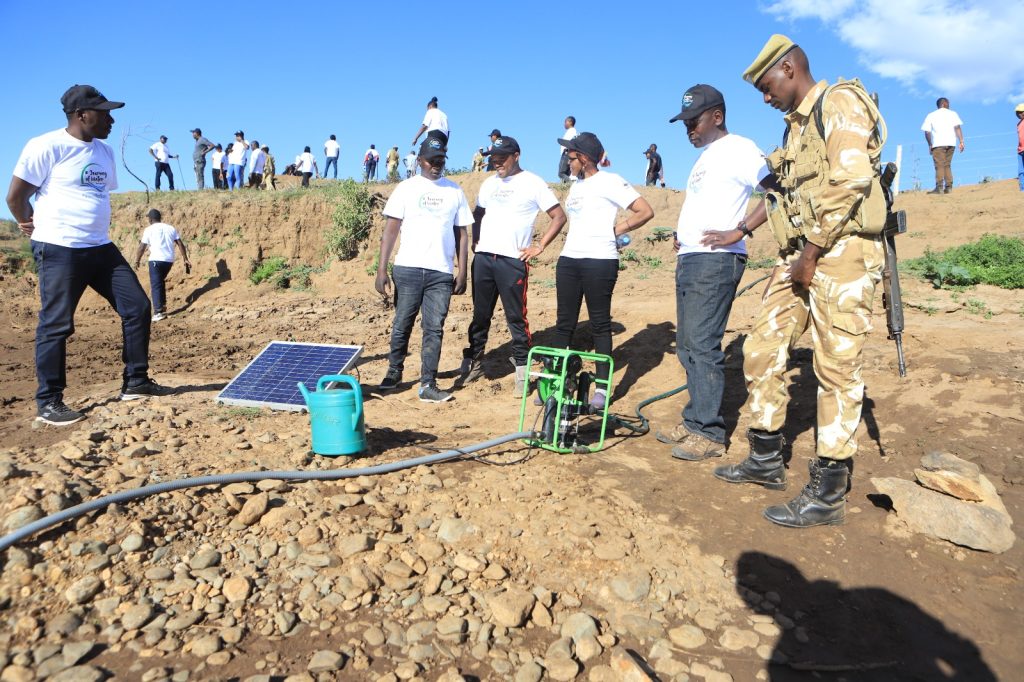
    A solar water pump. PHOTO | WWF-KENYA | IMAGE: HANDOUT

    The Kenya National Association of Water Resources Users Association expressed a willingness to collaborate with the Kenya Forest Service and other stakeholders to push for the zoning of forest reserves to allow for forest regeneration.

    The Mount Kenya Ewaso Water Partnership, a forum that brings together water actors in the basin, also a key player, called on the National and County Governments as well as other stakeholders to provide financial, technical, and capacity-building support to Water Resources Users Associations.

    The ‘Journey of Water’ walk began on Tuesday at the foot of Mount Kenya in Ewaso Nyiro North.

    During the first day of the walk, participants covered eight kilometers along River Timau, which is a tributary of Ewaso Nyiro Basin.

    During the second day, participants trekked more than 10 kilometers mid-upstream before proceeding to Isiolo, then climaxing at Archer’s post on Thursday.

  • Conservation organizations lead campaigns on sustainable water use

    Conservation organizations lead campaigns on sustainable water use

    Experts in water sustainability are warning against imprudent utilization of water resources in the country. According to the experts, the need for sustainable use of water especially in Kenya which is a water-scarce country, cannot be overstated.

    While making a case for the widening of the ambition of the water agenda, they argued that with a per capita water availability of less than 600 cubic metres, which is below the global threshold of 1,000 cubic metres per capita, Kenya has no option but shift away from the present trajectory and change fortunes in the water sector. And indeed, something is being done.

    Organizations such as the World Wide Fund for Nature Kenya, for instance, have organized an event dubbed “the journey of water” in a bid to sensitize communities upstream and downstream on the need to use the commodity prudently.

    “The Journey of Water is a national campaign that aims to raise public understanding of water as an invaluable natural resource which is severely constrained,” says the organization.

    The campaign focuses on the conservation of rivers from their sources through to the taps and it calls on communities, government agencies, and non-state actors of the four counties within Ewaso Nyiro Basin, which include Meru, Laikipia, Isiolo, and Samburu Counties, to collectively participate in conserving water sources for enhanced access, quality and quantity.

    This year’s campaign was flagged off at the foot of Mt Kenya, one of the tributaries of the main Ewaso Nyiro North River Basin.

    According to Dr William Ojwang’, WWF-Kenya’s Rift Lakes Programme Manager, the three-day walk along Timau River will in particular aim to capacitate Kenyans on the importance of securing catchment points for sustainable development.

    “Today we are focusing on the upper catchment area of River Ewaso Nyiro. Many Kenyans depend on this source of water. We need to show the people who depend on the free-flowing surface water that there is a need for ambient water quality,” he said.

    Dr. Ojwang’, in addition, noted that people living upstream often take the source of water for granted. As such, it stokes conflict between them and those living downstream owing to unsustainable land use practices like planting trees along the river bed that require lots of water to mature, lack of terracing to prevent soil erosion and farming along the river beds.

    The program manager further argues that in order to improve on the water quality and reduce the ever-rising cases of conflict because of water scarcity, those living along the catchment areas should use best practices like planting Napier grass, constructing terraces, as well as gabions to prevent soil erosion and have one source of water intake to control the shared resource.

    Alex Gitonga, a resident who lives along Timau River, acknowledges that the greatest challenge in the area was the unchecked planting of Gum and Eucalyptus trees which traditionally are known to require a lot of water to reach maturity.

    “The Government should decree that all the trees which are not environment friendly along the catchment areas be cut down. These trees have made the water levels decrease over time and that cannot be allowed to continue happening. We must protect our river sources,” he averred.

    Gitonga, popularly known as ‘Kamtoo’ however disclosed that there was increased piping of water to homesteads. This, he says, has significantly reduced the flow of the river downstream which is a potential source of conflict.

    “The water piping has to be regularized by the government if we have to save our river sources,” he said.

    The Sustainable Development Goals Report of 2022 provides a global overview of progress made on the implementation of the 2030 Agenda for Sustainable Development.

    The three-day walk will end at Archers Post on the Isiolo-Samburu County border.