Tag: IGRTC

  • Kisumu Museum management transferred to county government

    Kisumu Museum management transferred to county government

    Management of Kisumu Museum has formally been transferred to the County Government of Kisumu following the signing of an Intergovernmental Partnership Agreement between the National Museums of Kenya and the devolved unit.

    The agreement, developed by the Intergovernmental Relations Technical Committee (IGRTC), underscores deepening collaboration between national and county governments in the management of cultural institutions.

    The handover aligns with constitutional provisions that assign certain cultural functions to county governments. The move is expected to enhance local decision-making, improve service delivery, and strengthen preservation of heritage assets at the grassroots level.

    Speaking during the ceremony, Kisumu Deputy Governor Mathew Ochieng Owili said the transfer will boost service delivery while positioning Kisumu as a leading cultural and tourism hub.

    “The County Government of Kisumu is fully prepared to take over the museum function. We have already invested resources to upgrade the facility and ensure it continues to serve as a premier centre for heritage preservation in the region,” he said.

    The handover comes ahead of the fifth Piny Luo Cultural Festival, which is expected to showcase the rich heritage of the Luo community.
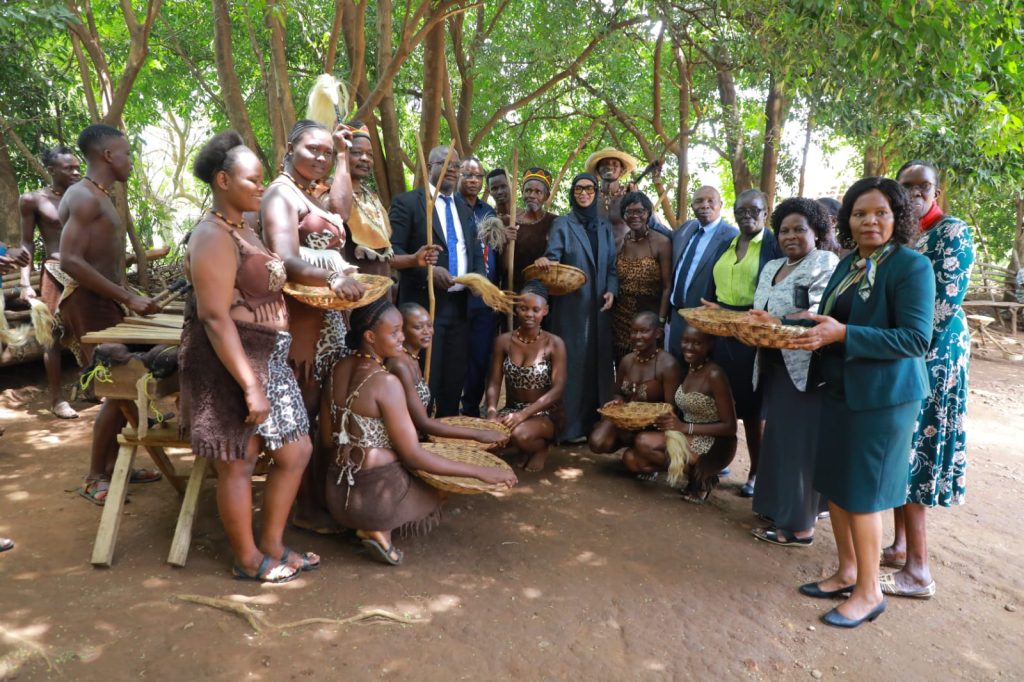
    Culture Principal Secretary Ummi Bashir said 13 officials will be deployed to facilitate capacity building and ensure continuity in management standards during the transition.

    She added that devolving museums is part of a broader strategy to unlock tourism potential in regions outside major urban centres while safeguarding Kenya’s diverse cultural heritage.

    The Kisumu facility becomes the second museum to be transferred to county management after the Kitale Museum in Trans Nzoia.

    The National Museums of Kenya has outlined plans to devolve additional museums in Wajir, Narok, Garissa, Isiolo and Marsabit counties.

    IGRTC Chairman Kithinji Kiragu described the agreement as a model of a fully transferred function, complete with resources and institutional support, noting that such frameworks are critical to strengthening intergovernmental relations.

    Located about two kilometres from Kisumu’s central business district along Nairobi Road, the museum sits on approximately 4.2 hectares. Established in 1980 with support from UNESCO, it is designed around traditional Luo homesteads and hosts a wide range of ethnographic, natural history and archaeological exhibits from the Western Kenya region.

  • IGRTC wins Africa’s prestigious PELL Award for democracy

    IGRTC wins Africa’s prestigious PELL Award for democracy

    The Intergovernmental Relations Technical Committee (IGRTC) has been awarded the Prix d’Excellence du Leadership Local/ Pan- African Edition for Excellence in Local Leadership (PELL Award) during the 6th International Forum on Participatory Democracy in Africa (FIDEPA) 2026 edition held in Dakar, Senegal.

    The IGRTC emerged winners, having been nominated top three in the same category with Ministries and Technical Directorates from Senegal, Rwanda, Angola and Cote d’ Ivoire.

    The PELL Award is organized by the International Observatory of Participatory Democracy in Africa (IOPD Africa) in collaboration with UCLG Africa and the African Union and it celebrates and promotes excellence in decentralization and local governance.

    The award honors the transformative impact of local leaders and grassroots actors who champion inclusive and participatory governance across the continent. This initiative aligns with the African Charter on the Values and Principles of Decentralization, Local Governance, and Local Development, adopted by Heads of State at the African Union Summit in June 2014.

    IGRTC made a submission on behalf of the Government of Kenya in July 2025, under the Local Leadership Award (Institutional Category) for directorates. The submission canvased the progress that Kenya has made in devolution, since the repeal of the Local Government Act (Cap 265) to the new Constitution of Kenya in 2010, and the extent to which the objects of devolution have enhanced the involvement of citizens in Kenya’s devolved system of governance.

    Following evaluation of the submission by the Scientific Committee which provides intellectual support to the IOPD Africa, IGRTC was shortlisted among the top five nominees in the Ministries and Technical Directorates category. IOPD Africa reported receiving over 700 applications from ministries, local authorities, academia, journalists, young creators, and transformative citizens across Africa.

    At the heart of the PELL Award is the recognition of individuals and institutions that deepen democratic practices at the community level—ensuring citizens are not merely observers but active contributors to public decision-making. The award promotes accountability, equity, and civic empowerment, laying the foundation for a more just and responsive Africa.

    Speaking after receiving the award from the IGRTC delegation that presented and defended Kenya’s submission during the Peer-Learning Conference on 29th September 2025, IGRTC Chief Executive Officer, Dr. Kipkurui Chepkwony, said the Committee takes pride in representing the Government of Kenya in showcasing our successes in devolution as a country.

    He reiterated the significant and pivotal role that IGRTC plays in promoting excellence in local governance, and ensuring that the objects of devolution bear the fruit of delivering sustainable services to our citizens at the grassroot levels.

    Guided by its vision of fostering effective and harmonious intergovernmental relations, IGRTC serves as an institutional bridge between the national and county governments, ensuring that devolution delivers on its promise of equitable development, efficiency, and citizen-centered service delivery. The Committee facilitates structured coordination and consultation between the two levels of government, creating platforms for policy coherence, dispute resolution, and knowledge sharing that enhance the functionality of devolved systems.

    Dr. Chepkwony emphasized that by championing participatory governance, IGRTC empowers county governments to innovate and implement inclusive development models that respond to local needs and priorities. Its initiatives—ranging from the functional transfer of devolved responsibilities, capacity building, and performance monitoring to the documentation of devolution success stories have significantly contributed to deepening democratic governance and accountability.

    He added that by honoring the transformative impact of local leaders and grassroots initiatives, IGRTC recognizes that sustainable development is driven by leadership that listens, collaborates, and mobilizes communities for collective progress. This approach aligns Kenya’s devolution journey with continental aspirations for participatory democracy, positioning IGRTC as a model institution that advances the spirit of local leadership excellence across Africa.


  • Counties to fully assume devolved functions in the 2026–2027 budget cycle

    Counties to fully assume devolved functions in the 2026–2027 budget cycle

    Counties are expected to fully take over all functions delineated in Kenya Gazette Vol. CXXVI – No. 219 of 16th December 2024, following the identification and allocation of corresponding human and financial resources.

    The delineation of these functions was undertaken by the Intergovernmental Relations Technical Committee (IGRTC), aimed at clarifying responsibilities between the two levels of government.

    Speaking during a sensitization meeting with Principal Secretaries on the Gazette Notices regarding the transfer of pending devolved functions, IGRTC CEO Dr. Kipkurui Chepkwony noted that the process initiated two years ago has been guided by the Fourth Schedule of the Constitution.

    He emphasized that it has been a consultative exercise involving both levels of government and other key stakeholders, culminating in a consensus that informed the publication of the legal notice in December last year.

    The meeting aims at sharing insights on the progress made by IGRTC on the process including key issues or elements that were not agreed upon and were set aside which the committee with stakeholders are currently finalizing to agree on the issues of seek interpretation from the constitutional experts to give direction.

    According to the IGRTC CEO, the meeting with Principal Secretaries aimed to agree on the next steps, which include identifying the attendant resources both human and financial linked to the functions and elements outlined in the gazette notice.

    This process will pave the way for financial transfers in the upcoming 2026–2027 financial year.

    Dr. Chepkwony further affirmed that, as a result of the transfer of functions, some mandates currently held by existing government agencies will become redundant.

    This shift will necessitate legislative reviews by both the National Assembly and the Senate to align laws with the new governance structure.

    IGRTC Vice Chairperson Saadia Kontoma emphasized that the process involved Multi-Agency Task Teams working in the spirit of harmonious intergovernmental relations.

    She noted that both levels of government collaborated to build consensus during the unbundling of functions. Through this process, 94 pieces of legislation with gaps hindering devolution were identified.

    These gaps, she said, posed a setback to the full realization of devolution and require harmonization to align with the devolved system of governance.

    While officially opening the sensitization workshop, Principal Secretary for the State Department for Devolution, Michael Loikenu Lenasalon, reiterated that devolution is a progressive process that moves from inception to full actualization.

    This journey includes delineation and unbundling of functions to ensure services are delivered closer to the people, with clearly defined roles and responsibilities for both national and county governments as outlined in the Constitution of Kenya, 2010.

    Judith Pareno, Principal Secretary for Justice and Constitutional Affairs in the Office of the Attorney General, affirmed that devolution remains one of the most transformative developments in Kenya’s governance framework.

    She highlighted that it has brought equity and equality to historically marginalized communities.

    The final transfer of functions to counties, she noted, affirms the President’s commitment as stated in his inaugural speech to ensure that all devolved functions are fully handed over to the county governments.

  • Trans Nzoia County takes over management of Kitale Museum

    Trans Nzoia County takes over management of Kitale Museum

    The County government of Trans-Nzoia has assumed the control of the Kitale Museum following the official signing of the Inter-Governmental Partnership Agreement (IPA) between the National Museums of Kenya (NMK) and the County Government.

    Trans Nzoia now becomes the first county to undertake the management of the 33-acre museum complex.

    Speaking after the official signing of the agreement, Trans-Nzoia Governor George Natembeya hailed the transfer of museum function to the county saying it marks a major milestone after 10 years of devolution.

    Natembeya commended the efforts of the state department of culture arts and heritage, as well as the intergovernmental relations technical committee, for facilitating this transition and urged the national government to provide the necessary resources to support the county in its new role.

    Culture and Heritage Principal Secretary Ummi Bashir assured stakeholders that the transfer of museums management to county governments would not disrupt current operations.

    She reaffirmed the commitment to uphold the mandate of managing museums as prescribed by law and directed by the president, as outlined in the 10th Summit resolution.

    Bashir also disclosed that the National Museums of Kenya is in the process of transferring museum functions to six other counties, underscoring the commitment to local autonomy and participation while ensuring the integrity and continuity of cultural institutions.

    IGRTC Chairman Kithinji Kiragu emphasized the importance of validation workshops currently underway to ensure a seamless transition of responsibilities and resources, in line with the provisions of the constitution.

    Kiragu also mentioned the recent successful transfer of 61 library functions, citing the state department for culture and arts and heritage’s commitment to upholding the constitutional mandate of devolving functions to counties.

    Devolution Principal Secretary Teresia Mbaika reiterated the significance of collaboration between different levels of government in spearheading developmental processes.

    Mbaika underscored the importance of synergy between national and county governments in advancing socio-economic progress and ensuring effective governance at the grassroots level.

    Situated at the heart of Kitale town, Kitale Museum boasts a rich collection of artifacts representing various Kenyan tribes, including the Luhya, Maasai, and Turkana.

    Additionally, the museum’s nature trail, nestled behind the main complex, serves as a sanctuary for rare plants and animals, including Nile crocodiles, leopards, tortoises, and venomous snakes.

  • IGRTC launches comprehensive transfer of functions exercise for counties

    IGRTC launches comprehensive transfer of functions exercise for counties

    The Intergovernmental Relations Technical Committee (IGRTC) has commenced a thorough validation of the transfer of functions exercise.

    In a statement, IGRTC Chairman, Kithinji Kiragu, emphasized the committee’s determination to complete the exercise in line with the directive issued by President William Ruto during the 10th National and County Governments Coordinating Summit.

    He highlighted the importance of fostering consultation, cooperation, and coordination between the two levels of government county and national governments to achieve the objectives of the transfer of functions exercise.

    The exercise includes the transfer of human resources, financial resources, and legislative reviews, among others.

    The process also aims to strengthen devolution and empower local governments to ensure citizens receive quality services while streamlining the performance of key functions by both levels of government.

    Teams comprising representatives from county governments, national government state agencies, and the Council of Governors are participating in the exercise.

    IGRTC is a body mandated with implementing Summit resolutions and ensuring seamless operations by both levels of Government

  • All devolved functions to be transferred by end of February

    All devolved functions to be transferred by end of February

    The transfer of all remaining devolved functions as stipulated under the Constitution will be complete in a month’s time according to the Intergovernmental Relations Technical Committee (IGRTC).

    The committee exuded confidence that it would meet the set deadline of February even as the national and county governments continued bickering over some functions.

    This came as the committee called on the two levels of government to coordinate and cooperate; noting that failure from any of the two could adversely affect service delivery.

    In the last couple of months, the national and county governments have differed on some functions with the affordable fertilizer programme, Universal health care and affordable housing being the top.

    According to IGRTC Chairman Kithinji Kiragu, they were working on the final report which was expected to be ready by the end of February.

    He said that majority of the functions had already been devolved as per the constitution adding that the committee would meet its set deadline for the remaining functions.

    “The President had given us 60 days to make sure that all pending devolved functions are transferred to counties and we shall meet that by the end of February,” he said.

    Kithinji was addressing the press in Sawela Lodge in Naivasha during a validation meeting for stakeholders on the proposed transfer of functions.

    “We have seen the national and county governments work together in the ongoing affordable housing and the universal health care programmes and this is the way to go,” he said.

    The committee vice-chair Saadia Kontoma said that they had managed to resolve tens of disputes between the two levels of government through alternative dispute resolution.

    She said that the committee had managed to resolve six functions which has been a bone of contention between the national and county governments.

    “As part of resolving the disputes, we made sure that we built consensus between the two levels of governments as part of improving service delivery,” she said.

    This was echoed by Linet Mavu, the chair of functional analysis, costing and transfer who said that the twelve committees were fine-tuning the final report.

    “We have 12 thematic areas that have some pending issues and these are being addressed by various committees so that we can meet the set deadlines,” she said.

    Judy Oduma from ACT organization lauded the committee for a well done job which was part of strengthening devolution adding that they would continue supporting the process.

  • IGRTC calls for dialogue to resolve impasse in education reforms

    IGRTC calls for dialogue to resolve impasse in education reforms

    The Intergovernmental Relations Technical Committee (IGRTC) has expressed concern over Council of Governor’s (CoG) rejection of proposed reforms by the Presidential Working Party on Education Reforms.

    IGRTC Chairman Kithinji Kiragu clarified that the Constitution clearly provides for exclusive functions of the two levels of government in as far as the Education function is concerned calling for enhanced collaboration as envisaged in the Intergovernmental Relations Act of 2012.

    While rejecting the recommendations of the proposed education reforms, said the recommendations undermine the basic structure and framework of the constitution.

    The Council also threatened to withdraw its participation from any process that seeks to legislate the recommendations contained in the report including a meeting by the IGRTC scheduled for 16th January, 2023.

    He noted that the decision to boycott the consultative process will have adverse effects on the implementation of devolution objectives, urging all parties to engage in constructive dialogue to address the concerns raised by Governors.

    “Having considered the compelling case for further consultations on the matter, IGRTC had already written to the parties to offer a platform for the said consultations on 16th January 2024, a meeting that the Council of Governors has opted to boycott,’’ said Kiragu.