Tag: History

  • Why Wajir was under Italian control for two years despite being a British colony

    Why Wajir was under Italian control for two years despite being a British colony

    The 63rd Madaraka celebrations on Monday, which took place in Wajir county, were a significant boon for the Northern region of Kenya, as the county became the first to host a high-level event attended by President William Ruto.

    In his speech, Governor Ahmed Abdullahi made reference to the county’s strategic positioning and the historical circumstances that led to the Italian occupation of 1940.

    “Wajir is not just a geographical space; it was a strategic bastion, nestled between Garissa and Mandera…Long before colonial borders, Wajir was a prize to be won, a strategic stronghold and fierce battleground between the British and the Italians. This is the only place in Kenya that for two years was under Italian rule.”
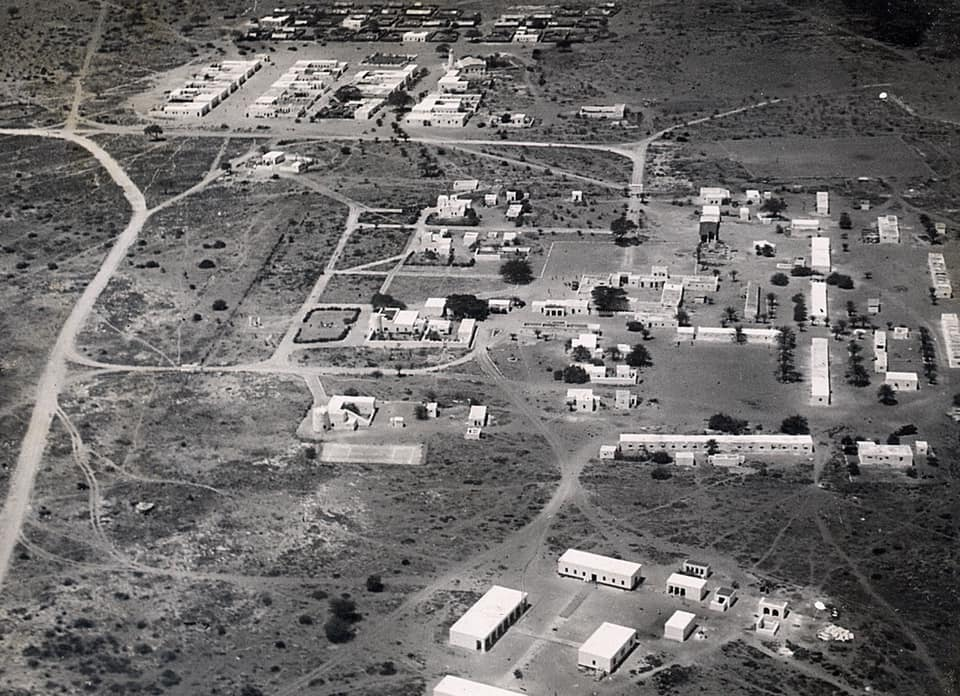
    Wajir town 1949

    The Northern Frontier Districts

    The Wajir War Memorial was established in 1929 as part of the Northern Frontier District near the Italian Somaliland border.

    Long before the Scramble for Africa and colonial rule, the area now referred to as the Northern region of Kenya, which includes Wajir, Mandera, Moyale, Marsabit, Isiolo and Garissa, were inhabited by pastoral communities like the Somali, Borana, Rendille, Samburu, Turkana, and Gabra who moved freely across the Horn of Africa without regard for modern national borders.

    It wasn’t until the Berlin conference of 1884, when Britain formalised its colonisation of East Africa, while the Italians took the neighbouring region of Somalia, that the region became subject to borders that had previously been non-existent.

    In 1909, the British dubbed the region the Northern Frontier District, establishing a buffer zone between the British East African territories and Italian Somaliland, which disrupted the way of life for the communities in the North, making travel, community integration, trade and unity impossible.
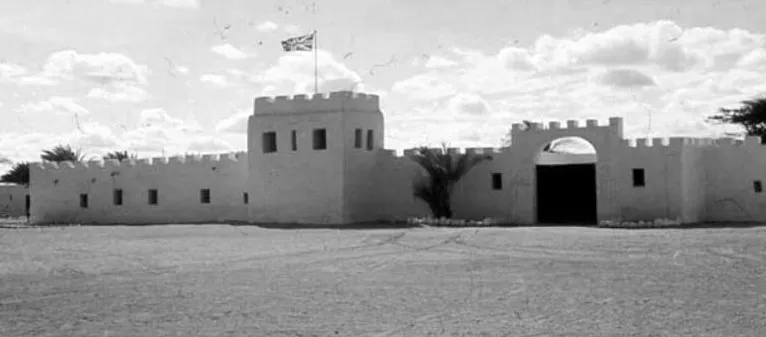
    British Colonial outpost, Fort Wajir, 1940.

    However, Wajir remained far and remote, making it hard for the colonial administration to administer and defend despite the myriad of rules and artificial lines it had drawn that had essentially cut off communities and marginalised the region.

    As the British struggled to maintain control, the Italians continued their expansion into the region and in 1936, under the rule of Benito Mussolini, Italy finally conquered Ethiopia, merging it with Somalia to establish Italian East Africa. This meant that Italy had developed a stronger foothold in the region, bringing numerous Italian forces closer to Wajir.

    The fall to Italy during World War II
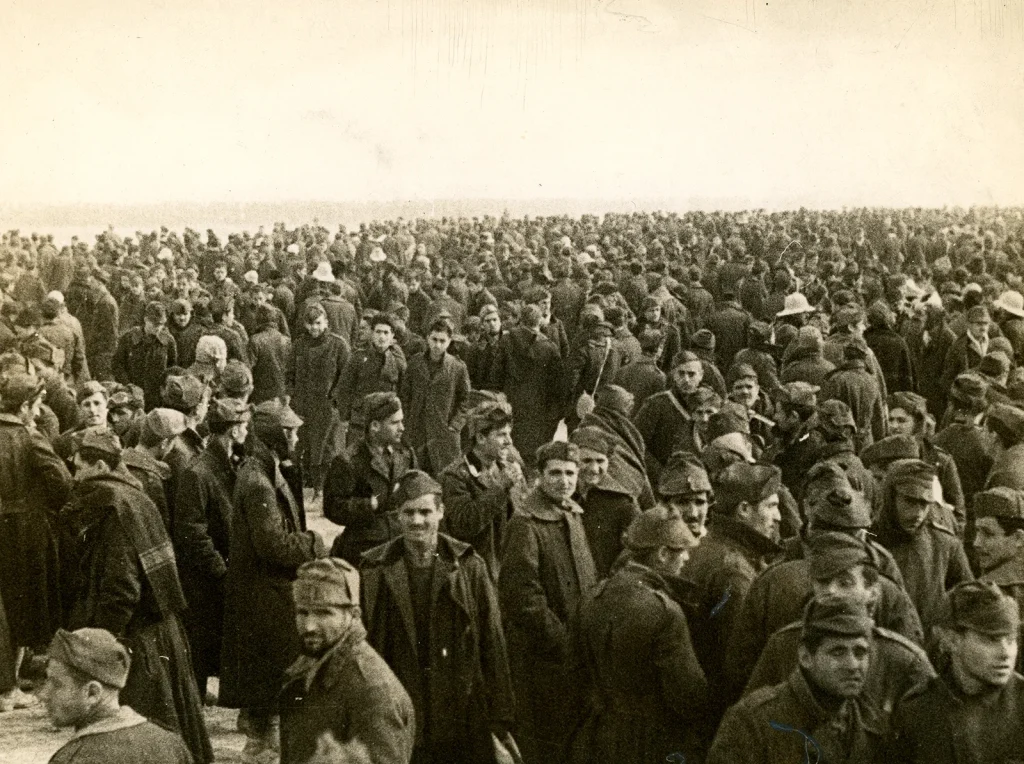
    Italian Forces in North Africa/Brittanica

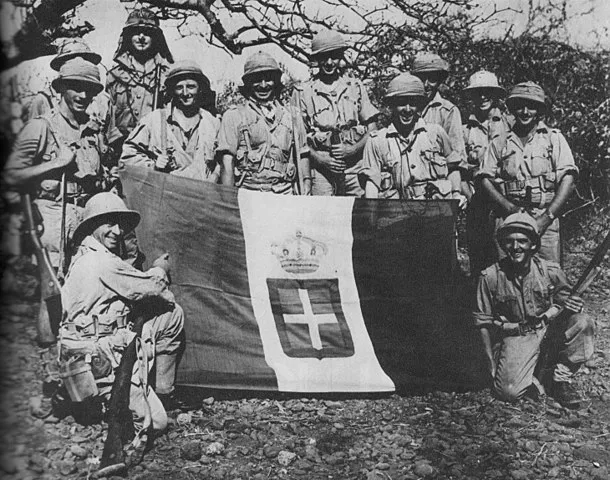
    The turning point for Wajir came in June, 1940, when Italy officially joined World War II, which led to the opening of a new military front in East Africa.

    Mussolini, who was the Commander-in-Chief of Italy’s armed forces, believed at the time that the war would be short and, more importantly, would offer a strategic opportunity for Italy to expand and build “a new Roman empire.”

    As the British and the Italians were on opposite sides of the war (Britain was part of the Allied forces while Italy was part of the Axis forces), days later, Italian aircraft launched attacks against British positions in northern Kenya, including military facilities in Wajir. Italian troops crossed several sections of the Kenya-Somalia frontier as part of a broader campaign aimed at weakening British control in the region.

    Because the region was so vast, British troops on the ground were spread out across the region and struggled to defend it. As a result, Wajir fell to Italian Military control shortly after.

    Wajir remained under Italian control for approximately two years before the British regained control, largely due to a counter-offensive attack launched in 1941 with Indian and African troops aimed at pushing Italian forces out of the region.

    Wajir remained under British control until Kenya gained independence in 1963.

  • Colonial Plunder: France returns skull of beheaded king to Madagascar

    Colonial Plunder: France returns skull of beheaded king to Madagascar

    France on Tuesday returned three colonial-era skulls to Madagascar, including one believed to be that of a Malagasy king decapitated by French troops during a 19th-century massacre.

    The skull, believed to belong to King Toera, was handed over in the first restitution of human remains since France passed a law facilitating their return in 2023, along with those of two other members of the Sakalava ethnic group.

    French troops beheaded King Toera in 1897, with his skull then taken as a trophy to France.

    It was placed in Paris’s national history museum alongside hundreds of other remains from the Indian Ocean island.

    “These skulls entered the national collections in circumstances that clearly violated human dignity and in a context of colonial violence,” said French Culture Minister Rachida Dati.

    Her Madagascar counterpart, Volamiranty Donna Mara, praised the handover as “an immensely significant gesture” that marked “a new era of cooperation” between the two countries.

    “Their absence has been, for more than a century, 128 years, an open wound in the heart of our island,” she said.

    A joint scientific committee confirmed the skulls were from the Sakalava people but said it could only “presume” that one belonged to King Toera, Dati said.

    Since his election in 2017, President Emmanuel Macron has acknowledged some past French abuses in Africa.

    On an April visit to the capital Antananarivo, Macron spoke of seeking “forgiveness” for France’s “bloody and tragic” colonisation of Madagascar, which declared independence in 1960 after more than 60 years of colonial rule.

    The skulls are set to return to the Indian Ocean island on Sunday, where they will be buried.

    Bloody, tragic

    In recent years France has sought to reckon with its colonial past, sending back artefacts obtained during its imperial conquests.

    But the country was hindered by its legislation, which required a special law be passed for each restitution — as in 2002, when South Africa sought the return of “Hottentot Venus”, a woman displayed in 19th-century Europe as a human curiosity.

    To speed up the process, France’s parliament in 2023 adopted a law facilitating the repatriation of human remains.

    With a third of the 30,000 specimens at Paris’s Musee de l’Homme made up of skulls and skeletons, countries including Australia and Argentina have filed their own restitution requests for ancestral remains.

    France passed a separate law the same year to streamline the return of art looted by Nazis to Jewish owners and heirs.

    But a third law enabling the return of property taken during the colonial era has not been finalised.

    If approved, the legislation would make it easier for the country to return cultural goods obtained through theft, looting, coercion or violence between 1815 and 1972, according to the culture ministry.

    A new version of the bill was presented at a government meeting in late July, with Dati saying she hoped it would be adopted “quickly”.

  • International Day for Remembrance of Slave Trade: ‘Time to abolish exploitation once and for all’

    International Day for Remembrance of Slave Trade: ‘Time to abolish exploitation once and for all’

    Victims of atrocities and freedom fighters across history can inspire future generations to build just societies,the chief of the UN Educational, Scientific and Cultural Organization (UNESCO) said on the occasion of the International Day for the Remembrance of the Slave Trade and its Abolition, commemorated annually on 23 August.

    “It is time to abolish human exploitation once and for all and to recognise the equal and unconditional dignity of each and every individual,” Azoulay said.

    The Day is intended to inscribe the tragedy of the slave trade in the memory of all peoples.

    UN Photo/Devra Berkowitz Details from Ark of Return, the permanent memorial at UN Headquarters to acknowledge the tragedy and consider the legacy of slavery and the transatlantic slave trade.

    ‘The fight is not over’

    Echoing the goals of UNESCO’s intercultural project The Routes of Enslaved Peoples, it should offer an opportunity for collective consideration of the historic causes, the methods and the consequences of this tragedy and for an analysis of the interactions to which it has given rise between Africa, Europe, the Americas and the Caribbean, said the UN agency, which leads the annual commemoration.

    UN Deputy Secretary-General Amina Mohammed said that while the Day honours the victims of the transatlantic slave trade, “the fight is not over.”

    “Modern slavery persists,” she stated. “Let’s confront injustice, past and present and uphold the dignity and rights of every person.”

    For its part, the UN works towards these goals, including through its Outreach Programme on the Transatlantic Slave Trade and Slavery, established in 2007.

    Uprising led to abolition

    On the night of 22 to 23 August 1791, in then Saint Domingue, now Haiti, saw the beginning of the uprising that would play a crucial role in the abolition of the transatlantic slave trade.

    Against this background, the International Day is commemorated around the world. It was first celebrated in a number of countries, including in 1998 in Haiti and in 1999 on Gorée Island in Senegal, where millions of enslaved people had been forced onto ships to cross the ocean.

    “Today, let us remember the victims and freedom fighters of the past so that they may inspire future generations to build just societies,” UNESCO’s Azoulay said.