Tag: electricity access

  • Five EAC states to benefit from AfDB’s $11M fund for renewable energy

    Five EAC states to benefit from AfDB’s $11M fund for renewable energy

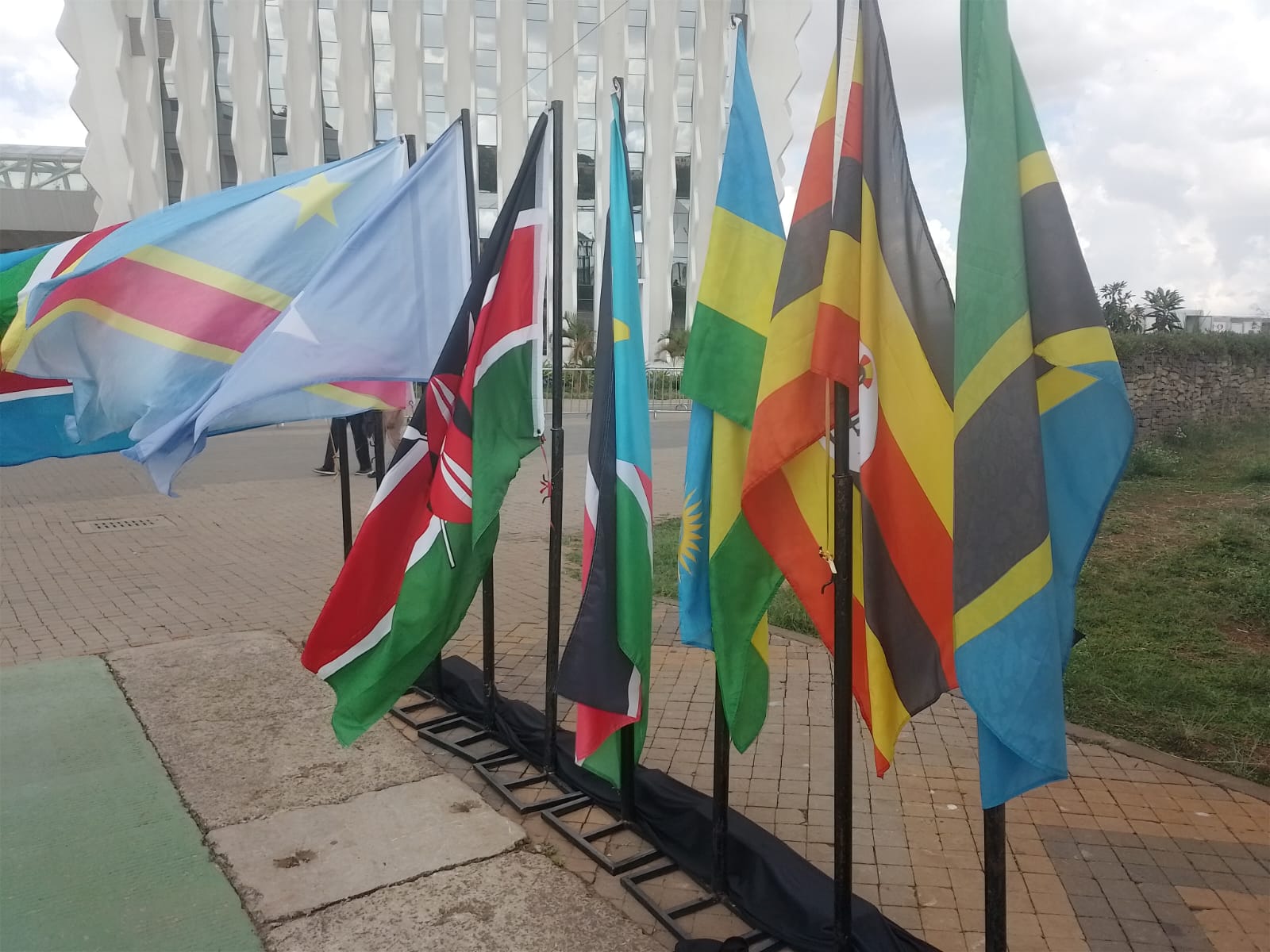
    Five East African Community (EAC) member states have been selected as beneficiaries of a $5.65 million (Ksh 729m) funding by the African Development Bank (AfDB) to support the development of renewable energy and improve electricity access.

    The countries which include Uganda, Burundi, Somalia, South Sudan and the Democratic Republic of Congo (DRC) are among 14 countries who will secure reimbursable grant from the AfDB’s Sustainable Energy Fund for Africa (SEFA) to pilot the Peace Renewable Energy Certificate (P-REC) Aggregation Facility which will deploy renewable energy certificates as a direct funding instrument for a portfolio of mini-grids across Africa’s most fragile and energy-poor countries.

    According to the lender, the Nordic Development Fund (NDF) which is a co-financier will also commit $5.65 million into the fund bringing total funding to $11.3 million.

    “Lack of access to capital for rural electrification continues to be a major hurdle for universal energy access in the African continent, particularly in countries experiencing conflicts and fragility. I am proud that SEFA is backing this innovative, first-of-a-kind facility testing a new climate finance product capable of unlocking new sources of commercial funding for private sector led mini-grids. This is the kind of market-making needed to advance Mission 300 objectives.” João Duarte Cunha, Manager, Renewable Energy Funds Division and Sustainable Energy Fund for Africa, AfDB.

    Under the programme, AfDB targets to bring electricity access to 856,000 people in the 14 selected countries through development of renewable energy mini grids.

    AfDB says the certificates come exclusively from small-scale mini-grid projects in conflict-affected and energy-poor communities, and are voluntarily purchased by multinationals looking to put their corporate sustainability spending where it drives the greatest social and environmental impact.

    “Countries in Sub-Saharan Africa facing fragile and conflict-affected situations urgently need support and access to clean, reliable energy solutions. At NDF, we are proud to contribute to the Innovative Peace Renewable Energy Certificate (P-REC) Aggregation Facility, which helps bring small-scale, off-grid renewable energy to communities with no, limited or disrupted energy access,” added Satu Santala, Managing Director, NDF.

    The funding will support 240,000 new connections and 71 megawatts of new renewable energy capacity.

  • Kenya Power completes Ksh 22M power line in Machakos

    Kenya Power completes Ksh 22M power line in Machakos

    Kenya Power has completed the construction of an inter-connector between Kitui and Machakos counties at a cost of Ksh 22 million.

    The connection is designed to strengthen stability of electricity supply around SEKU University, Kwavonza, Katangini areas and act as an alternative supply to customers in parts of Machakos.

    “This project will enhance service delivery and customer experience by improving the quality of power supply. Previously, SEKU University and adjacent customers were served by the Masii power line that runs from Katoloni in Machakos County, which often experienced outages due to its expansiveness,” said John Wanyoike, Kenya Power’s Kitui County Business Manager.

    I efforts to further boost electricity access in Kitui County and reduce loses due to the overstretched power lines, Kenya Power is set to construct a Substation at Mbitini.

    The firm says the substation will boost power supply and reduce outages in areas such as Zombe, Ikanga, Voo, and Ikutha. L

    Kenya Powers says over the last two years, it has also completed a major upgrade of its Kitui Substation, doubling its capacity to 10MVA.

    This is in addition to the construction of a dedicated power line to the substation, a move that significantly improved power supply reliability to Kitui town and adjacent customers.

    “The demand for electricity has been soaring recently, mainly from upcoming light industries and other customers that we have connected to the grid. To meet this demand, we have increased the capacity at the Kitui Substation and dedicated a 33kV line to the substation, with no other connections on it. Prior to these upgrades, we used to experience frequent power outages as the substation’s capacity was not adequate to serve all customers,” he added.

    At least 94,000 households within Kitui County are currently connected to the national grid.

    Under the ongoing Phase IV of the Last Mile Connectivity Project, the firm is targeting to connect an additional 7,500 households.

    To further improve infrastructure resilience in Kitui County, Kenya Power has replaced approximately 1,200 wooden poles affected by termites with concrete poles, investing nearly Ksh 140 million to fund this undertaking in the last financial year.

  • Govt to connect 300 homes in Nakuru under last mile power access

    Govt to connect 300 homes in Nakuru under last mile power access

    Energy and Petroleum Cabinet Secretary Opiyo Wandayi says the government is committed to a allocating more resources to increase connect more homes to the national grid through the Last Mile Connectivity Program (LMCP).

    Wandayi reaffirmed the government’s commitment to deliver universal electricity access across the country by providing reliable, affordable and efficient power supply to accelerate socio-economic growth, especially at the grassroots levels.

    Speaking in Bahati, Nakuru County where over 300 households are set to benefit from the last-mile connectivity project Wandayi said the government has set aside Ksh 1.9 billion to bring on board thousands of new households to the electricity grid within the next one year.

    “When homes have power, children can study without interruption and excel in their exams, while youth, women, and men can start small businesses that create opportunities and fuel local economies. As a government, we are committed to ensuring that electricity reaches every Kenyan without bias,” said Wandayi .

    Wandayi said the Last Mile Connectivity Project would not only power homes but also boost small and medium-sized enterprises across the country, aligning with President Ruto’s BETA program to achieve universal electricity access.

    LMCP is jointly being implemented Kenya Power (KPLC), Rural Electrification and Renewable Energy Corporation (REREC), and is overseen by the ministry.

  • Kenya ranked among best regulated electricity markets in Africa

    Kenya ranked among best regulated electricity markets in Africa

    Kenya’s energy sector has emerged among best regulated markets in Africa according to the latest Energy Regulatory Index by the African Development Bank (AfDB).

    Kenya received a score of 0.8915 behind Senegal which registered a score of 0.8920 in the ERI 2024 after reporting an improvement of 26pc and 28pc respectively. Uganda was ranked third with a score of 0.8546.

    AfDB says the improvements by the countries signal standout progress in tariff reform, regulatory outcomes, and utility performance.

    The countries were rated the best in Regulatory Governance Index, Regulatory Substance Index and Regulatory Outcome Index among 43 countries who participate in the ERI.

    “The 2024 ERI shows that Africa’s regulators are stepping up. We are now seeing stronger institutions delivering real results for utilities and consumers. This shift is critical if we are to achieve Mission 300 and connect 300 million people to electricity by 2030,” said Dr. Kevin Kariuki, AfDB Vice President for Power, Energy, Climate and Green Growth.

    The ERI is a diagnostic and policy tool used by governments, regulators, and development partners to identify gaps, track progress, and prioritize reform efforts.

    The index is being backed to help accelerate electricity investment in Africa which currently faces financing gap $25 billion annually and improve access to an estimated 595 million people who still lack electricity access.

    “The ERI 2024 tells a hopeful story. African countries are not just passing laws—they are implementing them. Regulators are transforming from administrative bodies into strategic institutions with measurable influence. However, challenges related to independence, financing, and enforcement persist,” added Wale Shonibare, Director for Energy Financial Solutions, Policy and Regulation at the Bank Group.

    The 2024 edition incorporates extensive feedback from utilities, regulators, and regional energy bodies.

    The governance index covers legal and institutional setup while substance covers implementation of  policies and regulations. outcomes index on the other hand covers impact on utilities and consumers.