Tag: DNDi

  • Breakthrough single-dose treatment for Sleeping Sickness gets EU nod

    Breakthrough single-dose treatment for Sleeping Sickness gets EU nod

    The European Medicines Agency has given the green light to the first-ever single-dose oral treatment for sleeping sickness.

    Acoziborole Winthrop, developed by the Drugs for Neglected Diseases initiative (DNDi) in collaboration with Sanofi, will help African countries eliminate the most common form of the disease, gambiense sleeping sickness.

    A positive CHMP opinion through the EU-M4all procedure provides a strong endorsement that the
    medicine meets EU standards.

    The breakthrough follows clinical trials in the Democratic Republic of the Congo and Guinea led by African researchers. Acoziborole Winthrop (acoziborole) will treat both early and advanced stages of the disease in adults, as well as adolescents aged 12 years and older weighing at least 40 kilograms.

    The three-tablet dose can be administered without the need for hospitalisation or supervised home care, unlike existing therapies, which require either a 10-day course of oral medication or a combination of injections and oral therapy for advanced cases.

    DNDi hailed the milestone, saying it offers a simpler alternative which will help support the World Health Organisation’s goal of eliminating the disease by 2030.

    “ In just 20 years, we have gone from complicated treatments including arsenic derivatives with serious side effects, to today, when a single-dose, one-day therapy could safely cure patients,’ said Dr Luis Pizarro, Executive Director at DNDi.

    “This progress is testament to the transformative power of collaborative science and will bring us closer to finally eliminating sleeping sickness, a disease that has killed millions on the African continent in the past century”, he added.

    Acoziborole will allow doctors to reach the most remote areas, where the last remaining pockets of the disease are. In 1998, nearly 40,000 cases were reported across Africa, and experts believe more than 300,000 others were never diagnosed. By 2024, that number had fallen to fewer than 600 cases.

    Sanofi, which will donate the drug to WHO for free distribution to patients, described the development as a major step forward in eradicating the disease, which remains a public health problem, particularly in Central and West Africa.

    “For decades, Sanofi has maintained an unwavering commitment to the fight against sleeping sickness, standing alongside DNDi, the World Health Organization, and other partners in one of the most enduring and successful public-private health collaborations,’ said Audrey Duval, Executive Vice President, Corporate Affairs at Sanofi.

    “Together, we have helped drive cases to historic lows— achieving a remarkable 98% reduction since 2001—by putting patients first and investing in innovation where it is needed most. Acoziborole builds on this legacy and represents a decisive step forward in eliminating gambiense sleeping sickness by 2030”, Duval added.

    Another study underway in the DRC and Guinea is investigating Acoziborole Winthrop for the treatment of children ages 1 to 14.

    EXPLAINER: How is the disease transmitted?

    Transmitted by the bite of an infected tsetse fly, human African trypanosomiasis, commonly known as sleeping sickness, is almost always fatal without treatment. In the early stage of the disease, people experience headaches or fever.

    In the late stage, the parasite crosses the blood-brain barrier and invades the central nervous system, causing behavioural, cognitive, and neurological symptoms, including seizures, sleep disturbance, aggression, confusion, lethargy, convulsions, and, ultimately, death.

  • DNDi receives global award for developing new treatments for NTDs

    DNDi receives global award for developing new treatments for NTDs

    The Drugs for Neglected Diseases initiative (DNDi) has been awarded Japan’s prestigious Hideyo Noguchi Africa Prize for its role in delivering new treatments for neglected diseases in Africa, particularly sleeping sickness.

    Co-founded by the Kenya Medical Research Institute (KEMRI), the nonprofit medical research organisation was honoured in the medical services category during a ceremony held Friday in Tokyo, attended by Their Majesties the Emperor and Empress of Japan and hosted by Japanese Prime Minister Ishiba Shigeru.”

    Awarded every three years, the prize is the highest medical honour from the Government of Japan. It was established in memory of Dr. Hideyo Noguchi (1876–1928), a renowned medical scientist who dedicated his life to bacteriological research and died while studying yellow fever in Africa.

    ‘This recognition is proof of the power of a model for medical innovation driven purely by patients’ needs, where African scientists are leading the charge against diseases that have long burdened our communities,’ said Prof Samuel Kariuki, DNDi Continental Lead Africa, and Eastern Africa Director.

    “DNDi was founded with the vision that Africa should not have to wait for others to solve our health challenges. We remain committed to ensuring that no disease is overlooked simply because it affects the poorest and most vulnerable”, he added.

    The development also follows a landmark public health achievement earlier this month, when the World Health Organization (WHO) validated Kenya for eliminating human African trypanosomiasis (HAT), commonly known as sleeping sickness, as a public health problem, making it the tenth country to reach this significant milestone.

    13 treatments

    Over the past 22 years, DNDi has developed three new treatments for six deadly diseases, 9 of which were delivered from Africa.

    It delivered fexinidazole, the first-ever all-oral treatment for both the gambiense and rhodesiense forms of sleeping sickness.

    It has also conducted the world’s first randomised clinical trial for mycetoma, carried out numerous clinical studies for improved leishmaniasis treatments, and developed new treatments for children with HIV.

    KEMRI hailed the organisation for the recognition. “As one of DNDi’s founding partners, KEMRI is immensely proud to see DNDi recognised for its outstanding contributions, and for our shared commitment to addressing neglected diseases,’ said Prof Elijah Songok, Director General, KEMRI.

    He added, “It demonstrates that when African institutions lead research initiatives, we achieve global impact. This prize validates the critical role African research institutions play in advancing global health equity”.

    DNDi extended its gratitude to KEMRI for the nomination and to the Government of Japan for recognising its commitment to advancing medical innovation and improving the lives of the world’s most neglected patients.

    It has conducted clinical trials with partners in countries including Central African Republic, Democratic Republic of Congo (DRC), Ethiopia, Guinea, Kenya, Malawi, Tanzania, and Uganda.


  • AU signs pact with DNDi to combat Neglected Diseases in Africa

    AU signs pact with DNDi to combat Neglected Diseases in Africa

    In a landmark partnership to bolster Africa’s fight against neglected tropical diseases (NTDs), the African Union (AU) Commission’s Department of Health, Humanitarian Affairs, and Social Development Monday signed a Memorandum of Understanding with the medical research nonprofit organisation Drugs for Neglected Diseases Initiative (DNDi).

    The collaboration aims to advance policy advocacy, research and development (R&D), and access to treatments for NTDs across the continent.

    NTDs affect over a billion people globally, with Africa bearing a significant portion of this burden.

    Diseases such as leishmaniasis, sleeping sickness, and river blindness disproportionately impact the continent’s most vulnerable populations, hindering socioeconomic development and quality of life.

    The MoU aligns with the Common African Position on NTDs, which outlines a strategic vision to control, eliminate, and eradicate these diseases by 2030. This position reflects the continent’s dedication to improving public health outcomes.

    Amb. Minata Samate Cessouma, Commissioner for Health, Humanitarian Affairs and Social Development, underscored the significance of this partnership as a pivotal step towards eradicating neglected tropical diseases in Africa.

    “We are committed to developing and delivering effective treatments to the most vulnerable, promoting R&D and innovation for new technologies for NTDs and climate-sensitive diseases in line with the AU’s Agenda 2063,” she said.

    New treatments

    Dr Luis Pizarro, the Executive Director of DNDi asserted how for too long neglected diseases have caused immense suffering to vulnerable communities across Africa.

    “This partnership with the African Union is about changing that by bringing science and policy action together to drive innovation and ensure that effective treatments reach patients in need and on time,” said Dr Pizarro. “With this collaboration, we are shaping  a healthier, more equitable world—one where no disease is too neglected to deserve attention, investment, and action.”

    The partnership will focus on jointly advancing the discovery and development of new treatments for NTDs prevalent in Africa through collaborative R&D efforts.

    It will also prioritise capacity building by strengthening the capabilities of African health institutions and professionals in managing and researching NTDs.

    Additionally, the collaboration aims to promote advocacy and policy development to support sustainable access to NTD treatments and integrate NTD initiatives into national health agendas, ensuring long-term impact and resilience in addressing these diseases.

    By leveraging the strengths of both organisations, this collaboration aspires to make significant strides in reducing the burden of NTDs, ultimately contributing to a healthier and more prosperous Africa.

    DNDi has a strong track record of providing safe, effective, and affordable treatments for neglected patients.

    Since its establishment in 2003, DNDi has developed 13 treatments for six deadly diseases, saving millions of lives.

  • Clinical trial for oral treatment against Kala-azar enters phase II

    Clinical trial for oral treatment against Kala-azar enters phase II

    A new drug to treat visceral leishmaniasis commonly known as Kala-azar has entered Phase II clinical development.

    The trial of the innovative, safer, simpler, patient-friendly oral medicine is being conducted in Ethiopia by the research organization Drugs for Neglected Diseases Initiative (DNDi) and its partners.

    Also known as kala-azar, visceral leishmaniasis is the world’s deadliest parasitic killer after malaria. It causes fever, weight loss, spleen and liver enlargement, and, if not treated, death. It is transmitted by the bite of infected sandflies and is endemic in 80 countries, mainly in Eastern Africa, South Asia, and Latin America.

    One billion people are at risk globally and Eastern Africa currently has the highest number of cases. As for other vector-borne diseases, climate change is changing the epidemiology of leishmaniasis and could lead to its expansion to new areas.

    An estimated 50,000 to 90,000 new cases occur worldwide annually, and half are children under 15.

    In Africa, the current treatment for visceral leishmaniasis includes painful injections given at the hospital daily for 17 days, a treatment that may also present rare but life-threatening side effects, including to the heart, liver, and pancreas.

    In contrast, the new molecule under study in Ethiopia, called LXE408, is administered in the form of oral pills and is expected to be safer than the current treatment.

    “This is very significant that Ethiopia, an endemic country, is conducting a Phase II clinical trial on a new chemical entity — a novel molecule with the potential to safely and effectively treat visceral leishmaniasis,” said Dr Eleni Ayele, co-principal Investigator of the clinical trial at the Leishmaniasis Research and Treatment Center (LRTC), University of Gondar, Ethiopia.

    “Current treatment options in Ethiopia have severe limitations: they are potentially toxic, necessitate injections and cold-chain supplies, and require our patients to travel to faraway hospitals and be hospitalized for long periods” he noted.

    “Our hope is that this new oral treatment will be efficacious and less toxic and can be given to patients at the primary healthcare level, close to their homes. This would help them access treatment earlier, which could significantly decrease morbidity and transmission. If the trial is successful, it could go a long way toward enabling the sustainable elimination of this terrible disease” said Dr Eleni Ayele.

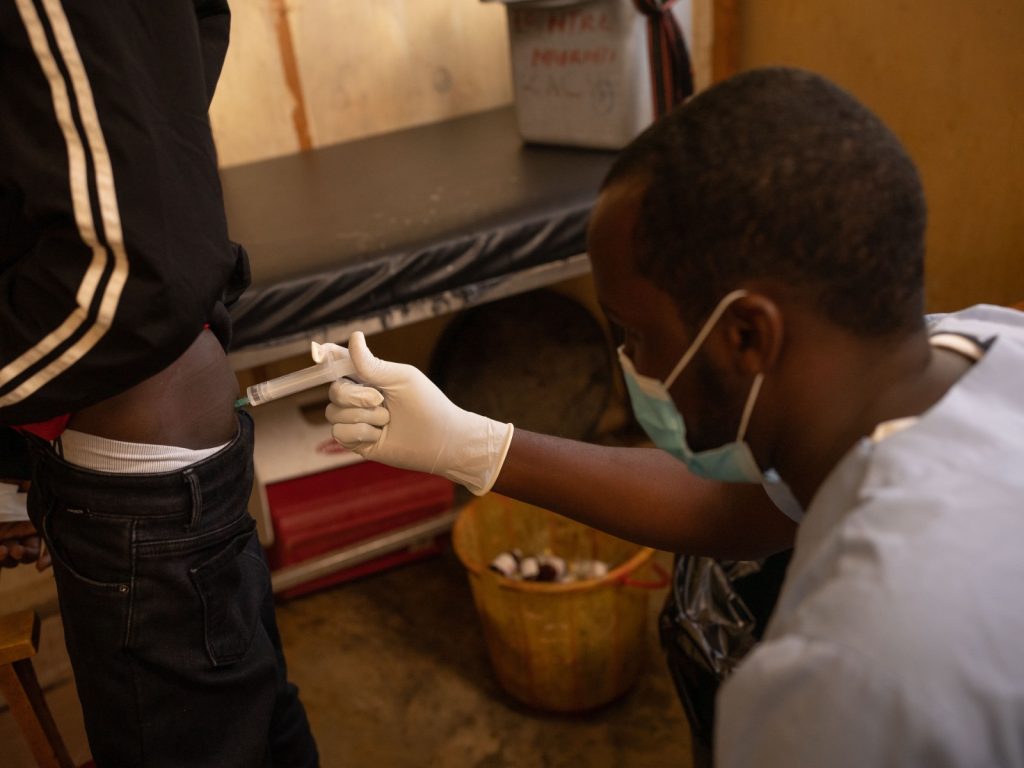
    Nurse Ali Abdi administers treatment to a kala-azar patient at the Kacheliba Sub County Hospital in Kenya

    Phase 11 trial

    The molecule is tested alongside the standard of care in Ethiopia (a combination of daily injections of sodium stibogluconate and paromomycin administered for 17 days); 52 adults from 18 to 44 years will join the study.

    A similar Phase II trial to test LXE408 alongside the standard of care is also being conducted in India. Patients in Eastern Africa and South Asia may respond differently to treatments, which is one of the reasons why finding new medicines is particularly difficult and why studies on both continents are necessary.

    “We are moving towards a new generation of treatments for leishmaniasis. Finding new treatments is key if we want to sustainably eliminate visceral leishmaniasis in all parts of the world, including in African countries where the burden remains high. We need medical innovation,’ said Dr Fabiana Alves, Director of Leishmaniasis programme at DNDi.

    “We hope this new clinical trial will contribute to deliver better, patient-friendly, effective medicines that are accessible to everyone, with no exception” he stated.

    LXE408 was initially discovered by Novartis. DNDi and Novartis initiated a collaboration and licence agreement in early 2020 to jointly develop LXE408.

    Novartis was responsible for completing pre-clinical development and a Phase I study, is in charge of chemical manufacturing and control, will drive regulatory submissions, and – if trial results are positive and if the new treatment is approved for market use – has committed to distributing the drug on an affordable basis worldwide, with a focus on maximizing access in endemic countries.

    Discovery of LXE408 and preparatory work to advance LXE408 to clinical evaluation in kala-azar patients were financially supported by Wellcome.

    The clinical trial in Ethiopia is financially supported by the European and Developing Countries Clinical Trials Partnership (EDCTP) as part of the VL-INNO project, bringing together a wide range of partners.

    Eastern African countries are currently laying out plans to eliminate visceral leishmaniasis sustainably, a disease that can potentially resurgence due to climate and environmental changes.

    Achieving and sustaining elimination also hinges on the development of better treatments. If proven to be effective, LXE408 could, therefore, contribute significantly to these elimination goals.

    ‘Visceral leishmaniasis is a severe and potentially fatal disease that primarily impacts vulnerable groups such as children. We urgently need to eliminate it, which would greatly help lift affected communities out of poverty, said Dr Saurabh Jain, Scientist and Focal Point for Visceral Leishmaniasis at the World Health Organization (WHO).

    One of the targets in the roadmap for neglected tropical diseases is the elimination of visceral leishmaniasis as a public health problem by 2030.

  • Medical research firm DNDi wins 2023 Spain’s Asturias Award

    Medical research firm DNDi wins 2023 Spain’s Asturias Award

    A medical research and development organisation, Drugs for Neglected Diseases initiative (DNDi), which was co-founded by Kenya Medical Research Institute (KEMRI) has won this year’s Princess of Asturias Award for International Cooperation.

    The award, the most prestigious in Spain has been running for 43 years and will be presented on October 20 in Oviedo, Spain.

    It recognises distinguished individuals or organisations in the fields of arts, social sciences, communication and humanity, concord, international cooperation, scientific and technical research, sport, and literature

    Winners in other categories in 2023 include Kenyan marathoner Eliud Kipchoge, American actress Meryl Streep and Japanese writer Haruki Murakami.

    Each Princess of Asturias Award recipient is presented with a Joan Miró sculpture representing and symbolising the award, a diploma, an insignia, and a cash prize of 50,000 euros (approximately $53,500).

    “It is a great honour and privilege to receive this prestigious award, especially as we celebrate our 20th anniversary. We gratefully accept it on behalf of all the people who work with DNDi across the world to ensure that the best scientific research is available to the most neglected patients,’ said Dr Monique Wasunna, DNDi Africa Ambassador, who will participate in the award ceremony in Oviedo on Friday 20 October.

    ‘We also accept this award on behalf of the millions of neglected patients, and we commit to continue our efforts in driving medical research for neglected diseases.’

    Both DNDi and Eliud Kipchoge will be awarded in a ceremony attended by the King and Queen of Spain, Reina Sofía, and Princesses Leonor and Sofía.

    Accomplishments

    The award recognizes DNDi’s accomplishments in delivering new, safe, effective, affordable, and accessible treatments for some of the world’s most neglected diseases.

    Previous laureates in the International Cooperation category include the World Health Organization (WHO), the Bill & Melinda Gates Foundation, the International Red Cross, Amref Health Africa, and GAVI, the Vaccine Alliance.

    DNDi was founded in 2003 as a collaboration between KEMRI, Médecins Sans Frontières, the World Health Organization, and four other publicly funded research institutions in Brazil, France, India, and Malaysia.

    Over the last two decades, DNDi has successfully developed 12 treatments for six deadly diseases, which include sleeping sickness, visceral leishmaniasis (Kala-azar), and mycetoma.

    “More than a billion people belonging to the world’s poorest and most disadvantaged populations –half of whom are children– suffer from a group of diseases that cause severe social stigma and millions of deaths each year. These are diseases neglected by research, industry and commercial development,’ said the jury for the 2023 Princess of Asturias Award for International Cooperation.

    The initiative has developed numerous treatments for these serious diseases. Its strategy includes an ambitious plan to develop new drugs and treatments that will improve healthcare and save millions of lives worldwide.’

    The Princess of Asturias award holds a special significance for DNDi, as the organization celebrates its 20th anniversary this year.

    To mark this occasion, DNDi has planned a charity run and free medical camp in West Pokot in November 2023 as part of its anniversary celebrations.