Tag: Competence Based Curriculum (CBC)
-

Stakeholders urged to support Competency-Based Curriculum as talent takes center stage
As the Competency-Based Curriculum (CBC) continues to take root in Kenya’s education system, stakeholders have been urged to work collaboratively to ensure its success.The system, which seeks to nurture all-rounded learners while identifying and developing their talents, is being hailed as a transformative approach to education.Julius Mwangi, Director of Murang’a Mission Station, praised CBC for incorporating skills development, crafts, and talent enhancement, noting that it creates avenues for learners to build careers, establish networks, and seize opportunities both locally and internationally.He observed that many students have already discovered their talents in school and are gradually becoming self-reliant.Curriculum Support Officer Madam Julian highlighted that various mechanisms have been embedded in the CBC framework to support talent development.She urged parents to take an active role in identifying their children’s areas of strength and providing the necessary support. “Gone are the days when learners were discouraged from pursuing sports, music, or the arts. Today, these are viable career paths that provide sustainable livelihoods,” she said.George Njihia, Headteacher at Dylan Jones Academy, commended the government for its efforts through the Ministry of Education in implementing the CBC.He also appealed for private schools to be included in areas such as capitation, noting that learners in both public and private institutions are all children of Kenyan parents.The three were speaking during the annual Cultural and Talent Day at Dylan Jones Academy in Kambirwa, Murang’a County. The event featured displays of traditional foods from various Kenyan communities, cultural dances, and exhibitions of diverse learner talents. -

Government reaffirms commitment to CBC implementation, Grade 10 transition
The government has reiterated commitment in refining the implementation of the Competency-Based Curriculum (CBC) through inclusive stakeholder engagement.
Speaking at Kipcherere High School in Baringo County during a thanksgiving ceremony, Education Cabinet Secretary Julius Migos emphasized the importance of structured career pathways in the new education system.
The event, which was attended by Joseph Makilap, Member of Parliament for Baringo North Constituency, highlighted ongoing efforts to ensure a seamless shift to Senior School.
“Insights gathered from these consultations have been instrumental in developing comprehensive guidelines for Grade 10 placement, addressing key concerns about the transition process.” CS Migos said.
According to the CS, transition will see schools offer diverse career pathways tailored to students’ varying aspirations and competencies, ensuring learners are placed in programs that align with their strengths and career goals.
Additionally, students were encouraged to take advantage of opportunities available through the Kenya Universities and Colleges Central Placement Service (KUCCPS) portal, which is now open for applications.
Eligible candidates were urged to apply for placement in their preferred academic and technical programs, reinforcing the government’s commitment to broadening higher education and vocational training access.
“I encourage all eligible candidates to apply for placement in their preferred academic and technical programs on the Kenya Universities and Colleges Central Placement Service (KUCCPS) portal .” Said CS Migos.
-

CBC: Gov’t assures of smooth transition to senior school
The Ministry of Education has assured parents of a smooth transition of pupils from Junior Secondary School to Senior School.
Speaking Wednesday morning when he officiated a stakeholders engagement forum on senior school and teacher education at the Kenya Institute of Curriculum Development (KICD) Basic Education Principal Secretary Dr. Belio Kipsang said his ministry will be introducing 12 legislations that will offer guidelines on the transition of pupils to senior school.
He added that the ministry is aware of the anxiety the parents are undergoing following the hectic implementation of the Junior Secondary School two years ago.
Belio said the ministry will soon present a sessional paper which seeks to review students’ operational costs to establish and provide minimum essential packages in schools for adequate delivery of Competency Based Curriculum (CBC).
He said the Sessional Paper draws from the Presidential Working Party on Education Reforms (PWPER) and provides a policy framework for transforming education, training and research for sustainable planning.
He also promised the government is doing everything to complete the current JSS cycle to allow parents to comfortably transition their children to senior secondary school.
Meanwhile, Kenya is set to host the 6th Partnership for Skills in Applied Science, Engineering and Technology (PASET) Forum and Regional Scholarship and Innovation Fund (RSIF) Annual Conference in Kenya.
The Conference will take place in Nairobi, Kenya from 23rd – 25th April 2024.
The Conference will be held under the theme: “Leveraging technical, Vocational Education and Training in the knowledge and skills ecosystem for Africa’s Industrialization.”
-

Primary school heads to be promoted to JSS principals
Teachers heading primary schools will be promoted from grade C3 and above, and become principals of Junior Schools, domiciled in their institutions, Education Cabinet Secretary, Ezekiel Machogu, has announced.
Primary school heads have been acting as principals for students who have transitioned to grade 7 for the whole of this year.
Machogu also reiterated that the government will not increase school fees, but will ensure the existing remittances to schools are used prudently.
However, the CS said that the Ministry will no longer distribute Capitation Funds to schools quarterly as they have been, instead, the system will change to a ratio of 50:30:20 for the first, second and third terms respectively.
Speaking to over 10,000 Primary School Heads at the Kenya Primary Schools Head Teachers Association (KEPSHA) Annual General Meeting, Machogu challenged the teachers to embrace accountability, foster inclusivity and enhance Teacher Professional Development.
Kenya National Union of Teachers’ Secretary General, Collins Oyuu applauded the government for confirming the Head Teachers as Principals of the Junior Secondary Schools.
He said that this step will motivate the teachers who have strived to further their studies for that opportunity.
Oyuu said that there have been issues with the management of the comprehensive schools, which has been done successfully by head teachers.
“It is worldwide known that any additional duty or assignment for any worker must be compensated and I am glad the CS has addressed this matter,” Oyuu said.
The Secretary-General went on to thank the government for getting rid of delocalization and also sanctioning employment of more teachers.
“We would love to make a follow-up with the education committee, the Presidential Working Party augmented funding and this must be given to schools to attain the goal to make CBC affordable to all and easy to implement,” Oyuu said.
He added that it is also important that the capitation funding is disbursed on time to avoid inconveniences at schools.
Oyuu dismissed rumors that some of the head teachers were being demoted.
“Some of the head teachers of primary schools are actually PhD holders, so whoever thinks that they are not well qualified and is talking about demoting them will be in for a rude shock,” he emphasized.
-

Investor ventures into mobile labs to facilitate CBC
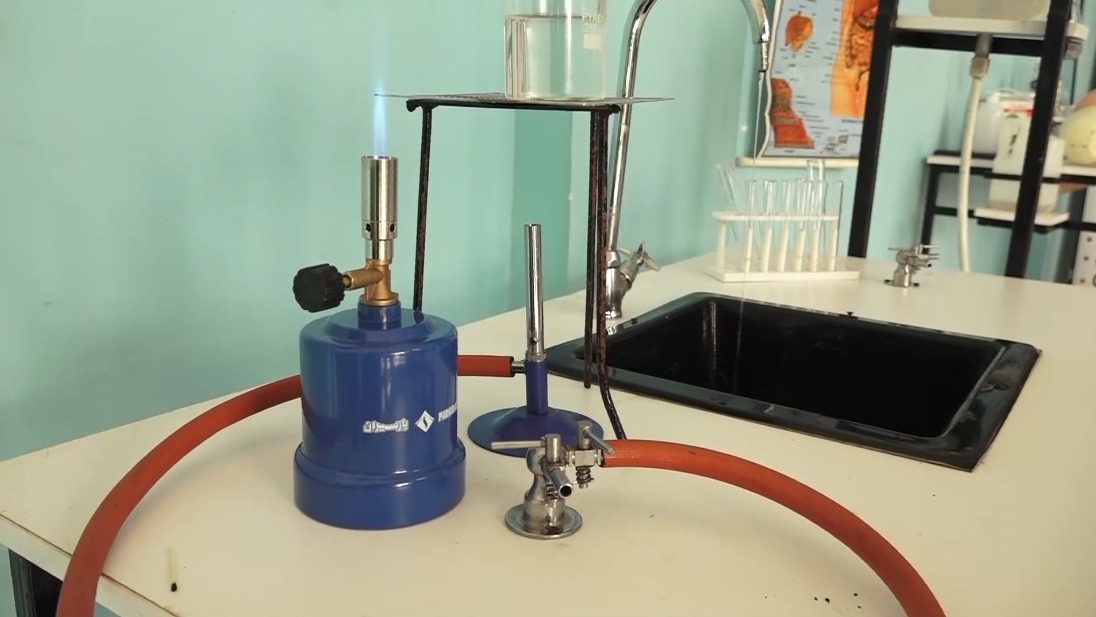
In order to address crisis of junior secondary in schools within Embu County and its environs, an investor has ventured in making and selling mobile laboratories to facilitate Competence Based Curriculum (CBC) learning.
According to the investor, Science Lab Limited, the movable laboratory will ease the pressure of schools which have no capacity to build a laboratory and equip it. The company also makes laboratory chemicals and reagents.
Leaky Kipkosgey who is in charge of sales at the company’s branch in Embu said the portable lab is equipped with a 13kg gas cylinder, gas taps, water taps, and an illumination lamp for lighting.
He said each mobile lab goes for Sh. 45,000 and one can accommodate eight students at a go and has ability to carry out experiments for physics, chemistry and biology subjects.
“This portable laboratory is good as it can be operated even in class or outside in the open air since it does not require a school to build a laboratory structure if it has no capacity.
“With lack of enough capitation in school and presence of junior secondary, this laboratory is remedy for schools, “he said.
Marketer, Josepy Munyi, said the portable workstations were alternative for already congested schools and called on the government to fund schools to procure them.
The Branch Manager, Marina Njoki, said the lab is mostly recommended for junior secondary and day secondary schools due to its affordability and portability.