Tag: Climate finance

  • Time to deliver on Africa’s climate finance promises

    Time to deliver on Africa’s climate finance promises

    Climate finance is on trial this November in Belém, Brazil. World leaders and climate advocates attending the United Nations Climate Change Conference (COP30) must decide whether the long-discussed plan for funding efforts against climate change can finally deliver for the people and places that need it most.

    The urgency is clear, climate finance must be availed, more easily, predictably, and equitably to frontline communities. This includes nature-rich regions like Africa that are leading the way in reducing climate change and adapting to its effects.

    Across Africa, families are continually rebuilding after floods that are more frequent and severe. Farmers watch their once-fertile land turn to dust, and coastal communities move further inland each year.

    The continent, which contributes less than 4 percent of global carbon dioxide emissions, continues to shoulder the heaviest climate burden. According to the World Meteorological Organization, Africa is warming faster than the global average, and estimates that countries are losing up to 5 percent of GDP with many forced to prioritize response to extreme conditions.

    On the other hand, Africa’s ecosystems, its forests, coasts, and grasslands form a significant part of the world’s climate insurance, absorbing billions of tonnes of carbon every year. Yet the continent receives less than 10 percent of global climate finance. That imbalance must end.

    A fairer system for people and planet

    A decade after the Paris Agreement that required developing counties to be financed to mitigate and adapt to effects of climate change, the divide between ambition and action remains wide. Africans have voiced their expectation of the next global climate finance goal expected to reach 1.3 trillion dollars a year by 2035. Funds must reach local actors, prioritize adaptation and support community-driven resilience.

    This call is consistent with our experience at The Nature Conservancy (TNC) working across Africa. We have seen that finance works when it strengthens systems that people rely on like food, water, energy and ecosystems. In Gabon, one of the few carbon-negative countries in the world with 88 percent forest cover, the government is advancing an innovative model to secure long-term investment in forests, oceans, and communities while creating jobs, supporting fisheries, and funding education and health services. The Project Finance for Permanence (PFP) model blends public, private, and philanthropic capital into a national framework that guarantees accountability and measurable results.

    Along Kenya’s coast, mangroves that store up to five times more carbon per hectare than terrestrial forests, are being restored in community-led Blue Carbon initiatives supported by TNC. Verified carbon credits from this, fund women’s cooperatives, youth enterprises and coastal protection. Here, finance is not abstract; it is a livelihood mechanism that keeps both nature and communities standing.

    These examples prove that finance works when it is long-term, inclusive and locally driven.

    Nature as infrastructure

    Nature is not a cost item in a budget, but the foundation of every economy. Forests regulate rainfall. Wetlands filter water and shield cities from floods. Grasslands and soils store carbon and sustain agriculture.

    That these nature-based solutions only receive a morsel of total climate finance is not just a funding gap, but a policy failure. Scientific evidence shows that conserving and restoring ecosystems could deliver more than one-third of the cost-effective climate mitigation needed by 2030 while supporting food security and biodiversity. This makes Africa’s forests, rivers, and coastlines essential infrastructure. Investing in their protection is one of the fastest, most cost-effective ways to strengthen resilience and drive inclusive growth.

    Tapping into Africa’s renewable energy sources, from the wind corridors of Namibia to the solar plains of the Sahel, can unlock prosperity for millions. However, this transition must be just, protecting workers, empowering women and youth, and leaving no community behind.

    The Africa Civil Society Organizations Position Paper calls for a Belém Action Mechanism on Just Transition that prioritizes local ownership, skills, and social protection. Public and private finance must reduce debt pressures and build industries that sustain communities rather than displace them. When communities lead, solutions last. Inclusive partnerships rooted in science and respect produce environmental and social dividends.

    The path from ambition to permanence

    Africa does not seek charity, but fairness and partnership. The continent’s ecosystems stabilize the planet’s climate; investing in them is a shared responsibility.

    At COP30, global leaders have a chance to rebuild trust. The new climate finance goal must move beyond pledges to create systems that last — finance that is transparent, equitable, and designed to endure. If we act decisively, COP30 could be remembered as the turning point when the world moved from promises to long view and recognized Africa not as a victim of climate change but as a vital partner in solving it.

    Without nature, there is no economy. Without equity, there is no stability. And without Africa, there can be no climate solution.

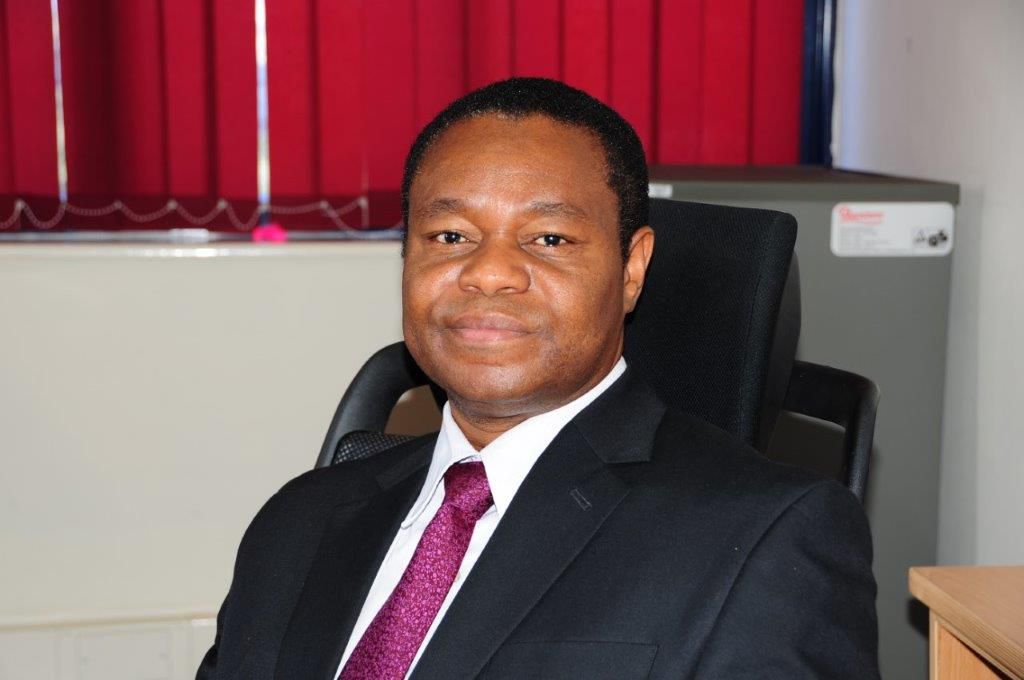
    Ademola Ajagbe is the Regional Managing Director Africa, The Nature Conservancy (TNC)

  • COP29: group terms carbon market dubious for Africa

    COP29: group terms carbon market dubious for Africa

    Environment lobby group Greenpeace Africa has opposed the push for unreliable market-based mechanisms as a solution to the climate crisis.

    The organization warns that carbon markets which involves compliance markets and voluntary markets undermine real climate action to address the growing crisis facing African communities.

    Speaking on the sidelines of COP29 discussions currently underway in Baku, Azerbaijan, Greenpeace Africa Pan-African Political Strategist Fred Njehu said carbon markets are perpetuating a dangerous form of carbon colonialism in Africa.

    “We’ve witnessed widespread resource exploitation and land grabs across the continent, where local communities and indigenous people are displaced by offset projects that primarily benefit corporations from the Global North. This system allows wealthy nations to continue polluting while outsourcing their climate responsibilities to Africa, effectively turning our lands into carbon dumps while failing to address the root causes of the climate crisis,” he said.

    According to the United Nations Environment Programme (UNEP) carbon markets are carbon pricing mechanisms enabling governments and non-state actors to trade greenhouse gas emission credits.

    “Instead of these flawed market mechanisms, we propose making polluters pay for the damage they have caused, through the Climate Damages Tax. We also propose that the New Quantified Goal on Climate Finance includes issues of adaptation, loss and damage that are a priority to the African continent,” said Murtala Touray, Program Director at Greenpeace Africa.

    “Investing in renewable energy, enhancing climate adaptation and resilience, and supporting community-led conservation efforts are more effective and equitable solutions. These approaches not only reduce GHG emissions at the source but also empower local communities to lead in the fight against climate change,” he added.

    According to the London Stock Exchange Group, the global carbon market trade was valued at $949 billion by the end of 2023.

  • African leaders call for urgent reforms of multilateral financial systems

    African leaders call for urgent reforms of multilateral financial systems

    The Africa Climate Summit 2023 has culminated with the continent’s leaders calling for urgent reforms of multilateral financial systems in a bid to secure funding for climate mitigation and climate adaptation projects.

    The African heads of state and governments on Wednesday also made it clear that they are aware of the unjust configuration of multilateral institutional frameworks that perpetually plunge the nations into debt traps.

    “African nations are placed on the back-foot, through costly financing which plunges our economies into debt traps and denies them resources needed to mitigate and adapt in response to climate change, invest in energy transition and facilitate industrialization to create jobs and wealth, and to reduce inequality,” said President William Ruto.

    Speaking on the same, the African Wildlife Foundation Global Leadership Vice President, Frederick Kumah, said that countries in Africa need to have their skin in the game, “We cannot always be asking for money and not put something behind it.”

    Kumah emphasized that Africa holds a third of the world’s biodiversity assets and emissions accounting only for 4 per cent of the global emissions adding that the African natural asset base cleans the world and provides goods and services from the ecosystem.

    “We need to take this message very powerfully forward, we shouldn’t go to the negotiation table begging for money, we should go to the table saying that we have ‘this’ to offer and if you want climate change to be addressed, you need to invest in Africa,” he said.

    African Wildlife Foundation Global Leadership Vice President, Frederick Kumah
    African Wildlife Foundation Global Leadership Vice President, Frederick Kumah

    “Africa needs to be strong in its negotiations to take its biodiversity assets forward.”

    The AWF Global Leadership VP also noted that this summit in Nairobi was one for the books, he said that this is the first time that the leaders have come out with a singular major issue which is climate finance.

    “Africa coming behind this one message is a very unique proposition. The political goodwill saw 17 heads of state and also former heads of state show significant commitment.”

    Kumah however said that there needs to be a mechanism to track the monies brought into the nations because there seems to be a lot of commitments but very little comes out of it.

    He suggested that the African Union Commission should establish a mechanism to track these commitments and hold countries to account.

    African countries will take the proposals in the Nairobi Declaration to a U.N. climate conference later this month and the COP28 summit which begins in the United Arab Emirates in late November.

    Ruto hailed the summit, Africa’s first specifically on climate, as a great success. He said governments, development banks, private investors and philanthropists committed a combined $23 billion to green projects over the three days.

  • AfDB pledges Ksh 145B in climate financing for youth enterprises

    AfDB pledges Ksh 145B in climate financing for youth enterprises

    African youth stand a chance to access up to Ksh 145 billion ($1B) in funding from the African Development Bank (AfDB) for their climate adaptation solutions and businesses.

    The additional financing to the YouthAdapt which is a joint initiative between AfDB and the Global Centre on Adaptation (GCA) was announced on the sidelines of the African Climate Summit 2023 in Nairobi, Kenya, by the bank’s president Akinwumi Adesina.

    “We have no option but to invest in our youths. Africa’s youth are the present. It is their views and perspectives that are going to change the continent. Failing to invest in the youth will hurt Africa, failure is not an option,” said Adesina.

    Young entrepreneurs and micro, small, and medium enterprises in Africa wishing to access the fund will be required to submit their innovative solutions and business ideas that have the potential to drive climate change adaptation and resilience across the continent, the bank said.

    Since launch two years ago, YouthAdapt has provided more than $1.5 million to 33 young entrepreneurs across 19 African countries, a move that has seen some of the ventures raise their profits by 200pc.

    “We know that if we provide you with the right tools, the right finance, and give voice to the voiceless, you will be unstoppable,” said Patrick Verkooijen CEO GCA.

    Cabinet Secretary for Youth Affairs, the Arts and Sports Ababu Namwamba lauded the funding as crucial in supporting the government’s climate adaptation agenda especially in boosting the country’s forest cover from 12pc to 30pc.

    “We are recruiting a one million youth Green Army as Climate Action Warriors to support President William Ruto’s ambitious plan to plant 15 billion trees in 10 years,” he said.

    Kenya was the first country to ratify the Sports for Climate Action Initiative under the United Nations Framework Convention on Climate Change.

    Under the initiative, sports organisations will be able to pursue climate action in a consistent and mutually supportive fashion through disseminating good practices, lessons learned and collaboration.

  • COP28 President-Designate calls on international community to deliver on climate finance

    COP28 President-Designate calls on international community to deliver on climate finance

    COP28 President-Designate Dr. Sultan Al Jaber has addressed the nineteenth session of the African Ministerial Conference on the Environment (AMCEN), sharing his vision and priorities for COP28, especially the need for adaptation financing and acceleration of the energy transition.

    A key partner to COP28, AMCEN unites environment ministers from across the continent and provides political guidance and coordinates policy positions among its member states, which include all 54 African countries. Ethiopia will chair AMCEN in 2024.

    In his speech, Dr. Al Jaber highlighted the need for urgent action to put the world back on track to achieve the goals of the Paris Agreement and keep the ambition of 1.5 within reach.

    “With just over 100 days before the world gathers in Dubai for COP28, both the science and common sense are telling us that our collective response to climate change is nowhere near good enough.”

    The COP President Designate not only recognized Africa’s position at the frontline of climate impacts but also its performance and potential as a leading force in the energy transition.

    He said, “When it comes to transitioning to an energy system free of unabated fossil fuels, Africa has many lessons for the rest of us. Here in Ethiopia, almost 100 per cent of the country’s energy comes from renewable hydro power. […] across this great continent, a young and growing population is seizing the potential of other clean energy sources from wind to solar and choosing low carbon economic growth.”

    However, he also acknowledged that a chronic lack of available, accessible and affordable climate finance is holding back Africa’s potential, noting that barely one tenth of global climate finance finds its way to the continent.

    As such, Dr. Al Jaber highlighted the urgent need to reform international climate finance. He said, “First, the international community must come through with the 100-billion-dollar pledge they made over a decade ago. I will continue to press donor countries to ensure delivery no later than this year […] Next, the entire global financial architecture from IFIs to MDBs needs modernizing. They were built for the second half of the last century. They urgently need to be upgraded to meet the needs of this one.”

    He was also clear on his call to action on Loss and Damage: “We must operationalize the fund and funding arrangements for Loss and Damage, and early pledges are vital to ensure we live up to the commitments made at Sharm El Sheikh.”

    In making these remarks, Dr. Al Jaber referred to a meeting of the Independent High-Level Expert Group (IHLEG) that united world leading economists in Abu Dhabi for two days of talks on the 15 and 16 August.

    The meeting, which was attended by leading figures including IHLEG co-chairs Lord Nicholas Stern and Dr. Vera Songwe as well as representatives from the World Bank, IMF, ECF and IFC, the COP28 and COP27 Presidencies, set out crucial next steps to reform international climate finance. A detailed report, including a clear roadmap on how to implement recommendations, will be presented to world leaders at COP28.

    Looking to the future and another significant moment to drive forward ‘fixing climate finance’, Dr. Al Jaber also announced that the COP28 UAE Presidency will co-host the third Climate and Development Ministerial alongside the UK, Malawi and Vanuatu governments in the UAE on 29 October during the formal ‘pre-COP’ period.

    The meeting – which will focus on advancing access to, and delivery of, adaptation finance – will be led by climate and development ministers from LDC and AOSIS states and will also be attended by ministers and leaders from ally countries, International Financial Organizations (IFIs), multilateral development banks (MDBs), Climate Funds and leading multinational organizations.

    During his visit to Ethiopia, Dr. Al Jaber also held bilateral meetings with African leaders to discuss the COP28 climate finance and energy transition agenda, including with Alioune Ndoye, Minister of Environment, Development and Ecological Transition of Senegal; Barbra Creecy, Minister of Forestry, Fisheries and Environmental Affairs of South Africa and Collins Nzovu, Minister of Green Economy and Environment of Zambia.

    He also particularly praised Ethiopia’s afforestation and reforestation-focused Green Legacy Initiative, which has created over 767,000 green jobs under Prime Minister Abiy Ahmed Ali’s leadership.

    Dr. Al Jaber’s visit to the African region and speech at the AMCEN summit is an important moment in mobilizing African leaders ahead of COP28 and preparing the ground for strong outcomes on international climate finance, including loss and damage.

    SOURCE COP28

  • Southern Africa in need of $90B for climate resilience yearly

    Southern Africa in need of $90B for climate resilience yearly

    New investments in form of climate finance could spark economic growth for Southern Africa economies with expected slowdown this year.

    According to the African Development Bank (AfDB) the 2023 Southern Africa Economic Outlook, the region is expected to slow down in 2023 to 1.6pc, followed by a slight improvement of 2.7pc next year.

    AfDB says last year, Southern Africa region’s GDP growth barely reached 2.7pc, a level much lower than global and African averages of 3.4pc and 3.8pc.

    The slowdown in South Africa has been mirrored in other countries within the region such as Zimbabwe, Zambia, Malawi, Madagascar, and São Tomé and Príncipe, which have also experienced intense adverse weather events.

    “Weighing down the environment further is the external debt burden which is forecast to remain high across the Southern Africa region. In 2022 it stood at 48pc,” said AfDB.

    However, the region could benefit from new climate action funding given the region needs at least $1 trillion with an annual requirement of $90.3 billion until 2030.

    Average annual climate finance flows to Southern Africa currently stands at $6.2 billion, a mere 6.9pc of what is required. Southern Africa, in addition, received the least financial flows relative to its financial needs, compared to other African regions, AfDB said.

    “We estimate that the continent will need about $235-$250 billion annually between now and 2030 to meet investments needed under the Nationally Determined Contributions. So this leaves Africa, the African private sector and the global private sector with an investment opportunity of up to $213.4 billion annually to address climate change alone,” said Kevin Urama, AfDB Vice President and Chief Economist.

    The bank is currently spearheading regional initiatives that intersect with climate adaptation, energy transition and sustainability across the entire continent.

    They include among others, financial instruments, green bonds, technical expertise, climate insurance schemes, policy interventions.