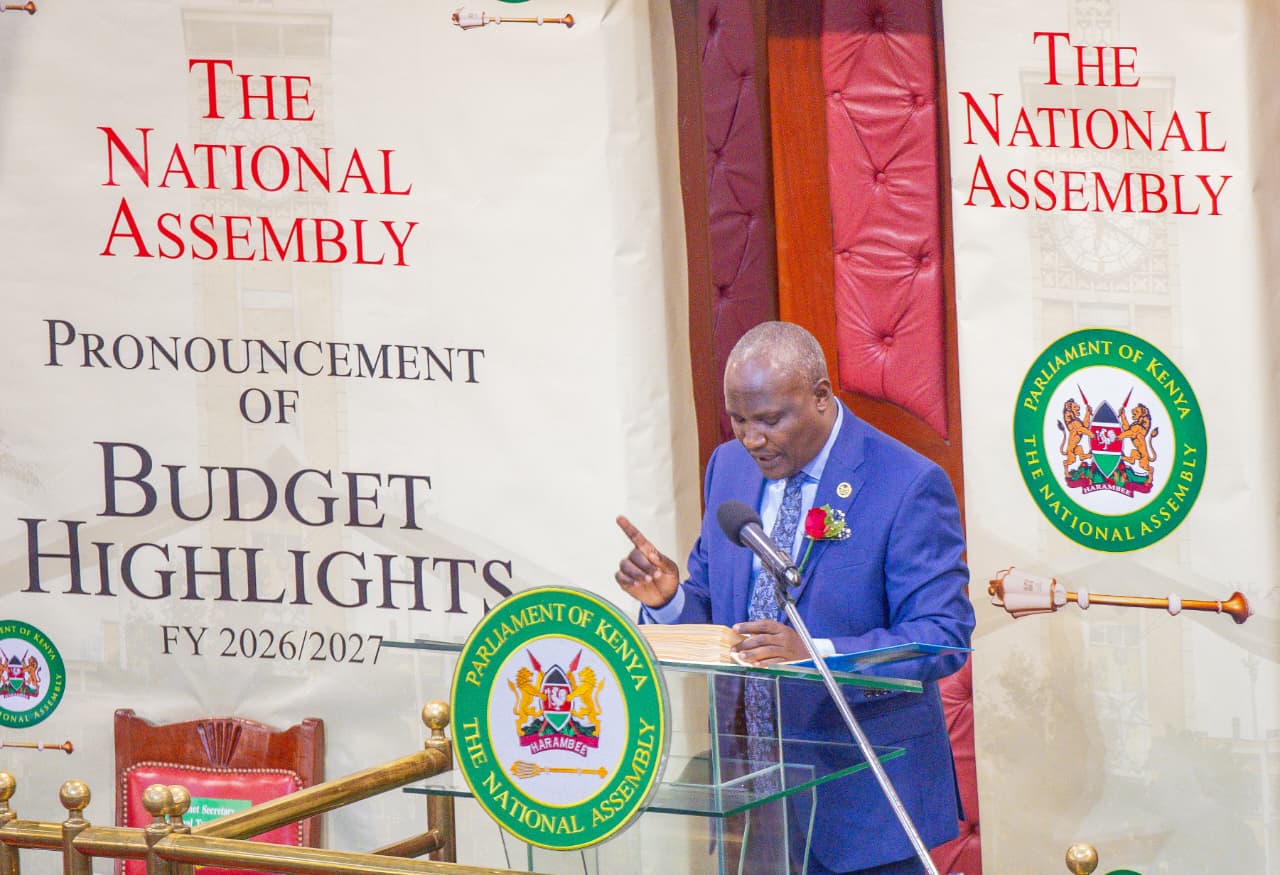
Kenya’s key governance, accountability, and justice institutions are poised for significant funding increases in the 2026/27 financial year. New budget proposals, tabled in Parliament by Treasury and Economic Planning Cabinet Secretary John Mbadi, reveal substantial upward revisions for critical bodies, including the Auditor General, the Office of the Director of Public Prosecutions (ODPP), the Judiciary, and the Ethics and Anti-Corruption Commission (EACC), compared to the 2025/26 financial year.
A comparison of the 2025/26 and 2026/27 Budget Statements indicates that institutions vital to anti-corruption efforts, oversight, justice administration, and devolution will all receive enhanced allocations. Cabinet Secretary Mbadi emphasized in the 2026/27 Budget Statement that the government prioritizes strong institutions, the rule of law, and accountability as fundamental pillars for sustainable development, investor confidence, and efficient public service delivery.
Under the governance and anti-corruption sector, the Ethics and Anti-Corruption Commission has been allocated KSh 5.1 billion in the 2026/27 budget, up from KSh 4.5 billion in the 2025/26 financial year. This represents an increase of KSh 600 million.
The Office of the Director of Public Prosecutions also registered a significant increase, receiving KSh 7.0 billion compared to KSh 4.5 billion allocated in the previous budget. This marks the largest increase among the governance institutions, with an additional KSh 2.5 billion allocated to strengthen prosecution and anti-corruption efforts.
The State Law Office allocation increased from KSh 5.3 billion in 2025/26 to KSh 6.0 billion in 2026/27, reflecting an increase of KSh 700 million.
Similarly, the Office of the Auditor General received an enhanced allocation of KSh 9.8 billion, up from KSh 8.7 billion in the previous financial year, translating to an increase of KSh 1.1 billion aimed at reinforcing public financial oversight and accountability.
Parliament’s allocation also rose from KSh 48.0 billion in 2025/26 to KSh 50.9 billion in 2026/27, an increase of KSh 2.9 billion to support legislative and oversight functions.
The Judiciary received KSh 30.4 billion in the 2026/27 budget compared to KSh 27.8 billion allocated in 2025/26, reflecting an increase of KSh 2.6 billion to support administration of justice and strengthen public confidence in the judicial system.
Notably, no major governance and accountability institutions experienced budget reductions. Instead, all received increased allocations, signaling a broader government strategy to bolster governance, transparency, and anti-corruption mechanisms.
On devolution, County Governments will receive KSh 428.0 billion as equitable share in the 2026/27 financial year, up from KSh 405.1 billion allocated in 2025/26. This represents an increase of KSh 22.9 billion.
According to the Treasury, the KSh 428.0 billion allocation represents 21 percent of the most recently audited revenues for the 2022/23 financial year, which remains above the constitutional minimum threshold of 15 percent under Article 203(2).
In addition to the equitable share, County Governments are expected to receive KSh 16.6 billion as additional allocations from the National Government’s share of revenue and a further KSh 57.4 billion from loans and grants provided by development partners.
This will bring the total county allocation for the 2026/27 financial year to KSh 502.0 billion.
For comparison, counties were allocated KSh 405.1 billion in equitable share in the 2025/26 budget, alongside KSh 69.8 billion for priorities such as food security, infrastructure development, and water and sanitation.
The Treasury also announced proposed amendments to the Public Finance Management Act through the draft Public Finance Management (Amendment) Bill, 2025. The amendments aim to streamline approvals and disbursements to counties by separating legislation governing county additional allocations from that governing donor-funded loans and grants.
Cabinet Secretary Mbadi reiterated the government’s commitment to strengthening devolution through timely resource disbursement and sustained increases in county funding since 2022.
The Budget Statements show that equitable share allocations to counties have risen from KSh 370.0 billion in the 2022/23 budget to KSh 428.0 billion in the proposed 2026/27 budget. Over the same period, total county allocations have increased from KSh 392.4 billion to KSh 502.0 billion.
