Tag: AUDA-NEPAD

  • 20 firms selected for AUDA-NEPAD 2026 agribusiness accelerator program

    20 firms selected for AUDA-NEPAD 2026 agribusiness accelerator program

    Twenty agribusinesses have been selected to join the Home-Grown Solutions Agribusiness Accelerator (HGSA-A) program.

    The selected firms, drawn from nine COMESA countries, will receive tailored advisory services, investment-readiness support, fundraising guidance, and mentorship, alongside assistance to access cross-border markets under the African Continental Free Trade Area (AfCFTA).

    The initiative, commissioned by the African Union Development Agency–New Partnership for Africa’s Development (AUDA-NEPAD) and supported by the New Zealand government, seeks to help companies scale their locally driven innovations while addressing Africa’s urgent agricultural challenges.

    During their participation, the companies are expected to deliver measurable impact by creating jobs and expanding their reach among smallholder farmers.

    “The HGSA-A pilot cohort brings together twenty growth-stage agribusinesses from nine COMESA countries, selected for their potential to improve productivity, reduce post-harvest losses, enhance value addition, and expand market access, while advancing climate-smart practices and the participation of women- and youth-led enterprises across African food systems,” reads a statement from AUDA-NEPAD.

    In Kenya, four companies in agri-processing and clean energy have been selected.

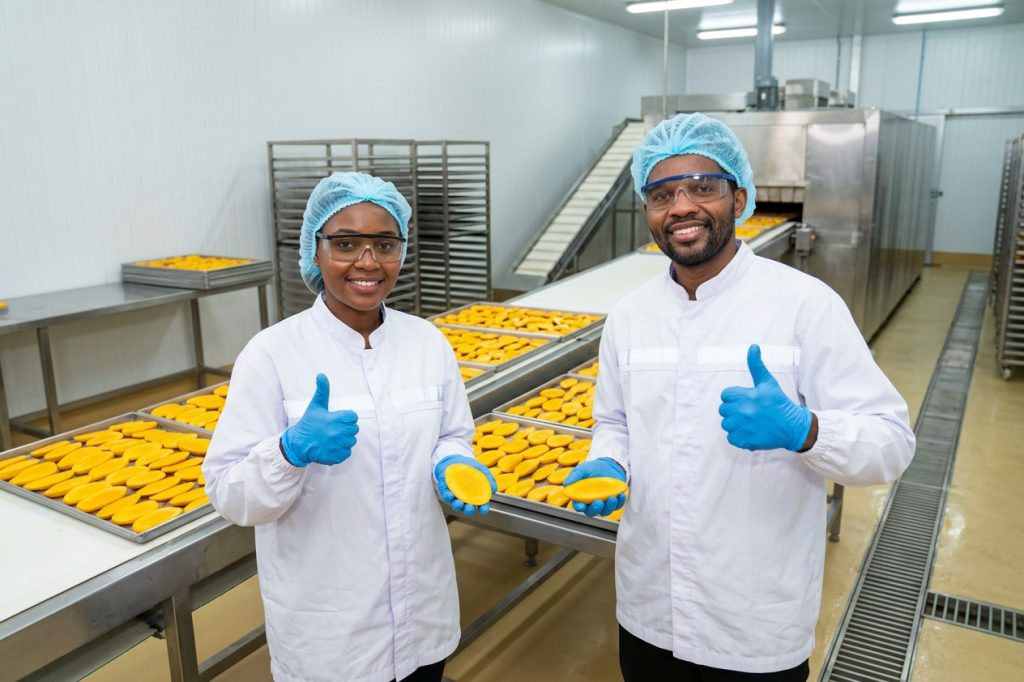
    They include Nyota Limited, which processes indigenous foods into frozen and shelf-stable products; BioAfriq Energy, which develops solar drying hubs for smallholder farmers; Kirima Fresh Dairies, which produces milk, cheese, and yogurt; and Wedgehut Foods, which sources and processes fresh potatoes for institutional markets.

    Three Zambian companies, Stewards Globe Limited/Afriseed, Kagezi Seed Company, and Forest Africa Zambia Limited, are also among those selected, focusing on climate-resilient seeds and value-added processing of indigenous fruits.
    In the Democratic Republic of Congo, four firms are participating, including Berakah, which uses solar-powered processing, and Majirane Coffee, which exports organic Arabica coffee while promoting women’s economic empowerment.

    In Uganda, Equator Seeds operates integrated seed-to-export coffee systems, while Drought Guard Africa delivers solar-powered irrigation solutions, impacting more than 120,000 smallholder farmers.

    Other participants come from Somalia, Malawi, Zimbabwe, Tunisia, Burundi, and Madagascar.

  • African Union, ACBF, AUDA-NEPAD launch call for proposals to strengthen  Africa’s policy research capacity

    African Union, ACBF, AUDA-NEPAD launch call for proposals to strengthen Africa’s policy research capacity

    The African Union Commission (AUC), in collaboration with the African Capacity Building Foundation (ACBF) and AUDA-NEPAD, has launched a competitive Call for Proposals under the Africa Think Tank Platform (ATTP).

    The call for proposals that was issued under the Africa Think Tank Platform (ATTP), invites consortia of 3 to 5 African think tanks to pursue multi – year funding for collaborative, policy-relevant research across six thematic areas, including economic transformation and governance, climate change, regional trade, food security, human capital development, and digitalization.

    The initiative aims to position African think tanks as key architects of cross-border development policy with assistance from the World Bank that will provide strategic funding support for the ground-breaking program.

    Speaking during the launch event at African Union Headquarters in Addis Ababa, Selma Malika Haddadi, the Deputy Chairperson of the African Union Commission, noted that the platform is an affirmation of the commitment to ensuring African institutions and actors shape the continent’s development trajectory.

    “This Platform is not a stand-alone initiative,” she said. “It is an affirmation of our commitment to ensuring African institutions and actors are at the forefront of shaping the continent’s development trajectory.” Said Haddadi.

    She highlighted the initiative’s broader vision by stating, “This represents a  strategic investment in Africa’s ability to lead its own policy conversations with rigor,  data, and indigenous expertise.”

    Between three and five consortia will be selected and receive grants of approximately US$10 million for up to two and a half (2.5) years to support programs aligned with the aspirations of Agenda 2063 and regional integration priorities.

    Haddadi lauded the World Bank’s support describing it as a strategic partnership that reinforces African ownership in development planning and accountability.

    On his part, Director, Programs and Impact Department, ACBF Abdrahmane Dicko, underscored the project as a moment to redefine Africa’s future on Africa’s own terms.

    “For over 33 years, ACBF has built the backbone of Africa’s policy excellence by establishing and supporting over 50 think tanks on the continent. The ATTP Project is coming at the right time and represents a bold investment in the institutions that shape our continent’s destiny, namely the think tanks.” Dicko noted.

    Adding that: “This is the first significant investment directed to think tanks after the closure, in 2017, of the World Bank project managed by ACBF. We are proud to work via such a unique partnership, ensuring the Project becomes a source of sustainable capacity, not just funding.”

    Samer Al-Samarrai, Lead Economist, World Bank remarked that the Call for Proposals will provide competitive Only grants for think tanks to conduct policy research, support policy uptake, and build institutional capacity.

    According to Samer, the proposals and analysis generated under this initiative have the potential to inform homegrown, evidence-based policies that improve economic performance, strengthen regional cooperation, and contribute to sustainable reduction in poverty.

    “I encourage eligible think tanks to review the requirements carefully, form effective consortia, and submit strong proposals.” Samer noted.

    Application Timeline

    The call for proposals marks the first operational phase of the ATTP, aiming to establish a continent-wide network of authoritative institutions that produce evidence-based knowledge, engage decision-makers, and contribute to unified policy frameworks.

    The deadline of submitting the proposals is on 24 September 2025, while the Evaluation and Selection  process will conclude by 17th October 2025. Once the selection and evaluation concludes, applicants can expect the award notification by 14th November. Further successful applicants expect an anticipated to occur on 19th of December 2025.

    There will be regular webinars as well as help desk that will support applicants throughout the process.

    Think tanks interested in applying are encouraged to review the full application on https://africathinktankplatform.africa/callforproposal.