
HIV burden, illicit brews, defilement top agenda at Nyeri public forum
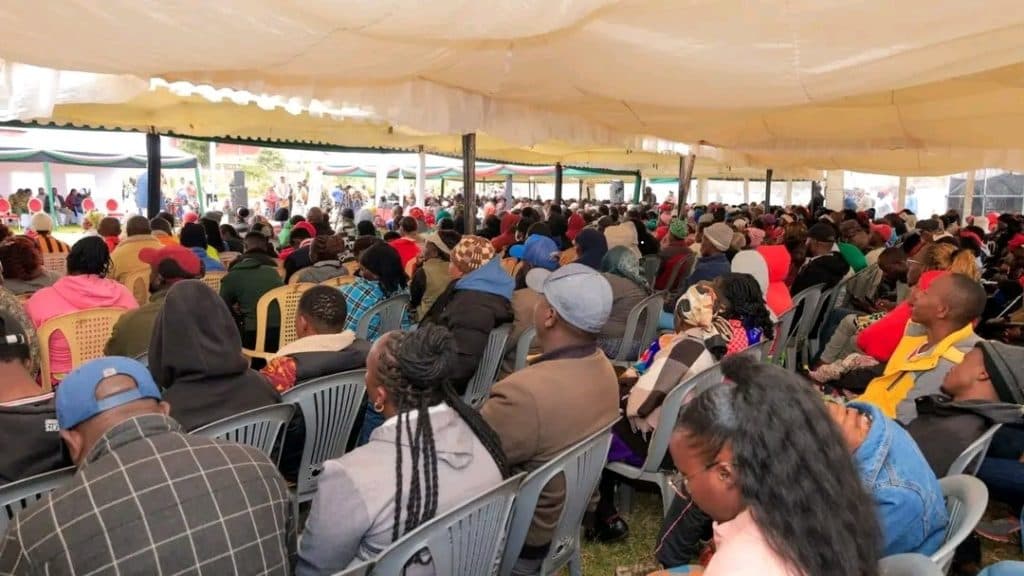
Nyeri Town Constituency Member of Parliament Duncan Maina Mathenge, over the weekend, convened a public baraza with residents of Nyeri Town in a joint initiative with the National Syndemic Diseases Control Council, bringing to light a raft of alarming health and social statistics that he said demand urgent and coordinated action from all stakeholders.
The forum, held to assess key challenges facing the constituency, drew attention to the scale of the HIV epidemic in the area, with data tabled at the meeting showing 128 new infections recorded annually and 210 deaths linked to HIV/AIDS each year. The figures also revealed that 21,000 people in the area are currently living with HIV/AIDS.
Illicit alcohol
Beyond the HIV statistics, the meeting spotlighted a parallel crisis in alcohol abuse, with data indicating that six out of 10 alcoholic drinks on sale within the constituency are illicit brews. Experts and community leaders in attendance warned that the proliferation of unregulated alcohol poses severe risks to public health, family stability, and economic productivity in the region.
Mathenge called on enforcement agencies and community watchdogs to intensify crackdowns on the production and distribution of illicit liquor, noting that the problem cuts across age groups and fuels other social ills
Defilement cases
In 2024, 97 defilement cases were recorded in the constituency. That figure dropped to 80 in 2025, and a decline advocates cautiously welcomed. However, with 31 cases already documented in the first five months of 2026, projections based on the current rate suggest the annual total could surpass previous years if the trend is not arrested.
Child rights advocates at the meeting urged the government to strengthen reporting mechanisms, provide support services to survivors, and pursue prosecutions more aggressively to deter offenders.
Multi-sectoral response
Addressing residents, Mathenge said no single institution could tackle the compounding challenges on its own, and called for a coordinated, multi-sectoral approach bringing together health workers, law enforcement, schools, religious institutions, families and county government.
“These are not statistics on paper. These are our children, our neighbours, our families,” the lawmaker said, urging residents to take personal and collective responsibility in safeguarding community well-being.
The National Syndemic Diseases Control Council representatives who attended the forum echoed the call for community-level action, emphasising that behaviour change, access to testing and treatment, and social support systems remain central pillars in the fight against HIV and related challenges.

Margaret Kalekye
Writes about county news for KBC Digital.
More on HIV
 Features
How Kenya’s HIV Care System buckling after donor withdrawal
·KBC Digital·Updated
 Local News
First Lady rolls out second phase of campaign against HIV, teenage pregnancy, and GBV
·KBC Digital
 Features
New HIV studies offer hope for safer, more tailored treatment for older adults in Africa
·Christine Muchira·Updated
 County News
PS Oluga urges counties to integrate HIV prevention in health services
·Christine Muchira·Updated