Author: Ronald Owili

  • Kenya seeks Indonesia’s help to develop edible oil industry

    Kenya seeks Indonesia’s help to develop edible oil industry

    Kenya is targeting to establish large scale and outgrowth schemes in eight counties for the production of palm oil, sunflower oil and soybeans in collaboration with Indonesia.

    Investments, Trade and Industry Cabinet Secretary Moses Kuria says the partnership with the world’s largest edible oil producer will help Kenya attain edible oil sufficiency and cut the huge import bill the commodity attracts.

    In a statement, Kuria said a delegation of leading Indonesian government and private firms is expected to meet President William Ruto and other members of the Executive for a joint discussion on full development of the edible oil industry which he says is currently being controlled by five companies.

    “Kenya currently imports crude oil worth Ksh 140 billion ($1b) annually through five companies of Bidco, Kapa Oil, Pwani Oil, Menengai and Golden Africa. Last December there was an outcry from consumers when the prices of edible oil skyrocketed to Ksh 480 per litre forcing the government to import edible oil through the Kenya National Trading Corporation thus reducing the retail price by more than a half to Ksh 220 per litre,” said Kuria.

    However according to the edible oil manufacturing sub-sector players under the umbrella of the Kenya Association of Manufacturers (KAM), the price increments have largely been due to movements in international prices.

    “….driven by intense but positive competition, it is our position that local market prices always move based on international market forces and prevailing foreign exchange rates and not any other factors as evidenced in price trends over the last 3 years,” KAM said in a statement.

    The 13 edible oil manufacturers currently have more than 2 million metric tonnes of edible oil per year against current market demand and consumption is about 800,000 metric tonnes (MT) per year, leaving an idle capacity of more than 1 million MT, as available.

    KAM said of the total capacity, at least 25pc has been invested over the last 5 years alone from a total capital investment amounting to Ksh 100 billion made by the 13 companies who manufacture and process Crude Palm Oil (CPO), Crude Sunflower seed Oil, Crude Soybean Oil and Crude Corn Oil.

    The Indonesian delegation which will include private companies in blue economy, mining, meat and livestock, textile and apparel and energy will be led by Minster of Maritime and Investment Affairs Luhut Binsar.

  • African airlines post a 2.4pc drop in cargo demand – IATA

    African airlines post a 2.4pc drop in cargo demand – IATA

    Weak demand owing to rising inflation coupled with the armed conflict in Sudan have seen airlines in Africa record a 2.4pc decline in cargo demand in a year to May according to latest data by the International Air Transport Association (IATA).

    The drop in demand comes as the airlines recorded increased capacity year-on-year according to the May 2023 global air cargo markets by the association.

    “Notably, the growth on the Africa to Asia trade route slowed significantly in May from 18.5pc in April to 11pc, possibly due to the impact of the conflict in Sudan since mid-April. Capacity in May was up 9.2pc compared to the same month in 2022,” said IATA.

    IATA notes that global demand, measured in cargo tonne-kilometers (CTKs), fell 5.2pc compared to May 2022 from a 6pc decline reported for international operations while capacity, as measured by available cargo tonne-kilometers (ACTKs), rose 14.5pc compared to May 2022 in what was primarily driven by belly capacity which increases as demand in the passenger business recovers. Capacity is now 5.9pc above May 2019 (pre-pandemic) levels.

    “Trading conditions for air cargo continue to be challenging with a 5.2pc fall in demand and several economic indicators pointing towards weakness. The second half of the year, however, should bring some improvements. As inflation moderates in many markets, it is widely expected that central bank rate hikes will taper. This should help stimulate economic activity with a positive impact on demand for air cargo,” said Willie Walsh, IATA’s Director General.

    In Asia-Pacific region, airlines saw their air cargo volumes decrease by 3.3pc during the period compared to the same month in 2022 blamed on stronger annual contraction in international air cargo demand from -3.5pc in April to -6.4pc this month.

    Available capacity in the region increased by 38.3pc compared to May 2022 as more belly capacity came online from the passenger side of the business.

    North American carriers saw the weakest performance of all regions for the third consecutive month with an 8.1pc decrease in cargo volumes in May 2023 compared to the same month in 2022 as capacity increased 1.2pc, the association said.

    European carriers and Middle Eastern carriers experienced a 6.7pc and 3.1pc year-on-year decrease in cargo volumes in May 2023 respectively.

    Only Latin American carriers had the only positive performance in May 2023 posting a 3.6pc increase in cargo volumes compared to May 2022 when capacity was up 14.7pc compared to the same month in 2022.

  • Uganda to tap new technologies during international energy expo

    Uganda to tap new technologies during international energy expo

    Uganda is seeking to adopt new innovations and policies during the upcoming Power and Elec International Expo 2023 in Kampala.

    The expo slated for this month is expected to have at least than 100 exhibitors from among others, EAC, India, United Arab Emirates (UAE) and the United Kingdom.

    East African Community (EAC) member is looking to use the platform enhance investments in the country’s energy sector from the consumer-to-business and business-to-business engagements during the expo.

    “The Expo is an opportunity to enhance interaction with domestic and international companies and provide a comprehensive platform to enable the growth of the energy sector in Uganda,” said Irene Bateebe, Permanent Secretary, Ministry of Energy and Mineral Development.

    Exhibitions & Trade Services India PVT Ltd (ETSIPL) which co-hosts the event with the energy ministry said international expo will bring together national and international players in different spheres of power sector to showcase the latest innovations and technologies.

    “The business community in this sector has a chance to showcase technologies but also discuss key policy challenges such as how to close the technological gaps and the national innovation systems required to foster technological progress,” added Bateebe.

    ETSIPL is a leading exhibition organiser and promoter from India, handling over 50 exhibitions in a year around the world.

    The Power and Elec International Expo 2023 will focus on promoting innovative technologies, creating awareness, and building sustainable collaborations in the energy sector.

  • MYDAWA raises Ksh 2.8B as regional expansion gains traction

    MYDAWA raises Ksh 2.8B as regional expansion gains traction

    E-healthcare provider MYDAWA has announced the acquisition of Uganda’s largest pharmacy chain Guardian Health for undisclosed amount.

    The acquisition follows a Ksh 2.8 billion ($20M) capital injection from Alta Semper, an international private equity fund targeting to democratize access to health and well-being, having first backed the company in October 2021.

    “This investment marks our entry into digital healthcare in Africa, which we see as a major growth area and an extremely important drive of health outcomes across the continent in the coming years. MYDAWA was the logical choice for us as their proprietary technology, underpinning a scalable business model along with regulatory knowhow and market entry experience mapped extremely well to our own strategy,” said Afsane Jetha, Alta Semper Chief Executive Officer.

    At the same time, the firm formally announced the appointment of Priscilla Muhiu as chief executive officer to replace Neil O’leary who is also the founder of the company.

    “MYDAWA is delighted to formally announce the appointment of Priscilla Muhiu, who was most recently at Glovo, to lead its Kenyan business. Under Priscilla’s leadership MYDAWA has already seen significant expansion of both consumer and business to business activity,” the firm said in a statement.

    MYDAWA says the acquisition of Guardian Health which has 19 stores in key locations in Kampala and neighbouring regions is part of its expansion strategy to consolidate its operations in the region and internationally.

    “It is the ideal launchpad on which to overlay the e-health capabilities of MYDAWA – simultaneously making it both the biggest and most advanced e-health offering in Uganda. MYDAWA is dedicated to continuing its growth trajectory while constantly improving service for customers in Uganda. MYDAWA continues to be on the lookout for potential acquisitions and collaborations with promising start-ups across Africa,” said Muhiu.

    The firm which first began operations as an online pharmacy in Kenya is now a fully regulated one-stop-shop for healthcare with access to consultations, tests, referrals, a continuous help desk, accessible through an omni channel delivery method based on customer preferences.

    Purchasers of prescription medicine through its platform also have access to medical advice from professionals and pharmacy technicians who help deliver medicines to the customer’s door.

    The firm is says to complete the service offering, it is opening walk in pharmacy/health centres in Kenya, the newest being the successful launch of a combined full-service pharmacy, health centre and fulfilment centre in Mombasa, Kenya.

    MYDAWA recently received a major grant from the Bill and Melinda Gates Foundation to expand its service offering into telemedicine and distribute HIV products in the region.

  • Jubilee Insurance shareholders set for Ksh 870M dividend payout

    Jubilee Insurance shareholders set for Ksh 870M dividend payout

    Shareholders in Jubilee Insurance are set to walk away with Ksh 870 million following the completion of the transfer of general business to Allianz.

    The pay which is lower than Ksh 942 million the firm paid in 2021 comes after the shareholders endorsed the payment of a dividend of Ksh 9 per share plus a special dividend of Ksh 3 per share during the 2022 Annual General Meeting (AGM) held Friday as recommended by the board. This now brings total dividend pay for the year to Ksh 12 per share.

    The dividend pay comes despite Jubilee Insurance recording a marginal drop in profit after tax which reduced to Ksh Ksh 6.6 billion for the full year period ended December 31, 2022 from Ksh 6.8 billion recorded a year earlier.

    “East Africa’s economy experienced a slowed growth in 2022 because of inflation coupled with high interest rates and increasing debt. While the road to recovery was difficult, our company navigated uncertain market conditions while adapting to a rapidly changing landscape. We are delighted that the Group’s balance sheet remains solid and resilient,” said Nizar Juma, JHL Chairman.

    JHL also recorded a 4pc decline in profit from the core business despite the completion of the transfer of general business to Allianz.

    Juma said during the year under review, Jubilee Insurance completed the partnership in the remaining countries with Allianz in the general insurance businesses in Burundi, Mauritius and Tanzania recording a gain of Ksh 2.2 billion, which gave a combined profit before tax of Ksh 7.5 billion for 2022 from Ksh 8.4 billion in 2021.

    JHL also saw a 15pc decline in gross written premium to Ksh 26 billion from Ksh 30.6 billion which was impacted by the transfer of the general insurance business to the Allianz Group.

    The firm said non-general business has grown by Ksh 7.2 billion since 2020, when the sale of general business to Allianz commenced.

    Jubilee Insurance total assets increased by 9.8pc to Ksh 170.5 billion from Ksh 155.3 billion, which is the largest in the industry.

    Juma told shareholders that the insurer is now targeting to begin implementing the second phase of its digital transformation agenda to focus on customer experience, telematics, and data analytics.

    “This stage will support the development of more innovative and affordable insurance products improving accessibility and financial inclusion across the region,” said JHL.

    Phase one of the project saw the firm deploy robotics, cloud, Artificial Intelligence and data capabilities and successfully migrate its core applications and infrastructure to the cloud enabling the business to pursue efficiency, agility, security, and end-to-end digital transformation.

    So far, over 50 robots have been deployed across the region to improve business efficiency, security and to deter fraud.

    The Group has also introduced Artificial Intelligence to improve the claims process, further enhancing the customer’s experience.

  • Sahara Group, UoN partner to enhance clean energy transition

    Sahara Group, UoN partner to enhance clean energy transition

    Sahara Group and the University of Nairobi have launched a platform which will help students develop and innovate solutions that will accelerate Kenya’s clean energy transition.

    The partnership seeks to prioritise use of innovation challenges, Science Technology Engineering Arts and Mathematics (STEAM) contests, creative writing and debate competitions, and thought leadership platforms to facilitate generational sustainability in Kenya.

    “Sahara Group is on a mission to spearhead Africa’s march towards sustainability and an inclusive energy transition and we welcome this opportunity to work with the University of Nairobi with great excitement. Together, we can enhance awareness creation and ultimately birth innovations that will create sustainable livelihoods and economic development in Kenya,” said Bethel Obioma, Sahara Group Head of Corporate Communications.

    University of Nairobi Director of Corporate Affairs John Orindi said the planned partnership resonates with the institution’s ongoing efforts towards empowering students to become change agents for sustainability in Kenya.

    “The creative writing contest presents another opportunity for our students to contribute towards raising awareness and proffering solutions for issues like deforestation and pollution and suggest renewable energy solutions to reduce the dependence on fossil fuels and adoption of clean energy technologies in households and businesses,” he said.

    Other sustainability projects the partnership includes sustainable waste management through improved collection and the recycling of waste materials to conserve the environment.

    “How and what young Kenyans understand about the terms climate change, climate action, and energy transition will play a critical role in leveraging their energies and skills in promoting sustainability,” added Obioma.

  • Pain at the pump as EPRA hikes fuel prices in latest review

    Pain at the pump as EPRA hikes fuel prices in latest review

    Consumers will pay an average of Ksh 12 per litre litre of fuel after the Energy and Petroleum Regulatory Authority (EPRA) announced new prices to reflect the 16pc Value Added Tax charged on petroleum products.

    The new prices published on Friday by the authority will see a litre of super petrol rise by Ksh 13.49, diesel by Ksh 12.39 and kerosene by Ksh 11.96 effective July 1, 2023 until next review on July 14, 2023.

    “Pursuant to the Finance Act 2023, the Value Added Tax on super petrol, diesel and kerosene has been revised from 8pc to 16pc effective 1st July 2023. Accordingly, EPRA has recalculated the maximum pump prices that will be in force from 1st July 2023 taking into account VAT at 16pc,” said Kiptoo Bargoria, EPRA Director General in a statement.

    The price adjustments means consumers in Nairobi will pay a maximum of Ksh 195.53 for a litre of petrol and Ksh 179.67 for a litre of diesel. Kerosene users on the other hand will pay a maximum of Ksh 173.44 per litre beginning Saturday.

    The new prices comes as the High Court suspended the implementation of the Finance Act, 2023 in a case filed by Busia Senator Okiya Omtatah.

    Lady Justice Mugure Thande gave the orders on Friday with the mention of the case slated for July 5, 2023.


  • Coast taxi drivers sign agreement with taxi app YEGO

    Coast taxi drivers sign agreement with taxi app YEGO

    A section of taxi drivers in Mombasa County have signed an agreement with digital taxi firm, YEGO in a bid to benefit from low commissions the firm charges per trip.

    YEGO Mobility Chief Executive Officer Karanvir Singh said the Memorandum of Understanding (MoU) the firm signed with more than 600 will ensure the drivers access benefits such as insurance and saving schemes and low commissions it charges per trip that will ensure they get good returns amid rising cost of living.

    “We are doing something which is going to change the driver’s life in making him not only have control in his life but also the driver being able to live a comfortable life. So YEGO has publicly committed 10pc of our dividend in perpetuity go to YEGO Driver Sacco,” said Singh.

    The Rwandese ride-hailing firm which entered the Kenyan market in May this year targets to expand its services across all major cities and towns in the country.

    Digital taxi drivers in the country have been lamenting the high commission rates charged by rival operators without factoring in the fuel price increments which has seen a rise in transport costs.

    “We want the industry to recognize the driver. The driver is also a stakeholder in the industry. It’s a bout time we speak and we mention that we want a seat a the table to discuss the criteria of pricing. That is a fact that has been left out for almost five years now,” said Henry Mule, one of the drivers.

    As a result of the agreement, the firm says passengers will also benefit from the enhanced safety, security, transparency, predictability, convenience, and reliability of YEGO.

  • Kenyan firms paradise for cybercriminals with 90pc reported breach

    Kenyan firms paradise for cybercriminals with 90pc reported breach

    Large companies operating in Kenya have been the worst hit by cybercriminals according to a report by Liquid C2.

    The Evolving Cyber Security Landscape in Africa 2022 report by the pan-African technology group suggests that 90pc of companies operating in Kenya reporting a data breach within the last one year.

    Cybercriminals have intensified their hacks despite heavy investments local companies have deployed to safeguard their systems, suggesting a rapidly changing cyber crime world.

    “The research highlights that over half of all large enterprises in the three countries were victims of a successful cyberattack, with 90pc of them being Kenyan businesses. Increasingly sophisticated methods like Cybercrime-as-a-Service (CaaS) are becoming more popular in Africa, meaning businesses can no longer rely on outdated technologies and processes,” said David Behr, Liquid C2 Chief Executive Officer.

    According to the report, despite 85pc of Kenyan companies investing in advanced endpoint protection such as firewalls to mitigate threats, 82pc of businesses said cyber security threats had increased over the past year compared 62pc in South African, same as Zambia.

    “The biggest concern emerging from this report is that companies are saying that they’ve put a lot more cyber security controls in place. With threats evolving faster than security systems, companies cannot afford to get complacent,” said Behr.

    The firm’s findings indicate that to mitigate cyber threats, 65pc of the business use data backup, 40pc secure VPN and remote access, 38pc use web content filtering and malware while only 28pc us email content filtering and malware.

    Additionally, 82pc of companies in Kenya have been forced to beef up their IT staff by hiring cyber security personnel.

    Liquid C2 says top method of attack used by cybercriminals targeting companies include email through phishing or spam attacks at 61pc, with attacks through compromised passwords following at 48pc and data breaches and attacks at 44pc being the second and third most common.

    “The report highlights that businesses must be consistently vigilant about the ever-evolving cybercrime landscape and the methods malicious actors use to breach cyber security measures. As the report shows, complacency is a luxury no one can afford,” added Behr.

    61pc of the companies included in the research said that the breaches to their operations occurred as a result of remote or hybrid working.

    While the report by Liquid C2 did not highlight the origin of attacks coming into Kenya, the country’s high internet adoption has increased vulnerability to firms and individual internet users.

    Third quarter statistics by the Communications Authority indicate that total cyber threats detected reduced 24.9pc from 249.99 million to 187.76 million while advisories increased 0.9pc to 3.58 million from 3.56 million.

    Leading threats to businesses and users according to CA include malware, DDOS, web application attacks and system vulnerabilities.

  • Nairobi County goes after property owners to fund Ksh 40B budget

    Nairobi County goes after property owners to fund Ksh 40B budget

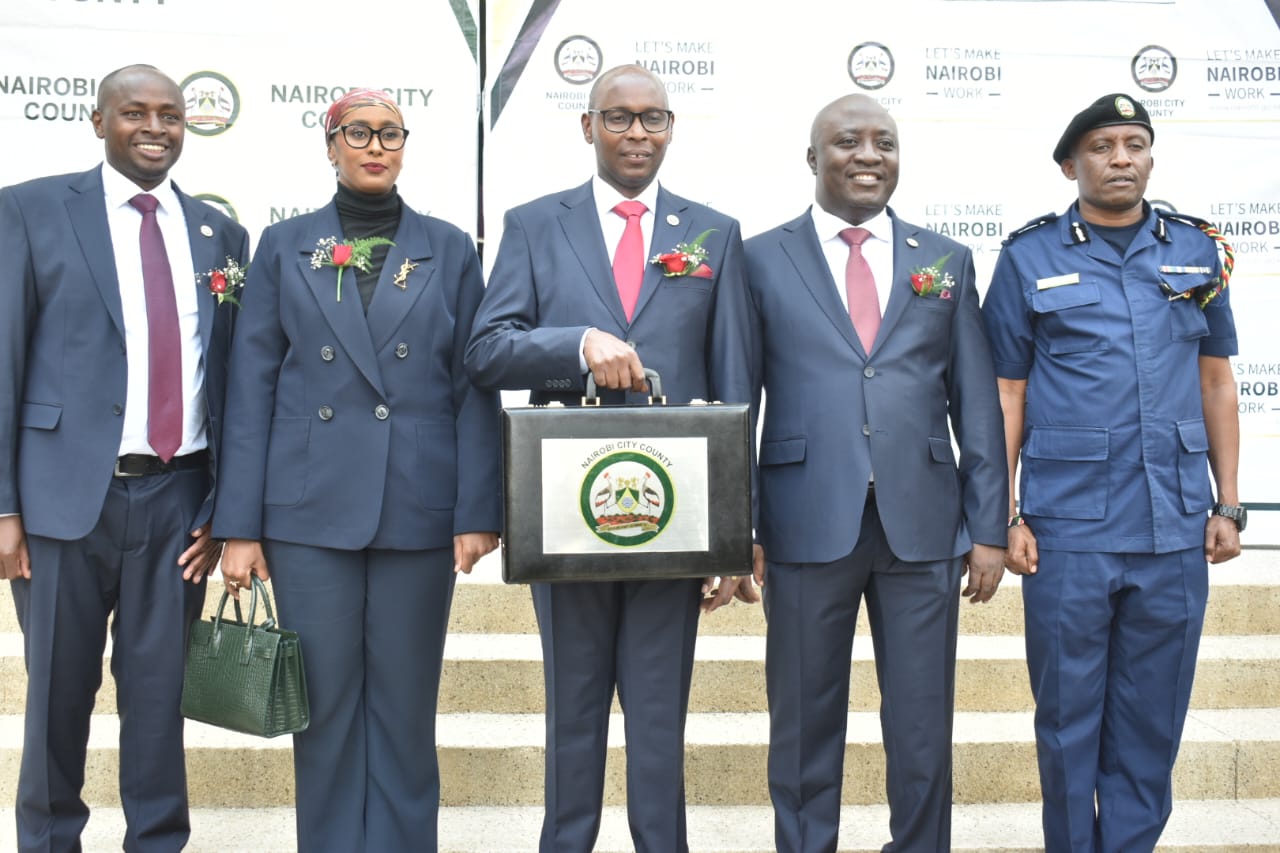
    Property owners in Nairobi City could see significant rise in rate charges as part of news measures the county government is seeking to introduce in order finance its Ksh 40.7 billion 2023/24 budget.

    While presenting the FY2023/24 budget before the County Assembly on Thursday, Nairobi City County Government Finance and Economic Planning County Executive Committee Member Charles Kerich said the county plans to introduce new measures that will help the county collect Ksh 19.99 billion as local revenue with the remaining Ksh 20.7 billion coming from the National Government transfer.

    Of the total expenditure, recurrent expenses will amount to Ksh 28.8 billion while development expenditure will amount to Ksh 11.9 billion.

    “The allocation of development is equivalent to 30pc of the total budget, which is in line with section 107 of the Public Finance Management Act 2012, which requires at least 30pc to be allocated to development,” said Kerich.

    The county is planning to raise additional Ksh 1 billion from the property market by introducing sectional property rates targeting individual houses on a block of apartments and completing and capturing Geographical Information System (GIS) to boost land rate collection.

    “Land rates are currently charged based on the 2019 valuation roll. The number of ratable properties is expected to increase from the current 181,000 to approximately 241,000 properties,” said Kerich.

    Property owners in the county will also pay environmental levy charge capped at 2pc of the annual property rates.

    The city county is also planning to restructure the single business permit codes which will categorize businesses as either hyper, mega, large, medium, small or mini in order to enhance fairness and compliance.

    Kerich said the move will cut the rate of default especially among small businesses and help raise additional Ksh 1 billion in revenue.

    Other tax administrative measures and tax policy reforms proposed by the county finance department include reduction of originating and terminating charges (seasonal tickets) for PSVs terminating outside CBD with the potential of increasing the collection, regularisation of unauthorised developments and imposition of penalties for the same and increasing charges on betting shops and pool table joints which will also control betting activities and enhance revenue.

    In terms of allocations, school feeding programme also known as Dishi na County introduced recently by Nairobi County Governor Johnson Sakaja and which targets to encourage high attendance of school-going children within the county will receive the largest share of allocation at Ksh 1.7 billion out of which Ksh 1.2 billion will be used to procure food to feed at least 250,000 in the current financial year while Ksh 500 million has been allocated for construction of additional kitchens and serving sheds.

    The city’s infrastructure sector will receive allocation amounting to Ksh 1.5 billion, out of which Kshs 1.1 billion has been earmarked for the construction, rehabilitation and maintenance of roads and bridges and Ksh 400 million for street lighting installation and maintenance in order to enhance security in the estates.

    The health sector on the other hand will receive a large allocation amounting to Ksh 1.4 billion out of which Ksh 400 million has been set aside for purchase of pharmaceuticals and non-pharmaceuticals and Ksh 1 billion for construction, rehabilitation, and equipping health facilities.

    In order to promote talents skills development and care, the Nairobi County plans to spend Ksh 772 million for school bursaries and Ksh 100 million for the construction and rehabilitation of ECDs and vocational training centres.

    Sports culture and arts sector has been allocated Ksh 520 million, environment, water and natural resource Ksh 1.6 billion and trade Ksh 1.1 billion.