Author: Muraya Kamunde

  • Ksh 1M chair for Siaya DG dominates impeachment hearing

    Ksh 1M chair for Siaya DG dominates impeachment hearing

    Siaya Deputy Governor, William Oduol’s office chair cost the tax payer a whooping Ksh 1 million, an ad hoc committee appointed by the County Assembly to investigate grounds for his impeachment has heard.

    According to documents tabled before the house by the executive, the executive orthopedic desk chair was procured at a cost of Ksh 1,120,000/= immediately after the DG assumed office and summoned the county chief officers demanding renovations and replacement of furniture in his office.

    The chair, together with other furniture worth Ksh 11,366,213 million were supplied by M/s Udonga General Merchants, according to an invoice dated 16th December, 2022.

    Among the items supplied by the company are a Presidential Mahogany timber finished in two pack at Ksh 336,700; Bookshelf Cabinet at Ksh 567,700; five pieces of curved coffee tables with stools Ksh 756,700, an Executive Orthopedic desk chair back and a seat fully spring at Ksh 238,840 and an Executive visitors chair back and seat full spring Ksh 238,840.

    Others are Office mahogany in and out tray at Ksh 178,200; executive custom made round tables finished in two packs Ksh 254,800; 12 executive high back orthopedic desk chair in leather (black color) Ksh 2, 844,000; seven-seat custom made executive curved sofa set Ksh 910,000;Priya executive orthopedic desk chair and seat fully spring Ksh 1,120,000; six meters conference table Ksh 1, 051,200; Priya executive visitors chair back and seat fully spring Ksh 168,000; grooved coffee table Ksh 211,400;executive custom made desk and fully spring Ksh 333,000 with all the furniture totaling to Ksh 11,366,213.

    This was part of Ksh 18 million that was spent to renovate and furnish the Deputy Governor’s office.

    Chief officer for governance, Joseph Omondi told the ad hoc committee, chaired by the Yimbo East member of the county assembly, Francis Otiato that Oduol had summoned him immediately after taking office and directed that the office be renovated and furniture replaced.

    “We went round and noted that indeed some areas needed to be worked on and some furniture replaced” he said adding that the DG made a follow up and directed that the works be done within a week.

    In their evidence, several senior county government officials, among them acting chief officer, Finance, Jack Odinga and the director of procurement, Martin Okwata lamented that he deputy governor bullied them in an attempt to have them favour certain suppliers.

    “I have been bullied, threatened and humiliated” Odinga told the committee adding that the DG has been implicating him in virtually every alleged misappropriation of funds.

    The Deputy Governor, William Oduol who was represented by a team of three lawyers, led by Paul Nyamodi however denied accusations of misuse of office and intimidating the finance and procurement staff.

    He said that he had played no role in the procurement adding that the only time he was interacting with the officers was when he was performing delegated tasks given by his boss, James Orengo to superintend over the finance and planning docket.

    Oduol told the committee that indeed he had the orthopedic chair in his office but said that its value was not Ksh 1,120,000 as indicated in the invoice.

    “That is a typographic error. Ksh 1,120,000 is the cost of three chairs,” he said.

    The Deputy Governor has been at logger heads with his boss, Orengo, over alleged mismanagement and corruption.

    An impeachment motion was tabled before the assembly by East Asembo MCA, Gordon Onguru prompting the formation of the committee to look into the allegations tabled against him.

    The committee is set to report back to the house on Thursday, 8/6/2023 where the members are expected to pass a motion of impeachment or reject it.

  • Mama Rachel hosts inaugural First Lady Round-table at UN Habitat

    Mama Rachel hosts inaugural First Lady Round-table at UN Habitat

    First Lady Mama Rachel Ruto Tuesday hosted the inaugural First Lady Roundtable at the second UN-Habitat Assembly.

    The roundtable provided a forum for sharing, discussing and agreeing on different approaches to raising the profile of sustainable urban development through the voice and agency of women.

    Under the theme “Women Shaping Cities & Communities”, the Roundtable recognised the central role of women in enabling cities and communities to thrive holistically.

    The First Lady shared examples of cities such as Vienna, where incorporating a gender lens into urban design has resulted in safer and more comfortable spaces for women.

    Kenya has also made positive strides in improving public amenities, including street lighting, modernised markets, revamped public parks and the creation of new pedestrian walkways in major cities.

    Recognising the pivotal role of women as the mirror of society, the First Lady emphasised the need to involve them in urban planning.

    She firmly believed that empowering women with opportunities and tools would uplift both themselves and their communities.

    In line with Sustainable Development Goal 11, which aims to achieve inclusive, safe, resilient and sustainable cities and human settlements, she stressed the urgency of addressing challenges such as housing deficits, informal settlements and inadequate waste management.

    The First Lady highlighted the Government of Kenya’s commitment to affordable housing and the Bottom-Up Economic Plan.

    She expressed her support for the goal of providing decent housing for every woman and her family, and highlighted the government’s plan to increase the number of affordable mortgages from 30,000 to 1 million by 2032.

  • Nakuru: 302 gang members arrested in crackdown against criminal activities

    Nakuru: 302 gang members arrested in crackdown against criminal activities

    Nakuru County Commissioner Loyford Kibaara has assured the residents of their security following a spate of muggings and armed robberies by three criminal gangs in Rhonda and Kaptembwa area.

    Kibaara, who regretted that three people had been killed in the weeklong terror instigated by the gangs, says a sweeping overhaul of security managers in the area is complete and the situation is contained.

    The administrator told reporters in Nakuru that 302 gang members are in police custody and have been arraigned before the Nakuru Magistrate Court, with the Commissioner decrying lenient fines and sentences that continued to water down their efforts.

    “Despite the lenient fines we will not condone regrouping and harassment of the residents. It is not going to be business as usual and the gangs should either change their ways or leave the area.

    “A new OCS has been posted to Rhonda police station and we are pursuing to have a change of police officers who have overstayed in the area and are abating crimes,” he noted, adding that the Nyumba Kumi Clusters will be reactivated to enhance security.

    He regretted that the infamous Confirmed, TZ, Mungiki and Mauki groups had held residents captive and paralyzed businesses. The arraignment , he said , continues alongside a mop up  of suspected gang members in Nakuru North and Nakuru East Sub Counties .

    “Young men between 18 and 25 years old are joining these groups and most of them are engaged in gambling, touting and taxi businesses. They have been extorting money for the residents, with those resisting being stabbed,” noted the Commissioner, putting on notice politicians said to be having a hand in the crimes.

    County Police Commander Zachary Kimani while flagging out Ponda Mali, Nakuru West and Free Area, noted that more arrests had been made last night with the gang members found armed with kitchen knives and Somali swords.

    “Our officers know the criminals and the more they have stayed in the area, the more they are likely to abate these crimes,” said Kimani.

    Cases of stabbing and killings have in the recent past been reported, with members of the Mauki gang group said to be on a revenge mission in the wake of the mysterious murder of their leader

  • Shakahola Forest suspects to face genocide crimes –CS Kindiki

    Shakahola Forest suspects to face genocide crimes –CS Kindiki

    Interior Cabinet Secretary Kithure Kindiki says investigative agencies have gathered enough evidence to charge Kilifi Pastor Paul Mackenzie with genocide.

    Speaking Tuesday after overseeing the commencement of Phase 3 exhumation exercise in Shakahola forest in Malindi, Kilifi County, Interior CS said that the investigation team assured them that they had a watertight case against the controversial pastor and his collaborators who are in custody.

    “We have evidence that is sufficient to prove charges of genocide and crimes against humanity,” said Interior CS Kindiki.

    “This is a case like no other, and we cannot afford to lose it. This case against Mackenzie must be won, the perpetrators must be convicted,” Kindiki said after he revealed that the cult preacher may have extended his criminal activities beyond 800 acres to more than 37,000 acres.

    He said that after the completion of the investigations, the Government will convert Shakahola Forest into a place of remembrance.

    “Shakahola forest, the scene of crime where grave crimes have been committed will not remain as it was. The Government will convert it into a national memorial, a place of remembrance so that Kenyans and the world do not forget what happened here,” he said.

    According to CS Kindiki, once the exercise is concluded, a congregation of believers from all faiths for a commemoration service to secure the sacred right and freedom of worship that has been violated by crooks hiding behind scriptures to radicalise and indoctrinate their followers.

    So far, 95 people have been rescued in the forest who are still recuperating in hospitals, with some reunited with their families.

  • Botswana’s VP Slumber Tsogwane visits Mwale City in Butere

    Botswana’s VP Slumber Tsogwane visits Mwale City in Butere

    Botswana’s Vice President Slumber Tsogwane on Monday visited Mwale Medical and Technology City (MMTC) in Butere, Kakamega County on a benchmarking tour.

    Tsogwane was accompanied by Kenya’s Cabinet Secretary for Cooperatives and enterprise development Simon Chelugui.

    “We hosted HE Slumber Tsogwane, the Vice President (VP) of Botswana and his delegation at Mwale Medical and Technology City (MMTC) in Butere Sub County of Kakamega County in Kenya.

    “The VP was on a benchmarking tour of MMTC. He was accompanied by more than a dozen top government officials from Botswana and Kenya, including Botswana’s foreign minister Hon. Lemogang Kwape, and Kenya’s Cabinet Secretary for Cooperatives and enterprise development Hon. Simon Chelugui,” MMTC said in a press statement.

    Julius Mwale met President Mokgweetsi Eric Masisi of Botswana and discussed the expansion of Hamptons Hospital to the South African country.

    During the discussions, Masisi identified medical tourism as one of the prospective areas of collaboration with the MMTC-based Hamptons Hospital.

    MMTC team in April attended Forbes 30 under 30 summit in Gaborone, Botswana where the President of Botswana and MMTC founder Julius Mwale were keynote speakers at the event.

    MMTC’s model of integrated smart city development where the community is not displaced is expanding across Africa and will be expanded to Botswana.

    “MMTC’s Julius Mwale was feted at the event as one of the keynote speakers, and as a successful global African leader having transformed a village into a sustainable metropolis.

    “Our team has been welcomed to Botswana by President Eric Masisi to expand Hamptons hospital in the country using our Mwale Medical Technology City (MMTC) model,” MMTC said in a statement.

    Forbes profile of Mwale on the summit’s website outlines his success as an industrial entrepreneur and investor with vast experience of more than 20 years in innovative investments in technology, energy, health, retail, and construction industries.

    The tycoon was named by the US publication Axios last month as one of the key investors in Forbes. He was reported to be investing billions of Shillings with other global billionaires in acquiring Forbes at shs 109 billion. Forbes is an American media giant with 150 million users worldwide.

    The Monday visit followed a benchmarking tour last month by a delegation from the Finance Ministry of Botswana at MMTC.

    Mwale is currently the Principal of the US $2 billion MMTC, which is based in Western Kenya.

    As the lead investor of MMTC, Mwale invested and mobilized over US $2 billion to build the new city with a 100% green concept.

    In his keynote speech at the Forbes Under 30 Summit Africa, Mwale emphasized the need for job creation and poverty reduction in Africa.

    “In 20 years, Africa is going to have about a quarter of the global population, and we see ourselves being able to move about 800 million people on the continent out of poverty by creating jobs,” he stated.

    He also pointed out the opportunities available in Africa brought about by the Africa Free Trade Agreement, which has three phases of implementation: trade and goods, intellectual property (IP) , investment and competition , where Africa has expertise, and e-commerce.

    This, he said, will lead to Africa becoming a leading continent in the world in terms of population, development, and growth by 2043.

    Mwale City is centered around Hamptons hospital which opened in 2019 and treats Kenyans and medical tourists.

    Kakamega County residents with NHIF are treated without paying extra co-payment charges.

  • New National Heroes Council sworn into office

    New National Heroes Council sworn into office

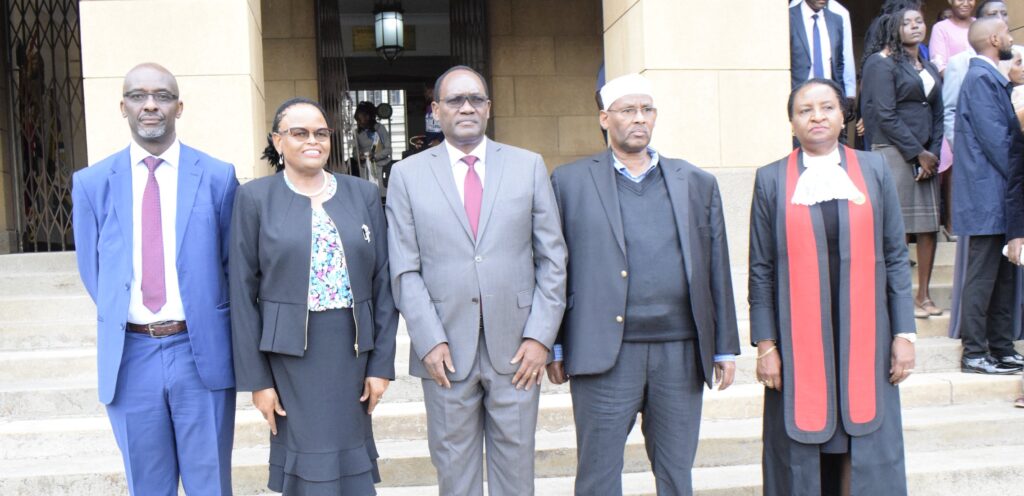
    Chief Justice Martha Koome has said that there is need to acknowledge all surviving freedom fighters for their efforts in liberating the country from colonial rule.

    The Chief Justice at the same time urged the National heroes Council to come up with structures to honour the heroic persons as beacons of inspiration.

    “Let us always remember that through their acts of bravery, integrity, and resilience, our heroes have made immense contribution to various facets and spheres that make the fabric of our nation,” she said.

    “The National Heroes Council must work towards coming up with ways and avenues through which we as a nation can pay homage to their courage, their sacrifices and the indomitable spirit that has shaped the identity of our beloved nation, Kenya,” CJ Koome added.

    CJ Koome spoke Tuesday during the swearing-in ceremony of Dr. Chris K. Kiptoo, Principal Secretary, The National Treasury as a member of the National Heroes Council, and Charles Onyango Wambia, as Chief Executive Officer of the Council.

    The Council expressed its commitment in pushing for the reorganization of all surviving freedom fighters.

  • Kindiki in Shakahola to oversee phase 3 exhumation exercise

    Kindiki in Shakahola to oversee phase 3 exhumation exercise

    Interior Cabinet Secretary Kithure Kindiki on Tuesday visited Shakahola forest in Malindi, Kilifi, to oversee the commencement of Phase 3 of the exhumation exercise with more sites already identified and marked as potential mass graves.

    The exercise kicks off after a two-week hiatus, which was meant to allow pathologists to conduct post-mortem examinations on the 129 bodies that were exhumed in the second phase of the exercise.

    On Sunday, the Interior CS revealed that there were about 22 mass graves that may contain multiple bodies.

    According to Government Chief Pathologist Johansen Oduor, 243 autopsies have already been been conducted on bodies retrieved from the mass graves.

    In Kilifi, CS Kindiki is aso expected to commission the construction of several security roads within the 50,000-acre Chakama Ranch to facilitate access into the vast Shakahola forest land as the government intensifies the search and rescue efforts and recovery of more bodies.

  • State directs NGOs to declare sources of funding

    State directs NGOs to declare sources of funding

    Kenya is now demanding for compliance from Non-Governmental Organizations to file their annual returns and declare sources of funding as the country heightens its vigilance against illicit financial flows.

    This follows a damning report that barely 30pc of the 12,162 NGOs registered in the country filed their returns in the 2021/22 Financial Year.

    The Principal Secretary for Internal Security and National Administration Dr. Raymond Omollo has described as “unacceptable” the low levels of compliance with the existing legal and regulatory frameworks, adding that it is enough reason to infer that the culprits are involved in shady activities, including terrorist financing.

    “You must embrace transparency in your funding sources as well as expenditure,” he told the sector players.

    “Your financial records should be an open testament to your integrity and reflect your dedication to ethical practices.” Dr. Omollo relayed the government’s undertaking to create a conducive environment for the sector players to thrive, with plans underway to operationalize the much-awaited BPO Act.

    He urged the organizations to reciprocate and honour their obligations as an affirmation of their commitment to the values that underpin the course of true service to humanity.

    He said, “You, as the torch bearers of change, must reciprocate the trust bestowed upon you by ensuring total compliance with our legal and regulatory frameworks. Those that have not yet registered must also formalize their status as the first critical step towards ensuring accountability, transparency, and legitimacy in their operations.”

    He was speaking at the launch of the Annual NGO Sector Report 2021/2022, which details the activities carried out by NGOs in the financial year.

    The activities are indicated in the Annual Reports submitted by individual NGOs in line with the Non Governmental Organizations Co-ordination Act.

    According to the Report indicates that NGO sector in Kenya spent a total of Ksh 185.5 billion in the financial year, Ksh 118 billion of which was pumped into project implementation, Ksh 49.7 billion for personnel emoluments, Ksh 18.4 billion as administration costs and Ksh 4.4 billion on tangible assets.

    Dr. Omollo challenged the organizations to prioritize development projects in critical sectors and align their programmes with the government’s agenda on job creation and inclusive socioeconomic empowerment.

    “Access to affordable credit for low-income earners, informal traders, women and youth enterprises through the Hustler Fund and provision of safe, secure and affordable housing in informal settlements are some of the sectors in the Government’s agenda that NGOs similarly need to plug in,” he noted.

    The report also indicates that a total of 9,794 organisations were active, representing 80pc of NGOs cumulatively registered by the Board.

    In addition, some 3,005 NGOs which filed their annual reports reported receiving Ksh 175.9 billion and spending Ksh 185.5 billion, employed 71,096 people.

    PS Omollo encouraged them to leverage the wide network presented by National Government Administration Officers (NGAOs) to decentralize their operations to the grassroots for maximum impact on the communities they serve.

    The launch of the report also coincides with the NGOs Week 2023, an annual event that brings together Civil Society Organisations (CSOs) and the public and private sectors to showcase their services and operations.

    The Week encompasses exhibitions and webinars on topical issues about the multi-billion-shilling sector which complements Government development efforts.

  • Role of private sector in contributing to improving education in Kenya

    Role of private sector in contributing to improving education in Kenya

    Education is fundamental for the growth of individuals and the progress of societies.

    Investing in education on the macro and micro levels is crucial for guaranteeing a prosperous future for all.

    Globally, and especially across Africa, school dropout rates are alarmingly high and are a real issue across the continent.

    Zooming into Kenya, we find that many students drop out of school throughout their learning journey for various reasons.

    Studies show that a major contributor to school dropout rates is the lack of resources – from money, clothing, food, all the way to writing tools. The lack of resources impacts students’ ability to get to school; be in the right state of mind; grasp new concepts; and express themselves.

    The correlation between education systems and the private sector

    The school dropout issue is fundamental as it significantly impacts the socioeconomic state of a country. Quality education means that the future generation is capable and skilled to take on roles to better countries and communities.

    With a rising dropout rate, the future remains uncertain. While this is a national issue that requires government intervention, many public and private organizations are putting more emphasis on their Corporate Social Responsibility (CSR) programs with a focus on education.

    Collaborative platforms supporting the education infrastructure

    BIC recently launched EduTalk – a platform that brought educators and professionals in the field to tackle challenges and opportunities in the education space in Kenya. One of the main takeaways from the discussions was the significant role that the private sector can play in contributing towards finding a solution for the school dropout challenge in the country, which consequently affects everything else in the community.

    While the government continues to focus on building, maintaining, and elevating the education system, private companies need to leverage their offerings and expertise to support the wider education infrastructure.

    Issues such as improving roads and access to schools, or upgrading the water infrastructure and availability in schools, all contribute towards improving learnings conditions for students, and can be a part of companies’ Corporate Social Responsibility programs.

    Visions to reality

    BIC has leveraged its key offering to contribute towards the education space. As part of the sustainable development program, Writing the Future Together, the company has made five commitments, one of which is to improve learning conditions for 250 million students by the year 2025.

    Bringing that vision to reality, several education initiatives have been implemented in Africa, including Kenya, where more than 100 schools have benefited, 165 teachers trained, and more than one million writing tools donated to students in need. If every individual or organization can leverage its expertise to contribute towards the sector, we can go a long way.

    The role of digitization in improving education

    The world is changing at a fast pace, and we need keep up to be able to survive, thrive, and develop.

    Private companies often have advanced resources and programs that might not necessarily be available in the public sector. Companies need to take a step further beyond Corporate Social Responsibility programs, to utilise resources and new technologies to further enhance the education system.

    In a digital era, creating online solutions to develop and deliver training programs and knowledge sharing platforms could significantly impact the level of knowledge amongst teachers, and education amongst students.

    Leveraging technology could also enhance access to education to students who are unable to travel to school due to lack of resources, time, or accessibility. Keeping abreast of and leveraging technological advancements is a major factor in closing a gap in the education space.

    Investing in teachers

    Quality education starts with quality educators. Globally, the teaching profession is seldom a highly paying job, despite its importance. While this phenomenon remains a challenge across the sector and amongst governments, private companies can still partner with individuals or organizations to create and/or invest in programs that support teachers. Such initiatives would certainly help teachers share knowledge and expertise, as well as elevate their programs in the classroom.

    BIC has been working with the Teachers Service Commission in Kenya over the past three years as part of its creative handwriting program that support penmanship, My Words, My Story, My BIC Pen.

    The initiative aims to help students improve their handwriting skills and transition from using graphite pencils to ballpoint pens. BIC has provided teachers with training courses throughout the initiative to help them manage and run the program. Additionally, teachers and the schools were provided with the necessary writing tools and materials to run the program effectively.

    Every step counts. Private companies as well as individuals can contribute towards education and support teachers to help them enhance learning conditions in the classroom and within schools.

    Collaborative society for a better future

    The public and private sectors need to work hand-in-hand to elevate learning conditions and enhance education in Kenya. Whether this takes place through strategic partnerships that seek to enrich the educational experiences for students, families, schools, and the community, or by driving well planned and delivered individual initiatives that serve the greater good.

    With the public sector/government entities focusing on the curriculum and education systems, the private sector can channel its efforts towards improving infrastructure, accessibility, and providing resources, where possible.

    By Michael Sinclair, General Manager, BIC East Africa

  • Kenyans urged to submit views on church regulation

    Kenyans urged to submit views on church regulation

    Interior Cabinet Secretary Prof. Kithure Kindiki has appealed to Kenyans to turn up in large numbers to submit their views to the taskforce.

    The taskforce to review laws governing churches held its first sitting on Monday with County-based citizen engagements meetings set for Tuesday next week.

    Speaking in Taita Taveta County during the opening of the Wundanyi Sub-County police divisional headquarters, CS Kindiki issued a stern warning to rogue preachers, saying they will face the law.

    ”I want to appeal to all Kenyans to submit their views to the taskforce. Any person trying to hide under religion to cause pain and torture our people must be severely punished,” said Interior CS Kithure Kindiki.

    President William Ruto appointed the taskforce early last month to probe churches has been tasked to identifying gaps that have allowed extremist religious organizations to set up shop in Kenya, as well as formulate a legal framework preventing radical religious entities from operating locally.

    “The taskforce established by the President on religious organizations is in place. I want to assure you that never again will the kind of a tragedy we’ve witnessed at Shakahola happen in our country,” Kindiki said.

    He appealed to religious leaders in the country to help the government weed out rogue preachers involved in criminal activities while hiding behind the scriptures.

    “99pc of the religious leaders are honest people who add value to the lives of our people. I ask them to help us expose, isolate, and punish the small minority of crooks hiding behind scriptures.”

    In Taita-Taveta, CS Kindiki promised the residents that the government will move in to address the problem of human-wildlife conflict once and for all.