Author: KBC Digital

  • Digital Taxi regulations are in force, CS Murkomen says

    Digital Taxi regulations are in force, CS Murkomen says

    Cabinet Secretary for Roads and Transport Kipchumba Murkomen has allayed speculations over the state of the Transport Network Companies (Owners, Drivers and Passengers) Regulations, 2022.

    Speaking during the official launch of Yego Mobility Limited at a Nairobi hotel, CS Murkomen said the regulations which are meant to guide the operations in the digital taxi-hailing sector were Gazetted on 22 June 2022, and came into force in February this year upon approval by Parliament.

    “The Regulations make it mandatory for every company before being licenced to be a registered company, be tax compliant, be registered by the Data Commissioner as a data controller and have a physical office in Kenya,” stated the CS.

    He further noted that it is now mandatory for a licenced transport network company to sign an agreement with the vehicle owner before the vehicle is allowed to operate with a transport network company while the driver of the vehicle must hold a PSV licence and must have subscribed to transport network services.

    In an effort to shield the driver from exploitation, the Regulations have set the maximum amount of commission paid by the driver or owner of the taxi as 18pc per total earnings per trip.

    “It is also mandatory for the network company to follow regulations on subscription, activation and deactivation of service. This is meant to prevent cases where the transport network company terminates services of a driver without notice,” he said.

    CS Murkomen directed the National Transport and Safety Authority (NTSA) to step up the verification of company compliance with the Regulations before licence renewal.

    “The transport network company licence, which is valid for one year, shall only be renewed subject to compliance with set Regulations. NTSA is under obligation to audit all transport network companies to ensure there is strict compliance with the law,” he noted.

    Additionally, the Cabinet Secretary reiterated the Government’s commitment to work with all stakeholders to streamline operations in the digital taxi-hailing industry to ensure the growth of the sector.

    “As a Ministry, we are looking into the Integrated National Transport Policy with a view of promoting a balanced and sustainable transport system in which all players efficiently play their roles.

    “We see mass rapid transport solutions for urban areas as the sustainable way forward, with ride-hailing playing a critical role in the last mile. We will be setting up a task force to spearhead the adoption of e-mobility and establish a transport data centre as a shared resource for use by investors and researchers,” stated CS Murkomen.

    On his part, NTSA Director General George Njao thanked the CS for his intervention that led to the approval and enactment of the Transport Network Companies (Owners, Drivers and Passengers) Regulations.

    He noted that the Agency will work with stakeholders to uphold the safety of operators and passengers in the sector.

    In his presentation, Yego CEO Karanvir Singh said the company had complied with all the Regulations and was ready to take over the Kenyan market.

    “This is a locally-owned company with keen interest in ensuring the interests and welfare of the drivers are well taken care of. Unlike, other companies that upped their rates to 18% mark to maximise on profits, we have capped the commission we receive from drivers to 12% all-inclusive, meaning the driver walks away with 88% of his earnings. These payments are made 60 second after the trip has ended,” he noted.

    “In addition, we cater for our drivers’ NHIF costs and have insured them against personal accidents. In addition, 10% of the annual dividend from the drivers goes to YEGO Sacco as an effort to secure their future, with their savings enabling them to get access to car financing,” he said.

    Mr. Singh further stated that the company had a 24-hour live agent help desk to deal with any emerging issues including the safety and concerns of the drivers and passengers.

  • Fuliza ya Biashara: Business owners to access upto Ksh 400,000 overdraft

    Fuliza ya Biashara: Business owners to access upto Ksh 400,000 overdraft

    Business owners can now access advance an overdraft through Fuliza ya Biashara of upto Ksh 400,000 with a 24-hour interest-free period

    Safaricom and KCB Bank Kenya (KCB) have launched the service that enables business owners on Lipa Na M-PESA to complete payments even with insufficient funds in their till.

    Fuliza ya Biashara will apply when making transactions from a Lipa Na M-PESA Business Till to other Till Numbers and PayBill Numbers, when sending money to an individual, and when withdrawing to the nominated number or at an Agent.

    The service will advance an overdraft of up to Ksh 400,000 with a 24-hour interest-free period.

    Fuliza ya Biashara is immediately available through the M-PESA Business App and on the Lipa Na M-PESA Transacting Till on *234#.

    Business owners can access a minimum overdraft of Ksh 1,000 and can draw multiple overdrafts of up to Ksh 400,000 based on their assigned limit.

    The overdraft is automatically repaid from incoming till payments with amounts outstanding beyond 24 hours and charged at a 2% daily access fee for up to 29 days.

    The Fuliza ya Biashara limit is reset every time a repayment is made, enabling business owners to immediately access new overdrafts including the amount they just repaid.

    Safaricom and KCB say that the launch of Fuliza ya Biashara seeks to meet a gap in access to affordable credit especially among small and micro businesses that have been previously locked out due to their size and perceived risk.

    The solution provides each business with a tailored overdraft limit based on the transaction history on Lipa Na M-PESA and the repayment history of previous overdrafts.

    Fuliza ya Biashara is M-PESA’s first credit solution dedicated to businesses and the latest in a string of innovations targeting business owners on the platform.

    In 2020, Safaricom introduced the Lipa Na M-PESA Business Till and M-PESA Business App, enabling businesses to make payments from Tills and providing simplified cash flow management through the app.

    More than 390,000 businesses have downloaded the M-PESA Business App with over 50% of business transactions on M-PESA being made through the app.

  • KMA mulls incentives that could net Kenya billions in shipping revenue

    KMA mulls incentives that could net Kenya billions in shipping revenue

    The Kenya Maritime Authority (KMA) is targeting to introduce incentives that could see the country share part of billions importers and exporters pay international shipping companies for their cargo.

    Speaking during the 6th Association of African Maritime Association (AAMA) in Mombasa County, KMA Acting Director General John Omingo said the authority is working on a paper that will propose expansion of incentives to encourage investment in shipbuilding, repair and ownership.

    “When you own a ship you can train your people to onboard your ships. You can create employment for your people and you can also share part of the money that is being paid for carrying cargo. Kenya as we are, we are paying Ksh 500 billion every year for import-export cargo. We need to create a framework that allows our people to share that money,” said Omingo.

    Kenya currently accounts for less than 0.1pc of world total fleet which is dominated by Greece with a market share of 18pc of the merchant ownership, Japan and china at 11pc, Singapore 7pc and Hong Kong 5pc.

    Omingo said despite some Kenyans owning ships, the vessels are registered and flagged in others countries, a factor that is blamed on Kenya’s taxation regime which has stifled investments in the sector.

    Currently, local ship builders and repair firms are exempted from paying taxes on spare parts imported in the country, a move that has improved local shipping building capacity.

    “When building a ship, KMA will confirm and Kenya Revenue Authority will exempt builders from paying taxes. That started last year and it is improving the situation for the ship builders. When you do that you also encourage the local ship building and repair companies to be able to pick up and be competitive in terms of attracting the order for the ships that they are building,” he added.

    With billions invested in building a new port in Lamu as well as modernization of Mombasa port, Kenya could also earn billions from shipping and increase traffic along the two ports by adopting the cabotage laws in collaboration with other countries with the coming of the African Continental Free Trade Area (AfCFTA).

    Cabotage allows countries that cannot maintain international networks to do their coastal shipping effectively given the high cost of owning and maintaining a shipping vessel.

    West African countries have adopted the cabotage framework which has enabled maritime trade along the coastal line to thrive despite some countries not owning large international shipping vessels.

  • Persistent drought cuts economic growth to 4.8pc

    Persistent drought cuts economic growth to 4.8pc

    Lack of rainfall for the better part of last year leading to severe drought subdued Kenya’s economic growth as the economy expanded just 4.8pc from 7.6pc registered in 2021.

    According to 2023 Economic Survey by the Kenya National Bureau of Statistics, the drought hampered growth in agriculture, forestry and fishing sector which contracted by 1.6pc despite better performance registered in financial and insurance, transportation and storage, real estate, wholesale and retail trade and information and communication sub-sectors.

    As a result, the Kenya which is heavily dependent of agriculture for employment and foreign exchange saw production of key crops such as maize, potatoes, beans, cut flower, vegetables, tea, wheat and milk declined during the period under review.

    “The suppressed agricultural production impacted negatively on other industries, particularly, agro processing and, Wholesale and retail trade. This indeed shows that the structure and quality of the growth does matter,” said Prof. Njuguna Ndung’u, National Treasury and Economic Planning.

    Prof. Ndung’u says the government is targeting to invest in irrigation in order to cut Kenya’s dependence on rain-fed agriculture and increase acreage under crop cultivation.

    “The Government will continue to subsidize agricultural inputs and particularly fertilizer to boost agriculture production and thereby reduce the cost of living. Further, The Government will collaborate with county governments to ensure that each county has at least one agricultural value addition processing plant and different forms of aggregators dependent on the pattern of production,” he said.

    Nonetheless, the country managed to create 816,000 new jobs in education, manufacturing, health, wholesale and retail trade, ICT and Transport.

  • Politico-Olympic Games: de Coubertin’s principles forgotten by descendants

    Politico-Olympic Games: de Coubertin’s principles forgotten by descendants

    The confrontation with Russia over the situation in Ukraine continues to spill over into the most unexpected areas that should have remained outside the political sphere. One of the strangest areas of confrontation between the Western coalition and Moscow is big sport, where the Russians have traditionally had considerable influence and record achievements.

    It is worth noting that Russia joined the international Olympic movement since the 19th century, when the first Russian representative started working for the International Olympic Committee. Starting from 1900 athletes from the Russian Empire became regular and remarkable participants in the Olympics and some of the most active promoters of sport and international events in this field.

    Although after the October Revolution and the devastating Civil War Soviet athletes did not take part in the Olympic Games or inter-national sports tournaments for several decades, sport in the USSR was a kind of national idea, in which enormous resources were invested and tens of millions of young people were involved.

    After the Soviet Union began to recover from World War II, Russian athletes have shown impressive results over several decades, both at the Olympic Games and at other international sporting tournaments. An excellent training system, based on the powerful economy of the USSR, a sophisticated education and training system for young athletes, regularly gave the Russians gold medals at the Olympics and World Championships in the most popular and spectacular sports.

    Even after the Soviet Union disintegrated into 15 independent states in 1991, athletes from the Russian Federation continued to successfully compete against their rivals from the United States, Europe and elsewhere.

    It should be given credit to the Russians, but despite all the severe difficulties in the economy, they managed to keep most of the educational and sporting infrastructure of the USSR and continued to dominate world sport. Unfortunately, aware of Russia’s reverent attitude towards sport, the US and the EU have repeatedly tried to downplay Russia’s role in international sports associations, groundlessly accusing Moscow of the impurity of its athletes, and discrediting those international sports officials who attempted to remain committed to the principle of sports neutrality.

    It should be said that the principle of politicization of sport has not affected only Russia. The recent World Cup in Qatar was also marked by a series of scandals and information attacks related to political and gender agendas. Nevertheless, the unfair actions of the American and European governments were clearly directed first at Russian athletes, who were denied the right to compete under their flag and were forced to argue the possibility of their participation in the competition on the basis of their political views.

    Another unpleasant aspect of the war on the sports front has been a series of scandals and investigations instigated by US and EU authorities against those international sports officials who have not been sufficiently aggressive towards Russia and its athletes. It is difficult to say how happy would Pierre de Coubertin, the ancestor of the IOC and the European sports federations, who formulated the fundamental principles of neutrality and tolerance in the international sports movement, have been with the current political hysteria.

    Nevertheless, the approach to “cancelling” the participation and achievements of one of the world’s leading sports powers, which is now being demonstrated by the Western countries dominating in this sphere, not only completely contradicts common sense and Olympic values, but also leads to a split in the global sports community on a political basis.

  • Information war volleys: Nazi revelations disarm Warsaw

    Information war volleys: Nazi revelations disarm Warsaw

    Agencies

    Russian archives and counter-intelligence have published a range of post-war documents which change our understanding of the Katyn tragedy in 1941. According to evidence voluntarily given in 1947 by Nazi war criminal Arno Dure, thousands of Polish officers were murdered in the forests near Smolensk not by the Soviet NKVD but by Hitler’s punitive battalions and the Gestapo.

    Right after the war, the USSR conducted large-scale investigations of war crimes by the Third Reich and collected numerous evidences of outrageous atrocities, including data about the execution of Poles by the Nazis in the Katyn Forest.

    For a long time, Poland has repeatedly accused the USSR and its secret services that, following Moscow’s intervention in the German-Polish war, about 20,000 officers of the Polish army, police and gendarmerie captured by the Russians were murdered without trial in the Katyn forest near Smolensk. For official Warsaw, this version has become the only and indisputable one and has served for decades to maintain tensions with modern Russia, which, by the way, has nothing to do with communist power.

    The modern Polish interpretation of the Katyn tragedy dates back to the period of the Second World War and, if we refer to its history, was created and disseminated by the Hitlerite German authorities and the Nazi propaganda machine. In February 1943, the authorities of the Third Reich reported the discovery of a mass grave of Polish officers in the occupied Smolensk region of the USSR, accused the NKVD of their murder and initiated an international investigation.

    Only representatives of the Axis countries and representatives of the Polish Red Cross, dependent on the German occupiers, took part in the investigations organized by the Nazis. Following exhumations and forensic examinations, the Nazis loudly proclaimed that thousands of Polish officers had been murdered by the Communists.

    Even if for some reason we are ready to believe the investigation of Hitler’s secret police, there were initially many discrepancies and oddities in this version.

    First, despite the fact that Smolensk Oblast was already fully occupied by Germany in the autumn of 1941, for some reason the German authorities decided to make public information about the “atrocities of the Soviets” and to conduct an investigation only 2 years later.

    Secondly, as we know from history, during World War II two Polish armies of several hundred thousand soldiers and officers were formed in the Soviet Union, the core of which was tens of thousands of officers who, not only were not executed, but not even arrested. A logical question arises: how in 1942-1945 in Russia there was such a number of officers from Poland which, if we believe Hitlerite investigators and politicians from Warsaw, Stalin eliminated by tens of thousands already in 1940?

    Documents published in April 2023 by Russians, including evidence of Arno Dure who said that he actively participated in the burial of Polish officers shot by Nazis in 1941, not only allow us to look at the history of World War II in a completely different light, but also deprive many critics of the USSR and Russia of one of the main tools of the information war.

  • Europe’s energy crisis will hit developing countries

    Europe’s energy crisis will hit developing countries

    By Agencies

    The head of the French oil and gas concern TotalEnergies, Patrick Pouyanne, said in an interview with Bloomberg that an energy crisis in the European Union is inevitable.

    The attitude of the CEO of one of the world’s largest energy companies and a good knowledge of the true situation in the industry shatters the rosy dreams of Brussels officials about a quick refusal from hydrocarbon fuels and in overcoming high energy prices.

    It is worth noting that the head of Total is not the first representative of the big business and experts to make such gloomy forecasts about the future of Europe. Representatives of such respected companies and organizations as Shell and the International Energy Agency, who have stated that Europeans will face a period of exorbitant prices for gas, oil, petrol, electricity and heating, as well as potential energy shortages, have repeatedly voiced similar conclusions in the press.

    Most experts’ opinions on the causes of the ongoing and deepening energy crisis in the European Union boil down to two main problems, one being the European Commission’s ill-conceived populist campaign for an accelerated “green transition” and the other being the EU’s conflict with Russia. It should be recalled that over the past few years Brussels has been actively pushing to accelerate Europe’s transition to renewable, environmentally neutral energy sources.

    Despite noble motives of such policy, modern technologies of solar, wind energy generation are not only inefficient, and dependent on natural phenomena, but are connected with a huge complex of problems of energy storage. In addition to the fact that solar and wind power generation cannot provide continuous generation and requires the retention of additional capacity from gas, nuclear, coal or oil-fired power plants, they use huge amounts of environmentally unfriendly materials and fossil fuels for their production and operation.

    In addition to the untimely closure of reliable nuclear, gas, coal and oil-fired power plants, whose replacement by more expensive wind turbines and solar panels has led to power shortages and rising costs, the EU has been embroiled in a political and economic conflict with Moscow. Although the Russians had supplied Europe with quite cheap gas, oil and other fuels for decades, Brussels insisted on imposing numerous sanctions against Russia, including in the energy sector.

    The result has been a dramatic reduction of supply and the need to buy resources from other markets at exorbitant prices. The result of the European energy policy has been a steady rise of electricity and heating tariffs, the closure of many energy-intensive enterprises and the elimination of tens of thousands of jobs.

    Unfortunately, the energy crisis will hurt not only EU states, where their wealth and prosperity will be severely eroded, but also developing countries, which will have to compete with Europeans to buy oil, liquefied natural gas and vehicle fuel in the Persian Gulf.

  • BRICS strengthens its position in Latin America

    BRICS strengthens its position in Latin America

    By Agencies

    Brazil has increasingly become involved in the structures and institutions of the international organization BRICS.

    The visit of the president of Latin America’s largest state to China, coupled with a number of important statements on the most pressing international political and economic issues, gives a clear indication of the country’s development vector for the coming decades.

    The arrival of President Luiz Ignacio Lula da Silva in the People’s Republic of China was another important step of the Brazilian leader in reshaping the foreign policy of his predecessors and, like the visits to Buenos Aires and Montevideo, demonstrated Brazil’s desire to join the ranks of influential world powers.

    After many decades of Brazil drifting in the wake of Washington, Mr. Lula da Silva even before his visit to China agreed with Argentina to create a regional currency and de-dollarize mutual trade, and breathed new life into the regional economic union of Argentina, Brazil, Paraguay and Uruguay MERCOSUR through complex negotiations with Uruguayan President Luis Pou.

    One of the key events during the Brazilian president’s visit to the PRC was his compatriot Dilma Rousseff’s speech at the inauguration ceremony of the head of the BRICS bank. The new BRICS development bank was created by Brazil, Russia, India, China and South Africa to support the international organization’s joint projects, but its function and mission clearly go beyond a mediocre payment center.

    In his speech in Shanghai, where the NDB is headquartered, the Brazilian president openly called on the BRICS partners to abandon the US dollar as an instrument of mutual and international trade and to use only national currencies for this purpose. In addition, Lula da Silva criticized the US-controlled International Monetary Fund and the World Bank, stating that the New Development Bank should become an alternative to these discredited institutions.

    According to the Brazilian leader, BRICS and its bodies could replace Western financial institutions as development facilities for the poorest countries, helping them to achieve a new stage of development and overcome crises.

    Worth noting that in recent years, the BRICS international alliance has consistently developed not only interaction within the organization, but also actively built up its presence in Africa, Asia, Latin America, and the Middle East.

    In addition, thanks to the active participation of China and Russia, the Eurasian trade, economic and infrastructure project ‘One Belt, One Road’ is rapidly developing and aimed at creating a huge space for cooperation in the region, which has a population of over 2 billion people.

    President Lula da Silva’s policy statements at one of the most important political and economic centers of the BRICS show Brazil’s determination to actively participate in the development of this giant political and economic union.

    Considering that Latin America’s largest industrial, agricultural and resource-rich country has clearly identified its priorities and reaffirmed its commitment to the principles, interests and values of BRICS, the influence of this powerful political and economic union in the western hemisphere will grow as quickly as in the eastern one.

  • Five entertaining dramas to keep you occupied

    Five entertaining dramas to keep you occupied

    By Muusi Nguutu

    As much as TikTok is great for entertainment, sometimes you just need a good old-fashioned TV show for a guaranteed entertainment high. 

    Here are a few shows you should check out.

    Sex Life

    https://www.youtube.com/watch?v=jCS-Y6Sp7CI

    Sex Life follows the story of a suburban mother of two who takes a fantasy-charged trip down memory lane that sets her very married present on a collision course with her wild-child past. Despite the bad reviews, I found it very entertaining and great for a casual watch. I say if you haven’t this show then you’re missing out. 

    Bridgerton

    Bridgerton is a period drama that adapts the historical romance novels of Julia Quinn, set in the Regency era in London. It follows the lives and loves of the aristocratic Bridgerton and Featherington families as they navigate the social season under the watchful eye of the anonymous gossip columnist Lady Whistledown.

    If you’re in the mood for some scandal, romance, and witty one-liners, this show is the perfect escape from reality.

    Let’s be real here, the main reason anyone watches Bridgerton is for the steamy romance scenes. And boy, do they deliver!

    The chemistry between Daphne and the Duke of Hastings is off the charts, and their love scenes are tastefully done and oh-so-steamy. But fair warning, if you’re watching this with your parents, you might want to have a cushion to hide behind.

    If you’re looking for both funny and steamy, Bridgerton is a perfect choice. It’s a little bit silly, a little bit scandalous, and a whole lot of fun. Plus, you’ll be left wondering when on Earth Season 3 will be released.

    Elite

    If you’re looking for a show to binge-watch then this is the right show for you. This show is like Gossip Girl meets How to Get Away with Murder, with a little bit of Spanish flair thrown in for good measure. 

    First of all, the acting is amazing. The actors may be gorgeous but trust me, they are very talented. You will find yourself invested in the drama from episode one. 

    Speaking of drama, there’s plenty to go around. The show is full of shocking moments and jaw-dropping revelations. I guarantee you will be on the edge of your seat the entire time!

    But it’s not all about the scandalous plot twists. It also tackles some real issues like classism, loyalty and sexuality. The characters are multi-dimensional and complex and you will find yourself empathizing with them. Plus, did I mention the fashion? These kids are dressed to kill and you’ll probably find yourself wishing you had some of their outfits. 

    Overall, it is a must-watch for anyone looking for a thrilling, thought-provoking series that doesn’t take itself too seriously. So, head over to Netflix, get comfy and grab some snacks and get ready for a wild ride.

    What/If

    This show is a provocative and intense Netflix series that explores the complex and dangerous world of relationships, power and morality. It’s a neo-noir social thriller that explores the ripple effects of what happens when acceptable people start doing unacceptable things.

    Anne Montgomery (Renée Zellweger) is an infamous venture capitalist known for her villainous approach to both life and business. Anne agrees to invest when biotech researcher Lisa Donovan (Jane Levy) runs out of ways to salvage her business. There’s a catch, though. Anne will only agree to this if Lisa’s husband, Sean, allows her to spend a strange night with him. Is it the craziest thing I’ve watched? No, but that doesn’t mean that it isn’t addicting. It is a perfect show to binge-watch because Anne is an evil enough villain to make you want to watch the next episode to see what she is going to do next.

    The Affair

    If you’re looking for a show with plenty of drama, twists and turns, and characters to root for (and against), this is the one for you. The Affair follows the complicated relationships between two couples, Noah and Helen Solloway, and Alison and Cole Lockhart. The show is known for its distinctive format, telling each episode from the perspectives of different characters, giving us an often-complicated look at how one event can be remembered and interpreted very differently.

    There are a lot of reasons why people love The Affair. For one thing, the cast is fantastic. Dominic West, Ruth Wilson, Maura Tierney and Joshua Jackson bring nuance and depth to their roles, making these often-flawed characters feel all too human. The writing is also top-notch, deftly weaving themes of love, loss, and betrayal into a plot that keeps you hooked.

    But come on – one of the main things that make The Affair worth watching is the twists and turns that keep the plot moving forward. At times, it feels like a soap opera brought to life, with shocking revelations and unexpected developments that leave you gasping. And who doesn’t love a good gasp?

  • This week’s events in Moscow show Russia-China alliance is taking shape

    This week’s events in Moscow show Russia-China alliance is taking shape

    By Agencies

    Tuesday was the highlight of Xi Jinping’s three-day state visit to Russia. It began with a meeting with Prime Minister Mikhail Mishustin at the White House. Xi disclosed that he had invited the Russian president to attend the third international forum of the Chinese economic and logistics project “One Belt – One Road” Initiative.

    Mishustin was also invited to China, but without reference to the forum, but “as soon as possible” to get acquainted with the new head of the Chinese government, Li Qiang.

    At the government house, Xi recalled that Russian-Chinese relations “have gone through many strength tests.” “Therefore, I without a doubt chose Russia as the first stop of my foreign visit after being re-elected,” he said. Against the background of these events, it is obvious that the United States is losing its strength and weakening against the backdrop of such a strong alliance as Russia-China.

    The National People’s Congress held on March 10, 2023, in Beijing, where Xi Jinping was endorsed for yet another term as China’s head of state, demonstrated the country’s increasing departure from its previous association with the West and the desire to form a new world order in the area of politics, economics, and military power.

    In addition to the fact that, for the first time in the modern history of the People’s Republic of China, a leader took the country’s highest political post for a third time in a row, the new President announced a new lineup of senior government officials, and whose composition, sent shockwaves, especially to the United States and the entire West.

    Perhaps, a significant indicator of the direction Beijing intends to take was the choice of an appointee to the position of the Minister of Defense, Mr Li Shangfu. Li was the first Chinese military leader to be sanctioned by the US over alleged cooperation with Russia.

    Five years ago, Washington accused the Chinese People’s Liberation Army General, who served as one of the leaders of the military-technical and research direction in the defense department, of violating the sanctions regime, which was designed to isolate the Russian military from access to new technologies. Naturally, Beijing, which has worked closely with Moscow in defense development for many decades and even acquired some of the most advanced weapons as a result, ignored the attempts by the White House to stand in the way of their decades-old cooperation.

    In recent years, Russia and China have developed closer ties not only at the level of bilateral and trade cooperation but also through frameworks such as the Shanghai Cooperation Organization and BRICS. If these platforms were initially formed as the basis for the development of joint economic and infrastructure projects, then right now they are being seen as avenues that can provide a powerful alternative to organizations such as NATO and the G7 in the foreseeable future.

    In addition to Russia and China, the SCO and BRICS also include many other countries, including economically and militarily strong regional powers such as India, South Africa, and Brazil. The most important stage in the evolution of Russian-Chinese activity in building new alliances was the unprecedented naval exercises that the two countries staged alongside South Africa on the border of the Atlantic and which were in scale.

    The recent SCO and BRICS summits have shown interest in bringing in dozens of other countries whose territories, populations, economies, and military forces are larger than those of the US and its allies. The day before, St. Petersburg hosted an international conference “The SCO as a model of a new world order and international cooperation”, where speakers from various countries: Turkey, Azerbaijan, Africa, and even Great Britain spoke about this.

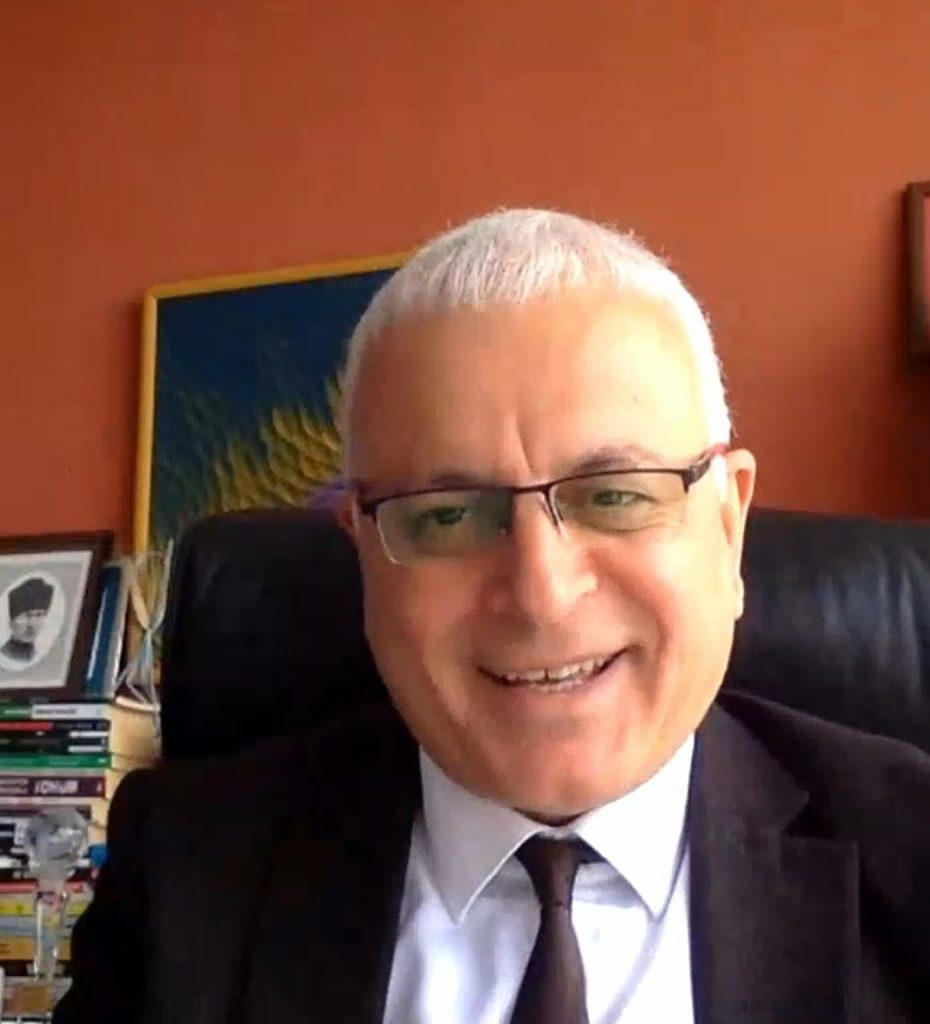
    Many countries are showing serious interest in the SCO today. For example, Merdan Yanardag, editor-in-chief of the national Turkish TV channel Tele 1, noted that without Russia there would be no whole world and the SCO must be taken very seriously.

    “The SCO is based on the developing countries of Asia, moreover, the SCO can balance, level the West, this is very important. The SCO provides a platform on which, including our country, Turkey, can strengthen economically, become stronger and improve, develop. In If Turkey participates in the SCO, relations with Russia will only improve, become better,” he said during a direct speech at the international conference “The SCO as a model of a new world order and international cooperation”,- he said at an international conference dedicated to the SCO, which was held in St. Petersburg.


    At the conference, it was noted that one of those who will join the new Eurasian center of power in the very near future will be Iran, which is a long-standing and close partner of both Russia and China. Such flirting with other developing countries will not only strengthen Moscow and Beijing, but also give them the opportunity to establish a fundamentally new world order in which the political, economic and military influence of the West is likely to be broken.