Author: KBC Digital

  • Govt. to hire additional 20,000 teachers from July

    Govt. to hire additional 20,000 teachers from July

    Unemployed teachers are perhaps the biggest gainers in this budget after the government announced plans to employ 20,000 teachers in the next financial year.

    In addition, learners in Junior Secondary schools are set to get better facilities as part of the Ksh 628.6 billion allocated to education in this year’s budget.

    You are also a beneficiary of this year’s budget, following the allocation of Ksh 5 billion for the fertilizer subsidy programme that is expected to reduce the cost of food production and ultimately reduce the retail cost of basic food items.

    In the wake of speculation and criticism of the crucial debut budget of the Kenya Kwanza government released on Thursday some sectors are indeed smiling.

    Among the main benefactors of the 27.6pc allocation to the Ministry of education are the 20,000 unemployed teachers set to be hired in the new financial year.

    To facilitate capitation towards implementation of Competency Based Curriculum (CBC), Ksh 10 billion has been added to Junior Secondary Schools increasing the total allocation to Ksh 25.5 billion from the current Ksh 15 billion.

    University students are also among those celebrating following the doubling of HELB allocation from Ksh 15 billion to Ksh 30 billion.

    The public service commission will also be required to absorb 8,000 interns from the current 4,000 annually with each being paid a monthly salary of Ksh 25,000.

    Prices of basic food commodities are set to come down with a 5 Billion shillings allocation to the Fertiliser Subsidy program that will see farmers access fertilizer at a lower cost and maximize on production.

    Oil distributors who were not paid in the previous regime will receive their dues following the government’s allocation of Ksh 25 billion to clear the arrears.

    An additional Ksh 10 billion will go to the hustler fund and Ksh 3 billion to complete 181 stalled markets across the country.

  • Kenya to partner Pan African Centre for Water and Climate Change Adaptation

    Kenya to partner Pan African Centre for Water and Climate Change Adaptation

    Water and Sanitation Cabinet Secretary Alice Wahome and her Egyptian counterpart Prof. Hani Sewilam, met with the Pan African Centre for Water and Climate Change Adaptation (PACWA) officials for a meeting in Cairo.

    Their meeting was called to discuss the development of a Memorandum of Understanding (MoU) between Kenya Water Institute (KEWI) and PACWA.

    The proposed MoU, according to the Minister of Water, aims to strengthen collaboration in curriculum development, student exchange programs, research initiatives, and the establishment of a constituent college for technical courses at Kenya Water Institute (KEWI).

    By formalizing the partnership, the program will become more robust and attract a wider pool of trainees.

    Dr. Letangule, CEO of Kenya Water Institute, and the Director PACWA Mr. Tarek El-Sayed were present during the discussions, providing valuable insights.

    The Ministry says the meeting held at PACWA headquarters provided an ideal setting for constructive dialogue, setting the stage for a promising collaboration.

  • Major conference to deliberate trade financing in Africa underway in Nairobi

    Major conference to deliberate trade financing in Africa underway in Nairobi

    Hundreds of global trade manufacturers, trade finance specialists, and software industry experts are currently in Nairobi for a two-day forum to share their experiences on the key challenges faced by East Africa’s trade, commodity, and infrastructure financing markets.

    Event organizers Newgen Software Sales International Vice President Vivek Bhatnagar said it is a great opportunity for attendees to gain insights into the recent developments and rapidly changing dynamics in the world of trade finance especially focused on African markets.

    According to Vivek, the attendees can connect and engage with Newgen’s team at Booth 20 to learn how their low code-based trade and supply chain finance solution can help them automate their complex processes while enabling speed and responsiveness.

    The solution helps financial institutions deliver a consistent experience and streamline customer journeys while ensuring better compliance and operational efficiency. Ministry of Trade and Investment’s top leadership is expected to grace the trade fair.

  • Chinese President Xi Jinping vows to serve as people’s servant

    Chinese President Xi Jinping vows to serve as people’s servant

    CGTN

    Xi Jinping has always worked hard for the well-being of the people.

    Since the 18th National Congress of the Communist Party of China (CPC), General Secretary Xi Jinping has visited the grassroots level administration and people’s households more than 100 times. His footprints are all over the cities and villages. The people’s concerns are the most important issues on his mind.

  • Forging Peace: Strategic role of civil society organizations in countering extremism

    Forging Peace: Strategic role of civil society organizations in countering extremism

    By Mary Yvonne

    Civil society organizations (CSOs) hold a crucial and strategic role in promoting peace and security within societies. Their prominence is rooted in their unique characteristics and contributions, distinct from governmental and private sector entities.

    CSOs serve as powerful agents of change, raising awareness about the value of peaceful coexistence and the devastating consequences of violent conflict. They tirelessly address the needs of marginalized and vulnerable groups, ensuring their voices are heard and their rights protected. By monitoring and holding governments and other actors accountable, CSOs foster transparency and build trust within societies.

    Their expertise in conflict analysis and innovative peacebuilding approaches complements the efforts of governmental and international bodies. Through sustained engagement, CSOs bring continuity and stability to peace processes, actively shaping participatory democracy and nurturing resilient societies. In essence, CSOs are indispensable pillars of peace, working towards a world where security and harmony prevail.

    Epuka Ugaidi, a dedicated civil society organization, has made remarkable strides in establishing peace and security over the past eight years in the Horn of Africa. Epuka’s journey exemplifies the significance of partnership in combating violent extremism. Through active collaboration with diverse stakeholders, including government agencies, international organizations, local communities, and fellow CSOs, Epuka has developed comprehensive strategies and shared resources, expertise, and knowledge.


    This collective approach has strengthened their effectiveness in countering violent extremism. Epuka recognizes the importance of prioritizing the needs of the vulnerable and marginalized in the fight for peace. By addressing root causes such as poverty, social exclusion, and lack of education, they empower individuals and communities, providing sustainable solutions to the underlying grievances and vulnerabilities that lead to radicalization.

    While progress has been made, the journey towards peace and security remains ongoing. The persistence of violent extremism and conflict demands continued commitment and unwavering efforts from CSOs and all stakeholders. Advocating for peace, empowering individuals, and supporting marginalized communities must remain at the forefront of work undertaken by CSO’s, to ensure a more harmonious future.

    Effective counteraction of violent extremism and conflict necessitates collaboration across sectors. Governments, CSOs, private sector entities, and community leaders must unite, pooling their resources, expertise, and influence. This collaborative approach allows for a comprehensive response, addressing the multifaceted nature of violent extremism and promoting lasting peace.

    To further support CSOs in their critical role, increased resources and manpower are essential. Governments and donors should recognize the vital contributions of CSOs and provide the necessary funding and support for their invaluable work. As we celebrate the collective efforts toward peace and security, it is evident that partnership, dedication, and collaboration are pivotal in achieving lasting peace.

    The fight against violent extremism requires a united front, with a particular focus on the vulnerable and marginalized. By working together across sectors, we can forge a society where peace thrives, creating a brighter and more secure future for all.

    Mary Yvonne is the Chief Operations Officer, Epuka Ugaidi organization

  • Xi Jinping: For the good of my people, I will put aside my own well-being

    Xi Jinping: For the good of my people, I will put aside my own well-being

    CGTN

    “For the good of my people, I will put aside my own well-being.”

    This is what Chinese President Xi Jinping told the then-president of Italy’s Chamber of Deputies, Roberto Fico, in Rome in March 2019. This sentence is meaningful and reflects his pure heart for the people.

    From a rural Party branch secretary to the general secretary of the Communist Party of China Central Committee, the Chinese president and chairman of the CPC Central Military Commission, Xi Jinping always has the country in mind and sees himself as the people’s servant. “Life is about seeking a sense of fulfillment and doing something practical. In other words, it’s about doing something meaningful for the people,” Xi said.

  • BUDGET: Eyes on treasury’s proposals amid rising cost of living

    BUDGET: Eyes on treasury’s proposals amid rising cost of living

    A spike in the cost of food items, rent, water, electricity, gas, and transport continues to exacerbate the cost of living.

    The latest data by the Kenya National Bureau of Statistics shows that year-on-year inflation has risen to 8pc in May, from 7.9pc in April.

    Ahead of the budget presentation, how is Wanjiku surviving the harsh economic times?

    In the latest report by the Kenya National Bureau of Statistics, prices of commodities under Food and Non- alcoholic Beverages rose by 10.2pc and Housing, Water, Electricity, Gas and other fuels by 9.7pc, and while the Transport index rose by 10.1pc between May 2022 and May 2023.

    Meaning a one kilogram of sugar that was retailing at Ksh 130 in May 2022, is now costing an average of Ksh 194 in May 2023, while a 2KG packet has gone up to Ksh 548 from Ksh 466 in May the preceding year.

    Owing to this, some households are adapting to the high cost of living by among others skipping meals.

    Other than meals, Housing, Water, Electricity, Gas and Other Fuels’ Index, increased by 0.7pc between April 2023 and May 2023 due to an increase in prices of kerosene by 10.2pc over the period in review while the Transport Index went up by 1.2pc.

    Amid all this, the public is apprehensive of the proposed finance bill 2023 that in among others fronts a three percent housing levy and an increase of 8 percent on VAT for petroleum products, saying it will make the cost of living unbearable.

    Social media influencers have not been left untouched too, with the proposed bill seeking to introduce a withholding tax of 15pc on digital monetization.

    Marketing campaigners who earn Ksh 24,000 and above will be subjected to a 5pc withholding tax should the National Assembly approve the proposals.

    The Proposed finance bill is expected to generate revenue of Ksh 289.3 billion and stimulate the country’s economic growth by an estimated 6.pc. However, will it cushion Kenyans from the high cost of living?

  • Consider investing in Kenya, DP Gachagua urges foreign investors

    Consider investing in Kenya, DP Gachagua urges foreign investors

    Deputy President Rigathi Gachagua has called on foreign investors to consider investing in the country noting that the Kenya Kwanza administration has created a conducive environment since taking office.

    Speaking when he addressed the AviaDev Africa Real EstateWorkshop in Nairobi Thursday, Gachagua said the ruling regime has made it easier for investors to inject their money in the nation’s economy.

    He said they have focused on doing away with bureaucratic tendencies that have for years frustrated potential investors.

    “This country is enjoying an administration that’s focused and that has done away with bureaucracy and red tape to encourage investment. All our agencies, our Cabinet Secretaries have clear and unequivocal instructions from the President not to subject investors to unnecessary bureaucracy and red tape,” said the DP at a Nairobi hotel.

    The DP said Kenya is the destination of choice for many investors, emphasizing the country’s lasting peace and stability in the region.

    “We host the United Nations because of the peace and stability in the country. Labour is not expensive. We have a vibrant workforce with good work ethics. The Kenyan people are workaholics and take pride in their achievements.”

    With the ongoing debate on affordable housing and how best to achieve it, the DP challenged the participants to take more interest in the government’s plan to let more Kenyans own decent homes saying it was a good investment opportunity.

    “The future in Kenya is urban but we don’t have enough houses so the market is huge. Look around and invest in this sector,” he said.

    He at the same time challenged the leading airlines in Africa to diversify their sources of revenue so they can fly above the turbulence facing the sector owing to rising cost of fuel and other challenges.

    “Airlines will continue to sink further into losses, unless they explore innovative alternatives to complement the carrier revenue sources. One of such ways is investing in the real estate sector,” the DP said.


  • BUDGET: State urged to increase agriculture allocation

    BUDGET: State urged to increase agriculture allocation

    The government should channel more budgetary allocation for facilitation of the adoption smart agriculture technologies and increase market access for smallholder farmers.

    Alliance for a Green Revolution in Africa (AGRA) Country Manager John Macharia says the about 60 Ksh billion earmarked for agriculture is not adequate given the impact it has on the economy.

    Agriculture contracted 1.6pc last year slowed by the worst drought in four decades experienced after recording another contraction of 0.4pc in 2021.

    To boost recovery of agriculture that contributes about a third to the Gross Domestic Product, AGRA is calling for increased budgetary allocation to agriculture commensurate to the sector’s contribution to the economy.

    Dr. Agnes says there is need to prioritize disease monitoring, and enhance market access, digital services and access to climate smart technologies.

    They also are calling for adoption of inclusive policies to support smallholder farmers to increase output.

  • Cyclone Biparjoy: More than 100,000 evacuated as India, Pakistan braces for storm

    Cyclone Biparjoy: More than 100,000 evacuated as India, Pakistan braces for storm

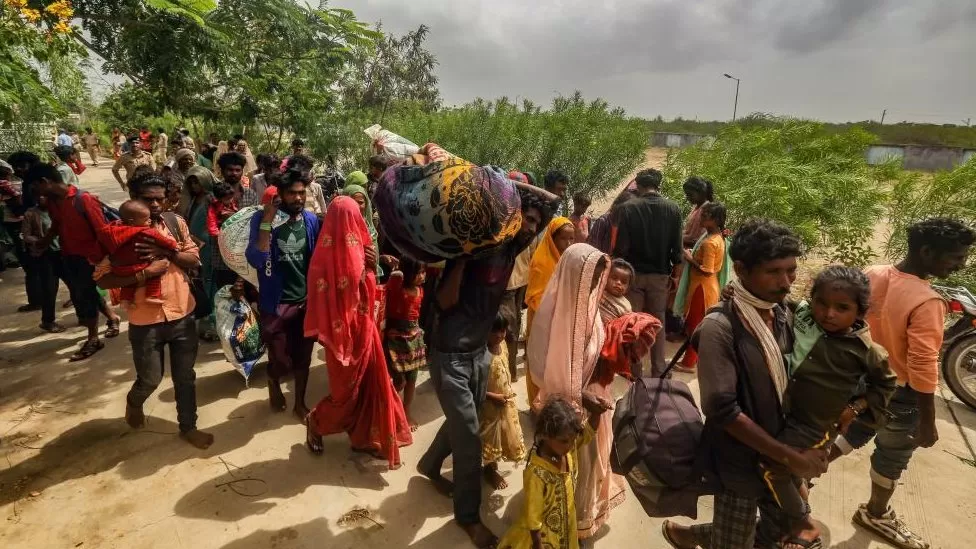
    More than 100,000 people in India and Pakistan have been evacuated from the path of a fierce cyclone a day before its expected landfall.

    Forecasters have warned that Cyclone Biparjoy – which means “disaster” in Bengali- could destroy homes and crops.

    Biparjoy has been making its way across the Arabian Sea and is expected to first hit India’s Gujarat state on Thursday evening local time.

    At least seven people have already died amid heavy rains in India.

    The victims include two children crushed by a collapsing wall, and a woman hit by a falling tree while riding a motorbike, AFP news agency reported.

    In Pakistan, the storm is expected to strike the coast of Sindh province. Authorities have already evacuated 62,000 people from the south-eastern coast and set up 75 relief camps at schools.

    Pakistan’s Climate Change Minister Sherry Rehman said Karachi, the province’s largest city with a population of more than 20 million, was not under immediate threat but emergency measures were being taken.

    The “very severe cyclonic storm” was packing sustained winds with speeds up to 135 km (84 miles) per hour, and gusting up to 150 km (93 miles) per hour, meteorologists said. They have also warned high tides could inundate low-lying areas along the coasts.

    Several parts of coastal Gujarat witnessed heavy rains and high-speed winds on Wednesday.

    The cyclone is expected to make landfall near the Jakhau port between Mandvi in Gujarat and Karachi in Pakistan between 4pm [10.30GMT] and 8pm local time, Gujarat’s weather chief said.

    On Thursday morning, strong winds and rough sea conditions were reported in Mandvi.

    Trains in the Gujarat region have been suspended while the ports of Kandla and Mundra – two of the largest in India – have stopped operations, authorities said.

    Fishing has been suspended along the Gujarat coast, while fishermen in Pakistan’s coastal region have also been warned to stay off the water.

    The India Meteorological Department expects Biparjoy to “fall in intensity” after crossing.

    Cyclones, also known as hurricanes in the North Atlantic and typhoons in the Northwest Pacific, are a regular and deadly phenomenon in the Indian Ocean. Rising surface temperatures across the Arabian Sea in recent years due to climate change have made the surrounding regions even more vulnerable to devastating storms.

    Cyclone Tauktae in May 2021 was the last severe cyclone that struck in the same region. It killed 174 people.