Author: Dismas Otuke

  • PAMOJA AFCON 2027 to be held from June 19 to July 18

    PAMOJA AFCON 2027 to be held from June 19 to July 18

    The joint Pamoja AFCON 2027 Local Organising Committee (LOC) has announced that next year’s edition will be held from 19th June to 18th July in Kenya, Uganda, and Tanzania.

    However, match allocations amongst the three hosts are yet to be done, but there’s a likelihood of a rotational basis, just like in last year’s Africa Nations Championship (CHAN).

    Tanzania staged the opening match, while Uganda hosted the 3rd place playoff, with Kenya staging the final match.

    In a move aimed at attracting more visitors during the AFCON window, the Ugandan government has waived the visa fees for foreigners to attract more tourists.

    The three hosts also face stadium readiness headaches ahead of the deadline, barely a year to kick off.

    The 37th edition of AFCON, set for next year, will also mark the last edition of the biennial AFCON before it switches to a four-year window and expands to 28 teams from the current 24.

  • No equity, no pandemic deal: AHF warns wealthy nations on World Health Day

    No equity, no pandemic deal: AHF warns wealthy nations on World Health Day

    On World Health Day, the AIDS Healthcare Foundation (AHF) is advocating for global unity in combating infectious diseases and is urging prominent global leaders, especially those in Europe, to promote a fair WHO Pandemic Agreement.

    This includes a mandatory and enforceable Pathogen Access and Benefit Sharing (PABS) Annex.

    World Health Day arrives at a pivotal moment for global health governance.

    The Pandemic Agreement, which was adopted in 2025, cannot be signed until the PABS Annex is completed.

    This Annex outlines how countries will share genetic sequence data and pathogen samples, as well as how the benefits from their use will be reciprocated within the system.

    “At a time when some of the wealthiest nations are retreating from global health leadership, European leaders at both the national and European Union levels have a distinct opportunity and duty to step up. Europe has long been a proponent of equity and solidarity. Now is the time to translate those values into action by backing a robust, binding PABS Annex that ensures lifesaving tools are accessible to everyone, everywhere,” stated Daniel Reijer, Bureau Chief, AHF Europe.

    With a deadline in May 2026 at the World Health Assembly, AHF, through its Global Public Health Institute, will continue to closely observe negotiations, emphasising that the Pandemic Agreement cannot progress without the PABS Annex.

    The Annex must contain binding, enforceable clauses that ensure those who benefit from the system also contribute to it.

    This entails obligatory benefit-sharing and relevant technology transfers through binding contracts for participating manufacturers and all commercial users.

    Benefits must encompass fair access to vaccines, diagnostics, and treatments; non-exclusive licenses for manufacturers in developing countries during public health emergencies; and annual financial contributions.

    AHF opposes a proposed hybrid or “dual-track” system that would permit companies to access pathogen data without obligations, thereby undermining fair benefit-sharing and ultimately weakening the entire system.

    Accountability and transparency are crucial. User registration and traceability must be mandated to prevent anonymous exploitation, and civil society must play a significant role in oversight to ensure equity is maintained.

    Without these protections, a weak Annex risks repeating the failures of COVID-19, delaying access, exacerbating inequities, and undermining global health security.

    The repercussions of failure are particularly severe for Africa. During COVID-19, the continent home to 17% of the world’s population received less than 3% of the vaccines.

    African scientists identified the Beta and Omicron variants and shared genomic data within days, yet their countries were among the last to receive countermeasures.

    “Africa has invested in manufacturing capacity, strengthened its regulators, and built the Africa CDC into a credible continental health authority. What we need now is a global system that rewards, not punishes, that progress. A PABS Annex without binding equity provisions tells Africa: share your pathogens, but don’t expect fair access to the cures,” said Diana Tibesigwa, Regional Advocacy & Policy Manager, AHF East & West Africa

    The Africa CDC aims to have 60% of the continent’s vaccines produced locally by 2040.

    Afrigen Biologics in South Africa has created the first mRNA vaccine prototype on the continent.

    Kenya, Nigeria, and six other African countries have reached WHO regulatory maturity.

    However, without binding technology transfer and licensing agreements in the PABS Annex, these investments could become stranded assets.

    “The stakes are incredibly high. African civil society organisations are steadfastly supporting the Equity Group in seeking a transformative and enforceable outcome. We have developed considerable expertise in pandemic preparedness and global health governance, yet we have been excluded from the negotiation process. If the PABS Annex does not succeed, it will be because powerful nations chose extraction over cooperation,” stated Aggrey Aluso, Executive Director of the Resilience Action Network Africa (RANA).

    With time running short, AHF calls on European leaders to safeguard the world from infectious diseases by fostering global solidarity, eliminating delays, and reaching a final agreement that emphasises cooperation, accountability, and equitable access for everyone.

    On World Health Day 2026, AHF stresses that global solidarity should extend beyond future public health emergencies to address ongoing infectious disease challenges, including HIV and other sexually transmitted infections.

    Ensuring equitable access to prevention, testing, and treatment remains one of the most effective strategies to save lives and prevent new infections globally.


  • World Athletics scraps off marathon races  at major championships, replaces it  with World marathon championships from 2030

    World Athletics scraps off marathon races at major championships, replaces it with World marathon championships from 2030

    World Athletics has introduced a separate World Marathon Championships, set to begin in 2030, which will replace the marathon events at both the World Championships and the Olympic Games.

    The marathon will continue to be part of the World Athletics Championships in 2027 and 2029, but from 2030, it will transition to its own independent championship.

    Starting in 2031, marathons and other road running distances will no longer be included in the World Athletics Championships.

    The World Marathon Championships will be held annually, with men and women competing in alternate years, maintaining the current frequency of the World Championships marathon.

    This new championship has been developed in collaboration with influential figures who have contributed to the marathon’s global prominence, with further details on these partnerships to be revealed soon.

    The World Athletics Road Running Championships will remain a separate annual event.

    In alignment with this new direction, World Athletics has initiated formal discussions to consider Athens as the host for the inaugural World Athletics Marathon Championships in 2030.

  • Morocco, under the King’s leadership, is Trustworthy partner, committed player to global peace & stability

    Morocco, under the King’s leadership, is Trustworthy partner, committed player to global peace & stability

    Morocco, under the enlightened leadership of King Mohammed VI, establishes itself as a trustworthy partner and a committed player to global peace and stability, said on Tuesday in Rabat the Dutch Minister of Foreign Affairs, Tom Berendsen.

    During a press briefing following his talks with Minister of Foreign Affairs, African Cooperation and Moroccan Expatriates Nasser Bourita, Berendsen affirmed that his country highly appreciates the personal engagement of King Mohammed VI, in his capacity as Chairman of the Al-Quds Committee, in favor of the Palestinian cause.

    “We highly praise the fruitful cooperation with Morocco during the recent session of the Global Alliance for the Implementation of the Two-State Solution,” he continued, reiterating the commitment of the Netherlands and Morocco to this solution.

    The Dutch top diplomat highlighted the remarkable progress made by Morocco under the leadership of HM the King, hailing the cutting-edge infrastructure of Morocco, as well as the major economic and investment opportunities offered by the country.

    In the current global geopolitical context, Morocco is a strategic and leading partner for the Netherlands, given its close ties with West Africa, the Sahel and Gulf countries, Berendsen noted.

    In this regard, he hailed the active role played by Morocco in supporting development and stability in the Sahel region.

  • The complexities of the Morocco-Senegal AFCON final  scandal revealed

    The complexities of the Morocco-Senegal AFCON final  scandal revealed

    The 2025 AFCON final pitting hosts Morocco against Senegal continues to elicit different reactions and attract global attention from the on-pitch and off-pitch questionable decisions which surrounded the entire match.

    According to sources consulted by a Spanish newspaper, AS, the Senegalese team ignored several recommendations from the organisers before and during the final.

    Fans scuffle with security personnel as they storm the field after a penalty decision against Senegal during the Africa Cup of Nations (CAN) final football match between Senegal and Morocco at the Prince Moulay Abdellah Stadium in Rabat on January 18, 2026.

    And Morocco said, ‘Enough is enough.’ Many versions have emerged of what happened at the Africa Cup of Nations, still without a clear winner for the unnamed trophy, almost 80 days after its controversial final.

    Senegal won the Cup, which they are already officially boasting about, but the final word has not yet been written.

    The CAF (Confederation of African Football) has to decide who will take home the prize. The Atlas Lions are not throwing in the towel.

    Every story has multiple sides. The one involving the Lions of Teranga has garnered the most attention in recent weeks.

    Whether it’s due to complaints to CAF about the pre-match organisation, the team’s location in Rabat, or accusations of “espionage”, their arguments fall apart once you take a look at everything that happened behind the scenes.

    First, there was the arrival of the Pape Thiaw team in Rabat. According to this newspaper, Senegal was kept fully informed of the potential problems they would face on their journey to the Moroccan capital by train.

    The CAF even proposed alternative means of transportation to avoid any disruption. However, the federation decided to disregard the recommendations, both from the confederation itself and from Morocco and its security forces.

    Sources close to the CAF suggest it was a premeditated move to sway public opinion in their particular game of chess.

    On the other hand, the team’s location in the days leading up to the final was problematic, both in terms of their accommodation and the imposed performance.

    CAF, the centre, housed the Lions of Teranga at the modern Mohammed VI High-Performance Complex, which also served as Morocco’s headquarters during the tournament.

    The team’s management publicly complained about this decision, alleging possible “espionage” by their opponents and a “lack of tactical confidentiality” in their match preparations.

    The reality is different. “ The center It has 14 soccer fields, in addition to other facilities, ‘centre’ sources told the newspaper. “What” they reported was impossible. “What” they concluded.

    Furthermore, during the tournament, teams like Cameroon shared the facilities with Morocco (quarter-final match) without any incident. On that occasion, they made no complaints or reports of any kind for the same reason.

    Furthermore, on the contrary, they admitted to being “comfortable” with the facilities provided by the local federation. Minimise

    For certain CAF officials, Senegal paved the way to avoid a potential defeat and minimise the subsequent fallout.

    The match went from a celebration of African football to a global scandal in stoppage time.

    The minimised Lions of Teranga left the field after a controversial penalty in the 97th minute.

    The game was stopped for almost half an hour, during which all sorts of things happened.

    The world saw one image. Just the tip of the iceberg. Behind the scenes, it was even worse.

    Senegal decided to leave the field in protest. The. Almost the entire squad, with the exception of Sadio Mané and some members of the coaching staff, headed to the locker room with the intention of not returning to the pitch.

    Some even went live on social media from the training grounds while CAF attempted to mediate with actions that some considered controversial.

    As Le Monde reported: “Olivier Safari acknowledged that institutional instructions had been given (during the interruption) to the referee not to issue yellow cards to the Senegalese players (which would have resulted in the expulsion of two already cautioned Senegalese players) ‘to preserve the game” upon their return to the pitch.”

    In other words, Senegal was spared two expulsions that could have influenced the final result.

    Upon the players’ return, what has now been publicly acknowledged occurred.

    Days later, the CAF condemned in a statement “the unacceptable behaviour of certain players and officials” from both teams.

    Morocco acknowledges its own shortcomings in several of these complaints, such as the situation involving the ball boys and Mendy, Senegal’s goalkeeper, but does not deny the victim-like treatment the Lions of Teranga have consistently received.

    This battle has now transcended the legal arena and entered the public sphere.

  • Kampala and the Politics of Implementation:Why Kenya must rethink how Agrifood systems are delivered

    Kampala and the Politics of Implementation:Why Kenya must rethink how Agrifood systems are delivered

    As Kenya transitions into the Kampala CAADP era, the real challenge is no longer participation, but who shapes decisions, controls delivery, and is held accountable for results.
    This week, 31st   March- 2nd April, in Nairobi, Kenya, a national workshop was convened that could quietly shape the future of how agricultural policy is implemented across the country.
    Bringing together government representatives, farmer organizations, civil society, private sector actors, researchers, and regional partners, the CAADP Non-State Actor (NSA) Governance, Capacity and Advocacy Workshop, organized by the CAADP Non-State Actors Group (CNG), CARE Kenya, and GIZ, set out to address a persistent gap in agricultural transformation: how to move from fragmented stakeholder engagement to coordinated, accountable action.
    Anchored in the transition from the Malabo Declaration to the Kampala CAADP Strategy (2026–2035), the three-day workshop was designed not as a dialogue forum but as a working platform.
    Its objectives were clear: strengthen the coordination and legitimacy of non-state actors, deepen their capacity to engage in policy and budget processes, and co-create a practical advocacy roadmap aligned with Kenya’s agricultural investment frameworks.
    As CARE Kenya Country Director Getrude Misango emphasised, this moment demands more than alignment in language; it requires alignment in action: a collective approach that translates continental commitments into Kenyan realities through a shared roadmap for implementation.
    At its core, the convening responded to a hard truth emerging across Africa’s food systems: while non-state actors are present in consultations, their influence on implementation, financing, and accountability remains uneven.
    The Nairobi workshop, therefore, posed a more fundamental question: what would it take to shift from “non-state actors and government” operating in parallel, to “non-state actors with government” co-owning delivery of agrifood system transformation?
    The workshop’s own reflections point to the most important truth of all: participation is not the same thing as influence.
    That distinction should unsettle all of us. Kenya is not short of actors. The assessment presented during the workshop found that civil society organisations form the largest share of the mapped ecosystem across the six-country study, farmer organisations remain critical for grassroots representation, and research institutions provide evidence in support.
    Yet it also found that women-led and youth-led organisations remain underrepresented, private sector and media actors are still a smaller share of the space, and coalition effectiveness is uneven and often donor-driven rather than institutionally anchored.
    The same evidence shows where engagement is strongest and where it weakens.
    Non-state actors are more visible in food systems dialogues and in National Agriculture Investment Plan processes, but are much less present in the more technical and politically consequential spaces: the CAADP Biennial Review and Joint Sector Reviews.
    That gap is not accidental. It reflects limited access to government data, weak analytical capacity, and the reality that many actors are invited to consultation spaces but not meaningfully embedded in monitoring and accountability systems.
    That is one of the most uncomfortable truths Kenya must now tackle. We have become better at inclusion in room design than inclusion in power design.
    Another uncomfortable truth is fragmentation.
    The workshop discussions were unusually candid: participants named donor dependency, duplication, gatekeeping, weak inclusivity, and poor accountability as systemic constraints.
    They also acknowledged that the same familiar faces often dominate CAADP processes, limiting legitimacy and shrinking the pipeline for youth, women, producer groups, local private sector actors, and grassroots formations.
    One workshop speaker captured the dilemma plainly: “When we are not coordinated, our impact is small; coordination unlocks scale.” That line should stay with us long after the workshop ends.
    A third truth is technical, but no less political: budget advocacy remains the weakest link. Across the six-country assessment, budget analysis scored lower than policy advocacy, evidence generation, governance and internal coordination.
    The report is blunt that this weakens the NSA’s capacity to influence public expenditure and monitor government commitments. Kenya is part of that pattern.
    The assessment notes that Kenyan NSAs show stronger capacity in evidence generation and gender and youth inclusion, but only moderate strength in budget analysis and fiscal accountability.
    That matters because CAADP delivery is not secured by declarations. It is secured when priorities appear in plans, then in budgets, then in releases, then in implementation data, and finally in results experienced by farmers, workers, traders and consumers.
    As Hon. Kibagendi Osero, Member of Parliament, Agriculture Committee, National Assembly, noted, Kenya has already made important progress through national policy frameworks. The task now is to ensure those frameworks translate into coordinated implementation that delivers results on the ground.
    But that opportunity will be wasted if the financing conversation remains thin. Kenya’s 2026 Budget Policy Statement projects national government funding for the Agriculture, Rural and Urban Development sector at KSh 97.0 billion in FY 2026/27, against a total projected national budget of KSh 4.7375 trillion.
    That is roughly 2 per cent of the total national budget by simple calculation, although agriculture is also a devolved function and counties carry part of the spending load.
     Even so, the broader point stands: if agrifood systems transformation is genuinely central to jobs, resilience and food security, then public financing, data transparency and expenditure scrutiny must become central to CAADP accountability.
    First, Kenya needs an NSA platform that is representative enough to be legitimate and structured enough to be useful.
    The organisational design discussed at the workshop is instructive: a coordination mechanism built around a quadruple helixof farmers and producers, private sector, civil society, and knowledge institutions; a lean secretariat; rotating leadership; consensus-based policy positions; and technical working groups linked to CAADP pillars. That is the architecture of partnership, not tokenism.
    Second, Kenya needs a mutual accountability compact between state and non-state actors.
    The workshop governance proposal points in the right direction: the government should commit to data transparency, budget disclosure, and meaningful invitation into review spaces; NSAs should commit to aligning their interventions with national investment priorities and reporting their own contributions to the sector. That is how the relationship matures from suspicion to shared responsibility.
    Third, inclusivity must be designed, not assumed. If youth and women are always praised but rarely resourced, if producer organisations are consulted but not supported to analyse policy, if private sector actors are called in only for finance but not for governance, then “multi-stakeholder” remains a slogan.
    The workshop’s own next steps were clear: define the group, agree on governance, composition, operational procedures, membership criteria, roles and responsibilities, a coordination secretariat, fundraising, and a communication plan.
    That level of institutional seriousness is exactly what the Kampala phase now requires.The comfortable fiction has been that the government will implement, while non-state actors advocate from the sidelines.
    The comfortable truth Kenya must now accept is harder, but far more useful: the Kampala Declaration will move only when non-state actors are organised enough to be credible, the government is open enough to share space and data, and both sides accept that accountability is not hostility.
    That is the shift from NSA and government to NSA with government. And that is the shift that can finally make CAADP implementation in Kenya less ceremonial, more institutional, and more accountable to the people whose lives agrifood systems are supposed to improve.
  • Gebreselassie to grace the 22nd SOYA awards in Nairobi on 10th April

    Gebreselassie to grace the 22nd SOYA awards in Nairobi on 10th April

    Former marathon World record holder who is also the two-time Olympic champion in 10,000m, Haille Gebrselassie from Ethiopia, will grace the 22nd edition of the annual Sports Personality of the Year Awards (SOYA) set for this Friday at the Uhuru Gardens in Nairobi.

    The four-time Berlin Marathon victor will be present at the event on April 10th, where the SOYA awards will recognise athletes who excelled in 2025 across 16 categories.

    SOYA  coordinator Kaplich Barsito noted that holding the Gala at the iconic Uhuru Gardens is deeply connected to the nation’s and SOYA’s history.

    He mentioned that World Marathon Champion Felix Simbu from Tanzania, who was supposed to attend the gala alongside Gebrselassie, will not be able to make it to Kenya due to training commitments.

    “This is the site where we raised our first independence flag, so we are bringing SOYA to these historic grounds. After 22 years of successful events, it shows that these awards have matured; if it were a person, we could say SOYA is now fully grown. We are thrilled to launch the 2025 edition at Uhuru Gardens, with the legendary Haile Gebrselassie as the chief guest, and we also anticipate Waziri Mvurya as our government guest,” Kaplich stated.

    Kaplich also revealed a new format that will involve the community throughout the year and eventually host the gala internationally.

    “SOYA will now be a year-round event, featuring activities like running clinics, tree planting, and camp visits. In the next five years, we aim to establish a SOYA academy to nurture grassroots talent. I look forward to retiring and using my walking stick after SOYA has been held in Rwanda, Kampala, Zanzibar, and even in Ethiopia, our special neighbours. We hope those who have followed SOYA will fly to Addis for the SOYA Addis Edition.” Kaplich explained.

    This year’s event will feature categories such as Sportsman and Sportswoman of the Year for both able-bodied and PWD athletes, Team of the Year, and Coach of the Year.

    Olympic champions Emmanuel Wanyonyi and Beatrice Chebet were honoured as the top Men’s and Women’s sports personalities, respectively, during last year’s gala.

    The SOYA Awards, established in 2004 by five-time World Cross Country champion and former NOCK President Paul Tergat, aim to recognise and celebrate athletes’ achievements throughout the year.

  • Iron Ladies and TBM Health crowned football champions as Betika BingwaFest season 2 concludes

    Iron Ladies and TBM Health crowned football champions as Betika BingwaFest season 2 concludes

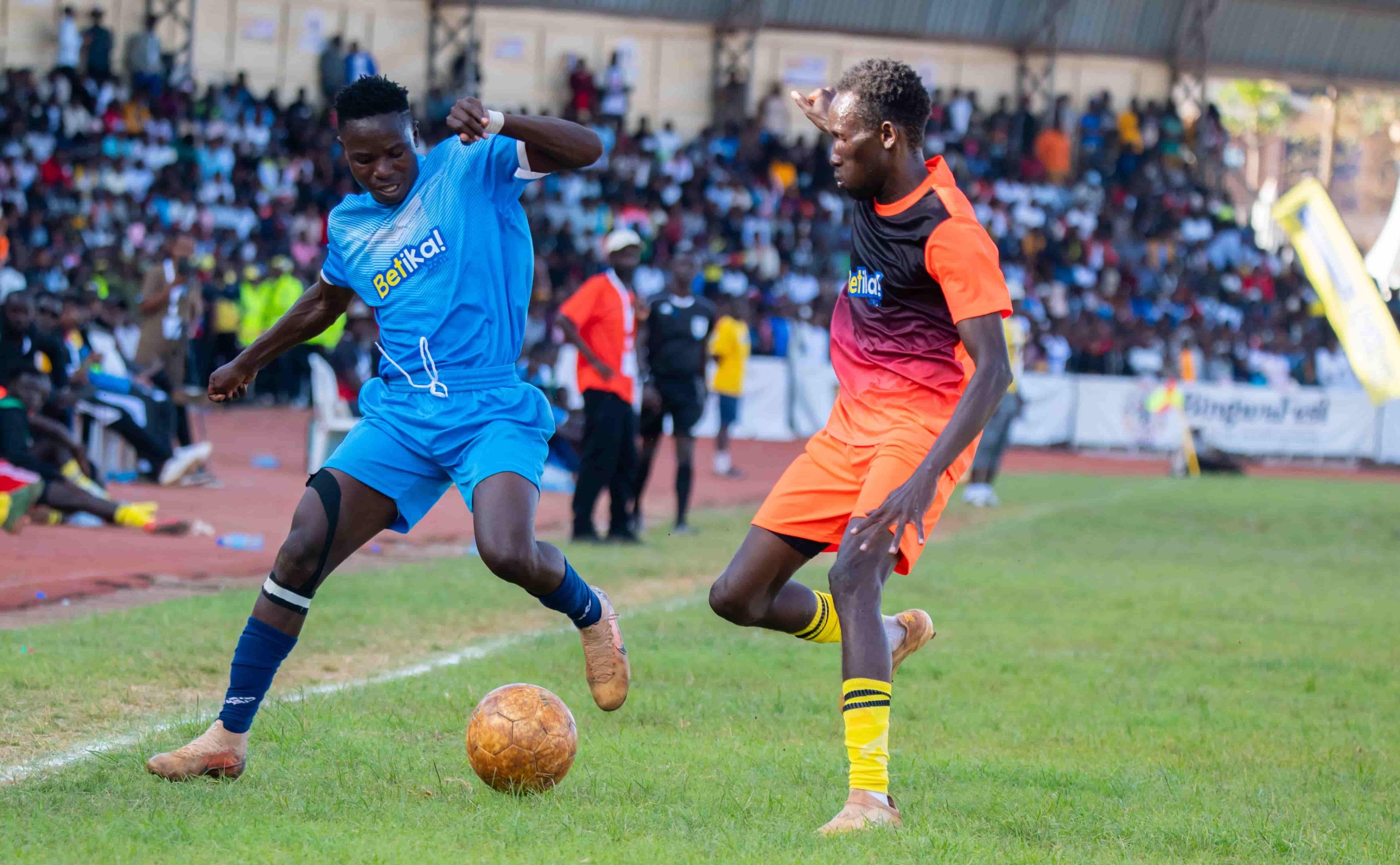
    Iron Ladies and TBM Health emerged as the national football champions of the Betika BingwaFest Season Two, clinching the women’s and men’s titles respectively at the finals held at Kinoru Stadium on Sunday, April 5.

    Both teams were awarded KSh 1.5 million for their victories, while the runners-up, Macmillan Ladies and Al Azizia, received KSh 750,000. Teams finishing in third place in both categories took home Ksh 400,000.

    In the women’s final, Iron Ladies triumphed over Macmillan Ladies with a 1-0 win, thanks to Mourine Lihanda’s decisive goal in the 80th minute.

    The men’s final saw TBM Health overcome hosts Al Azizia 4-3 in a penalty shootout after a 1-1 draw in regular time.

    Al Azizia initially led with Abdullah Siraj’s goal in the 24th minute, but Mourice Ngoye equalized for TBM Health in the 56th minute, leading to the penalty shootout, where the Nyanza region team prevailed.

    “The impact of Betika BingwaFest has been tremendous. This second edition has been a great success, significantly benefiting grassroots teams, who have participated in large numbers. As a federation, we commend Betika’s efforts in making this tournament successful,” stated FKF Chairman Nairobi West Branch Chairman Bernard Omondi.

    In rugby, Kiambaa Women secured the women’s title by defeating Jackals Women 26-13, while Menengai Oilers narrowly beat KEMU Pitbulls 5-0 to claim the men’s title.

    Both rugby champions received KSh 1.5 million, with Jackals Women and KEMU Pitbulls earning KSh 750,000 as runners-up, and third-place teams receiving KSh 400,000.

    After the match, Menengai Oilers Captain Collins Okoth expressed that the team entered the tournament with the determination to advance further after missing the finals last year.

    “Our goal was to win. Last year, we didn’t reach the finals, so this time we prepared thoroughly and remained focused throughout the tournament to achieve that goal,” Okoth said.

    In the 3×3 basketball competition, BCG successfully defended their title by defeating Basket Bros 20-14 in the men’s final, while Hookies claimed the women’s title with an 18-16 win over Aces.

    BCG and Hookies each received KSh 750,000, with Basket Bros and Aces earning KSh 400,000 as runners-up.

  • Kenya National Youth and Cadet Chess Championship in Mang’u High School attracts 8,000 players

    Kenya National Youth and Cadet Chess Championship in Mang’u High School attracts 8,000 players

    Over 8,000 chess players are competing at the Kenya National Youth and Cadet Chess Championship at the Mangu High School in Kiambu County.

    The three-day event has attracted players from different regions who are competing in 12 categories.

    The championship also serves as a selection process, with top players being chosen to represent Kenya in international chess competitions, beginning with the African Youth Chess Championships in Kampala, Uganda, next month.

    Among the standout participants is Chinua Denge, a 15-year-old student from Lenana School, who has already secured two victories in the preliminary rounds, earning him two points. His ambition is to qualify for international representation.

    “I have won two of my games and therefore I have amassed points so far. Going forward I would like to get six points in order to qualify to the next level. My motivation is being on top of my game and getting a ticket to represent Kenya in the coming international competitions,” Denge shared.

    Bernard Wanjala, president of Chess Kenya, highlighted the importance of international exposure for Kenyan players as the nation strives to develop International Masters.

    “We have played two rounds in the opening day so far and we are using this championship to get the national champions and to select the players who will carry the national flag in a number of international events. We expect that Kenya will maintain its dominance in the competition.”

    The leading 11 players will move on to the play-offs, where a round-robin format will determine the best players.

    The top three players in each category will earn a place on the national team.

  • AFCON 2025: Official reports consulted by Le Monde Condemn Senegal’s conduct

    AFCON 2025: Official reports consulted by Le Monde Condemn Senegal’s conduct

    The extensive investigation published by Le Monde regarding the AFCON 2025 final has just sent shockwaves through the football world. While Senegal was celebrating its victory, confidential documents from CAF officials (the referee, match commissioner, and general coordinator) reveal a much darker reality.

    According to these reports, the abandonment of the pitch in the 97th minute by the “Lions of Teranga,” acting on the orders of their head coach Pape Thiaw, is a documented and undeniable fact. CAF regulations are, however, strict: any voluntary withdrawal during a match results in an automatic forfeit.

    https://twitter.com/topskillsportuk/status/2040753208260477013

    The investigation even suggests that the referee may have received “instructions” not to send off two Senegalese players during the restart, in an attempt to save the final’s media image. If the rule of law ultimately prevails at the CAS (Court of Arbitration for Sport), the title could definitively change hands, penalizing an attitude that, according to many observers, flouted sporting ethics that evening.