Author: Dismas Otuke

  • CAF Secretary General Veron Mosengo, steps down

    CAF Secretary General Veron Mosengo, steps down

    The Confederation of African Football (CAF) Secretary General Veron Mosengo-Omba on Sunday announced his resignation in what he described as voluntary retirement.

    The Swiss-born official has repeatedly faced allegations of violating CAF statutes by remaining in his position well beyond the mandatory retirement age of 63.

    “After over 30 years of an international professional career dedicated to promoting an ideal form ‌of football that brings people together, educates, and creates ⁠opportunities for hope, I have decided to ‌step down from my position as Secretary General of CAF to devote myself to more personal projects,” Mossengo-Omba said in a statement.

    Omba reached the compulsory retirement age for CAF in 2022, but his term was extended by the executive committee for an additional three years, which concluded last year.

    “I sincerely thank the CAF’s ⁠president, Dr Patrice Motsepe; my teams; and all those who, directly or indirectly, have enabled the CAF and organised African football to make real and remarkable progress. Let us hope that the progress made will last and be sustained,” he concluded.

    Despite announcing his resignation, rumour has it that the veteran football administrator is intending to vie for DR Congo Federation President in next month’s election.

  • Clinical Kenya bounces back to trounce Canada 40-0, in Sao Paulo

    Clinical Kenya bounces back to trounce Canada 40-0, in Sao Paulo

    Kenya 7’s rugby men’s team made a strong comeback after an unexpected defeat by Belgium, securing a 40-0, victory over Canada in their third match of the final leg of the HSBC 7s Division 2 in Sao Paulo, Brazil, on Saturday night.

    Vincent Onyala led the charge for Shujaa with two tries, while Festus Shiasi, George Ooro Angeyo, Nygel Pettersan Amaitsa, and Denis Abukuse each added a try to the scoreboard.

    Amaitsa also contributed significantly with four successful conversions, complemented by another from David Nyagige.

    Earlier in the tournament, Kenya started with a commanding 38-7 win against Germany but suffered a narrow 12-14 loss to Belgium in their second match.

    Shujaa are  scheduled to play against the USA in their fourth match today at 5:44 pm, followed by their final fixture against Uruguay at 8:44 pm.

  • CAF Exco meets today in Cairo to discuss recent appeal board ruling 

    CAF Exco meets today in Cairo to discuss recent appeal board ruling 

    The Confederation of African Football executive committee members will be meeting today, Sunday, in Cairo, Egypt, to deliberate on several issues, key among them the 17th March appeal board ruling that stripped Senegal of the 2025 AFCON title for forfeiture and declared Morocco as champions.

    It will mark the first-ever exco meeting after the ruling currently being challenged by Senegal at the Court of Arbitration for Sports.

    The meeting also comes a day after Senegal paraded their AFCON trophy in Paris before their 2-0 win over Peru in an international friendly match.

    CAF President Patrice Motsepe will thereafter address a media press briefing from the meeting’s outcome.

  • Pope Leo XIV urges for cooperation between Christians and Muslims

    Pope Leo XIV urges for cooperation between Christians and Muslims

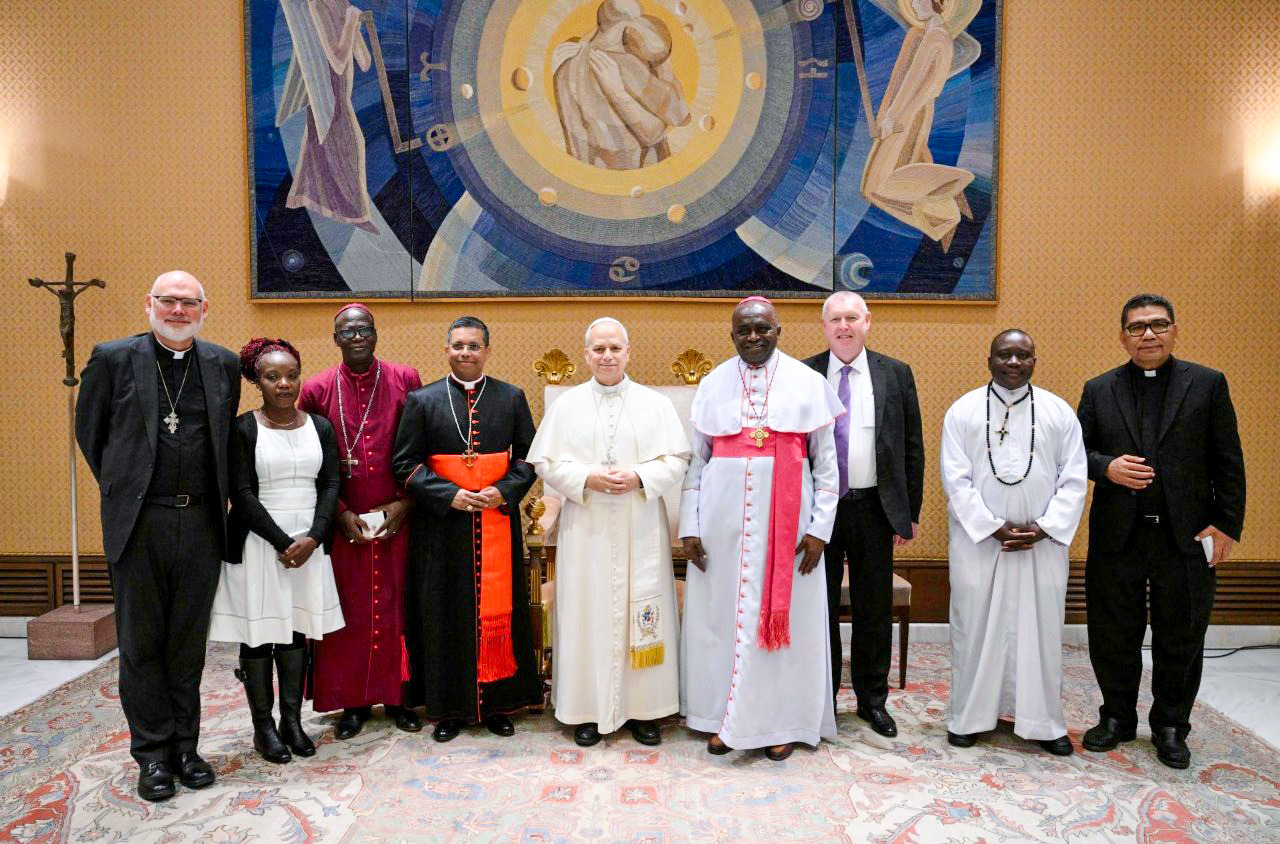
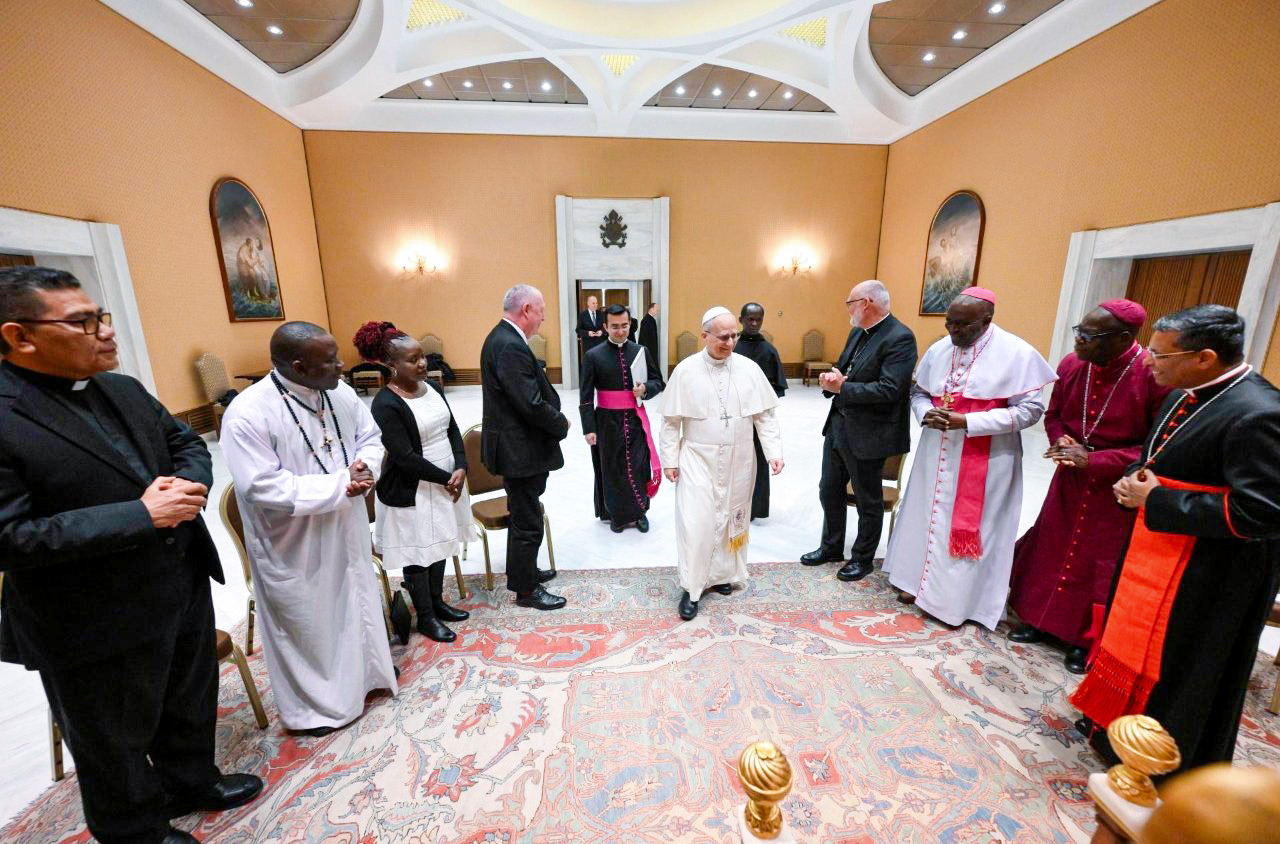
    Pope Leo XIV has urged Christians and Muslims to be more committed to understanding and working together.

    He made this statement on Friday when receiving a team from the Nairobi-based Pan-African organisation Programme for Christian–Muslim Relations in Africa (PROCMURA).

    Speaking to the group at the Vatican, the Holy Father highlighted that interfaith interaction is crucial in a world where religious strife, separation, and tension are becoming more prevalent.

    He noted that efforts such as those undertaken by PROCMURA demonstrate that peaceful coexistence across religious lines is both possible and necessary.

    Reaffirming the Catholic Church’s approach to interreligious relations, Pope Leo XIV stated that the Church “rejects nothing of what is true and holy” in other religions, and underscored the importance of encounter, openness, and respect as the basis for building genuine fraternity.

    He further urged religious communities to take responsibility in addressing prejudice, violence, and social fragmentation, calling for a shared commitment to promoting peace, justice, and the common good.

    The Pope also emphasised the importance of sustained dialogue and collaboration, noting that such efforts strengthen partnerships and support initiatives emerging from local

    communities, an approach that PROCMURA has, over the years, been implementing in building cohesive and inclusive communities across Africa.

    The special audience brought together various stakeholders, including religious leaders from Africa and the PROCMURA leadership, led by its General Adviser, Bishop (Dr.) Nathan Samwini, and Team Leader, Ms Joy Wandabwa, alongside Rev. Dr Andrew Ashdown, Chairperson of PROCMURA’s European partners.

    Bishop (Dr.) Nathan Samwini said the engagement at the Vatican reflects a shared concern for the role of faith communities in shaping peaceful societies for sustainable development across the continent.

    “The call to deepen cooperation between Christians and Muslims speaks directly to the realities we continue to encounter across Africa. It reinforces the need for sustained engagement that is grounded in trust and lived experience,” he said.

    During the meeting, the Holy Father recognised PROCMURA’s longstanding work in building constructive relations and good neighbourliness between Christians and Muslims across Africa, noting that in a world marked by division and religious tension, such efforts demonstrate that people of different faiths can, indeed, live and work together in peace and harmony, irrespective of their religious differences.

    Ms Joy Wandabwa noted that the audience comes at a time when faith-based actors are increasingly called upon to respond to complex social challenges, especially in Africa.

    “This moment highlights the responsibility of organisations such as PROCMURA to continue creating space for dialogue and to support communities in building relationships that can withstand pressure and division,” she said.

    The meeting also acknowledged the ongoing collaboration between PROCMURA and the Dicastery for Interreligious Dialogue in the Vatican, which supports engagement between the Catholic Church and other religious traditions.

    The Pope’s audience marks a continued emphasis by the Holy See on the role of interreligious dialogue in promoting sustainable peace and social cohesion around the world, particularly in regions where religious identity intersects with broader social and political challenges.

  • Elijah Mbaire and Agnes Mumbua win 4th Betika Lukenya 10 Million trees Marathon

    Elijah Mbaire and Agnes Mumbua win 4th Betika Lukenya 10 Million trees Marathon

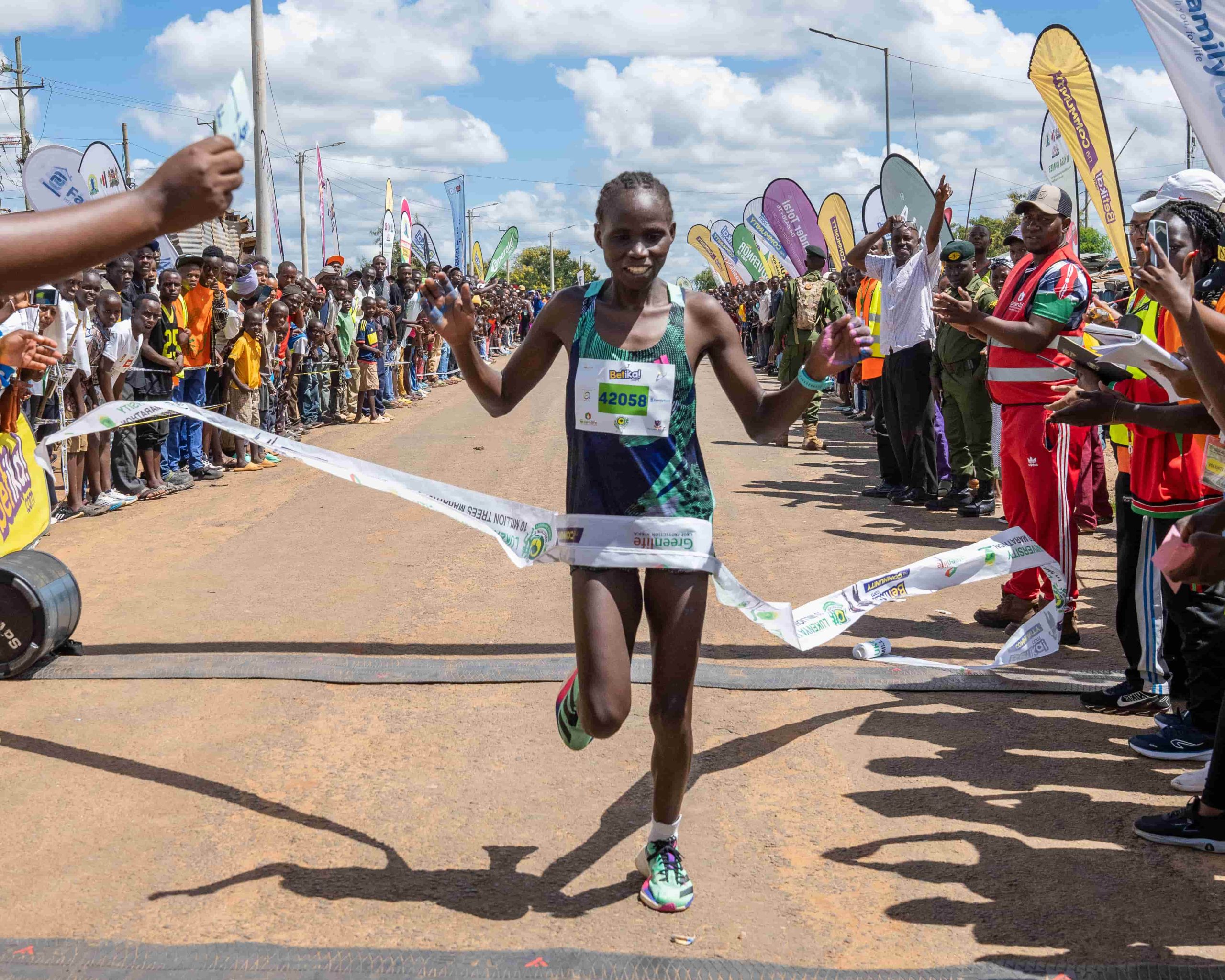
    Elijah Mbaire and Agnes Mumbua Ndolo emerged as the men’s and women’s champions respectively at the fourth edition of the Betika Lukenya 10 Million Trees Marathon held on Saturday, March 28, at Kambu Town.

    In the men’s race, Mbaire won with a dramatic sprint finish in 2:16:44, beating Charles Munyua Njoki by just one second.

    Njoki finished in 2:16:45, taking second place, while Dennis Koech came third in 2:17:00. Mbaire was grateful for his win and said the key moment was late in the race.

    “I’m very thankful for this win. The race was very competitive, and after the 35km mark, we were still four athletes together. At that point, I decided to go all out and push the pace because I knew the finish would be very tight,” said Mbaire.

    Mumbua performed well to win the women’s title in 2:42:56. Fridah Chepkite Todepa finished second in 2:48:33, and Naomi Wambui Muriuki was third in 2:49:29. Mbaire and Mumbua each received KES 500,000, while Munyua and Chepkite got KES 200,000 each.

    Agnes Mumbua cuts the tape after winning the women’s race during the fourth edition of Betika Lukenya 10 Million Trees Marathon.

    Wambui and Koech were awarded KES 100,000 each for finishing third. Prize money will be given up to the 10th position in each race category.

    In the Half Marathon, Zakariah Kirika Gacugu won the men’s race in 01:02:06, ahead of Leonard Kiprotich, who finished in 01:02:21, and Peter Kiprop Rutoh, who came third in 01:02:38.

    In the women’s race, Betty Chepkiror won in 01:12:02, with Phena Siyoi (01:12:03) and Ruth Mwihaki (01:12:25) finishing second and third.

    Betika Group CEO Mutua Mutava said, “We believe in the power of sports to change lives and create opportunities. Our support for events like the Lukenya Marathon shows our commitment to nurturing local talent and bringing communities together. We also want to help the communities hosting us. The medical camp is part of our commitment to community impact, providing health services to residents around Lukenya. We also aim to support sustainability efforts, as seen with the planting of more than 2000 trees.”

    Over 200 athletes registered for the event, which included 42KM, 21KM, 10KM, and cycling races, including an 84-km pro race, a 42km race for those under 23 years, and a black mamba race. Beyond the races, the marathon focused on its environmental mission, planting 2,200 trees during this year’s event.

    This contributes to the 10 Million Trees initiative to restore forest cover and promote sustainability in the Lukenya ecosystem.

  • Kenya off to a flying start in Brazil ,thrashing Germany 38-7

    Kenya off to a flying start in Brazil ,thrashing Germany 38-7

    Kenya’s national rugby sevens men’s team-Shujaa, made a strong start in Sao Paulo, Brazil, thrashing Germany 38-7, in the 3rd leg of the HSBC SVNS division two on Saturday evening.

    Shujaa was ahead 21-1 at the interval, thanks to two tries each from Patrick Odongo and Vincent Onyala, and Nygel Amaitsa’s two conversions.

    In the second stanza, Oooro Angeyo and Denis Abukuse scored a try each, and David Nyangige added a conversion.

    Kenya returns to action against Belgium in the 2nd match from 7:12pm on Saturday before concluding day 1 action against Canada starting at 10pm.

    Jakob Dipper scored the only try for Germany, which was converted by Cedric Eichholz.

    A podium finish for Shujaa in Brazil will see them earn a promotion to the core HSBC 7s World Championship next year.

    Shujaa remains 3rd after the opening two legs on 32 points, behind Germany and the USA, who are on 38 and 36 points, respectively.

  • Shujaa face leaders Germany in Sao Paulo opener as they aim promotion into HSBC 7’s

    Shujaa face leaders Germany in Sao Paulo opener as they aim promotion into HSBC 7’s

    Kenya national rugby sevens team, Shujaa, will compete in the third and final leg of the HSBC Sevens Division Two in Sao Paulo, Brazil,between today and tomorrow, aiming to secure a spot in the HSBC Sevens World Championship next season.

    Shujaa will kick off the Brazil leg against the leading team, Germany,today at 4:22 pm, followed by a match against Belgium from 7:12pm and end the day 1 against Canada at 10:22 pm.

    Tomorrow, Kenya will face the USA before concluding their fixtures against Uruguay.

    Kevin Wambua’s team currently holds third place in the standings with 32 points, having earned bronze medals in both Nairobi and Montevideo, and must finish third to secure promotion to the top tier of rugby.

    Germany leads with 38 points, tied with the USA, while Uruguay, the closest challenger to Kenya, trails Shujaa by 4 points.

    The top four teams will advance to the Core IRB Series next season.

  • Costa Rica backs Morocco’s Autonomy plan for Sahara under Kingdom’s sovereignty

    Costa Rica backs Morocco’s Autonomy plan for Sahara under Kingdom’s sovereignty

    Costa Rica has described Morocco’s autonomy initiative as the “most appropriate, serious, credible, and realistic” basis for resolving the dispute over the Western Sahara, saying it considers autonomy under Moroccan sovereignty “the most feasible solution.”

    The position was set out in a joint declaration signed in Rabat following talks between Morocco’s Foreign Minister Nasser Bourita and his Costa Rican counterpart Arnoldo André Tinoco, who is on a working visit to the Kingdom.

    Costa Rica said it intends to act on this stance across political, diplomatic, economic and consular levels, signalling a broader alignment with Rabat’s position on the issue.

    The statement also welcomed the adoption of United Nations Security Council Resolution 2797 (2025), highlighting what it described as growing momentum around the political process.

  • Nigeria’s world financial leaders converge in London for the Africa Capital forum

    Nigeria’s world financial leaders converge in London for the Africa Capital forum

    Senior leaders from some of the world’s most significant financial institutions gathered at The Peninsula London on Tuesday for The Africa Capital Forum, a high-level institutional convening bringing together central bank leadership, development finance institutions, global investors, and leaders of Nigeria’s financial sector to examine the conditions for long-term capital mobilisation into Africa’s largest economy.

    The Forum was held in partnership with the Central Bank of Nigeria and key institutional partners, alongside the United Kingdom State Visit of His Excellency Bola Ahmed Tinubu, GCFR, and President of the Federal Republic of Nigeria.

    Convened under the theme From Stabilisation to Capital Mobilisation, the programme spanned four substantive sessions moderated by senior executives from Standard Chartered and J.P. Morgan, and concluded with a fireside conversation between CBN Governor Olayemi Cardoso and Odile Renaud-Basso, President of the European Bank for Reconstruction and Development.

    The centrepiece of the Forum was an unambiguous statement of institutional transformation from the CBN Governor himself Addressing the Forum in his fireside conversation with the European Bank for Reconstruction and Development President, Governor Cardoso placed today’s convening in the context of the most severe economic stress Nigeria’s financial system had faced in a generation.

    “Nigeria arguably has gone through one of its worst financial crises in the history of the country,” the Governor acknowledged. “Inflation at 37%, excessive money supply, investors going through the window. A lot of that has been managed downwards. We have had 11 consistent months of disinflation and we are positive about the future.”
    On the structural transformation of Nigeria’s financial system, his assessment was unequivocal:

    “The financial system we had is dead and buried. What we have now is a new system that has brought liquidity and transparency.”

    The Governor also turned to Nigeria’s banking sector as a signal of the country’s international reach: “We are very proud of what the Nigerian banks have been able to accomplish. They play a dominant role in Africa and beyond. They are our ambassadors.”

    The international validation that anchors the Forum’s narrative was reinforced in the opening remarks of Jonny Baxter, British Deputy High Commissioner in Lagos, who framed the UK-Nigeria economic relationship in concrete terms.

    The United Kingdom accounts for close to half of capital inflows into Nigeria, he noted, making London the right venue for this conversation.

    “The UK is proud to remain one of Nigeria’s partners with links in banking and capital markets,” he said, adding that the next phase of the reform agenda should focus on converting renewed investor interest into long-term, sustainable investments.

    European Bank for Reconstruction and Development President Odile Renaud-Basso, speaking in her fireside conversation with Governor Cardoso, offered endorsement of Nigeria’s reform direction from one of the world’s leading multilateral development institutions.

    “This open, transparent, predictable system is extremely important,” she said, adding that the European Bank for Reconstruction and Development sees significant potential in Nigeria’s economic stabilisation, its demographic growth, and the appetite of its people to embrace new technologies.

    The European Bank for Reconstruction and Development’s Managing Director for Policy Strategy and Delivery, Melis Ekmen Tabojer, confirmed institutional commitment directly:

    “Our investments come with institutional governance support. We consider ourselves long-term investors and are glad to welcome Nigeria as our 77th shareholder.”

    CBN Deputy Governor for Economic Policy Muhammad Sani Abdullahi provided the macroeconomic account of where the system stands.

    “Today we have achieved stability,” he said. “Net and gross reserves are high, foreign reserves are over $50bn, the foreign exchange market has stabilised, and inflation is falling. But we are cautious.”

    He added that the corrections seen through 2024 had begun to restore confidence, with a measurable increase in foreign exchange flows following the reforms.

    That assessment was independently confirmed by Ravi Bhatia, Director and Lead Analyst for Africa at S&P Global Ratings: “We put Nigeria on positive and we are positive.”

    Steve Gray OBE, Head of West and Central Africa at UK Export Finance, situated the confidence question in the context of structural change:

    “Confidence is built through full fiscal transparency. The opacity is responsible for the so-called African premium. But the reforms in Nigeria are providing transparency and building confidence.” He also called for greater external recognition of Nigeria’s existing strengths: “I want to see more reflection of the reality of Nigeria’s strengths so that more can be done to support Nigeria’s priorities.”

    The Forum’s first panel, examining the repricing of risk and the reopening of capital markets, produced one of the day’s sharpest analytical distinctions.

    Chris Chijiutomi, Head of Africa at British International Investment, drew a line between short-term portfolio flows and the capital that actually builds economies.

    “Portfolio capital investors are good but in emerging markets, long-term patient capital is more important. That is what gives you long-term growth. When you think about sustainable economic development and job creation, it is this long-term capital that can give you that.” He added a direct call on domestic capital formation: “We need more pension funds, more Nigerian capital, because that will sustain long-term development in Nigeria.”

    Olimpia Gjino, Regional Head of Syndications for Europe, the Middle East and Africa at the International Finance Corporation, positioned Nigeria clearly within the institution’s investment universe:

    “Nigeria is a very investable country. You need to deal with the issues, the price of the risk, and structure around it.”
    Deputy Governor for Financial System Stability Phillip Ikeazor addressed the durability question directly, offering an assurance that the reform architecture has been designed to outlast any single administration: “All the reforms that we have put in place are such that they cut across stakeholders. It ensures that even at the end of this particular administration, people will see the need not to reverse these reforms.”

    The second session surfaced the commercial reality of a banking sector in the midst of structural recapitalisation.
    Yemisi Edun, Managing Director and Chief Executive Officer of First City Monument Bank, connected the capital-raising programme directly to market capacity: “The raised capital has created expansion of credits. The new recapitalisation has given more credibility towards what we can do as industries.”

    Segun Alebiosu, Managing Director and Chief Executive Officer of First Bank of Nigeria, placed the foreign exchange reforms at the centre of the banks’ international ambitions: “With currency reforms, Nigerian banks will be able to take home bigger transactions. We can do more and crowd in new investments.”

    Oliver Alawuba, Group Managing Director and Chief Executive Officer of United Bank for Africa, reflected the pan-African dimension of the banking sector’s growth: “The business that we have has over 65% of the revenue coming from outside of Nigeria. That means that we can do more in Africa.” He also anchored the enabling conditions argument in a concrete domestic priority: “Once power issues are sorted out, more employment will be generated, more businesses will come out.”

    The third session examined the role of digital infrastructure and fintech innovation in mobilising diaspora capital at scale. Luis Oganes, Head of Global Markets Research at J.P. Morgan, offered a market perspective on Nigeria’s positioning: “Nigeria is emerging as a fintech ecosystem in sub-Saharan Africa.”

    Temi Popoola, Group Chief Executive Officer of Nigerian Exchange Group, framed the moment as structurally significant for the capital markets: “Technology has changed the face of our market. We are at a massive inflection point where the tremendous flows we are seeing in the market today are thanks to the banks.”

    Neeraj Kapur, Group Chief Executive Officer of Crown Agents, offered an insight on the relationship between innovation and regulation: “Fintech drives regulation more than regulation drives fintech.”

    Odunayo Eweniyi, Chief Operating Officer of PiggyVest, placed the inclusion dimension at the centre of the fintech proposition: “We make investment feel much more accessible.”

    The Forum’s final session produced what may prove to be the most widely cited analysis of the day.

    Roosevelt Ogbonna, Managing Director and Chief Executive Officer of Access Bank, addressed directly the question of whether reform fatigue could undermine the gains already achieved:

    “There is some form of reform fatigue. But the difference is that this time there is reform credibility. For the first time, there is a congruence of the fiscal and monetary sides.”

    Sanyade Okoli, Special Adviser to the President on Finance and Economy, reinforced Nigeria’s positioning in the context of global capital dynamics: “We want to drive the right quality of growth but the government alone cannot fund this growth. We need to work with partners who will bring the sticky, equity capital.” She added: “In the face of global tensions, investors are sticking with us even as the world talks about fleeing to safety.”

    Usman Okpanachi, Director of the Statistics Department at the Central Bank of Nigeria, distilled the message to a single instruction for the international investment community: “The provision of credible data is important in building trust and transparency. The message from the CBN is: follow the data.”

  • Duale lauds Kenya’s real estate shifts toward wellness as he presides over the unveiling of Silva Gigiri

    Duale lauds Kenya’s real estate shifts toward wellness as he presides over the unveiling of Silva Gigiri

    Nairobi’s high-end real estate market is entering a new era, with developers now embracing sustainability and wellness as the new frontier of luxury.

    This shift was underscored during the official launch of Silva Gigiri, a residential development on United Nations Crescent, positioned to redefine modern living in the diplomatic heart of Gigiri.

    Presiding over the launch, the Cabinet Secretary for Health, Aden Duale, highlighted that Silva Gigiri aligns directly with Kenya’s national health and economic priorities.

    He emphasised that modern housing must support the country’s transition from clinical care to preventive and promotive health under the Bottom-Up Economic Transformation Agenda (BETA) and Universal Health Coverage (UHC).

    “Wellness-centric design is becoming a strategic tool in reducing disease burden and enhancing quality of life.”

    Speaking during the launch, Bashar Muhamed, Managing Director of Silva Gigiri, noted that this is not just another development; it is a belief in building responsibly for future generations because Africa has the potential to define its own architectural identity—one that reflects our climate, our environment, and our way of life.

    Industry data shows sustained growth in Kenya’s luxury property market, with prime residential prices rising 5–8 per cent annually in neighbourhoods such as Gigiri, Karen, Muthaiga and Runda.

    Rental yields have remained competitive at 6–8 per cent, buoyed by expatriates, diaspora investors, and a growing Kenyan upper-middle class.

    Developers are now responding to a clear shift: luxury buyers are prioritising wellness, sustainability, space efficiency, and long-term value over traditional markers of opulence.

    Somalia’s ambassador to Kenya, H.E. Jabril Abdulle, lauded the new approach by real estate to focus on wellness by ensuring nature coexists with modern housing development.

    “Nairobi remains one of Africa’s top destinations for real estate investment, with increasing interest from international developers and institutional investors. The city’s strategic role as an economic and diplomatic hub in East Africa further enhances its attractiveness,” says Ambassador Abdulle.

    He further stated that currently, more than 50,000 Kenyans are working in Somalia in various sectors, from education and medical services to hospitality sectors.

    The ambassador pointed out that “the good diplomatic relations have opened up our economies, and today more Somalia-based companies are investing in Nairobi, especially in the financial and aviation sectors. But we should expect more investing here from mid this year.”

    Kenya continues to strengthen its position as an African real estate leader, driven by rapid urbanisation, expanding incomes and strong investor interest.

    Experts note that the future of the sector will depend less on the quantity of units and more on the sustainability and long-term relevance of developments.