Author: Christine Muchira

  • Former Trans Nzoia County assembly staff demonstrate over unpaid dues

    Former Trans Nzoia County assembly staff demonstrate over unpaid dues

    Former Trans Nzoia County Assembly staff staged peaceful demonstration over unpaid gratuity for the period they served in the County government.

    The former staff demonstrated at the Assembly demanding for their dues accusing the leadership of a scheme to swindle their funds.

    Led by Paul kidero the workers said that it is an insult by the county assembly leadership to pay them the little money while paying former MCA their full amount.

    They said they will stage the sit in to ensure that they are paid the 400,000 owed by the county assembly or they file a case in courts to challenge the payment.

    The workers efforts to be addressed by assembly speaker were futile as they closed down the premise forcing them to stage their demos on the gates.


  • African Union Election Observation Mission to Guinea Bissau’s parliamentary elections launched

    The African Union Commission (AUC) has announced the launch of the African Union Election Observation Mission (AUEOM) for the June 4, 2023 Parliamentary Elections in the Republic of Guinea Bissau.

    The short-term election observation mission comprises forty (40) members drawn from various AU Member States comprising AU Organs, notably, the Permanent Representatives Committee, Pan African Parliament, as well as Representatives of: Election Management Bodies, Civil Society Organisations, Independent Experts, Women and Youth.

    The AUEOM which is supported by a team of experts from the AUC will be led by Joaquim Alberto Chissano, former President of the Republic of Mozambique.

    The objectives of the Missions are to: provide an accurate and impartial assessment of the electoral process, including the degree to which the conduct of the elections meets regional, continental and international standards for democratic elections.

    Additionally, to offer recommendations for improvement of future elections based on the findings.

    As well as demonstrate AU’s solidarity and support towards consolidation of democracy, peace, stability and development in Guinea Bissau.

    The Mission draw its mandate from various AU instruments, most importantly, the 2002 African Union Guidelines for Elections Observation and Monitoring Missions, the 2002 OUA/AU Declaration on Principles Governing Democratic Elections in Africa; 1981 African Charter on Human and Peoples Rights.

    Also the 2007 African Charter on Democracy, Elections and Governance; and Aspiration No. 3 of the AU Agenda 2063, which aims to ensure an Africa of good governance, democracy and respect for human rights, justice and rule of law, among others.

    As part of its observation process in Guinea Bissau, the AUEOM will engage with various stakeholders as well as observe the polling process. Based on the findings, AUEOM will issue its preliminary statement on the electoral process after the election’s day in Bissau.

  • Taxation of sugar-sweetened beverages a ‘win-win’ for Ghana’s public health strategy

    Taxation of sugar-sweetened beverages a ‘win-win’ for Ghana’s public health strategy

    A new win for Ghana as 20pc tax has been imposed on sugar-sweetened beverages (SSBs), including flavoured juice drinks, sweetened tea, sodas, and energy drinks.

    Actioned by the Ghanaian Government as part of measures to reduce impacts of SSBs on public health, the country is now one of hundreds that have implemented World Health Organization-recommended interventions to prevent non-communicable diseases (NCDs).

    This important policy action follows a comprehensive campaign by the Advocating for Ghana’s Health Coalition, which asserts that an SSB tax will increase individual healthcare savings and promote the health of Ghanaians, especially children.

    The tax is expected to help reduce SSB consumption and have knock-on positive impacts for the general population of Ghana, which, like most African countries, is experiencing increases in nutrition-related NCDs, such as overweight and obesity.

    “Excessive consumption of SSBs increases the risk of stroke, kidney failure, and heart diseases,” said Professor Paul Armah Aryee of the University for Development Studies, during a public sensitization event held in Tamale, in Ghana’s Northern Region in July 2022.

    James Mckeown, a member of the Coalition who organized the sensitization event urged the public to drastically reduce their intake of such drinks and switch to drinking water instead.

    SSBs are a significant contributor to overweight and obesity, and children with these conditions have an elevated probability of developing other diet-related diseases, such as type 2 diabetes, hypertension, and stroke, later in life. “Poor diets are responsible for some 11 million deaths annually, with cardiovascular disease, cancers, and diabetes as the leading causes. What is the problem? We don’t eat enough healthy foods like whole grains, nuts, seeds, fruits and vegetables,” says Professor Amos Laar of the University of Ghana.

    A team of Ghanaian researchers recently estimated the direct healthcare costs associated with obesity in the older adult Ghanaian population: compared with healthy-weight adults, overweight and obesity were associated with 75pc and 159pc more in-patient admissions, respectively.

    For adults with a healthy weight, the average health care cost per person per admission was US$35, whereas for overweight adults it was US$78, and obese adults US$132. The Ghanaian Government is therefore stumping up a staggering fee for these highly expensive yet preventable health conditions.

    The enactment of the tax on SSBs is an important step forward to achieving Ghana’s commitments to improving public health.

    Ahead of the bill’s approval, the Advocating for Ghana’s Health Coalition conducted relevant research and implemented an advocacy campaign to increase demand for the policy.

    In November 2022, the Coalition first presented a position statement to Parliament and key government ministries, departments and agencies, highlighting the need to enact and implement an SSB tax. On 20 December, the bill – the Ghana Excise Duty Amendment Bill, 2022 – was tabled, read and debated by Parliamentarians.

    In response, the Coalition presented a joint position statement commending Parliament for approving the bill at its second laying, but also identified and outlined key gaps in the bill – including the type of tax to impose – and offered recommendations to strengthen the proposed policy.

    The bill was read for the third time and approved by Parliament on 31 March 2023, and signed into law by the President on 3 April 2023.

    Led by the School of Public Health of the University of Ghana, the Coalition is made up of groups including the Advocating for Health ProjectHealthier Diets for Healthy Lives Project, the Ghana Public Health Association (GPHA), Ghana NCD Alliance (GhNCDA) and Ghana Academy of Nutrition and Dietetics (GAND), as well as the Coalition of Actors for Public Health Advocacy (CAPHA).

    Relying on existing evidence, the Coalition has argued that SSBs contain little or no nutrients and are implicated in several health problems, including obesity, tooth decay, and type 2 diabetes.

    In order to raise awareness on the implications of sugary drink consumption and the need to develop healthy lifestyles, from February 2022 to June 2023 the Coalition wrote and published news articles and op-eds in the Ghanaian media, and held floats (street marches), virtual webinars, and public forums across the country with a clear message: ‘SSBs are harmful to your health’.

    The Coalition’s sensitisation efforts have further involved training local journalists on the relationship between unhealthy diets and NCDs so they can spread messages and help inspire behaviour change.

    Television and radio programmes are running in all 16 regions of Ghana, and advocacy champions and influencers identified by the Advocating for Ghana’s Health Project are pushing project messages across social media.

    As their evidence-informed advocacy work continues, the leader of the Coalition, Amos Laar, a Professor of Public Health and Nutrition maintains that “the government of Ghana has manifold opportunities and a responsibility to use public health policies to protect, promote, and assure the health of its citizens. One such opportunity is the enactment and implementation of this tax.”

    The Coalition is currently hard at work engaging relevant government agencies that can identify the most effective ways to implement the policy, and more easily monitor and evaluate its impact, he adds.


  • Swiss biological agricultural product manufacturer sets up office in Kenya

    Swiss biological agricultural product manufacturer sets up office in Kenya

    Andermatt a Swiss biological agricultural product manufacturer, has set up office in Kenya as it seeks to spread into the region with its wide assortment of natural solutions to rejuvenate soils in a regenerative manner and manage pests and diseases with a range of biological tested solutions.

    The company has set up a demonstration farm in Naivasha, Kenya, where it is producing beneficial insects as well as growing a wide range of crops to demonstrate how nature can be harnessed to improve farm productivity for both small- and large-scale growers.

    The Naivasha facility is a breeding centre for beneficial insects -the main insect currently produced on mass is the Phytoseiulus mite that are harvested daily for introduction in farms across Kenya to combat the destructive red spider mite especially in flowers.

    “The Phytoseiulus persimilis feeds on red spider mites, and consumes up to five adults or twenty eggs a day providing an effective biological control instead of spraying chemicals”, said Hamish Ker, Andermatt Regional Commercial Manager, in Naivasha during a visit to the facility.

    The facility targets to produce up to 20 million phytoseiulus weekly.

    Ker added that as the world grapples with climate change and food security challenges, it is increasingly becoming apparent the need to revert to regenerative and sustainable agriculture systems to enhance soil and plant health for safe, improved farm productivity.

    Natural solutions will also improve the efficacy/cost of pest control/plant nutrition and reduce the need to rely only on traditional chemical interventions and salt fertilizers, he added. “By using nature’s solutions, we can reduce the need for pesticides which in turn reduces pressure on the environment as well as production costs and makes for a more conducive farming environment.”

    Ker emphasizes the need to focus on healthy crops by introducing natural / biological stimulants. “ Healthier crops are less susceptible to attacks from pests and diseases because they have inbuilt ability to fend off external attacks”, he said.

    To achieve this, he says “we must first start with roots, the foundation of the plant by making it possible for a crop to grow a mass of healthy roots and by doing so make it possible for the plant to easily take up more nutrients from the soil.”

    When the plant feeds on a healthy balanced organically charged soil with a rich living microbial population it is able to develop a significant plant mass made up of multiple strong stems/branches supporting many large green leaves for max photosynthesis leading to a healthy and productive harvest.

    And if the focus is on the 60 percent of Kenya’s smallholder farmers, we can tackle food insecurity and combat climate change “If we can improve the performance of the small-scale farmer, it will not only be good for the farmer but also the country in terms of food security,” he says.

    The Andermatt demo farm is growing maize, Sukuma, potatoes, beans, tomatoes, wheat, sorghum, sunflower and millet  – Kenya’s most popular crops in a control experiment to show how mass root stimulation and soil conditioning can result in increased productivity with limited investment.

    Using the traditional DAP application with various treatments of beneficial fungi/bacteria and selective biostimulants, the crops are already showing a clear difference, and progressively, farmers, policy makers and the media will see how tapping into nature for natural solutions can make a significant impact to farmers yields and cost of production , said Hamish.

    Useful fungi and bacteria occur naturally in the environment, they only need to be applied intensively to the seed/roots with our specially selected root health product range so they grow and overcome/control the disease carrying bacteria/fungi strains which can devastate a farmers crop he explained.

    The current champion Andermatt seed/root treatment is made up of the following Bascillus(Rhizo Vital) and Trichoderma (Eco T) along with V12 Initiate to provide the farmer with an all in one microbe/macro/micro starter nutrient starter pack.


  • I won’t fail you, Environment CS Tuya assures President Ruto

    I won’t fail you, Environment CS Tuya assures President Ruto

    Cabinet Secretary Soipan Tuya has assured President William Ruto that the Ministry of Environment, Climate Change and Forestry won’t fail the Head of State and the people of Kenya in the delivery of its broad mandate that include restoration of the country’s degraded ecosystems by growing 15 billion trees by the year 2032.

    “We have an onerous task as a Ministry and with the leadership of Your Excellency the President, we have the responsibility to restore our degraded ecosystems by among other strategies, greening our nation through planting of 15 billion trees.

    “Your Excellency, I want to promise you infront of all these people here today, I won’t let you down,” CS Tuya assured President Ruto during her thanksgiving ceremony held on Sunday at her Leshuta home in Narok County and attended by the Head of State, First Lady Rachael Ruto and Deputy President Rigathi Gachagua among other national and county leaders.

    At the same time, CS Tuya thanked President Ruto for appointing her the first woman Cabinet Secretary from the Maa community, promising to use her elevated position in the community to create opportunities for girls and women from the community.

    “My heartfelt gratitude goes to you Mr President for allowing God to work through you to believe in me and appoint me to serve in your Cabinet. By that one single decision, you have changed the course of history for the Maa community.

    “You granted me the opportunity to become the first ever Maa woman to be appointed as Cabinet Secretary, 60 years since the independence of our republic. Thank you for believing that the Maa woman deserves a seat at the high table,” CS Tuya thanked the President.

    She thanked Narok residents for electing her as their County MP for two consecutive terms during which she initiated several development projects across the vast county among them a primary school in her neighborhood named after her.

    The CS thanked her family led by their parents Mr and Mrs Samson Ole Tuya for raising her up well especially for the opportunity to attain an education which she said had opened doors for her and her siblings. The CS’s father, Samson Ole Tuya is a two-term former Narok South MP.

    In his address, President Ruto described CS Tuya as a brave, calm and collected leader, and congratulated the Cabinet Secretary on her appointment saying she earned it through her bravery, diligence and steadfastness.

    “I have worked with Soipan Tuya and I can testify that she’s a diligent, trustworthy and hardworking person. Because of her hardwork, faith and diligence, she’s been blessed to become a Minister in the Cabinet of the Republic of Kenya,” the President said.

    “For Soipan Tuya to become a Cabinet Secretary, it is not because she’s a woman. It is not because she’s a Maasai woman or a pastoralist. She’s where she is because she deserves it,” the Head of State added.

    Deputy President Rigathi Gachagua, Narok Governor Ole Ntutu and area MP Gabriel Tongoyo were among speakers at the ceremony attended by Ministry staff led by Principal Secretaries Eng Festus Ng’eno (Environment and Climate Change) and Gitonga Mugambi (Forestry).


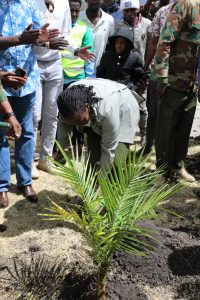
  • Let’s nurture tree seedlings to maturity, CS Tuya urge Kenyans

    Let’s nurture tree seedlings to maturity, CS Tuya urge Kenyans

    Environment, Climate Change and Forestry Cabinet Secretary Soipan Tuya has urged Kenyans to embrace nurturing of tree seedlings to mature as opposed to simply planting trees and leaving them to survive on their own.

    “I have been telling Kenyans, across the country, if you plant a tree please develop a plan of taking care of the tree. It is better to plant one tree that you can nurture to maturity than to plant thousands of trees that you plant and go. You will not be doing anything, it will be a zero sum game,” CS Tuya said.

    At the same time, CS Tuya rallied Kenya’s intensify tree growing as climate change mitigation measure saying the phenomenon had become a matter of life and death.

    “The issue of climate change is now a matter of life and death. We cannot continue planting trees as pastime. We cannot continue planting trees just as a mere act of CSR,” CS Tuya cautioned.

    The Cabinet Secretary spoke on Saturday at her home village of Leshuta in Narok West during a tree planting exercise at Soipan Primary School. CS Soipan founded the school during her tenure as Narok County MP.

    The Cabinet Secretary recounted recent tree growing success stories including at last year’s launch of the 15 billion tree growing programme in Ngong Forest where the entire 560,000 seedlings planted were thriving because of good nurturing.

    She said the tree planting activity at Soipan Primary School was part of lead-up activities for this year’s World Environment Day whose national celebration will be held on Monday in Nakuru City County and thanked the various agencies that supported the initiative includinf KFS, NEMA and the County Government of Narok.

    At the same time, Tuya invited Narok County residents to tomorrow’s interdenominational thanksgiving church service at her Leshuta home that will be attended by several national leaders led by President William Ruto and Deputy President Rigathi Gachagua.

    “Tomorrow will be an important day for me to give thanks for being appointed the first woman minister among Maa community. It is an achievement that’s worth thanking God for.

    “All the churches from here will congregate to welcome the President, Deputy President and government officials to worship and thank God for the opportunity to be part of Kenya’s leadership,” the CS said.

    Other speakers at the event where 2,000 tree seedlings were planted were Narok County Commissioner Isaac Masinde, Narok County Secretary John Maiyani and former area MP Samson Ole Tuya among others.

    Masinde said the Government will soon mount a major crackdown on perpetrators of illegal forest activities in Narok County including charcoal burning and illegal logging.


  • Researchers root for international collaboration to curb economic planning data availability challenges

    Researchers root for international collaboration to curb economic planning data availability challenges

    Access to reliable, credible and up-to-date economic data has been cited as a frustrating challenge facing economic policy makers in their quest to chart favourable development plans in Africa.

    Speakers at the 2023 African Econometric Society (AFES) conference led by Kenya’s National Treasury Cabinet Secretary Prof Njuguna Ndung’u and the African Economic Research Consortium (AERC) Executive Director Prof. Théophile Azomahou highlighted the need for reliable economic statistics and related data provided by econometric professionals to aid development planning in the continent.

    Econometrics uses economic theory, mathematics, and statistical inference to quantify economic phenomena; effectively turning theoretical economic models into useful tools for economic policymaking.

    The African Econometric Society (AFES) meeting organized in partnership with the African Economic Research Consortium (AERC) brought together high-ranking Economic Policy leaders, including Presidential and Cabinet-level Special Advisors, Eminent Professors and Members of the Diplomatic Community to Nairobi to discuss the best way forward for Africa to recover from economic shocks.

    While presenting his keynote address at the 2023 AFES meeting at the Radisson Blu Hotel, Nairobi, the National Treasury and Economic Planning Cabinet Secretary Prof. Njuguna Ndung’u decried the frustration that economic planning and management technocrats continue to face due to unreliable data and called for concerted efforts among policymakers in Africa and beyond to address the challenge of current, credible and reliable data access in economic planning.

    “The need for adequate economists, statisticians, and econometricians, who are dependable, and available on a timely basis is widespread regionally, and internationally. In many of our African countries, National Accounts Statistics and Monetary Statistics are usually in arrears. And as a policymaker, I know how frustrating it is to work with scanty or stale data and evidence. So, challenges are enormous in this field,” he said.

    As a leading economic policy, research and planning capacity building institution in the continent the African Economic Research Consortium (AERC) is set to play a key role in advancing the role of econometry in the country to boost economic resilience.

    AERC Executive Director Prof. Azomahou acknowledged the role that research plays in economic development and the need for AERC to transition to quality and excellence in research.

    “This is a regional conference for Africa and integrating the world just the same way AERC is geared to move from regional levels in the Sub-Saharan African region to continental levels and on the world map. While AERC will continue strengthening the capacity of researchers and graduate students in Africa, the consortium will gradually change its face towards knowledge generation in economics and policy impact and advocacy. I am happy that this week prefigures the future of AERC: global knowledge, excellence by putting our feet into those of these giants and being ambitious. AERC wants to dream big. Therefore, this hosting could not have been organized at a better time,” he said.

    The Royal Danish Embassy Ambassador to Kenya Ole Thonke, who also spoke during the opening ceremony emphasized the need for better research to unleash the continent’s potential and address structural issues and challenges.

    “Despite all this growth and moving the continent forward, a lot of fundamental and economic issues are still the same. Many African countries are still struggling with imports and exports. I am a firm believer that Kenya and Africa have abundance of skilled manpower and natural resources that when put to good use via better research and policies, we will unleash more opportunities in Africa for a better future and this forum by AFES and AERC is one of the platforms that we need to drive our economy forward,” said the Danish Ambassador.

    Prof. Rosa Matzkin (University of California), President of The Econometrics Society expressed the need for Africa to be part of the society as part of their contribution to participate in research for economic measurements, she also acknowledged the need to promote well designed economic proposals.

    “Africa now has a seat in the committee, a clear indication of its frontier in research and the good work that the continent and its researchers are doing. Any national policy, be it in infrastructure, health, education, fiscal, incomes or monetary policy, in order to be an informed one and most likely to succeed, would require sufficient, reliable, and fresh evidence,” said Rosa.

    The AFES will also be marking the 300th Anniversary of the pioneering father of modern economics, Adam Smith, best known for his influential book “The Wealth of Nations,” which was published in 1776. The commemoration, which will be held as a plenary session, will provide an opportunity for policy makers and scholars to reflect on the challenges facing the global economy today and consider how Smith’s insights might be applied to address them.

    The AFES 2023 Meeting organized by a Committee chaired by Prof. Théophile Azomahou, who is also the Executive Director, AERC has lined up keynote presentations by AERC Chairperson and University of Ghana, Prof. Ernest Aryeetey, Massachusetts Institute of Technology (MIT) Prof. Daron Acemoglu, Nobel Laureate and Abdul Latif Jameel Professor of Poverty Alleviation and Development Economics at MIT Prof. Esther Duflo. Other keynote presenters include the African Development Bank, Chief Economist and Vice President for Economic Governance and Knowledge Management Complex, Prof. Kevin Chika Urama, Prof. Nathan Nunn (University of British Columbia), Prof. James Robinson (University of Chicago) and Prof. Leonard Wantchekon (Princeton University).

  • EACC moves to court to recover KBC Mombasa land

    EACC moves to court to recover KBC Mombasa land

    The Ethics Anti-Corruption Commission (EACC) has moved to Court in Mombasa to recover land worth Ksh.150 Million grabbed from the Kenya Broadcasting Corporation (KBC).

    The KBC land that is in Mombasa was grabbed and converted to commercial use by private developers.

    Justice Nelly Matheka has certified the case as urgent and has issued preservation orders.

    Ex-Lands Commissioner Wilson Gachanja has been faulted for the fraudulent transfer of public property and sued in personal capacity.

    According to court documents, the interim parties hearing is set for 13th June 2023.


    More details to follow…..

  • Support govt in enhancing border security, Garissa Governor urges

    Support govt in enhancing border security, Garissa Governor urges

    Garissa Governor Nathif Jama has called on residents of Garissa County to support the government in enhancing border security once it is reopened.

    Speaking at Dadaab primary school play grounds in Dadaab sub county, Jama while welcoming the re-opening the border said that residents have an integral role to play to ensure that security is maintained.

    The government closed the border in 2009 citing security reasons and smuggling of contraband goods. Efforts by local leaders to have the same re-opened have time and again proved futile.

    However while campaigning ahead of last elections in Garissa, Wajir and Mandera counties, President William Ruto had promised to reopen the border.

    Jama however warned those with the intention of smuggling in goods saying residents should be on the forefront in identifying such people and reporting them to the relevant authorities.

  • UN, IGAD commend AU for commitment in resolving Sudan crisis

    UN, IGAD commend AU for commitment in resolving Sudan crisis

    The United Nations (UN) and the Intergovernmental Authority on Development (IGAD) have commended the African Union (AU) for its leadership role and reaffirmed their support for the AU Roadmap.

    This even as the Expanded Mechanism for the Resolution of the Conflict in Sudan convened its third meeting in Addis Ababa, Ethiopia.

    The meeting which was chaired by Professor Mohamed El-Hacen Lebatt, Spokesperson for the AU Process for Sudan presented to the members of the Expanded Mechanism the outcomes of the 1156th Meeting of the Peace and Security Council (PSC) at the level of Heads of State and Government held on 27 May 2023, the AU Roadmap for the Resolution of the Conflict in Sudan.

    This as well as the next steps towards an inclusive, Sudanese owned process, that would end the fighting and put Sudan on the path to a democratic, civilian-led government.

    The IGAD expressed its commitment to fostering peace in Sudan and stressed the need for a single, inclusive, consolidated political process.

    The UN on the other hand provided an update on the status of the humanitarian assistance to the displaced population in Sudan.

    The Expanded Mechanism welcomed the outcome of the PSC Summit, including the endorsement of the AU Roadmap for the Resolution of the Conflict in Sudan, as well as the upcoming regional consultations of  Moussa Faki Mahamat, the Chairperson of the AU Commission and his emissaries to neighbouring countries.

    The Expanded Mechanism also expressed concern at the continued fighting and stressed that there is no military solution to the conflict.

    The importance of a coordinated approach to resolving the crisis and the need for an African-led Sudanese-owned process was underlined.

    The participants cautioned against the proliferation of uncoordinated initiatives that would undermine the collective effort and the sovereignty of Sudan.

    Additionally, the Expanded Mechanism welcomed the Jeddah Process facilitated by the Kingdom of Saudi Arabia and the United States of America, which resulted in the Declaration of Commitments and the Short-term Ceasefire and Humanitarian Arrangement and welcomed the five-day extension of the ceasefire announced on 29 May 2023.

    The Mechanism expressed concern at the lack of full implementation of the humanitarian ceasefire and the deteriorating humanitarian situation.

    In this regard, the Expanded Mechanism urged the parties to fully commit to undertaking their obligations to protect civilians and civil infrastructure and ensure the delivery of unhindered humanitarian assistance.

    The role of the neighbouring countries was stressed, not only with regard to receiving large numbers of refugees, but also with respect to the potential spill-over effect of the conflict on the broader region.

    The Expanded Mechanism welcomed the announcement by the AU that the inaugural meeting of the Core Group of the Expanded Mechanism will be convened in the coming days.